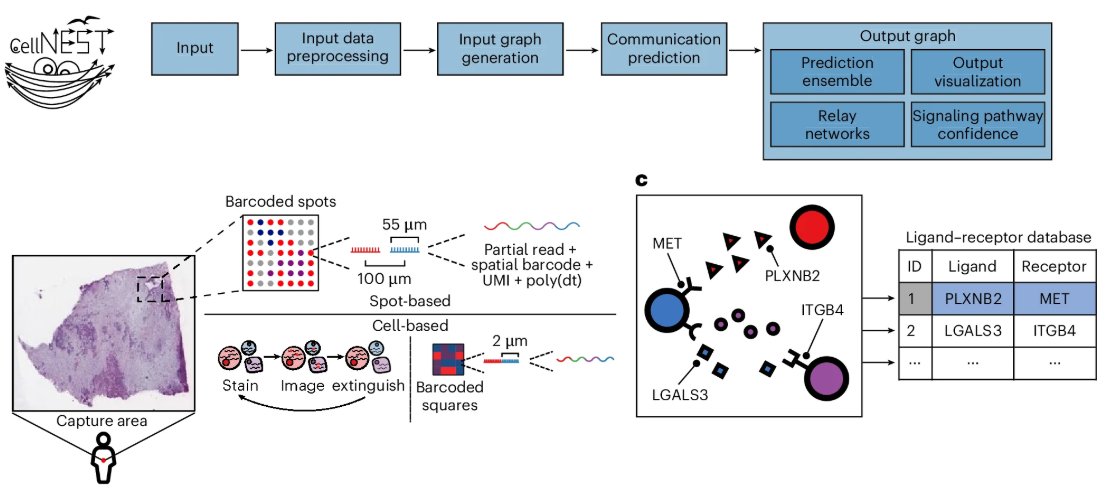
Out today from the Schwartz lab! A new way to study cell-cell communication from spatial transcriptomics data. Cell Neural Networks on Spatial Transcriptomics (CellNEST) can detect both signals between individual cells and relay networks of communication. https://t.co/bb0fwtp5ep
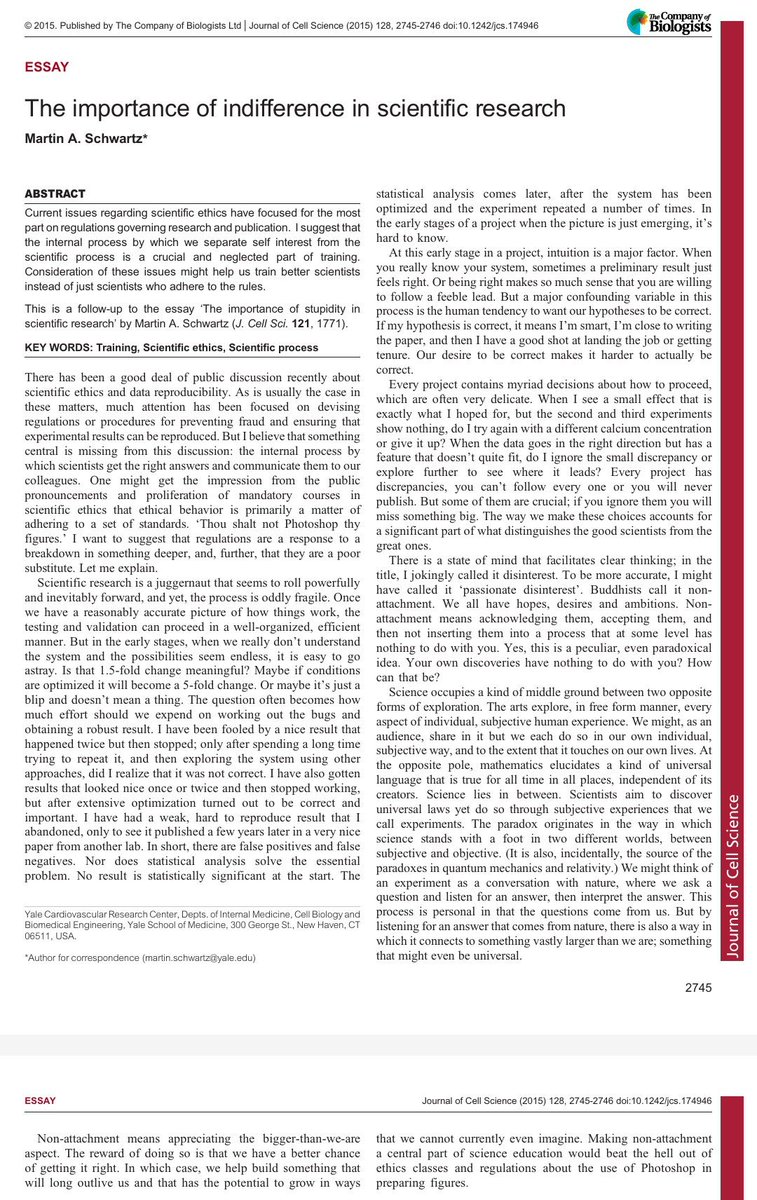
For clear thinking, cultivate passionate indifference. Buddhists call it non-attachment. We all have hopes, desires and ambitions. Non-attachment means acknowledging them, accepting them, and then not inserting them into a process that has nothing to do with you.
This classic book on creativity stresses two tools that have helped me a lot:
1. "The Morning Pages", a daily ritual of writing 3 pages on anything that comes to mind, and
2. "The Artist Date", a dedicated block of time to go for a walk and think about how the project is going.
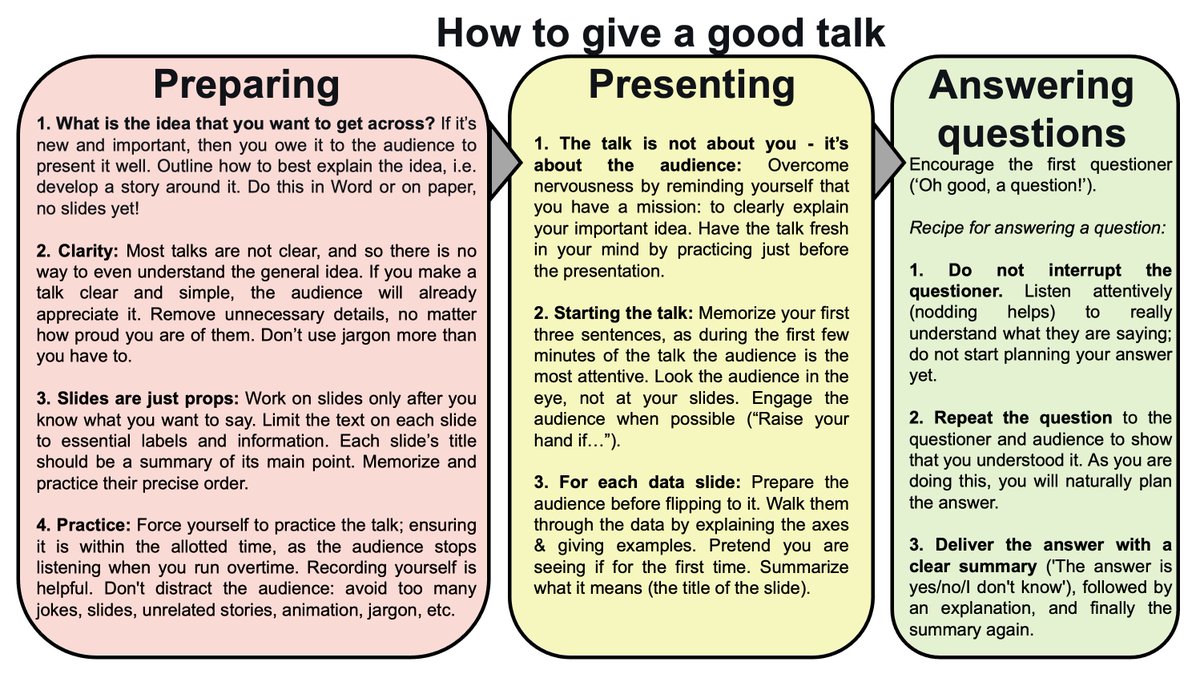
Knowing how to give a good talk is a crucial skill to have, but it's mostly not formally taught very well. Here's my strategy for how to prepare for the presentation, actually present it, and then answer the questions.
I think most of it is inhabiting the data.. if you are really trying to get a full understanding of a mechanism, then every piece of data either fits or doesn't fit.. it's always trying to live inside the data and use it to test the structure. – Ellen Rothenberg
In addition to applied statistics, I have another repository on Data visualization: "quick data vis" (https://t.co/87bQt5Ac6z). It used to be under "Online_R_learning" but now has its own repository on GitHub. I have used this content to teach 1st year grad students for 3 years.
#1 rule of talking with your science buddy: always make them look good. Good ideas and improvisations only flow when everyone is feeling comfortable and secure.
Excited to share our atlas build&use guide, out @naturemethods today. Led by @KHrovatin & @SikkemaLisa w @MDLuecken, our review highlights best practices for building, sharing, and leveraging atlases to unlock new biological discoveries. 🌍@humancellatlas
https://t.co/K48r85HuEI
👀New on bioRxiv: Our high-throughput #SingleCellProteomics pipeline analyzing 1,536 single cells/experiment, identifying 3,000+ proteins/cell. Applied to tumor macrophages in a lung metastasis model, we found ~500 differentially expressed proteins. 🔗 https://t.co/KWB0zaWXCS
Newly awarded literature laureate Han Kang’s work is characterised by this double exposure of pain, a correspondence between mental and physical torment with close connections to Eastern thinking.
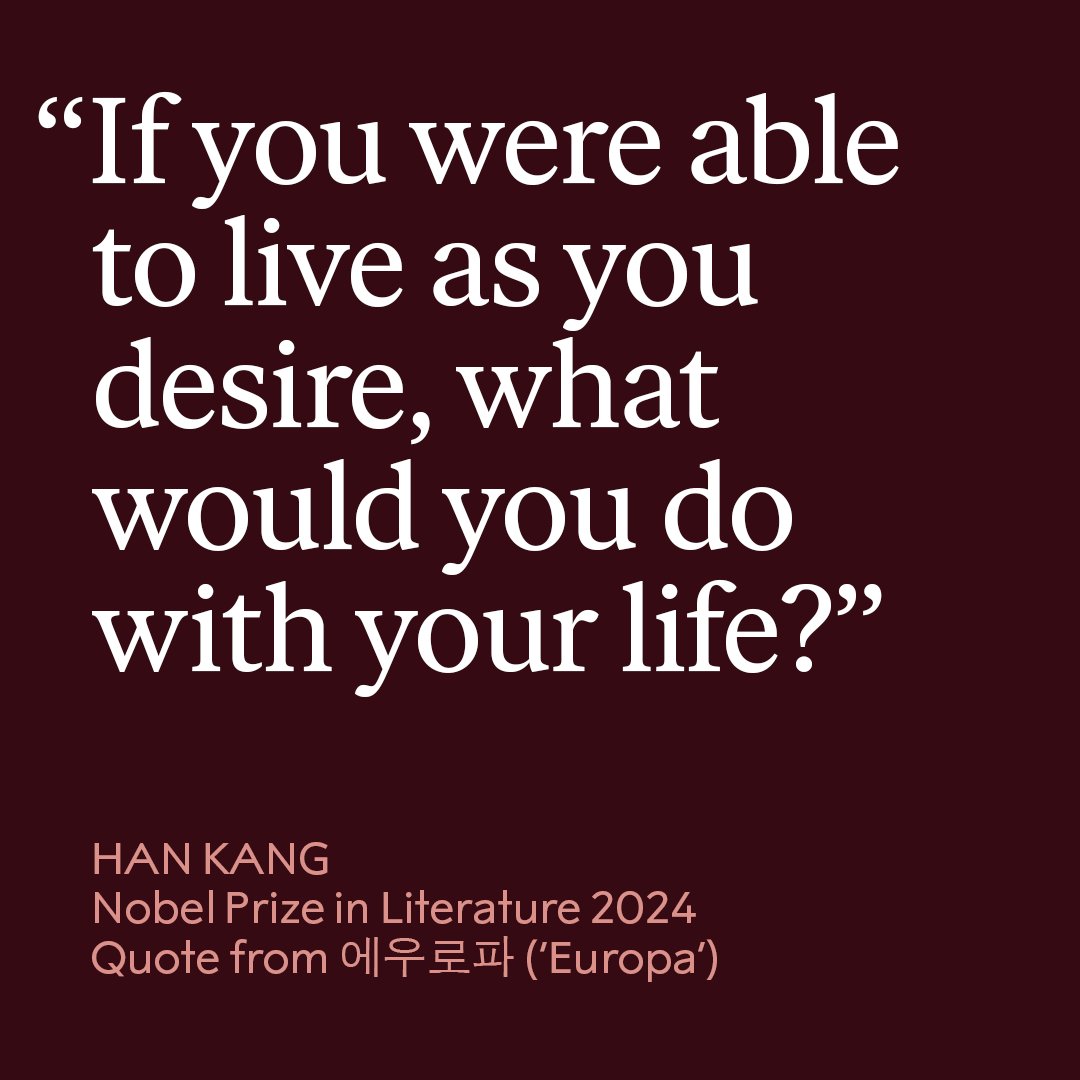
In Han Kang’s short story 에우로파 (2012; ‘Europa’, 2019), the male narrator, himself masked as a woman, is drawn to an enigmatic woman who has broken away from an impossible marriage. The narrative self remains silent when asked by his beloved: “If you were able to live as you desire, what would you do with your life?” There is no room here for either fulfillment or atonement.
#NobelPrize
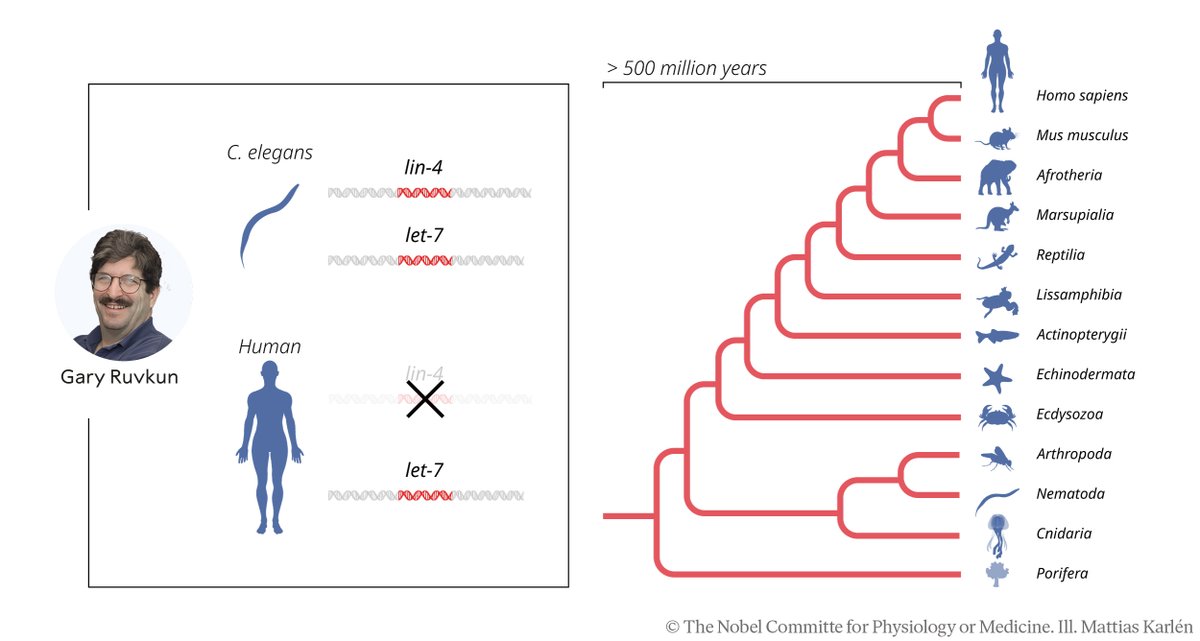
MicroRNA genes have evolved and expanded within the genomes of multicellular organisms for over 500 million years.
Today, we know that there are more than a thousand genes for different microRNAs in humans, and that gene regulation by microRNA – discovered by this year’s medicine laureates – is universal among multicellular organisms.
#NobelPrize
feeling particularly proud of our latest microRNA paper today @bulutkarslioglu@lambosaur and of my favourite (post-doc) paper from my time @VingronLab the PROmiRNA model https://t.co/6uYQ848GaM