🚂Poland's Niespieszny, or the 'Unhurried' train, is a bet that some passengers will pay for a slower, relaxed journey. Decked out in 1980s retro style, the train winds through countryside routes, giving travelers time to enjoy one of its main attractions: classic Polish food
THANK YOU DAVID FOR THE LESSON! 🥹❤️
Life is full of lessons. Last week, on a flight from Goa to Mumbai, I learned one.
In the picture is David.
When David boarded the flight, many people looked at him because he was overweight. He came and sat across the aisle from me. In the middle of the flight, he opened his bag, took out a huge collection of chocolates and sweets, and then walked towards the washroom.
I exchanged a glance with the gentleman sitting next to him and said, “He shouldn’t eat so much sweets and chocolates!” This was said out of concern! The gentleman smiled and replied, “Well, that’s probably why he looks the way he does.”
A little while later, David came back, gathered all the sweets, and handed them over to the cabin crew. 🥹
I was surprised.
So I told him, “I must confess, I thought you were going to eat all those chocolates yourself, and that’s why you were overweight.”
He smiled and said, “ I don’t blame you for thinking like that! I have a medical condition. But I used to work with airlines, and I know what cabin crew members go through every day. So I like to bring them something sweet whenever I travel.”
What an outstanding human being.
And what a lesson for me.
How quickly we judge people. How easily we create stories about them without knowing anything about their lives.😳
Thank you, David, for reminding me that kindness is often hidden behind appearances, and that the best people are sometimes the ones we understand the least.
I asked him for a pic! He obliged!
Thank you for the lesson my friend!❤️ #LifeLessons #Encounters
In a rare and highly specialised medical procedure, doctors at a private hospital in Guntur district successfully removed a brain tumour from a woman while she remained awake and watched her favourite actor and Andhra Pradesh Deputy Chief Minister Pawan Kalyan's action film They Call Him OG.
Read more: https://t.co/LPowwJA200
#pawankalyan #braintumour
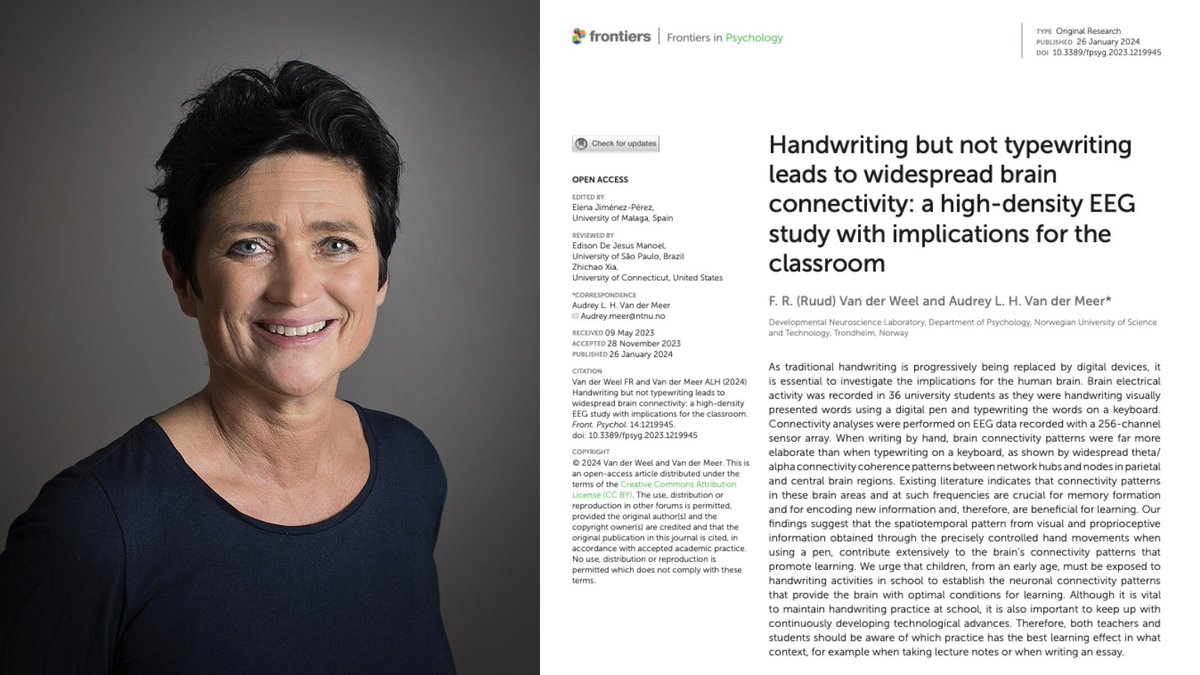
A Norwegian neuroscientist spent 20 years proving that the act of writing by hand changes the human brain in ways typing physically cannot, and almost nobody outside her field has read the paper.
Her name is Audrey van der Meer.
She runs a brain research lab in Trondheim, and the paper that closed the argument was published in 2024 in a journal called Frontiers in Psychology. The finding is brutal enough that it should have changed every classroom on Earth.
The experiment was simple. She recruited 36 university students and put each one in a cap with 256 sensors pressed against their scalp to record brain activity. Words flashed on a screen one at a time.
Sometimes the students wrote the word by hand on a touchscreen using a digital pen, and sometimes they typed the same word on a keyboard. Every neural response was recorded for the full five seconds the word stayed on screen.
Then her team looked at the part of the data most researchers had ignored for years, which is how different parts of the brain were communicating with each other during the task.
When the students wrote by hand, the brain lit up everywhere at once.
The regions responsible for memory, sensory integration, and the encoding of new information were all firing together in a coordinated pattern that spread across the entire cortex. The whole network was awake and connected.
When the same students typed the same word, that pattern collapsed almost completely.
Most of the brain went quiet, and the connections between regions that had been alive seconds earlier were nowhere to be found on the EEG.
Same word, same brain, same person, and two completely different neurological events.
The reason turned out to be something nobody had really paid attention to before her work. Writing by hand is not one motion but a sequence of thousands of tiny micro-movements coordinated with your eyes in real time, where each letter is a different shape that requires the brain to solve a slightly different spatial problem.
Your fingers, wrist, vision, and the parts of your brain that track position in space are all working together to produce one letter, then the next, then the next.
Typing throws all of that away. Every key on a keyboard requires the exact same finger motion regardless of which letter you are pressing, which means the brain has almost nothing to integrate and almost no problem to solve.
Van der Meer said it plainly in her interviews.
Pressing the same key with the same finger over and over does not stimulate the brain in any meaningful way, and she pointed out something that should scare every parent who handed their kid an iPad.
Children who learn to read and write on tablets often cannot tell letters like b and d apart, because they have never physically felt with their bodies what it takes to actually produce those letters on a page.
A decade before her, two researchers at Princeton ran the same fight using a completely different method and ended up at the same answer. Pam Mueller and Daniel Oppenheimer tested 327 students across three experiments, where half took notes on laptops with the internet disabled and half took notes by hand, before testing everyone on what they actually understood from the lectures they had watched.
The handwriting group won by a wide margin on every question that required real understanding rather than surface recall.
The reason was hiding in the transcripts of what the two groups had actually written down.
The laptop students typed almost word for word, capturing more total content but processing almost none of it as they went, while the handwriting students physically could not write fast enough to transcribe a lecture in real time, which forced them to listen carefully, decide what actually mattered, and put it in their own words on the page.
That single act of choosing what to keep was the learning itself, and the keyboard had quietly skipped the choosing and skipped the learning along with it.
Two studies. Two countries. Same answer.
Handwriting makes the brain work. Typing lets it coast.
Every note you have ever typed instead of written went into your brain through a thinner pipe. Every meeting, every book highlight, every idea you captured on your phone instead of on paper was processed at half depth.
You did not forget those things because your memory is bad. You forgot them because typing never woke the part of the brain that would have made them stick.
The fix is the thing your grandmother already knew.
Pick up a pen. Write the thing down. The slower road is the faster one.
Nerves of Steel. Arrows of Gold.
What a moment for Indian sport!
India’s women’s recurve archery team — Deepika Kumari, Ankita Bhakat and Kumkum Mohod — delivered a golden performance at the 2026 Archery World Cup in Shanghai, holding their nerve in a dramatic tie-break shoot-off to defeat China 28–26 and claim Gold.
With the final locked at 4–4, it came down to composure, precision and belief. And India answered with arrows that flew straight into history.
Earlier, the trio had stunned world champions South Korea in the semi-finals — proving that this was not just a win, but a statement.
A golden shoot-off. A fearless team. A proud Indian moment.
Watch the tie-break shoot-off — and watch India rise.
@india_archery@ImDeepikaK #AnkitaBhakat #KumkumMohod
Dr. Pritpal Kaur Batra, an IPS officer, became a true changemaker in Tuensang, Nagaland.
Beyond her police duties, she offered free UPSC coaching, counseled drug addicts, and taught livelihood skills like organic farming.
With initiatives like “Not Guns But Machines,” she inspired hope, reduced drug crime, and earned the title “Themshao Lam” — a protector and leader who transformed lives with compassion.
#Leadership #Changemaker #Inspiration #Empowerment #Compassion
[Leadership In Action, IPS Officer Impact, Empowering Communities, Compassionate Leadership, Social Change Initiatives]
Meet Sakib Hussain :
> Comes from Gopalganj, Bihar
> Belongs to a farmer family
> Wanted to join Indian army
> But his friends found him a cricketing skill better
> Wasn’t able to buy even cricket shoes
> His mother sold her jewellery for his shoes
> Was a net bowler for CSK in 2023
> Got sold to KKR for 20 lakh in 2024
> But didn’t get to play a single match
> Went unsold in the 2025 auction
> Now sold to SRH for 30 lakh
> Took 4 wickets in his debut.
> Clocked bowling speed of 140+ km/h
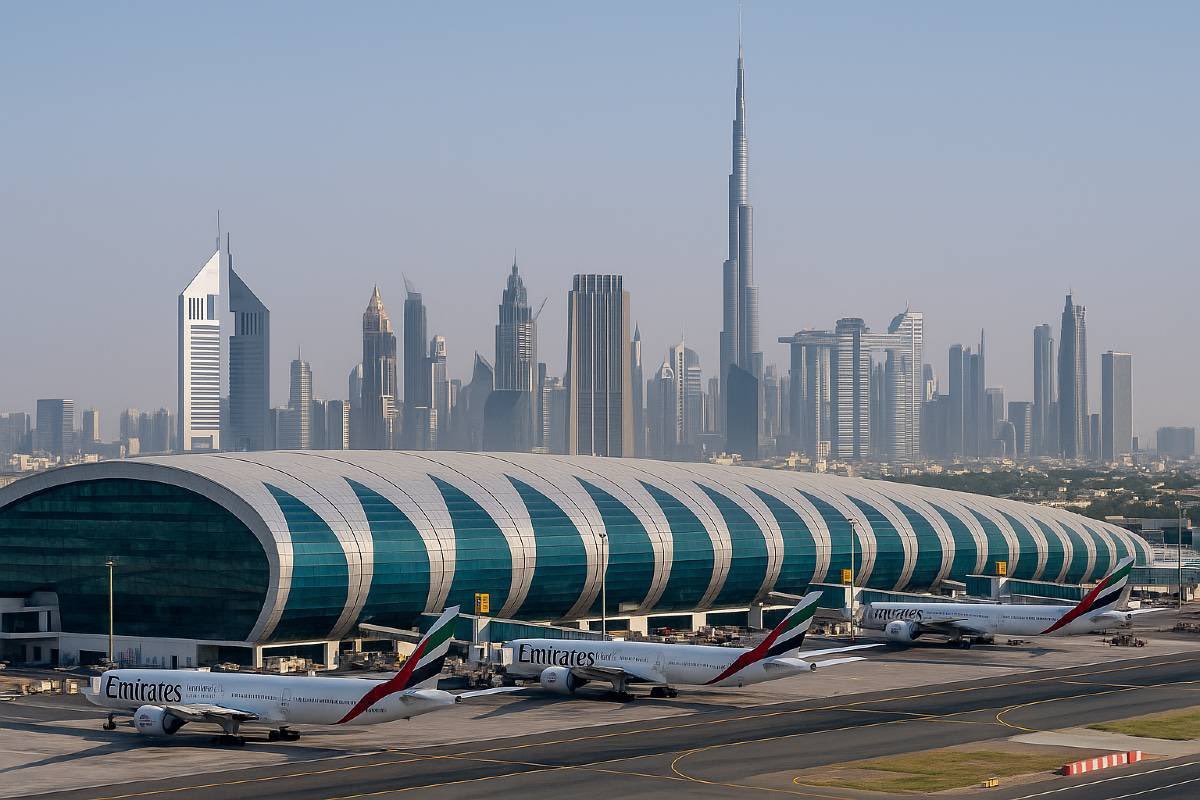
Dubai just shut down. The busiest international airport on earth. Closed. Indefinitely.
Dubai International and Al Maktoum International both suspended all operations on February 28 per official Dubai Airports statement. Over 280 flights canceled. 250 more delayed. The airspace that handles more international passengers than any hub on the planet went dark this morning because Iranian ballistic missiles were flying through it.
Now read the airline list and understand the scale of what just broke.
Emirates. Grounded. Etihad. Grounded. Qatar Airways. Suspended all flights to and from Doha after Qatari airspace closed. Air India. Every single flight to every destination in the entire Middle East. Suspended indefinitely. Turkish Airlines. Suspended flights to Bahrain, Iraq, Iran, Jordan, Kuwait, Lebanon, Oman, Syria, Qatar, and the UAE until at least March 2. Lufthansa. Dubai suspended. Air France. Tel Aviv and Beirut suspended. Wizz Air. Israel, Dubai, Abu Dhabi, and Amman suspended until March 7. British Airways. Affected. Virgin Atlantic. Affected. Japan Airlines. Affected. Norwegian Air, LOT Polish, Scandinavian Airlines, Aegean, Iberia, Air Arabia, PIA, Saudia, Air Algerie. All affected. All grounded or rerouting.
This is not a regional disruption. This is the global aviation network breaking at one of its most critical nodes.
Dubai is not just an airport. It is the single largest connecting hub between Asia, Europe, Africa, and the Middle East. Every flight from Mumbai to London, from Singapore to Frankfurt, from Nairobi to New York that routes through the Gulf is now either canceled, delayed, or burning extra fuel on thousand-mile detours around closed airspace. IndiGo just suspended flights to Almaty, Baku, Tashkent, and Tbilisi until March 28. Not March 2. March 28. A month of Central Asian connectivity erased because Iranian missiles crossed the flight paths.
The cost is compounding by the hour. Rerouted flights burn more fuel when oil is spiking past 100 dollars a barrel because the same conflict that closed the airspace is threatening the strait that moves 21 million barrels a day. Airlines are paying surge prices for fuel to fly longer routes around a war zone that did not exist yesterday morning. Every hour the airspace stays closed, the losses multiply across carriers already operating on thin margins.
And here is what nobody is calculating yet. Dubai’s economy runs on connectivity. Tourism. Trade. Finance. Logistics. All of it depends on DXB being open. The UAE just absorbed an act of war on its sovereign territory with a civilian killed in Abu Dhabi from missile debris. The country that built its entire economic model on being the safe, neutral, connected hub of the Middle East is now closed for business because the country it had no quarrel with fired missiles through its airspace.
Iran did not just attack military bases this morning. Iran shut down the economic engine of the Gulf.
That is a cost Tehran cannot afford to repay and the UAE will not forget.