Dear Afreximbank Team,
I am Dr. Aranmolate Rasheed Ayobami, Medical Director/CEO of Grandville Medical Group, with facilities in Lagos and Abuja offering plastic and reconstructive surgery, trauma, critical care, diagnostics and other specialist services.
We are developing a 100-bed trauma and specialist hospital in Sangotedo, Lagos, to expand access to advanced care and help reduce overseas medical travel. Our existing trauma service has attended to over 60,000 patients in five years.
We seek long-term project finance and medical equipment financing, alongside strategic equity investment. We would appreciate guidance on suitable Afreximbank funding opportunities and an introduction to the relevant team.
Our investment presentation, financial model and project details are available for review.
Kind regards,
Dr. Aranmolate Rasheed Ayobami
Medical Director/CEO, Grandville Medical Group
https://t.co/TNXPS0S521
@afreximbank We also need an industrial focus on healthcare. We are not even saying you should sponsor us. Give us patient capital for those of us who need it.
Dear Africa50 Team,
I am Dr. Aranmolate Rasheed Ayobami, Medical Director/CEO of Grandville Medical Group, a Nigerian healthcare organisation with facilities in Lagos and Abuja.
We are developing a 100-bed trauma and specialist hospital in Sangotedo, Lagos, building on our existing trauma service, which has attended to over 60,000 patients in five years. The project aims to expand access to emergency care, advanced surgery, critical care and diagnostics, while reducing the need for overseas treatment.
We seek strategic equity investment and support in mobilising long-term financing for construction and medical equipment. We would welcome an opportunity to discuss whether our project fits Africa50’s investment criteria or those of its partners.
Our investment presentation, financial model and project details are available for review. Kindly direct us to the appropriate investment team.
Kind regards,
Dr. Aranmolate Rasheed Ayobami
Medical Director/CEO, Grandville Medical Group
https://t.co/TNXPS0S521
Dear Afreximbank Team,
I am Dr. Aranmolate Rasheed Ayobami, Medical Director/CEO of Grandville Medical Group, with facilities in Lagos and Abuja offering plastic and reconstructive surgery, trauma, critical care, diagnostics and other specialist services.
We are developing a 100-bed trauma and specialist hospital in Sangotedo, Lagos, to expand access to advanced care and help reduce overseas medical travel. Our existing trauma service has attended to over 60,000 patients in five years.
We seek long-term project finance and medical equipment financing, alongside strategic equity investment. We would appreciate guidance on suitable Afreximbank funding opportunities and an introduction to the relevant team.
Our investment presentation, financial model and project details are available for review.
Kind regards,
Dr. Aranmolate Rasheed Ayobami
Medical Director/CEO, Grandville Medical Group
https://t.co/TNXPS0S521
@afreximbank Hello @afreximbank. I lead Grandville Medical Group, with hospitals in Lagos and Abuja. We seek long-term financing for a new 100-bed trauma and specialist hospital in Lagos. Please connect us with your healthcare financing team. Thank you.
@afreximbank We also need an industrial focus on healthcare. We are not even saying you should sponsor us. Give us patient capital for those of us who need it.
Dr Salami, this speaks to a deeper issue: how we prioritise and finance healthcare in Nigeria.
Building hospitals at that scale requires patient capital—funding that allows time to build infrastructure, recruit skilled professionals, establish services and recover the investment. We should not expect affordable healthcare to emerge from financing that demands expensive repayments almost immediately.
Government has a critical role, both through direct investment and policies that encourage private investment. Dedicated healthcare financing, lower interest rates, longer repayment periods and appropriate guarantees would help providers expand sustainably.
We must also distinguish willingness to pay from ability to pay. Many Nigerians want quality healthcare but cannot comfortably afford its full cost. Others question the price without recognising what it takes to provide reliable power, modern equipment, qualified staff and safe care. Stronger health insurance and greater transparency about quality and costs are essential.
As someone building and running hospitals in Nigeria, I see these challenges firsthand. The ambition to expand exists, but ambition needs a financing structure and a payment system that can sustain it.
The conversation must therefore go beyond bed numbers to how those beds are funded, staffed, equipped and made accessible. That is the foundation we need to strengthen.
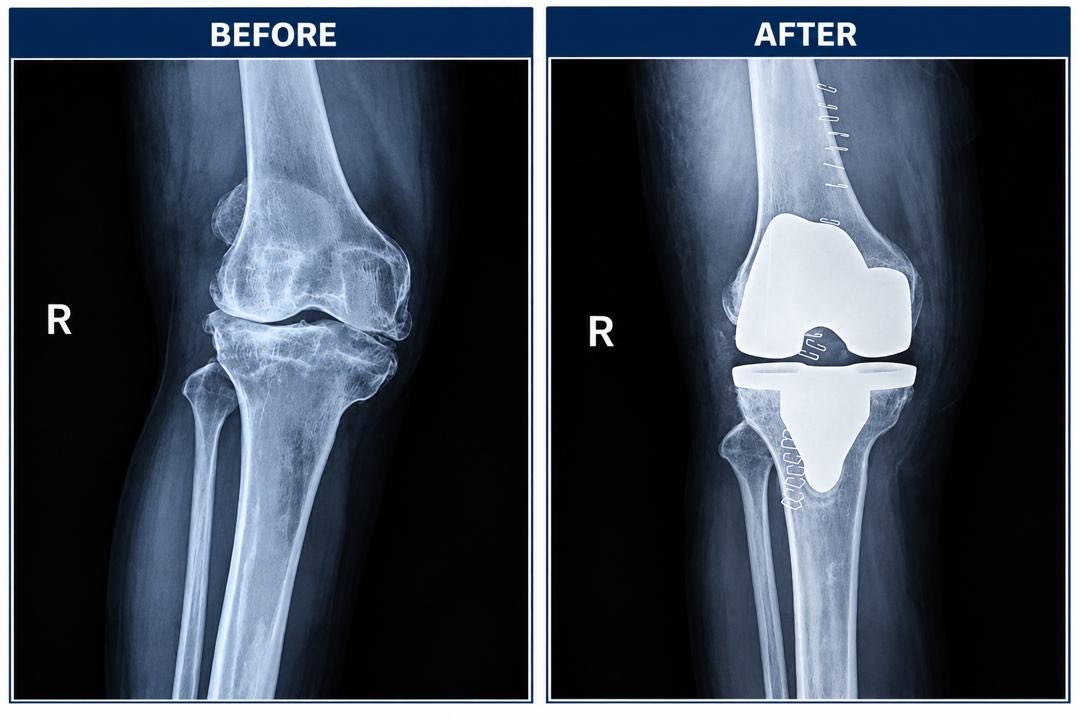
A Nigerian former Head of State has reportedly undergone knee replacement surgery abroad, and the foreign hospital is now using his image to advertise its services.
While anyone has the right to choose where they receive medical care, turning the treatment of a former head of state into an advertisement for a foreign private hospital raises a bigger question about our healthcare system.
Nigeria has many surgeons and hospitals capable of performing complex joint replacements. @summitorthong for the past 8 years our joint replacement program has running smoothly with excellent outcomes .
The advert is just bad optics!
#healthcare #kneereplacement #nigeria
@Nwokeufuma@ancientmind@asemota He trained as an orthopedic surgeon in national orthopedic hospital, Igbob, Lagos but am not sure he is still into clinical practice.
Dr. Salami, I like your analysis. However, I believe time still has an important place in surgery. Just as every flight has an estimated arrival time, every surgical procedure has an expected duration based on experience and established benchmarks. Those timeframes exist because they reflect the average performance of competent surgeons under similar circumstances.
That said, speed alone should never define surgical excellence. An unnecessarily slow surgeon may expose the patient to increased anaesthetic time and other risks, while a surgeon who rushes may compromise precision and judgment. I would therefore place greater emphasis on being an efficient surgeon rather than simply a fast surgeon.
Efficiency is built on experience, sound judgment, appropriate instruments, a well-trained theatre team, adequate exposure, and meticulous planning. The ultimate goal is not to beat the clock, but to achieve the safest and best possible outcome for the patient.