Why do we do math in school?
When I asked this question as a kid, my teachers always told me, “You’ll use it one day.”
That’s almost always false.
Most adults are never going to be in a sticky situation with two binomials, thinking, thank goodness I can FOIL my way out of this mess. Most of us get by just fine without ever solving for x again.
And especially in an AI age, fewer and fewer people will “use math” in the narrow, practical sense.
But the origins of math have never been primarily about utility.
Math is formative. It trains the mind to love what is true, to recognize what is orderly, and to be drawn toward what is beautiful. It teaches us that the universe is not chaos, but something intelligible, something structured, something that can be known.
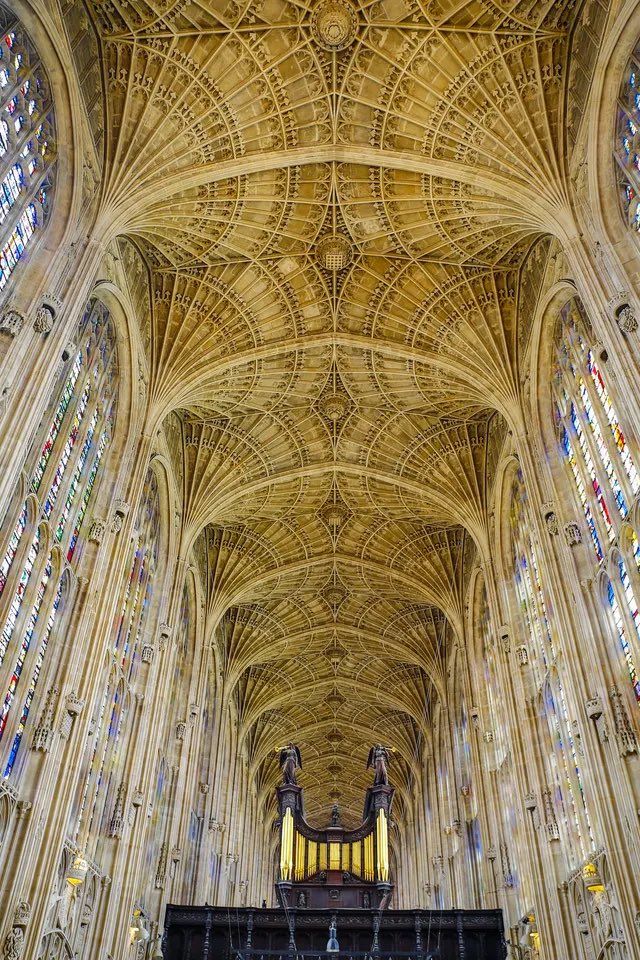
And you can see that truth made visible in the world’s most breathtaking churches and cathedrals: arches, vaults, domes, proportions, symmetry, harmony, light—geometry turned into glory. The mathematics that shapes a cathedral is not cold or sterile. It’s the language of wonder, carved into stone.
We don’t teach math because everyone will use it.
We teach math because it forms the kind of person who can see that reality has meaning.
I took my rescue dog to the groomer for the first time today. He kept looking at me to make sure that I hadn't left. He doesn't want to be abandoned again
Milan Cathedral, Italy.
Besides gigantic doors that allowed people to enter riding (On giraffes?), an architecture made possible only with Chisel and Hammer.
“Delayed gratification was taught to us by the stoics. It is one of the greatest attributes.”
Another all-time line from Fernando Mendoza—this one on Stoicism 🤣👏
Fernando Mendoza was HYPED to advance to the National Championship Game:
"We're a bunch of misfits! There’s no 5 stars on our team. Just a bunch of gritty guys who are glued together and going towards a common goal.”