اٹک کی تاریخ میں پہلی دفعہ اٹک کی عوام اور سرکاری ادارے نے پروٹوکول کے ساتھ ٹرانسفر ہونے والے ڈپٹی کمشنر اٹک راؤ عاطف رضا کو جمخانہ اٹک سے راولپنڈی کے لیے رخصت کر رہے ہیں
“Ford says it has hired back some human engineers after AI failed to match their skills and experience...
its executives said the firm has rehired more than 300 "veteran" quality inspectors in recent years to make up for the pitfalls of automated systems.” https://t.co/IdLCJxKg0x
A college dropout who became Robert Greene's research assistant wrote a book in 2016 arguing that the single thing destroying most tech founders is not the market, not the competition, and not bad luck, but the same enemy Marcus Aurelius wrote about in his journal 1,800 years ago.
The book is called Ego is the Enemy and its written by Ryan Holiday.
He dropped out of UC Riverside at 19 to apprentice under Robert Greene, the author of The 48 Laws of Power. He spent years inside the rooms where Greene wrote, reading every old book Greene was citing, watching how a serious researcher actually worked.
By his mid-20s, he was writing his own books. By 29, he had published the one that quietly became required reading inside Silicon Valley, the NFL, and the U.S. military.
The book he wrote came out in 2016. It is built on a 2,000-year-old philosophy called Stoicism, written down by three men who could not have predicted how relevant they would still be in 2026.
Marcus Aurelius was a Roman emperor. He kept a private journal he never intended to publish, writing to himself every night about how to stop being arrogant, how to stop being reactive, how to stop letting power destroy his judgment.
Seneca was an advisor to emperors who ended up rich, famous, and eventually forced to kill himself when the politics turned against him. Epictetus was a Greek slave who became a philosopher and taught his students that almost everything that destroys a person comes from inside, not outside.
The three of them, separated by centuries, all arrived at the same conclusion. The enemy is not the world. The enemy is the part of you that wants the world to confirm how important you are.
Holiday took that conclusion and built a framework specifically for modern builders. Founders. Engineers. Writers. Athletes. Anyone trying to do good work in public.
He says we are always in one of three stages. Aspire. Success. Failure. We cycle between them constantly. And the ego attacks us differently inside each one.
Stage one is aspire.
This is the stage where you are working on something nobody is paying attention to yet. The repo with 12 stars. The startup with no users. The newsletter with 30 subscribers. The book draft sitting on your laptop.
The ego in this stage wants you to talk about the work instead of doing the work. It wants you to post about the launch instead of finishing the launch. It wants you to argue with people on X about your future plans instead of shipping the next commit.
The reason this is so dangerous is that talking about your work produces a small dose of the same satisfaction that finishing your work produces. Your brain cannot quite tell them apart. So you tweet about the project, you feel a little hit of completion, and the actual work gets quietly pushed to tomorrow.
Holiday's prescription is direct. Talk less. Do more. Confidence is silent. Ego is loud.
Stage two is success.
This is the stage where the work starts to land. The repo crosses 1,000 stars. The startup gets the seed round. The post goes viral. The founder finally gets the press coverage they have been chasing for years.
The ego in this stage wants you to believe you have arrived. It wants you to stop learning, stop listening, stop questioning your own assumptions, because you have proof now that you were right all along.
This is the stage Holiday spends the most time on, because this is the stage that destroys the most careers. The founders who survive Series A and die at Series C. The maintainers whose project explodes and then quietly rots because they stop responding to issues. The creators who get one viral hit and chase that exact format for the next five years until nobody is reading anymore.
The line he uses is brutal. Success is intoxicating, yet to sustain it requires sobriety. You have to keep treating yourself like a beginner long after the world has decided you are an expert.
Stage three is failure.
This is the stage every founder and every open-source maintainer eventually lands in. The project no one used. The startup that ran out of money. The launch that fell flat. The github repo that nobody starred. The book that did not sell.
The ego in this stage wants you to blame everyone except yourself. The market was wrong. The investors were stupid. The users did not get it. The competitor cheated. The timing was off.
Holiday calls this the most dangerous response to failure, because it prevents the only thing that can actually pull you out of it, which is honest learning. The Stoic move in failure is to look at the loss with cold clarity, separate what was your fault from what was bad luck, fix what was your fault, and keep walking.
Now here is the specific framework for tech founders and open-source builders. Holiday does not write it this way in the book, but it is the direct application of his three stages to the work most of you are doing.
In the aspire stage of an open-source project or a startup, your enemy is the dopamine of attention.
You will be tempted to share screenshots before the product works. You will be tempted to tweet your roadmap before you have shipped a single feature. You will be tempted to compare your star count to other repos every morning.
The Stoic move is to detach your identity from the metrics. The work is the work. The stars are a byproduct. If you stop checking the stars, the work will not get worse. If you start checking the stars every hour, the work will absolutely get worse. The Romans had a phrase for this. Memento mori. Remember you will die. The point is that no amount of validation is going to follow you out of the room you eventually die in. The work might. The applause will not.
In the success stage, your enemy is the belief that you have figured it out.
If your project explodes, the danger is not that you will fail. The danger is that you will stop being a student. You will stop reading the issues. You will stop talking to your users. You will start giving talks at conferences about your "philosophy" instead of shipping the next version.
The Stoic move is to behave exactly the same after the win as you did before it. Same hours. Same humility. Same willingness to be told you are wrong. Marcus Aurelius wrote to himself, while ruling the entire Roman Empire, that he was just one man among many men, one mortal among other mortals, and that he should never let the throne change how he treated the people who served him. He was emperor. He still wrote this down every night. That is the standard.
In the failure stage, your enemy is the story you tell yourself about why it was not your fault.
The startup that did not work. The launch that fell flat. The project that nobody starred. The instinct will be to blame the algorithm, the timing, the competitor, the funding climate, the platform, the audience. Some of those things will be partially true. The Stoic move is to ignore them anyway.
The Stoics taught that you only have two things in your life that are fully under your control. Your judgments and your actions. Everything else, including how your work is received, is outside the wall. If you spend your time arguing with what is outside the wall, you are wasting the only resource you can actually use, which is the next decision you make.
The deeper insight buried in all of this is the one most readers miss the first time through.
Ego is not the same as ambition. Ego is not the same as confidence. Ego is the specific failure mode where your sense of who you are becomes attached to outcomes you do not control.
The repo getting starred. The startup getting funded. The tweet going viral. The press calling. The job offer arriving. The moment your identity gets attached to any of these, you have handed the steering wheel of your life to a public that does not love you and that has the attention span of a goldfish.
The Stoic move is to take the wheel back.
Do the work because the work is worth doing. Ship the project because shipping is its own reward. Build the company because building is the only part you can actually control. The outcomes will be whatever they are. The applause will arrive or it will not. The press will cover you or it will move on.
None of it is yours. The work is yours.
Marcus Aurelius wrote it down in his journal almost 1,900 years ago, expecting nobody to read it.
The reason every serious founder you admire is quietly reading Ryan Holiday is that the most important sentence in modern startup advice is still a Roman emperor's private note to himself in the year 170.
The enemy is inside the gates. And most days, the enemy is wearing your own face.
A researcher spent 20 years “proving that the chemicals trees release into the air walk into your bloodstream, hunt down your stress hormones, and arm your immune system in ways no therapist or pharmaceutical has ever matched…” 👇🏿
سعودی ہیریٹیج کمیشن نے اعلان کیا ہے کہ المہد گورنریٹ میں آثارِ قدیمہ کی کھدائی اور سروے کے دوران چٹانوں پر ایسے تاریخی پتھر دریافت ہوئے ہیں جن پر اسلام کے دوسرے خلیفہ حضرت عمر بن خطاب کا نام لکھا ہوا ہے۔
#SaudiArabia#heritage#Independenturdu
14 سو سال سے بھی پہلے کے قبیلے
بنو قریش: خانہ کعبہ کے ارد گرد مکہ کا سب سے طاقتور اور معزز قبیلہ "قریش" آباد دکھایا گیا ہے۔
یہ حضور صلی ال��ہ علیہ وسلم کا آبائی قبیلہ تھا۔
بنو ہاشم: خانہ کعبہ کے بالکل قریب بنو ہاشم کی نشاندہی کی گئی ہے، جو قریش کی ہی ایک معزز ترین شاخ ہے اور اسی خاندان سے نبی کریم صلی اللہ علیہ وسلم کا تعلق تھا۔
۲. مدینہ منورہ اور اس کے قریبی مقامات (بالائی حصہ)
تصویر کے اوپری حصے میں مدینہ منورہ (یثرب) کا سرسبز و شاداب علاقہ اور نخلستان دکھائے گئے ہیں۔
مسجد نبوی: مدینہ کے مرکز میں سبز گنبد کے ساتھ مسجد نبوی کی عمارت دکھائی گئی ہے، جو ہجرتِ مدینہ کے بعد مسلمانوں کا مرکز بنی۔
جبلِ احد (احد پہاڑ): مدینہ منورہ کے پس منظر میں تاریخی پہاڑ "جبل احد" نظر آ رہا ہے، جہاں غزوہ احد کی مشہور ��نگ لڑی گئی تھی۔
بنو اوس اور بنو خزرج: مدینہ منورہ کے دائیں اور بائیں طرف ان دو بڑے قبائل کے نام درج ہیں۔ یہ مدینہ کے مقامی انصار قبائل تھے جنہوں نے ہجرت کے بعد مسلمانوں کی دل کھول کر مدد کی تھی۔
۳. مکہ اور مدینہ کے درمیانی مقامات اور وادیاں
مکہ سے مدینہ جانے والے تجارتی اور ہجرت کے راستے پر درج ذیل مقامات کی نشاندہی کی گئی ہے:
وادی فاطمہ: نقشے کے درمیان میں ایک سرسبز نخلستان اور پانی کا چشمہ نظر آ رہا ہے جسے "وادی فاطمہ" لکھا گیا ہے۔ یہ مکہ اور مدینہ کے درمیان ایک مشہور اور زرخیز وادی ہے۔
طائف: مکہ کے پہاڑی سلسلے کے ساتھ دائیں جانب "طائف" کا علاقہ دکھایا گیا ہے، جو اپنی سرد آب و ہوا اور باغات کے لیے مشہور تھا۔
۴. دیگر تاریخی قبائل (درمیانی اور صحرائی علاقے)
مکہ اور مدینہ کے ارد گرد کے وسیع صحرائی علاقوں میں عرب کے دیگر مشہور قبائل آباد تھے جن کے نام تصویر میں درج ہیں:
بنو تمیم: یہ نجد اور حجاز کے درمیانی علاقوں کا ایک بہت بڑا اور جنگجو قبیلہ تھا۔
بنو کنانہ: قریش کا قریبی قبیلہ جو مکہ کے نواح میں آباد تھا۔
بنو بکر: یہ بھی حجاز کے ارد گرد آباد ایک مشہور عرب قبیلہ تھا۔
بنو اسد: مکہ اور مدینہ کے درمیانی صحرائی راستوں پر آباد ایک قبیلہ۔
بنو تک: نقشے کے دائیں جانب دور صحرا میں اس قبیلے کی نشاندہی کی گئی ہے۔
خلاصہ: یہ تصویر عہدِ رسالت (صلی اللہ علیہ وسلم) کے حجاز کا ایک جامع جغرافیائی خاکہ پیش کرتی ہے، جس سے مکہ اور مدینہ کی دوری، ان کے درمیان موجود وادیوں، تجارتی راستوں (جہاں اونٹوں کے قافلے نظر آ رہے ہیں) اور وہاں آباد مختلف قبائل کی جغرافیائی پوزیشن کو سمجھنے میں آسانی ہوتی ہے۔
QUOTE 1: Conscience is an indispensable companion of both moral life and holistic self-realization. It recognizes our errors and weaknesses, giving an early signal for correction. Yet conscience itself must grow — and its development is supported by reason and constructive feelings.
: The author presents conscience as an indispensable companion to both moral life and holistic self-realization. It serves as an inner guardian, sensitively detecting our errors and weaknesses and providing an early warning that allows for timely correction.
However, conscience is not static or infallible. It must itself grow and mature. This development is nourished by two essential forces: reason, which brings clarity, consistency, and depth of understanding, and constructive feelings, which provide warmth, empathy, and moral sensitivity. When reason and feeling work in harmony, conscience becomes sharper, wiser, and more reliable.
Without this ongoing cultivation, conscience can remain narrow, inconsistent, or overly rigid. With it, conscience evolves into a powerful guide that supports not only ethical conduct but the continuous unfolding of our full human potential.
QUOTE 2: The choice of the modern individual is the duty of full self-realization and the readiness to face the judgment of conscience in moments of weakness.
: The author states that the fundamental choice facing the modern individual is the conscious acceptance of a duty: the commitment to full self-realization. This is not optional self-improvement but a moral obligation to develop one’s intellect, character, creativity, and potential to the highest possible degree.
Equally important is the readiness to face the judgment of one’s own conscience during moments of weakness. True self-realization demands honesty with oneself. When we falter, conscience must be allowed to speak clearly and without evasion. This inner accountability prevents self-deception and ensures that personal growth remains genuine rather than superficial.
In this view, modern freedom is inseparable from responsibility. The privilege of shaping one’s life comes with the duty to shape it meaningfully and the courage to confront one’s shortcomings. Self-realization and moral self-honesty together form the core ethical demand of our time.
ہارورڈ یونیورسٹی کی گریجویٹ کمنسمنٹ تقریب میں ایک خوبصورت اور یادگار لمحہ دیکھنے کو ملا، جب ایک مسلمان طالب علم نے قرآنِ مجید کی سورۂ النور کی تلاوت کی:
"اللہ آسمانوں اور زمین کا نور ہے، اور اس کے نور کی مثال ایسی ہے جیسے ایک طاق میں روشن چراغ ہو۔"
یہ روح پرور تلاوت تقریب کے شرکاء کے لیے ایک خاص اور معنی خیز لمحہ بن گئی۔
I used to wonder why Allah describes Himself as “closer to you than your jugular vein.”
Not your heart.
Not your soul.
Not your mind.
The jugular vein.
“And We are closer to him than his jugular vein.” (50:16)
I looked into it. The answer stopped me completely.
انگریز کی مغل دربار میں پہلی حاضری
10 جنوری 1616۔ بظاہر یہ صرف ایک درباری ملاقات تھی۔ ایک
انگریز سفیر، چند تحائف، ایک درخواست، اور مغل دربار کی شان و شوکت۔ مگر تاریخ کے لمبے سفر میں یہی لمحہ برصغیر کی تقدیر بدلنے والے سب سے سنگین موڑوں میں شمار ہوا۔
اس پینٹنگ میں تخت پر بیٹھا شخص نورالدین محمد جہانگیر ہے، اکبر اعظم کا بیٹا اور مغل سلطنت کا چوتھا بادشاہ۔ سامنے کھڑا انگریز سفیر سر تھامس رو ہے، جو برطانیہ کے بادشاہ جیمز اول کا نمائندہ بن کر آیا تھا۔ اس کے ہاتھ میں درخواست ہے، لیکن حقیقت میں وہ درخواست نہیں، آنے والے دو سو برسوں کی غلامی کا ابتدائی پروانہ تھا۔
یہ پینٹنگ مغل دور کی منی ایچر روایت سے متاثر بعد کے زمانے کی تاریخی مصوری مانی جاتی ہے۔ اصل ملاقات کی کئی تصویری تشریحات بعد میں یورپی اور ہندوستانی مصوروں نے بنائیں، اس لیے اس مخصوص تصویر کا حتمی مصور متعین کرنا مشکل ہے، لیکن اس کا منظر تاریخی حوالوں سے مشہور ہے: سر تھامس رو کا جہانگیر کے دربار میں حاضر ہونا۔
سر تھامس رو 1615 میں ہندوستان پہنچا تھا۔ ایسٹ انڈیا کمپنی اس سے پہلے بھی کوششیں کر چکی تھی کہ مغل سلطنت سے باقاعدہ تجارتی اجازت حاصل کی جائے، مگر پرتگیزی اثر و رسوخ، درباری سازشیں اور مغل دربار کی پیچیدہ رسومات انگریزوں کے راستے میں رکاوٹ تھیں۔ رو کو مہینوں انتظار کرنا پڑا۔ کبھی درباری اسے اندر نہ جانے دیتے، کبھی ملاقات ملتوی ہو جاتی۔ مغل سلطنت اس وقت دنیا کی امیر ترین سلطنتوں میں شمار ہوتی تھی، جبکہ انگلستان ایک ابھرتی ہوئی بحری طاقت تھا۔ جہانگیر کے لیے یہ چند تاجروں کی درخواست تھی، لیکن ان تاجروں کی پشت پر ایک ایسی سلطنت کھڑی ہو رہی تھی جو سمندروں پر قبضہ جما رہی تھی۔
آخرکار 10 جنوری 1616 کو یہ ملاقات ہوئی۔ جہانگیر کو تحائف پیش کیے گئے۔ انگریزوں نے عاجزی دکھائی، دوستی کی بات کی، تجارت کی اجازت مانگی۔ مغل دربار نے شاید اسے ایک معمولی سفارتی واقعہ سمجھا۔ انہیں اندازہ نہ تھا کہ ساحلوں پر تجارتی کوٹھیاں مانگنے والے یہی لوگ ا��ک دن توپوں کے دہانے پر پورا ہندوستان کھڑا کر دیں گے۔
پہلے انہوں نے صرف تجارت کی۔ سورت، مدراس، بمبئی اور کلکتہ میں فیکٹریاں قائم ہوئیں۔ پھر انہوں نے مقامی سیاست میں مداخلت شروع کی۔ ایک ریاست کو دوسری کے خلاف استعمال کیا۔ مقامی نوابوں اور درباریوں کو خریدا گیا۔ اور پھر وہ وقت آیا جب تجارت کرنے والی کمپنی نے فوج کھڑی کر لی۔
1757 میں پلّاسی کی جنگ ہوئی۔ بنگال کے نواب سراج الدولہ کو میر جعفر کی غداری کے ذریعے شکست دی گئی۔ یہی وہ لمحہ تھا جب ایسٹ انڈیا کمپنی پہلی بار صرف تاجر نہیں رہی بلکہ حکمران بن گئی۔ بنگال کی دولت انگریز خزانے میں بہنا شروع ہوئی۔ ہندوستان کے وسائل نے برطانیہ کے صنعتی انقلاب کو ایندھن فراہم کیا۔
1616 سے 1757 تک تقریباً 141 سال لگے کہ ایک تجارتی کمپنی سیاسی طاقت میں تبدیل ہو جائے۔ اور پھر 1757 سے 1857 تک مزید سو برس میں پورا برصغیر انگریز اقتدار کے شکنجے میں چلا گیا۔
1857 کی جنگِ آزادی دراصل اسی ملاقات کا آخری باب تھی۔ وہی کمپنی جس نے جہانگیر کے دربار میں اجازت مانگی تھی، دو صدیوں بعد دہلی کے لال قلعے پر قبضہ کر چکی تھی۔ آخری مغل بادشاہ بہادر شاہ ظفر کو رنگون جلا وطن کر دیا گیا۔
تاریخ کے عجیب منظر ہوتے ہیں۔ جہانگیر کے دربار میں شاید کسی نے نہیں سوچا ہوگا کہ ایک معمولی سا انگریز سفیر، جو دربار میں داخلے کے لیے ترس رہا ہے، آنے والے وقت میں ایسی طاقت کی بنیاد رکھ رہا ہے جو تاجِ مغلیہ ہی نہیں، پورے برصغیر کی قسمت بدل دے گی۔
یہ صرف ایک ملاقات نہیں تھی۔
یہ ہندوستان میں انگریز اقتدار کے پہلے قدم کی دستک تھی۔
ایک خاموش دستک… جس کی گونج دو سو سال تک سنائی دیتی رہی۔
#الف_نگری
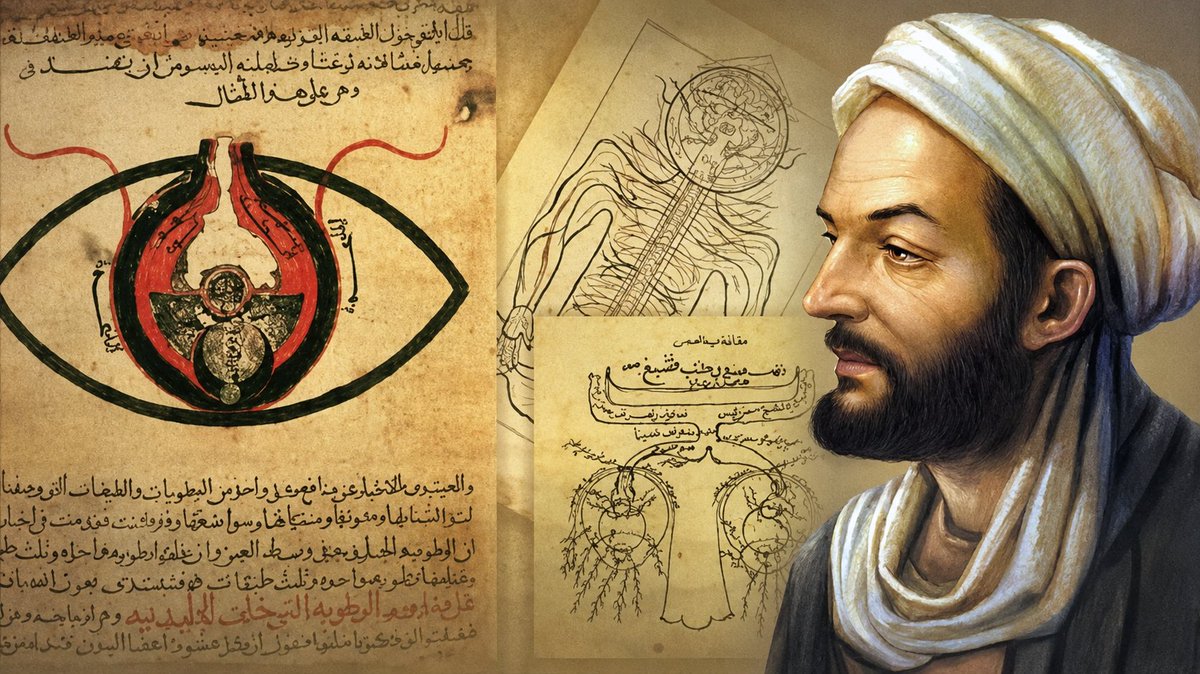
A Persian physician memorized the entire Quran by age 10 and was practicing medicine by age 16. By 18 he had cured a sultan that no other doctor could help. The textbook he wrote in his 30s became the operating manual for every European doctor for the next 600 years.
I started reading about him at midnight and could not believe one teenager had personally built so much of the foundation of modern medicine.
His name was Ibn Sina. The book is called The Canon of Medicine.
Every modern clinical trial. Every evidence-based drug protocol. Every pharmacology textbook. Every medical school curriculum that teaches doctors to observe before they prescribe.
All of it traces back to a Persian teenager who finished his medical education before most modern students finish high school.
Ibn Sina was born in 980 CE near Bukhara, in modern-day Uzbekistan. His father was an Islamic scholar who employed the best tutors money could buy. The tutors started failing to keep up with him almost immediately.
By age 10 he had memorized the entire Quran word for word. By 12 he was correcting his tutors on points of law. By 14 he had outpaced his teacher in mathematics and started learning on his own. By 16 he was treating patients in his neighborhood.
He later wrote, with no false modesty, that medicine was an easy subject and he had mastered it quickly.
He hit a wall around 17. He could not understand Aristotle's Metaphysics. He read the book forty times and still could not grasp it. Then he picked up a commentary on it by Al-Farabi in a Bukhara bookshop for a few coins, read it overnight, and suddenly the entire system of Greek philosophy snapped into place.
He went home and gave alms (money or goods) to the poor in gratitude that he had finally understood.
A year later the news of his medical skill reached the sultan of Bukhara, Nuh ibn Mansur, who was suffering from an illness no doctor in his court could cure. Ibn Sina was called in. He treated the sultan. The sultan recovered. The 18-year-old asked for one thing in payment.
Access to the royal library.
The library of the Samanid sultans in Bukhara was one of the greatest in the Islamic world at that time. Ibn Sina spent the next year inside it reading everything he could find.
He later wrote that by age 21 he had absorbed everything written by every major scholar before him, and that the rest of his career was just refining what he had already understood as a teenager.
He spent the next decade as a wandering physician and political advisor. Empires were collapsing across Persia and Central Asia. He moved from court to court, treating princes, drafting legal documents, escaping invasions, hiding from enemies who wanted to kill him for his association with rival rulers.
He wrote at night while moving between cities by day. He was imprisoned at least once. He kept writing.
In his 30s and 40s he produced The Canon of Medicine. A five volumes book at least a million words. A complete synthesis of every medical tradition he could find. Greek medicine from Galen and Hippocrates. Persian medicine from his own tradition. Indian medicine from Ayurvedic texts. His own clinical observations from thousands of patients.
The Canon was translated into Latin in the 12th century. It was reprinted more than 30 times in the 15th and 16th centuries alone. It was the standard reference text at the University of Paris, the University of Bologna, and Oxford well into the 17th century.
William Osler, one of the founding fathers of modern medicine, called it the most famous medical textbook ever written and said it served as a medical bible for a longer period than any other book in human history.
The part that most people miss is what was actually inside it.
He laid out clear rules for testing whether a drug works rules that still look like modern clinical trials. The drug must be pure, tested on a single condition, and checked against opposite conditions for consistent results. Effects must be seen repeatedly, with timing that matches the treatment. And it has to be tested on humans, since animal results don’t always carry over.
A thousand years before the modern clinical trial existed, he had written its protocol.
He defined medicine itself in a sentence that has never been improved on. Medicine is the science by which we learn the various states of the body in health and when not in health, the means by which health is likely to be lost, and when lost, is likely to be restored.
He insisted that prevention came before treatment. He argued that lifestyle, diet, exercise, and sleep mattered as much as drugs. He was right by a thousand years. He documented hundreds of conditions with such precision that European doctors were still using his diagnostic categories in the 1700s.
He died in 1037 at age 57. He was on a military campaign with one of the rulers he served when he developed colic. He treated himself with what he believed was the correct remedy. The remedy did not work. He died near the city of Hamadan in modern Iran. His tomb is still there.
His own assessment of his life is one of the most honest things any genius has ever written about themselves. He said he had lived a wide life rather than a long one and that he preferred it that way.
The Canon is digitized at the Library of Congress. The original Arabic version is preserved at multiple universities. Free English translations exist online.
The medical textbook that trained every European doctor for half a millennium is sitting one click away from you.
Most modern doctors have never heard the author's full name.
Three dams. Two rivers. One moment in history. Three dams under construction: Diamer-Basha on the Indus. Dasu on the Indus. Mohmand on the Swat. All three under construction simultaneously. This has never happened in Pakistan’s 78-year history. All three. Under construction. Right now. As you read this.
Remember: Pakistan’s last big dam was Tarbela, completed in 1976. That’s a 50-year gap.
Here are the numbers: combined installed capacity of 9,620MW. Total cost: Rs2.6 trillion. Dasu alone is 4,320MW. Diamer-Basha 4,500MW. Together, those two dams will double Pakistan’s entire existing hydropower capacity. Imagine: doubling the capacity.
Pakistan has been talking about water storage since Ayub Khan. We have been holding seminars, forming committees, issuing white papers and passing resolutions for six decades. And now – finally, actually, physically – three mega-dams are being built at once.
Ground reality: River Indus was successfully diverted at Dasu in February 2023 and at Diamer-Basha in December 2023 – a major construction milestone for both. Construction at Diamer-Basha is ongoing simultaneously across 13 work fronts, and RCC (roller-compacted concrete) work on the main dam body began in early 2026. Mohmand broke ground in 2019.
The official completion targets are Dasu Stage 1 in 2026 and Diamer-Basha in 2028. Mohmand Dam remains on track for completion in 2026-27.
This is not a press release. This is concrete. Steel. Tunnels. Diverted rivers. All visible from satellites above.
Here’s why this matters so much: Pakistan currently faces a severe energy crisis – expensive imported fuel, frequent loadshedding and a circular debt problem in the power sector. These three dams together add roughly 9,620MW of clean, domestic hydropower, which could transform that situation fundamentally.
Cold truth: Pakistan today stores 30 days of water. India stores 220 days. Complete all three dams – Basha, Dasu, Mohmand – and Pakistan reaches 45 days. Better. But still not enough.
Remember: the 2022 floods caused over $30 billion in damage. Here’s the flood control dimension: Regulated water flow from these reservoirs provides a buffer that saves lives and protects crops every monsoon season. Once completed: Cheaper electricity, water security and flood resilience – all from one coordinated programme.
Here are four major challenges to watch. First: funding gaps. The money pipeline is nowhere near consistent enough to match the ambition. The Rs2.6 trillion price tag also needs sustained financing Second: cost overruns. Diamer-Basha’s cost has already ballooned by 119 per cent due to redesigned seismic parameters, security requirements and rupee depreciation. Final bills will almost certainly exceed current estimates.
Third: delays. Mohmand was originally due in 2024-25. These projects have a long history of missed deadlines. Fourth: resettlement of affected communities. Displacing thousands of families in remote, tribal areas like Gilgit-Baltistan and Mohmand district is politically sensitive and logistically complex, with Rs78.5 billion already committed just for resettlement support.
This is genuinely exciting news for Pakistan. Will there be delays? Yes. Cost overruns? Certainly. Political interference? Inevitably. But here is what cannot be argued with: the Indus has been diverted. Three rivers are being tamed. Three dams are rising. The concrete is being poured. The tunnels are being drilled. In Pakistan, that alone is a revolution.
https://t.co/tQndm3sNpW
Arabs don't say "I love you" with one phrase.
They say "inta 'umri" (إنت عمري), "you are my life."
They say "roohi fidaak" (روحي فداك), "my soul is your ransom."
They say "ya noor 'aini" (يا نور عيني), "you are the light of my eye."
Arabic doesn't say love. It describes what love does to you.
Before 1890s, the prosperity and upkeep of the Haramain (Mecca & Medina) and Hejaz largely depended on the Indian Muslims.
Henceforth, the Ottomans referred to the Hajj as mevsim-i Hindî (“the Indian season”).
The largest & most lavish grants & endowments came from Indian Muslim monarchs and aristocrats.
For instance, the Muzaffarids sultanate (just 1 out of 8 or 9 sultanates in India) used to remit 70,000 misqals of gold annually.
This sum equalled the annual revenue of the Republic of Genoa, a third of the net annual revenue of Venice at its peak, and amounted to nearly 3.5% of the total annual revenue of the Ottoman Empire.
(scroll below for sources)
The Government of Pakistan notes with utmost satisfaction the Court of Arbitration’s Supplemental Award Concerning Maximum Pondage, handed down on 15 May 2026, in the Indus Waters Treaty proceedings arising from the Ratle Hydroelectric Plant and the Kishenganga Hydroelectric Project design disputes.
The Award affirms Pakistan’s central position that the Treaty places substantive limits on India’s water-control capability on the Western Rivers. These limits are not formalities. They apply at the planning and design stage and cannot be satisfied merely by a later assurance of operational restraint. Pondage for a Run-of-River Plant must be justified by real project needs, actual expected operation, site hydrology, hydraulic conditions, power-system requirements, and the information and explanation required under the Treaty.
Building on the Court’s General Issues Award of 8 August 2025, the Supplemental Award gives practical effect to the standard that installed capacity and anticipated load must be realistic, well-founded and defensible. Installed capacity must correspond to actual expected operation, hydrologic and hydraulic data, and Treaty requirements. Anticipated load must correspond to actual expected operation and to the projected needs of the power system the plant is intended to serve.
This addresses a core Treaty concern. India cannot justify increased Pondage through imagined capacity, artificial load curves, unrealistic peaking assumptions, or bare assertions of compliance with Paragraph 15 release limits. Paragraph 15 remains an operational constraint, but it is not a substitute for an evidence-based justification of the water-control capacity sought. Any different operating pattern must be supported by specific information and underlying data produced by India.
The Award also strengthens Pakistan’s review rights. India must provide Pakistan with sufficient information and explanation to assess Treaty compliance. If India fails to do so, it fails to carry its burden of establishing that the proposed maximum Pondage satisfies Paragraph 8(c) of Annexure D.
The Court further confirmed that any applicable minimum-flow obligation must be taken into account in calculating Pondage required for Firm Power where such obligation exists and is not otherwise satisfied. Paragraph 15 release requirements do not automatically satisfy such an obligation.
Pakistan also notes the Court’s earlier holding that the awards of a Court of Arbitration are final and binding on the Parties and have otherwise controlling legal effect for subsequent Treaty bodies on relevant questions of Treaty interpretation. Pakistan will place these interpretations before the Neutral Expert process, consistent with Treaty procedures and applicable confidentiality arrangements.
Pakistan remains committed to the Indus Waters Treaty, its dispute-resolution procedures, and the peaceful settlement of water-related differences. Pakistan will continue to protect its rights under the IWT and will pursue every lawful and diplomatic means to ensure that hydroelectric projects on the Western Rivers are designed and operated strictly within Treaty limits.
The Award is a strategic consolidation of Pakistan’s Treaty position: maximum Pondage must be realistic, evidence-based, hydrologically grounded, power-system justified, Treaty-compliant, and incapable of inflation through artificial assumptions.
BIG....International court of Arbitration has ruled against India supporting Pakistan's case accusing India of illegally suspending Indus Water Treaty. The court issued a supplemental award in favor of Pakistan on Friday after 3 days of hearing #Pakistan#India#IndusWaterTreaty