@FixingEducation Hard question. Do we want them to be well-rounded? We have to leave time for other things, like church and 4-H. If we start school later, that pushes everything else later, and some things don’t have give. School, then sports, then play practice and still homework? Hard question
@john_a_cooke@bannon1975 A thirst for learning! Reading for information is more important to my husband than reading for entertainment. His informational reading is entertainment to him.
I need to process. I would hope an adversarial relationship with an admin didn’t come into my classroom. I tried to have supportive words about teachers with whom I disagreed.
More days in school doesn’t mean more learning.
And this isn’t opinion.
The data backs it up.
The OECD has reported that simply increasing instructional time does not improve student outcomes.
Pew Research shows there’s a wide range of instructional hours across countries, with no consistent link to performance.
If time alone worked…
the countries with the most hours would dominate.
They don’t.
In fact, students in the United States already spend more time in school than many countries.
By the end of lower secondary school, students in Finland receive about 6,300 hours of instruction.
In the United States, it’s more like 9,000+ hours.
That’s a huge difference.
And yet… more time hasn’t translated into better outcomes.
So it’s not a time problem.
It’s how we use the time.
High-performing countries don’t cut arts, PE, and music to make room for more academics.
They protect them.
Because they understand these actually help improve student learning.
Movement improves focus.
Arts build creativity and thinking.
Music strengthens cognitive development.
So while we’re trying to cram more academics into more time…
They’re building better learners.
That’s why they can do less time and still get strong results.
But we keep going back to the same thinking,
if a little is good, more must be better.
That logic doesn’t hold up anywhere else.
No coach is doubling practice time thinking it will double performance.
That’s not better training… that’s overtraining.
And overtraining doesn’t build athletes, it breaks them down.
The brain works the same way.
There’s a limit to how much it can take in before more actually starts working against you.
You don’t get better learning—you get fatigue, disengagement, and burnout.
Especially with kids.
So when we add more days without changing the experience, nothing really improves.
We’re just stretching out the same problem over a longer period of time.
We don’t need more time.
We need to use time the way kids actually learn,
not the way it gets designed by people who aren’t in the room.
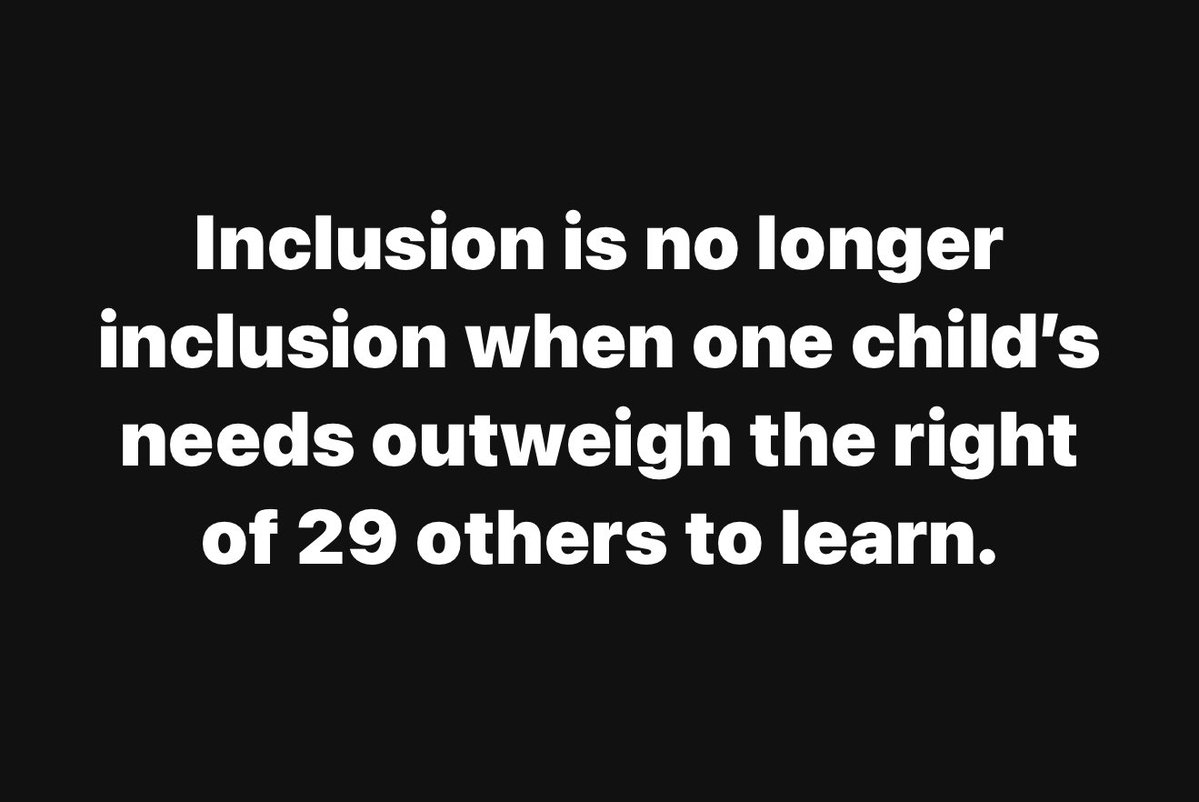
@ESzczambur93581@FixingEducation I see a difference in a student who has extra needs and one who is disruptive because they simply don’t want to be there (8th grade). I will work my tail off to help a student who is struggling for whatever reason. But the one who is purposely defiant, disruptive—remove.
Students need champions.
People who stand up for them.
Believe in them.
Encourage them.
But adults need someone in their corner too.
Encouragement doesn’t stop being useful because you’re grown.
I will never forget the day the assistant superintendent told a group of us that if we take a sick day, he better not drive past our house and see us outside. The ensuing discussion about mental health didn’t go well.
Teaching is an art, and the beauty of it is that no two artists create the same way.
One teacher’s strength is turning content into stories students never forget.
One’s strength is bringing peace to the kid who walks in carrying the world.
One’s strength is using humor to reach the student no one else can reach.
One’s strength is creating routines that give anxious kids a place to breathe.
One’s strength is sparking curiosity in students who thought they didn’t care.
One’s strength is seeing potential in every child long before they see it themselves.
Put them in the same classroom with the same standards and you will still see something completely different. That is the point. Kids do not need identical teachers. They need teachers who bring their own strength to the room.
This is why standardized evaluations miss the mark.
You cannot measure an art with a checklist.
You cannot score the very thing that makes a teacher great.
There is no magic formula for teaching.
There is only the magic each teacher carries into the room.
That is what kids remember.
That is what changes lives.
That is what cannot be replaced by scripts, programs, algorithms, or anything designed to make everyone look the same.
Teaching works because teachers bring their humanity.
And humanity has never been standard.
An article on @MarcoAndretti in Boys Life magazine started the interest in @IndyCar racing for my daughter (and me). His retirement announcement is bittersweet.