Welp, that happened faster than I predicted. Thought it would be end of 2027, then early 2027, but agentic traffic growing so fast that bots have now passed human traffic online for the first time in the Internet's history. https://t.co/2zX5bHdhsa
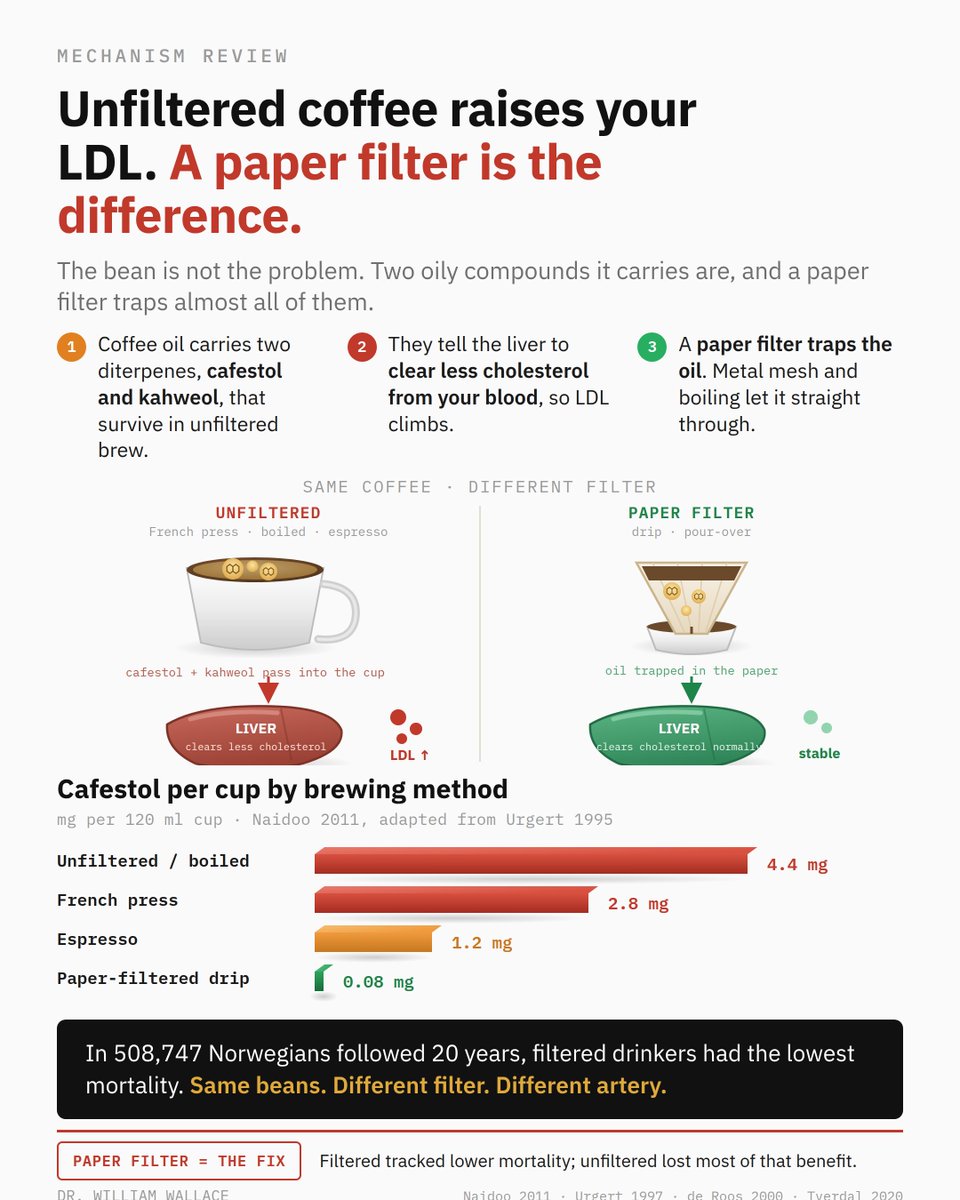
Unfiltered coffee raises your LDL cholesterol. Filtered coffee does not. The bean is identical. The only thing that changes is whether the brew passes through paper.
Coffee oil carries two diterpenes, cafestol and kahweol. They survive in French press, espresso, boiled, and Turkish coffee, and a paper filter traps almost all of them. That single step is the difference.
Once in your body, the diterpenes lead the liver to clear less cholesterol from your blood, and LDL climbs. Cafestol is one of the most potent cholesterol-raising compounds in the diet, and the effect shows up in controlled human trials, not just observational data. The diterpenes nudge triglycerides up too.
How much you get depends almost entirely on the brewing method. Per cup:
Unfiltered or boiled: about 4.4 mg
French press: about 2.8 mg
Espresso: about 1.2 mg
Paper-filtered drip: about 0.08 mg
That is roughly a 55-fold difference between an unfiltered cup and a paper-filtered one of the same coffee.
The long-term data points the same way. In 508,747 Norwegians followed for about 20 years, filtered coffee drinkers had lower mortality than people who drank no coffee at all. Unfiltered drinkers saw little or none of that benefit, and in men over 60, heavy unfiltered intake was associated with higher cardiovascular death. The risk tracked cholesterol: it grew when cholesterol was removed from the statistical model.
One honest caveat. That the LDL rise happens is well established. The exact molecular step, how the diterpenes lower cholesterol clearance, is still being worked out.
If your LDL is a concern, this is one of the easiest levers you have. You do not have to give up coffee. You just have to run it through paper.
Naidoo et al., Nutr J, 2011
Urgert et al., Eur J Clin Nutr, 1995
de Roos et al., J Intern Med, 2000
Tverdal et al., Eur J Prev Cardiol, 2020
This has quietly been a miracle month in medicine.
In the last 5 weeks we’ve got news on:
- retatrutide, the triple agonist GLP-1 from Lilly, basically melting fat and body-wide inflammation at record levels
- RevMed’s new pancreatic cancer drug showing unprecedented abilities to extend life
- small trial of a one-and-done PCSK9 gene editing therapy for slashing LDL cholesterol
- Mayo’s AI-assisted radiology showing vastly improved cancer detection
- this new therapy for metastatic solid tumors
This stuff is at varying levels of evidence. Retatrutide is ~100% on its way, other stuff needs more clinical trial data. But put it together and we’re maybe on the verge of majorly reducing the mortality of heart disease and cancer, the two leading causes of death in America.
Men who can't squeeze 70 lbs of grip by 60 have 3x the all-cause mortality risk of men who can squeeze 100+.
Not 30% higher. Three times.
Grip strength is the cheapest, most predictive longevity marker in medicine. Better than VO2 max. Better than BMI.
What do Harvard, Oxford, Stanford, Univ of Edinburgh, Mayo Clinic, Ohio State, James Cook, UCSF, and UCSD share in common?
They are all conducting trials of ketogenic diets for mental illness.
The results could change the field of psychiatry.
You don't have to inject forever.
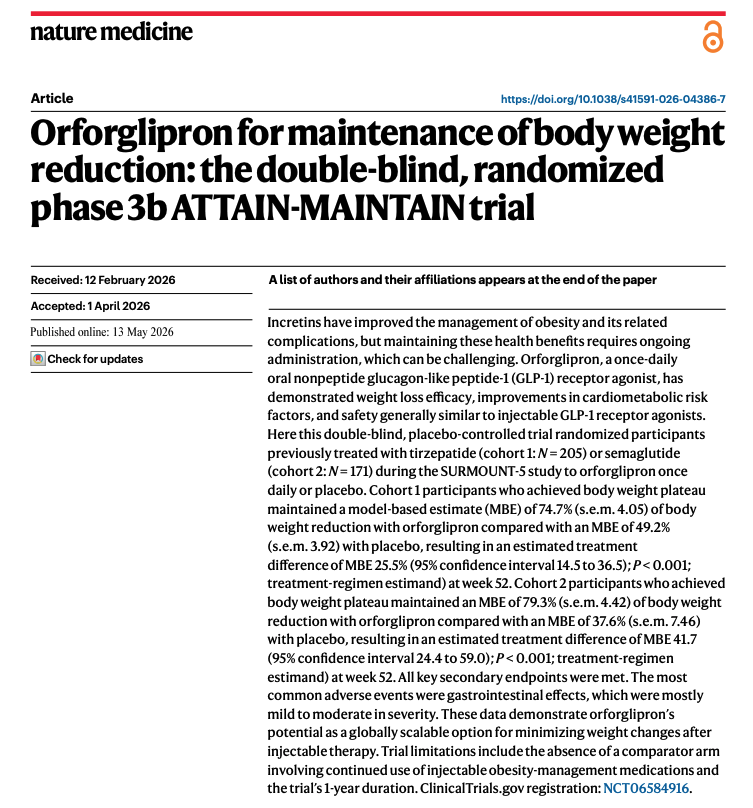
New trial: people who lost 22% on tirzepatide injections switched to a once-daily ORAL GLP-1 (orforglipron). 52 weeks later they kept ~75% of the weight off.
Same story for semaglutide → oral: ~80% maintained.
The pill era of GLP-1s is starting: 🧵
If this is true, using the best public estimates we have of LLM resource use, solving this Erdos problem took 0.6–6.3 kWh of electricity and about 3–31 liters of water.
So that is less than three almonds worth of water and the electricity equivalent of 2-20 miles of EV driving.
The new Readwise MCP server is now out of beta.
Search across every word in your library. Triage your inbox. Organize your data. Anything you can do in Readwise, your AI can now do for you.
Connect from ChatGPT, Claude, Codex, Perplexity, Poke, or any other AI app.
In some very real sense, Ozempic was invented in 1990. Pfizer ran the human trials and just never published them.
They showed it lowered blood glucose in diabetics, slowed gastric emptying, and killed hunger; the same 3 things that make Ozempic work today.
The joint venture agreement said internal data stayed internal, and that was that. Pfizer killed the program in 1991. The reasoning, as far as I can tell, was that nobody would ever want an injectable diabetes drug besides insulin.
So, the license went back to the hospital in Boston that held the patents.
Novo picked it up in 1992 and spent the next two decades building liraglutide, then semaglutide.
It's insane that data sat in a filing cabinet for 30+ years.
I only know this because Jeffrey Flier, one of the Harvard scientists in the room, finally wrote it up. He's in his late 70s and didn't want the history to die with him.
This makes you wonder what else is in those filing cabinets.
Ozempic could've existed 27 years ago.
I’ve had very good results running autoresearch with local qwen 3.6 26b model as long as I had a simple vibed pi “advisor” extension that allowed it to periodically ask GPT 5.5 for ideas. I think this direction has a lot of merit.
You vibecoded a website somewhere other than Replit?
That’s not wise, but okay… we’re going to let you import it and get a free mobile app.
Yes, FREE MOBILE APP!
People at major AI labs (using internal models) 3-4 months ahead of startup silicon valley engineers
SV founders/eng 3-6 months ahead of NY
NY founders/eng 6-12 months ahead of rest of world
Most people have no idea how fast AI shifting as 1-2 years behind SOTA
"The future is here, just not equally distributed" - Robert Heinlein
Successes by age…
Age 4…not peeing in your pants
Age 12…having close friends
Age 16…having a drivers license
Age 18…having sex
Age 35…having money
Age 50…having money
Age 60…having sex
Age 70…having a drivers license
Age 75…having close friends
Age 80…not peeing in your pants
Q1 was a strong start to the year for @ServeRobotics.
We delivered nearly $3 million in revenue, above expectations, up almost 7X year over year and 3.5X from last quarter.
The part I’m most proud of is what’s behind that growth: Compared to Q1 last year, our deployed fleet is 7X larger, daily active robots are 10X larger, and daily supply hours are up nearly 13X. We’re activating robots faster and getting more out of every robot in the fleet.
With @DiligentRobots, Serve now spans 44 cities across 14 states, with nearly 2M deliveries completed across sidewalks and healthcare.
This is what Physical AI looks like in practice: real robots, operating in the real world, at commercial scale, making lives better.
I’m heading into our Q1 earnings call now to share more about what these results mean for the year ahead. See you there!
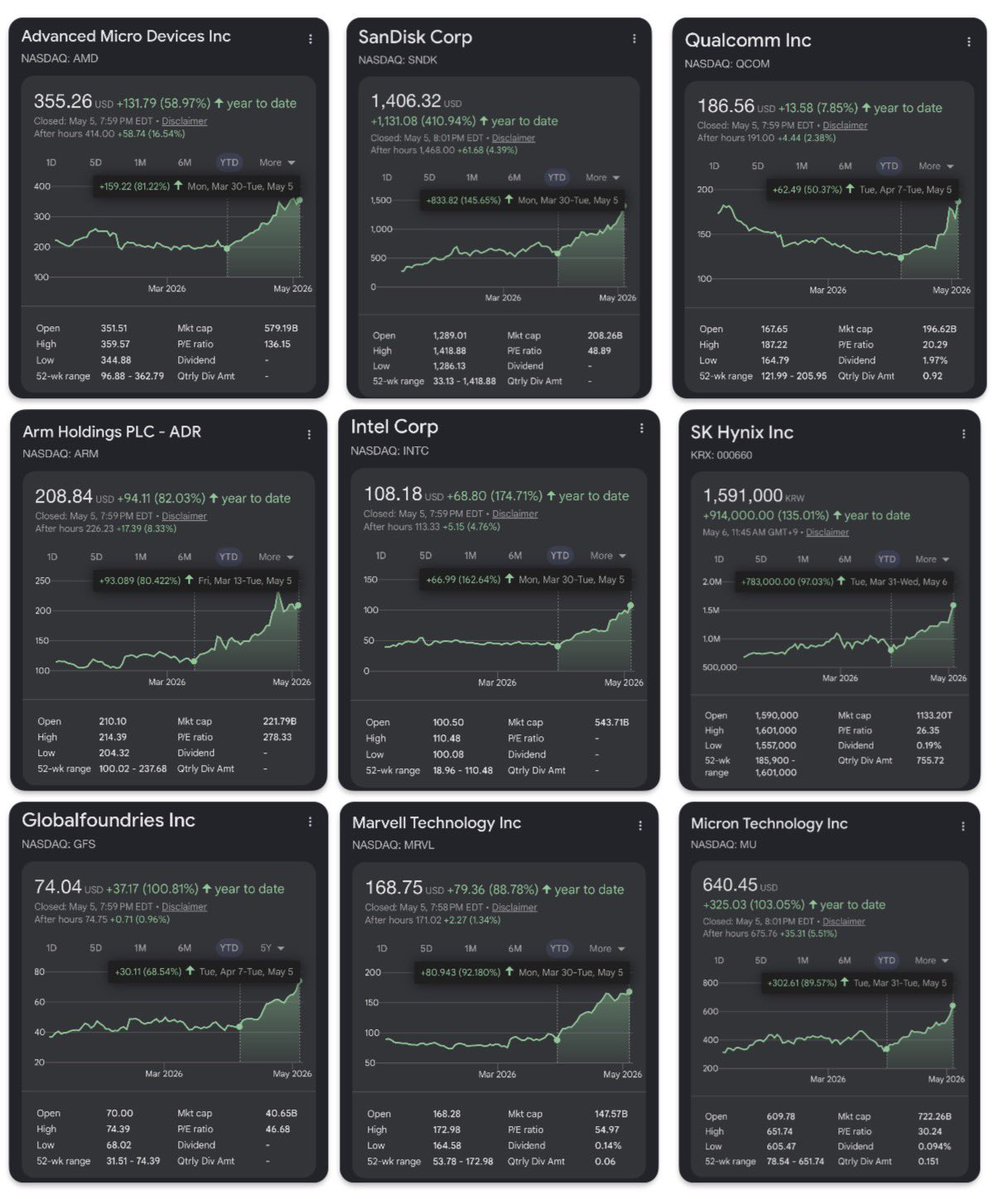
Almost every single semi stock in the has gone 2x in the last month.
More enterprise value created in non-Nvidia publics in the last month than all big labs this year.
I predict that xAI (now SpaceXAI) will quickly move away from training their own in-house models,
and Grok will stop competing to be a top-ranked LLM.
They will focus on being a hardware/ compute provider and leave the competitive models to others (their customers.)
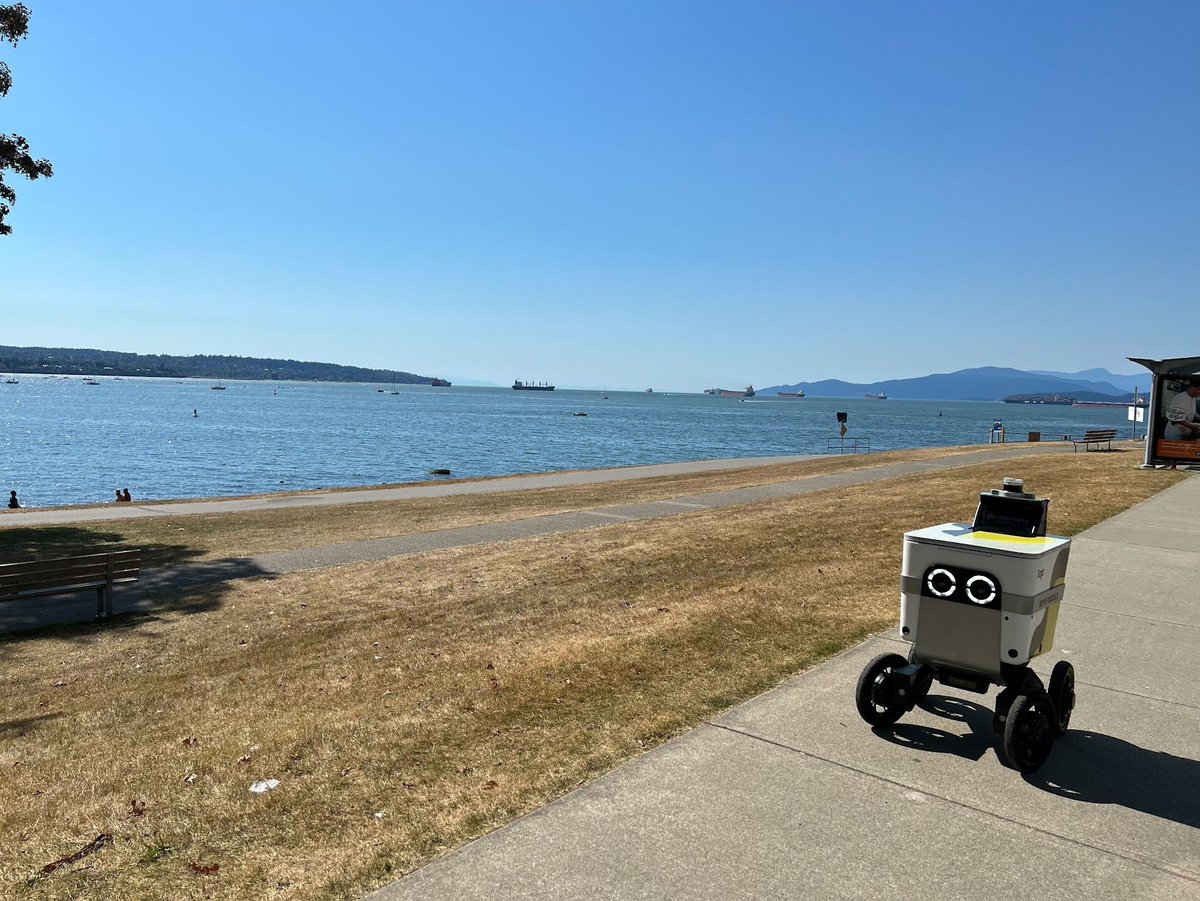
Tomorrow, @CityofVancouver is voting on a pilot for autonomous delivery robots, including @ServeRobotics. They should approve it.
This is personal. Vancouver is my home, and it’s where I was inspired to build Serve. It's where I fell in love with robotics. It's also where a lot of Serve's engineering has taken place.
But this vote is bigger than me. It’s an opportunity to support local businesses, reduce congestion on our streets, and make our city a great place to live.
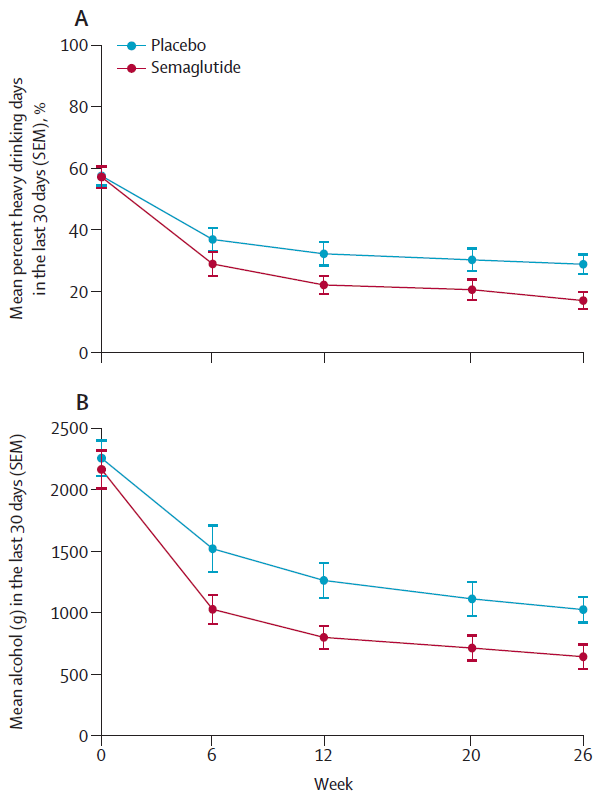
Alcohol use disorder accounts for 5% of deaths worldwide annually, and there is an urgent need for new treatments.
A new study found that GLP-1 reduces heavy drinking days in treatment seeking people with alcohol use disorder and obesity: https://t.co/MhUTBf9G7h
For 50 years, software engineering ran on code rationing. Writing code was expensive, so we rationed it carefully through roadmaps, RFCs, prioritization meetings, and scope reviews.
This created a role: the No Engineer. No, that won't scale. No, we don't have bandwidth. No, that's out of scope. No, we need a design doc first. The No Engineer was valuable for 50 years. Every "no" saved real money. Their judgment was the rationing system.
LLMs will be the end of code rationing. Code is cheap now. And while the No Engineer is explaining why something can't be done, the Yes Engineer has already shipped three versions of it.
If you're a Yes Engineer, the next decade is yours.