A filmmaker doesn’t know the role of an art critic? You think they exist only to tell the audience in advance whether to watch it or not? Even a 2 minute google search would be helpful for you.
Film critic: "Bobby Deol's Bandar remains captive to its own parochial provocations."
Audience: "Was it fun to watch?"
Film critic: "The director's subconscious yearning for socio-political redemption is—"
Audience: "SEEDHA SEEDHA BOLO YAAR."😅😅😅
@NonsensicalNemo There is another logical fallacy called Argumentum ad logicam (the fallacy fallacy) where one assumes a conclusion is false simply because the argument supporting it contains a fallacy.
It’s not myth-making for one power center (spymaster/regime/civilisation). It promotes all of them by presenting them aligned.
Of course, your readings may vary depending on your availability heuristic, but the maker’s project does not. It cheers regime and civilisation alike.
Gig workers absolutely deserve better, but he is right in identifying the core of this outrage. Much of the urban elites was totally unaware of the unemployment realities and how little many people earn despite intense hard work, unless they met their delivery partner + (1/3)
Last one on this topic, and I have been holding this in myself for a while.
For centuries, class divides kept the labor of the poor invisible to the rich. Factory workers toiled behind walls, farmers in distant fields, domestic help in backrooms. The wealthy consumed the fruits of that labor without ever seeing the faces or the fatigue behind it. No direct encounter, no personal guilt.
The gig economy shattered that invisibility, at unprecedented scale.
Suddenly, the poor aren't hidden away. They're at your doorstep: the delivery partner handing over your ₹1000+ biryani, late-night groceries, or quick-commerce essentials. You see them in the rain, heat, traffic, often on borrowed bikes, working 8–10 hours for earnings that give them sustenance. You see their exhaustion, their polite smile masking frustration with life in general.
This is the first time in history at this scale that the working class and consuming class interact face-to-face, transaction after transaction. And that discomfort with our own selves is why we are uncomfortable about the gig economy. We want these people to look our part, so that the guilt we feel while taking orders from them feels less.
We aren't just debating economics. We are confronting guilt. That ₹800 order might equal their entire day's earnings after fuel, bike rent, and app cuts. We tip awkwardly, or avoid eye contact, because the inequality is no longer abstract. It's personal.
Pre-gig era, the rich could enjoy luxury without moral discomfort. Labor was out of sight. Now, every doorbell ring is a reminder of systemic inequality. That's why debates explode. It's not just policy. It's emotional reckoning. Some defend the system (“they choose it”), others demand change (“this isn't progress, its exploitation”).
And here’s the uncomfortable twist: the unsaid ask of clumsy ‘solutions’ isn’t dignity. It is about returning to invisibility.
Ban gig work and you don’t solve inequality. You remove livelihoods. These jobs don’t magically reappear as formal, protected employment the next day. They disappear, or they get pushed back into the informal economy where there are even fewer protections and even less accountability. Over-regulate it until the model breaks, and you achieve the same outcome through paperwork instead of slogans: the work evaporates, prices rise, demand collapses, and the people we claim to protect are the first to lose income.
And then what happens?
The rich get their old comfort back. Convenience returns without faces. Guilt dissolves. We go back to clean abstractions and moral posturing from a distance. The poor don’t become safer, they become invisible again: back in cash economies, back in backrooms, back in shadows where regulation rarely reaches and dignity isn’t even debated.
The gig economy just exposed the reality of inequality to the people who previously had the luxury of not seeing it. The doorbell is not the problem. The question is what we do after opening the door.
Visibility is the price of progress. We can either use this discomfort to build something better (which we keep doing continuously as delivery partners are our backbone), or we can ban and over-regulate our way back into ignorance. One of those choices improves lives. The other simply helps the consuming class feel virtuous in the dark.
who was delivering that item for 30 odd rupees. Unable to comprehend why would anyone work for this small amount, and with a lazy and easy reading of the situation, they came to the conclusion that delivery company is exploiting the workers by paying them so little. (2/3)
@kamleshksingh Tau, it looks like this is an edited video where video speed has been increased to mislead. Though some people are certainly running, which is quite evident in a normal speed video as well.
The man steered the country of a billion away from the brink of bankruptcy. That, however, wasn't his biggest achievement. Keeping his dignity and decency intact, in spite of being surrounded by the dirtiest in the dark world of Indian politics, was. Fare well, Dr Manmohan Singh.
@SiddharthKG7 A different numeric system (which doesn’t include zero as a number) would create a lot of constraints for any researcher. All modern scientific advancements started after the adoption of zero by Europeans in their numeric system.
@SiddharthKG7 the larger calculations, provided foundation for most sophisticated algebraic system, and led to the development of all later mathematical and physics development.
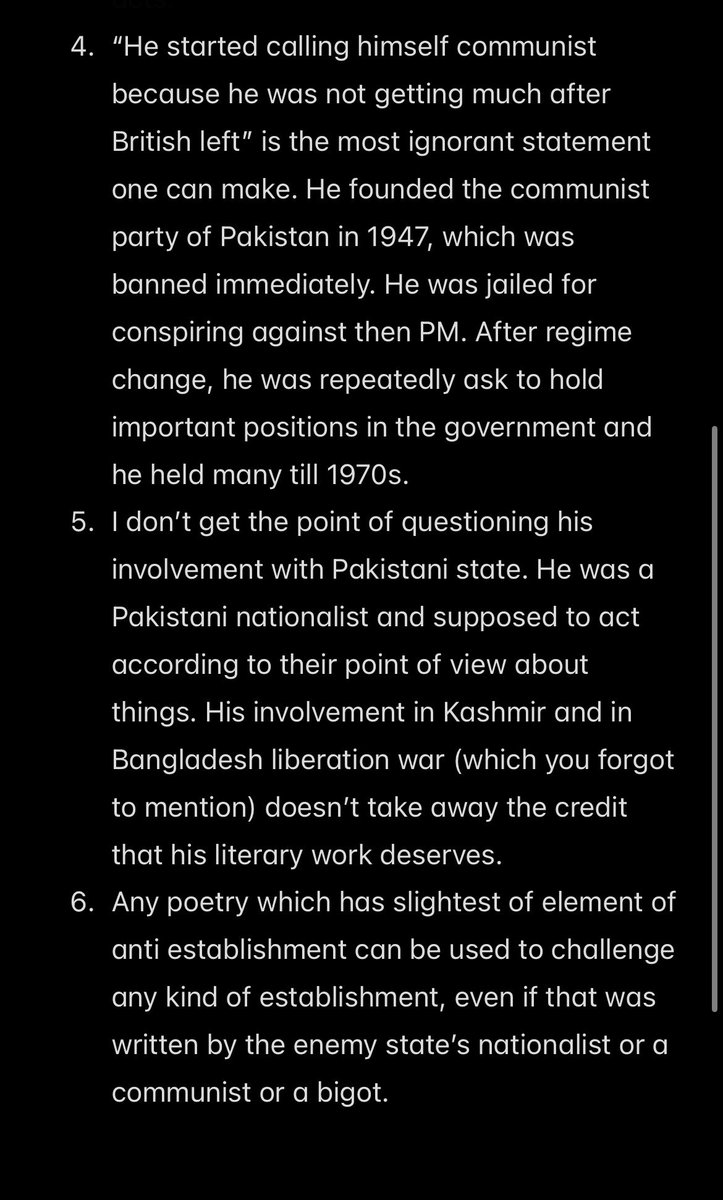
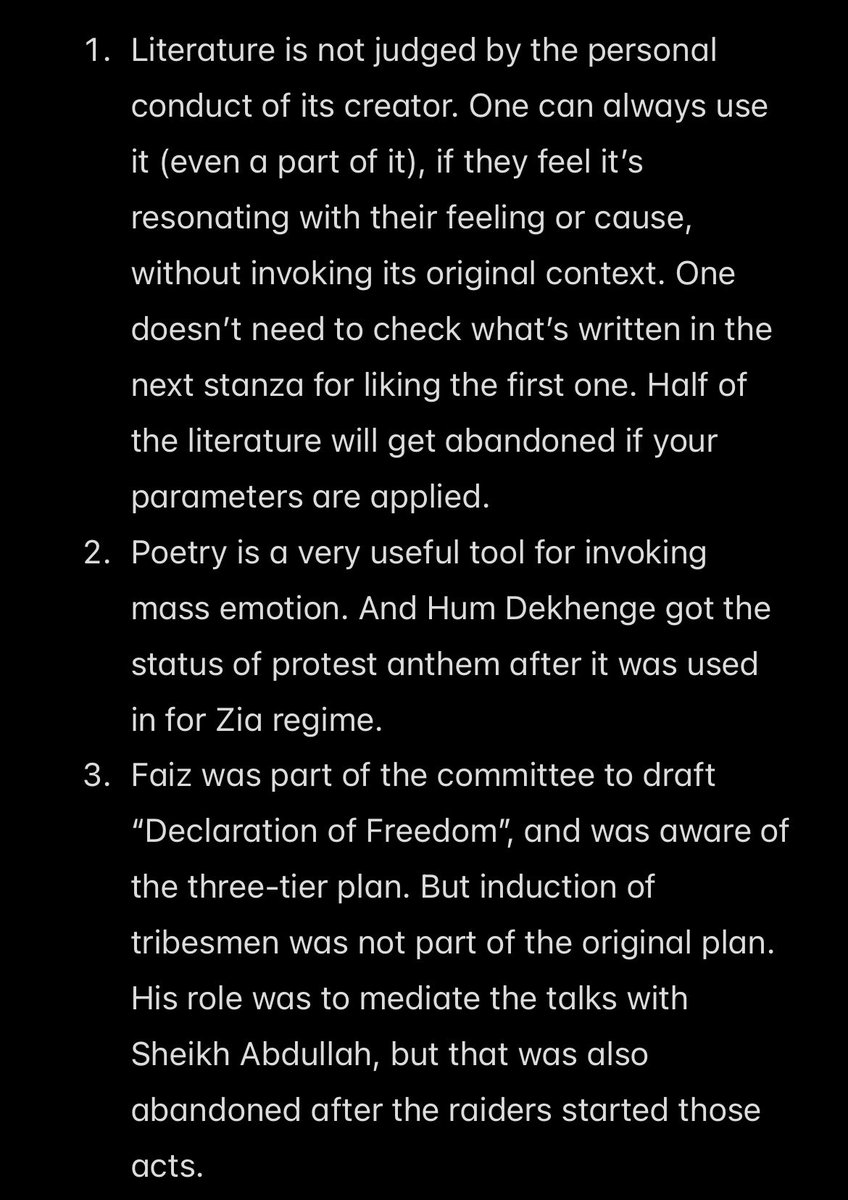
I am not here to defend communists or Faiz, but your post is filled with so many loose statements that it shouldn’t be taken seriously. Let me point out the flaws and factual errors one by one.
Faiz Ahmed Faiz was there when the raiders entered Kashmir in 1947-48 and started r@ping, plundering, killing the people. Took women from J&K and sold them like slave markets in Pakistan. Faiz was in fact one of the planners of that “rebellion” in Kashmir and “declaration of independence”.
This 2 rupees poem cannot change his bigoted life.