Changes in our bodies from aging, chronic pain, or illness can bring real grief. One psychological approach to coping with these changes is to explore why the loss hurts, then look for new ways to fulfill the purpose it served in your life. Read more:https://t.co/5jZjxZvKmA
As a resident I was intrigued by stats linking panic with cardiac disorders (mitral prolapse/tachycardia). 20 yrs later we finally could explore this! (w/ @HsuehBrian@ritchie_chen). William James on the right track: “we feel...afraid because we tremble”. https://t.co/LbVOEl1Sep
This sounds like a philosophy department term, and it partly is, but it has very practical implications for how we think about behavior, suffering, and change.
Functional contextualism is the philosophical foundation of ACT. It holds that the meaning and function of any event, including a thought, a feeling, or a behavior, can only be understood in its context. Nothing means the same thing in all situations. The same behavior can be healthy in one context and harmful in another. The same thought can be empowering in one context and paralyzing in another. So rather than asking "is this thought true?" we ask "what does this thought do, in this context, for this person, in the service of this life?"
For example, "I'm not good enough" is not a thought to be evaluated for accuracy. It's a thought to be evaluated for function. Is holding it tightly moving this person toward the life they want, or away from it? That's the question that matters.
#psychologicalflexibility
#ACT
#ACTtherapy
Every person I've ever worked with carries one of these, including me. Most people don't know they're carrying it, or they know they have one but don't realize how much it's running the show.
Your self-story is the ongoing narrative your mind constructs about who you are: your strengths, your failures, your limitations, your history, and what those things mean for your future. It's not entirely wrong; it contains real experiences. But it's also not entirely right, and the problem isn't its accuracy so much as its rigidity. When you're fused with your self-story, you stop experiencing life directly and start experiencing everything through the filter of the story.
Someone with a self-story of "I've always struggled with relationships" will interpret ordinary moments of relational friction as confirmation of that story, ignore moments of genuine connection, and behave in ways that make the story more likely to keep being true. The story becomes self-fulfilling, not because it was accurate, but because fusion with it shaped every action.
#psychologicalflexibility
#ACT
#ACTtherapy
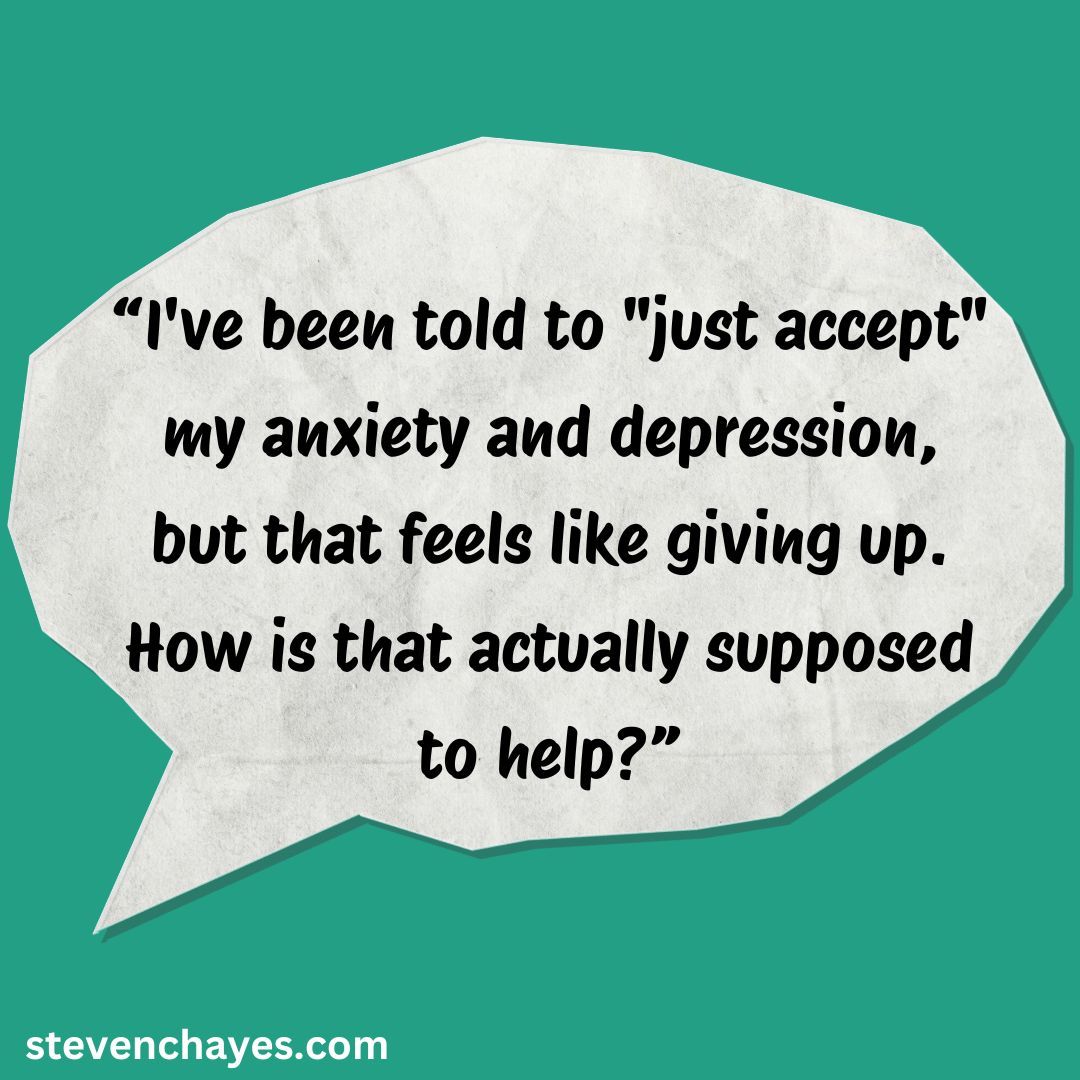
I understand why it sounds that way, and I want to be precise here because this distinction matters a great deal.
Acceptance doesn't mean you agree with what's happening or that you're done trying to build a better life. It means you stop adding unnecessary suffering on top of the pain that's already there. When you're in pain and simultaneously fighting the fact that you're in pain, telling yourself you shouldn't be feeling this, that something is wrong with you for feeling it, you're carrying two burdens instead of one. Dropping the second one doesn't make the first disappear. But it frees up a surprising amount of energy, and that energy can go somewhere useful.
What question does this raise for you? Write it below.
#psychologicalflexibility
#ACT
#ACTtherapy
This is one of the most important distinctions I make when introducing ACT to people who are skeptical, and rightfully so, about the idea of accepting their situation.
Acceptance does not mean approving of what is happening, agreeing that it should be happening, or giving up the intention to change it. It means acknowledging that it is happening right now, without adding unnecessary resistance on top of the reality. You can accept that you are in pain and still be working to address the source of that pain.
Someone going through a difficult divorce can accept the grief they're feeling without deciding that the divorce was a good thing or that they shouldn't feel grief. Acceptance simply means: this is what's here right now, and I'm not going to waste energy fighting the fact that it's here. That freed-up energy can then go toward actually navigating the situation.
#psychologicalflexibility
#ACT
#ACTtherapy
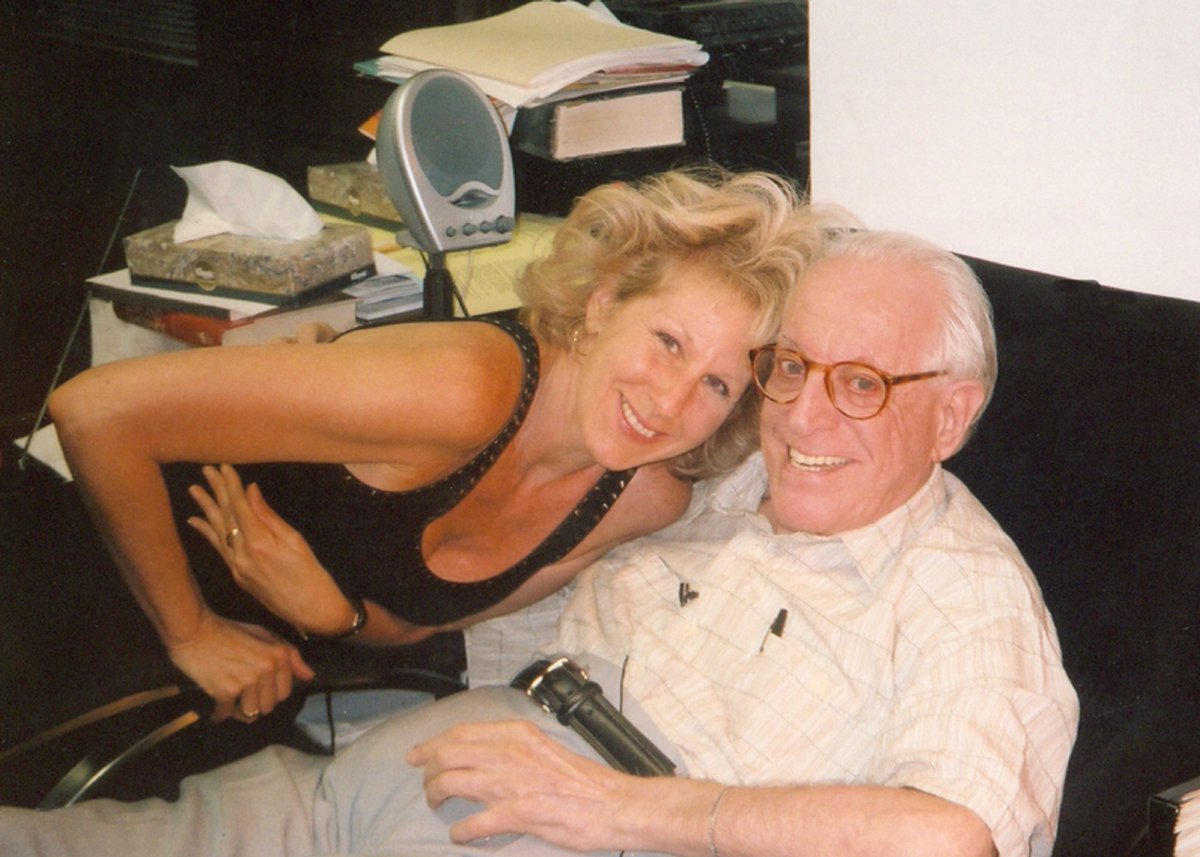
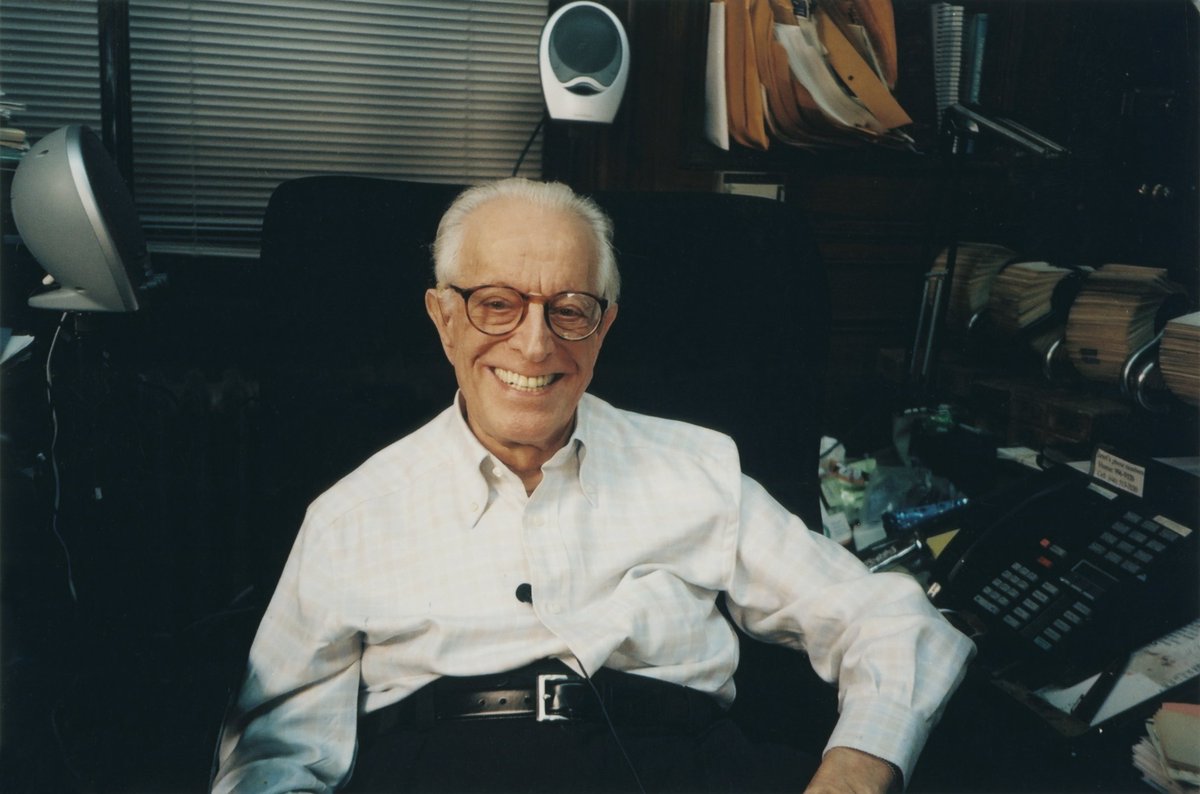
If you would stop, really stop, damning yourself, others, and unkind conditions, you would find it almost impossible to upset yourself emotionally - about anything. Yes, anything.
Dr Albert Ellis
“I have been accused of a habit of changing my opinions in philosophy and, in so far as this is true, the dictionary will enable readers to find it out. I am not myself in any degree ashamed of having changed my opinions. What physicist who was already active in 1900 would dream of boasting that his opinions had not changed during the last half century? In science men change their opinions when new knowledge becomes available; but philosophy in the minds of many is assimilated rather to theology than to science. Where nobody knows anything, there is no point in changing your mind.
But the kind of philosophy that I value and have endeavoured to pursue is scientific in the sense that there is some definite knowledge to be obtained and that new discoveries can make the admission of former error inevitable to any candid mind. For what I have said, whether early or late, I do not claim the kind of truth which theologians claim for their creeds.
I claim only, at best, that the opinion expressed was a sensible one to hold at the time when it was expressed. I should be much surprised if subsequent research did not show that it needed to be modified. I hope, therefore, that whoever uses this dictionary will not suppose the remarks which it quotes to be intended as pontifical pronouncements, but only as the best I could do at the time towards the promotion of clear and accurate thinking. Clarity, above all, has been my aim.”
— Bertrand Russell
Robert Sapolsky is a Stanford neuroscientist who proved chronic stress is the silent killer doctors ignore.
On Chris Williamson's podcast, he revealed 10 "normal" habits you do every day that wreck your sleep, mood, and nervous system:
1) Replay conversations in your head
Recovery is a superpower... A thread...
1/There's a moment most aging athletes eventually hit.
You finish a routine workout, but the next day, something is off.
You're not just tired. You're slower. Less inclined to train. Your body is responding differently to the same stimulus you've used for years.
That change might not be what you think...
One of the biggest myths about exercise?
That you need long, intense workouts to see real results, this belief alone stops a lot of people from even starting.
Stop waiting for the “perfect workout” you’ll never start, because science shows your health can transform through small daily movements, turning a few minutes at a time into powerful, real, lasting results
This visual shows how small bursts of exercise throughout your day can boost heart, brain, and metabolic health, proving that short, consistent movement beats long, occasional workouts
Lifting weights for belly loss a 'marketing myth'? Hyderabad neurologist shares the best way to lose fat
Synopsis
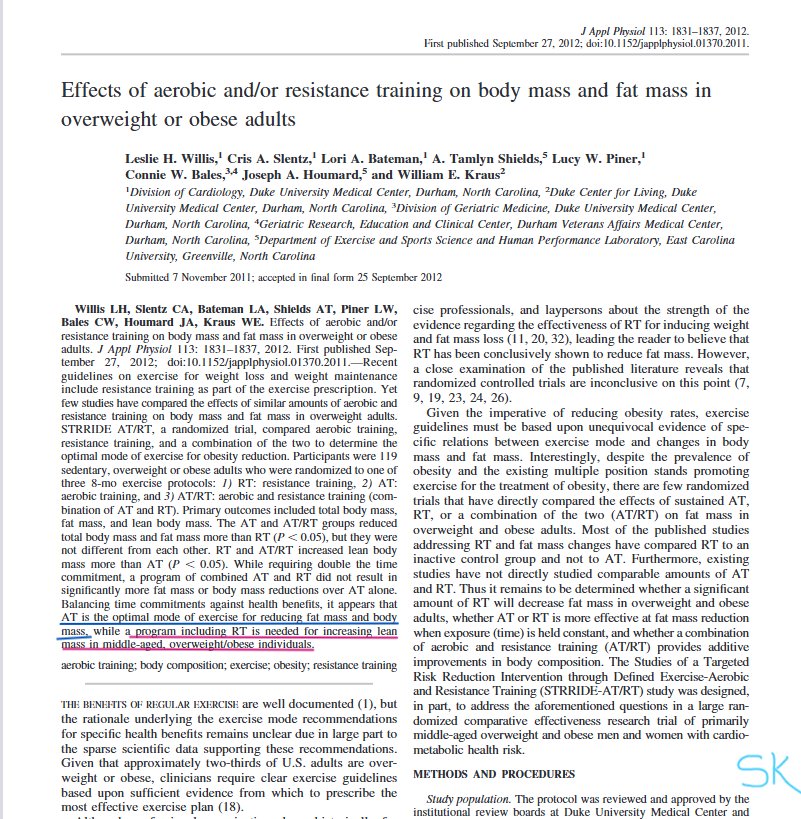
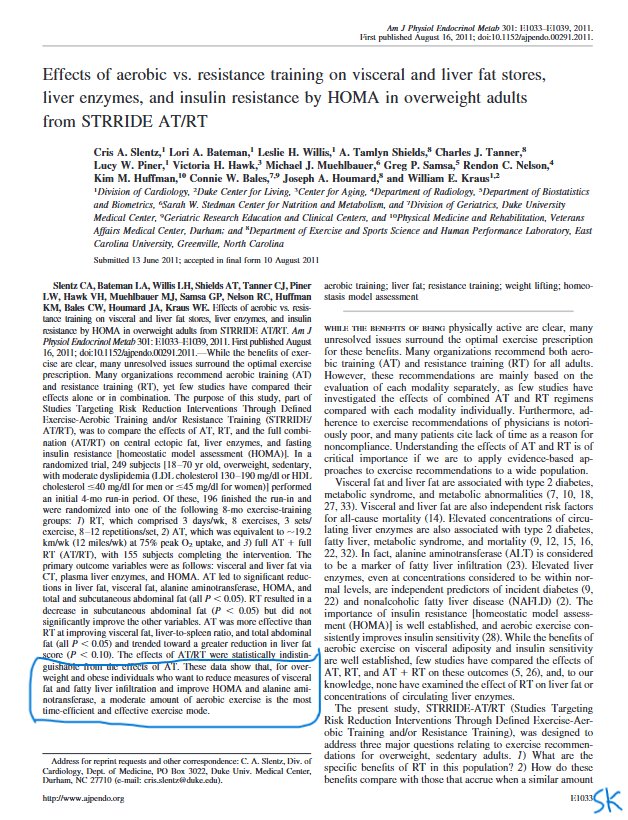
Neurologist Dr. Sudhir Kumar debunks the myth that heavy lifting alone melts belly fat, stating aerobic exercise is more effective for fat loss, especially visceral fat. Research supports this, showing cardio leads to greater fat reduction. A combined approach prioritizing cardio for fat loss and weight training for muscle maintenance is recommended.
An informative article published in the Economic Times has cited my recent post.
https://t.co/3E1dhYjUZl
@EconomicTimes@ETPanache
If your goal is fat loss, the gym bros have been misleading you.
Lifting weights is essential for health, but if you believe it is the best way to lose fat, especially visceral (belly) fat, you have fallen for a marketing myth.
The Evidence (The STRRIDE Trial & Beyond):
One of the most comprehensive studies on this (Duke University) compared aerobic training, resistance training, and a combination.
The results were clear:
🔸Aerobic Training led to significantly more fat loss and a greater reduction in visceral fat than weight training.
🔸Resistance Training is great for building lean mass, but it had zero significant impact on decreasing fat mass or total body weight when used alone.
🔸Visceral Fat: Runners consistently show lower levels of internal organ fat, which is the most dangerous type for metabolic health.
The Harsh Reality:
You can "chase the pump" for years and still carry a stubborn belly.
Why is it so?
Because the calorie expenditure of a heavy lifting session is often overcompensated for by increased appetite and decreased movement throughout the rest of the day.
Meanwhile, regular runners/cardio enthusiasts:
✔Burn more calories per minute of effort.
✔Experience better lipid oxidation (fat burning).
✔Accumulate significantly less visceral fat as they age.
Why won’t the fitness industry tell you this?
🔸"Lift heavy to get shredded" is a sexier sell. It sells supplements, gym memberships, and expensive coaching programs.
🔸"Go for a 45-minute run 4 times a week" is free, simple, and effective, but it doesn’t move product.
Reality Check:
✅Strength Training: Builds the "engine" (muscle) and preserves bone density.
✅Running/Cardio: Actually burns the "fuel" (fat).
If fat loss is your #1 goal:
1. Prioritize Zone 2 & Aerobic sessions. This is your primary fat-loss tool.
2. Use Weights as the Support. 2–3 days a week is enough to maintain muscle while the cardio does the heavy lifting for fat loss.
Bottom Line:
The "Cardio kills gains" era is over. If you are skipping the track and wondering why your waistline is not budging despite hitting PRs on the bench press...You are playing the wrong game.
Dr Sudhir Kumar X:@hyderabaddoctor
(Disclaimer: Information provided here is general in nature. Discuss individual exercise regimen with your fitness trainer and physician.)
The exercise prescription most of us learned was built around volume: 150 minutes a week, any movement counts, accumulate time and the benefits follow. For most chronic diseases, that serves well but for dementia and cardiovascular disease, data from nearly half a million people suggest that how hard you push matters more than how long you go. Let me explain. 🧵
The moment the West decided evidence no longer mattered — if it got in the way of utopia.
Melanie Phillips (former Guardian journalist):
“Objective evidence was cast aside because it was too inconvenient. The very idea of reason and rationality was dismissed.
All these ideologies — multiculturalism, lifestyle choice, deep green environmentalism, moral relativism — were utopian. They promised perfection. Anyone who brought facts against them wasn’t just wrong… they were evil.”
Result?
- Evidence became “right-wing”
- Dissenters were bullied, ostracized, fired, threatened
- The Guardian itself became the heart of this ideological machine… until she fell foul of it.
When ideology is sacrosanct and the world must be perfected, facts become the enemy — and truth-tellers become heretics.
Have you watched this shift in real time — where inconvenient evidence gets labeled “hate” or “misinformation”?
Which sacred ideology do you think has done the most damage to open debate?
Your honest take 👇
Exercise Literally Rewires Your Brain
Science just confirmed what your body already knows.
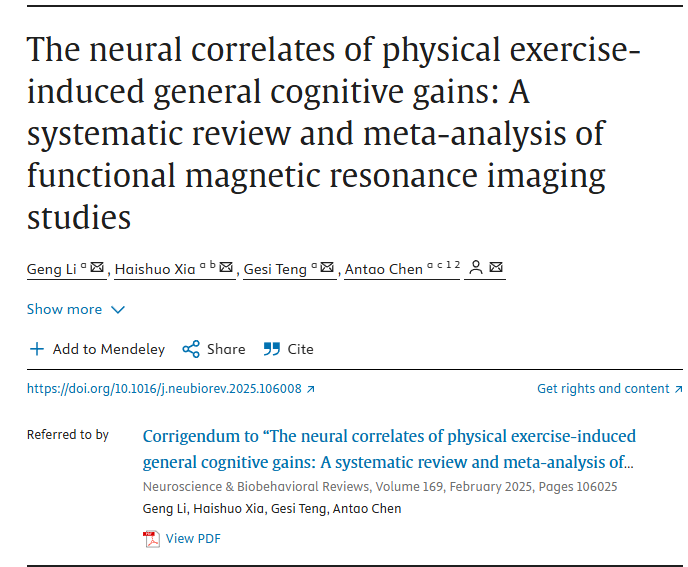
Here’s what a massive meta-analysis (52 studies, 1503 people) found:
1. Exercise boosts cognitive performance
• Measurable improvement (Hedges’ g = 0.271)
• Works across multiple thinking skills, not just one
2. Your brain becomes more active
• Strongest changes in the bilateral precuneus
• A key region for attention, memory, and self-processing
3. More brain activation = better thinking
• Direct positive link between brain activity and performance
• Not just correlation, but functional improvement
4. How you exercise matters
• Intensity affects brain response
• Consistency (adherence) strengthens results
• Social workouts may enhance brain engagement
5. This supports “whole-brain” benefits
• Exercise improves multiple cognitive domains
• Backed by real neural evidence, not just behavior
Move your body, upgrade your brain. Every workout is a neurological investment.
American College of Sports Medicine Position Stand. Resistance Training Prescription for Muscle Function, Hypertrophy, and Physical Performance in Healthy Adults: An Overview of Reviews
https://t.co/7g6ZCDn44K
NEW ACSM Position Stand-- Resistance Training Prescription for Muscle Function, Hypertrophy, and Physical Performance in Healthy Adults: An Overview of Reviews:
Graphic via mackinprof📸
Get fitter, think sharper, your brain upgrades with exercise
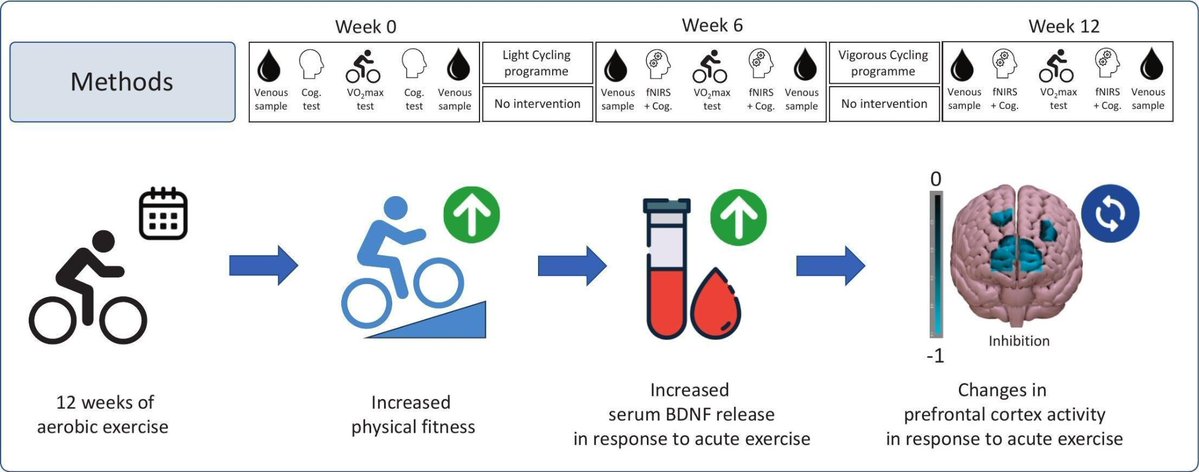
New research from UCL shows fitness doesn’t just help your body, it amplifies your brain’s response to exercise.
Key findings:
1. Just 15 minutes of moderate to intense exercise triggers BDNF, a protein that supports new brain cells and connections
2. After 12 weeks of training, participants released significantly MORE BDNF from the same workout
3. Higher fitness (VO2max) = stronger brain boost after exercise
4. Enhanced activity seen in the prefrontal cortex, improving attention and inhibitory control
5. Baseline brain levels stayed the same, but the response to exercise became more powerful
What this means:
The fitter you get, the more your brain benefits from every single workout
Train your body, upgrade your brain 🧠