Lots in here on Amazon, including its ability to reproduce class composition across America, its positioning no longer as a disruptive innovator but as socially essential, and its quiet-part-out-loud defence of tyranny
@trashfuturepod@machinekillspod
https://t.co/yJ44Gt4lEP
Why do privacy concessions won from Big Tech feel hollow?
Why have policymakers outsourced all discovery of social potential of digital infrastructure to the tech sector?
@evgenymorozov on the lost opportunity of building a creative, democratic internet
https://t.co/rduw53UL2H
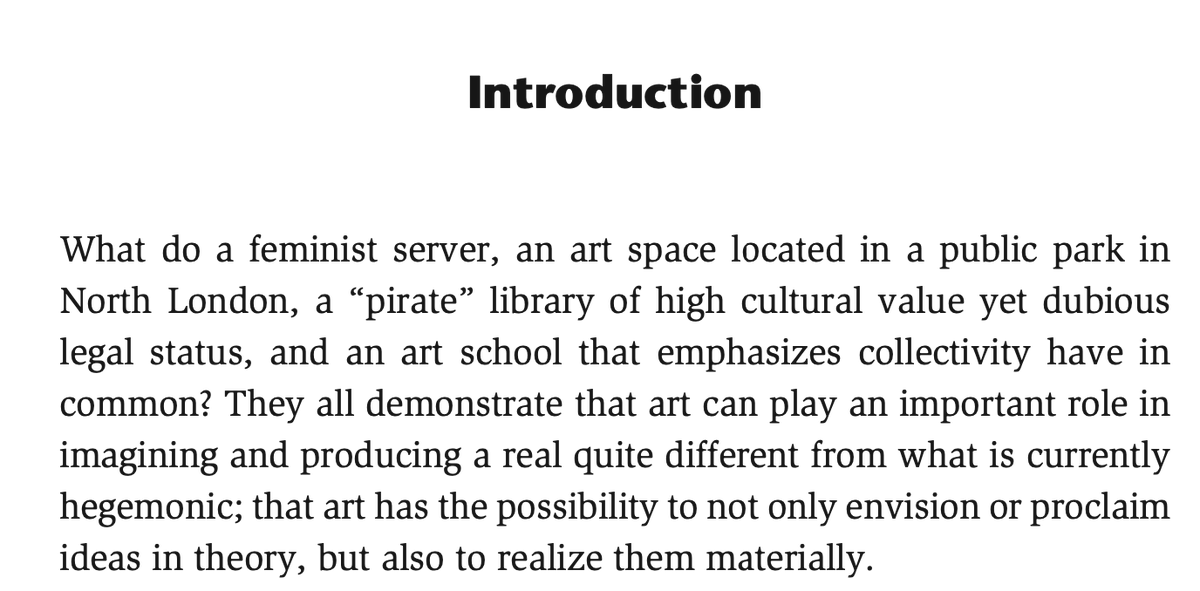
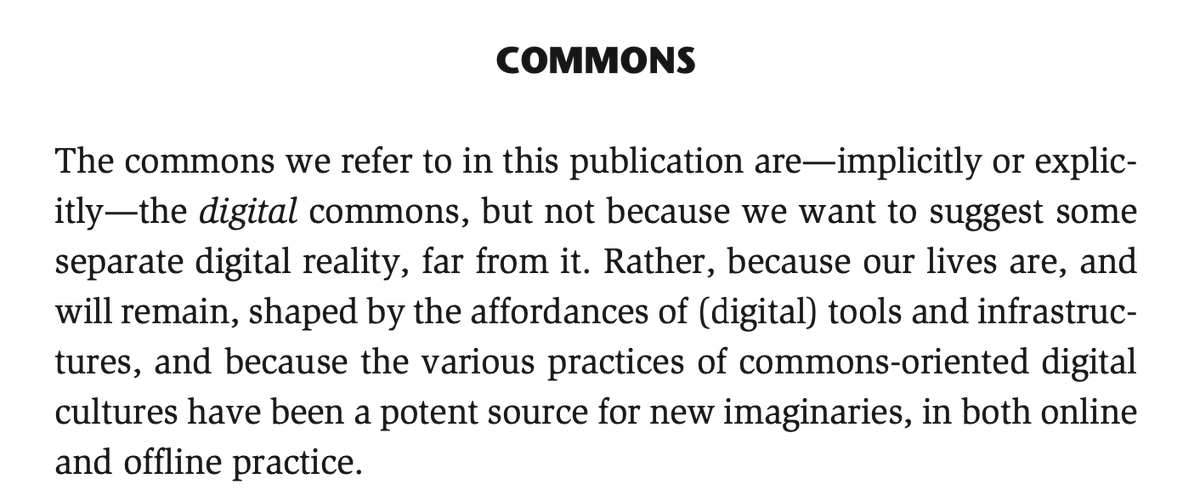
Aesthetics of the Commons, an open-access book, that looks at different artistic and culture projects drawn loosely from the (post) digital
https://t.co/XhA9FgEkAk
As we argue in Cyber-Waste, there is no distinction between the digital and real worlds...the way we organise the so-called digital economy is hugely material...looking forward to this book
🚨I’M WRITING A BOOK🚨
On one of the most fascinating topics of the modern era: our reliance on a few crucial materials.
We like to think we’re no longer reliant on physical stuff; that we’ve transcended the material world.
My argument is we’re more reliant on it than ever before
Cyber-Waste looks as how digital infrastructures change and shape physical environments, often out of sight...
Blockchain Chicken Farm by @xrw is an amazing, unique, illuminating book that subverts assumptions on technology and innovation in rural China
https://t.co/UqXyjW0ttV
Interested in the impacts of digital technology, inequality, exploitation and waste on societies and the environment?
Check out Waste Tide, by @ChenQiufan
https://t.co/cYAYxpZb44
And that’s actually the just the carbon footprint relating to one third of the entire Bitcoin network. If you add the rest, a single BTC transaction is easily equivalent to more than a million VISA transactions in terms of emissions.
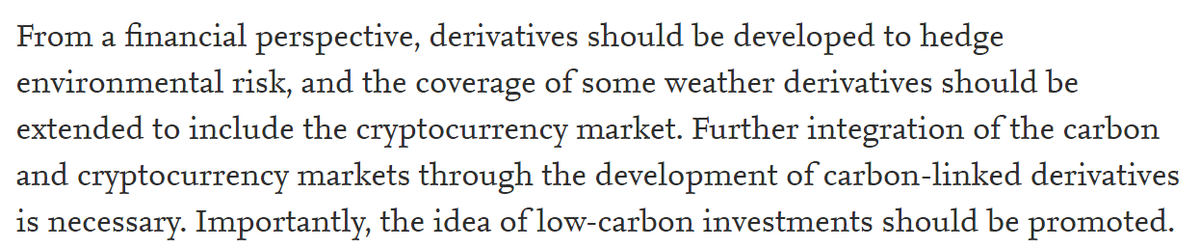
The environmental costs of Bitcoin might be high. But one can always count on the economists to come up with ingenous solutions! Like this new paper, which proposes to interlink markets for derivatives and those for crypto. What could possibly go wrong? https://t.co/pmg0rdfQth
As the network grows, the problem isn’t just carbon emissions. It’s the chips we need for everything else, local blackouts, water pollution, noise levels, electronic waste, sanction evasion and even CI services. You might not own Bitcoin, but you will have to deal with the damage
'Stream if you wanna die faster'
Talk on the environmental costs of streaming and options for a positive data future that doesn't 'cost the planet'
from @Container_Mag, with @TeresaHacks @Sharlene_Gandhi @mel_hogan@jennyhbren and Corinne Stuart
https://t.co/6XKfaP0w0W
This is a great talk on alternative data governance and alternative data economies, critical questions for Cyber-Waste.
With provocations on rethinking data in the platform world from @salome_viljoen_, @KatharinaPistor, hosted by @AdmsCentre
https://t.co/bvLq61irFX
The politics of Waste, food waste, medical waste, construction waste, e-waste, and more
Great talk with on @wortfm_music with Patty Peltekos and @kmoneill2530 on her book Waste, one of the world's last resource frontiers
via @syllabus_tweets
https://t.co/S4YiBNPUPr
Brine to Batteries: the extractive frontiers of the global energy transition
Fantastic talk by @triofrancos on the politics of the transition to renewables, looking at the global processes and local sites of lithium extraction, production and supply.
https://t.co/mn5CDrgrl0
What can we learn by replacing the vague 'infrastructure' with 'means of production' or 'means of computation' to look at the intesne concentration of ownership and control of the internet?
Great piece by @lifewinning for @ProjectReboot
https://t.co/KwbyWtIpBi