“SPAIN SHOULD RETURN CEUTA TO MOROCCO.”
Sure. Let’s start the clock in 711 and see who owes who:
In 711, a Berber commander named Tariq ibn Ziyad crossed from North Africa and landed in Spain. His launch point was Ceuta.
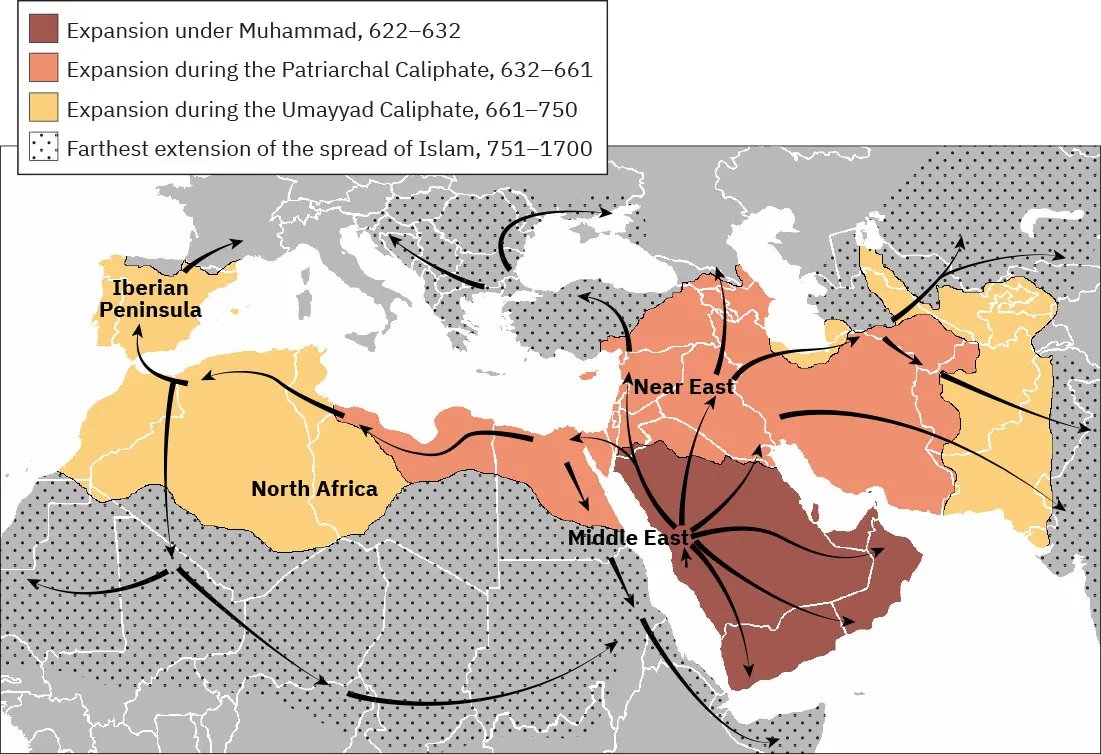
Within seven years almost the entire Iberian Peninsula was under Arab occupation, governed from Damascus. By 732 the Arab raiders were even at Tours, deep inside France.
Taking it back took 781 years: Covadonga 722. Toledo 1085. Lisbon 1147. Las Navas de Tolosa 1212. Córdoba 1236. Valencia 1238. Seville 1248.
Portugal finished in 1249 when Faro fell. The Portuguese-Spanish border has barely moved since and is one of the oldest continuous borders in Europe.
Castile and Aragon needed another 243 years. What was left was Granada, which survived from 1238 mostly by paying tribute to Castile and waiting out Christian civil wars.
Here is the part none of those “Ceuta is a Spanish colony” shills talk about:
In 1415 King João I of Portugal sailed across the strait and took Ceuta from the Marinids in a single day. One of his sons was Henry the Navigator. The Age of Discovery starts there. So Portugal was conquering African soil while European soil, less than 300 km to the northeast, was still under Muslim rule.
Boabdil, the last Nasrid Sultan of Granada, handed the keys to the Alhambra to Ferdinand II of Aragon and Isabella I of Castile on 2 January 1492, marking the end of nearly eight centuries of Muslim rule in Iberia. Later that same year, the Catholic Monarchs issued the Alhambra Decree, ordering the expulsion of Jews who refused to convert to Christianity. Coincidently, 1492 also marked the beginning of Spain’s rise as a global power, ushering in the Spanish Golden Age.
For context and scale: the First Crusade began in 1096. That is 385 years after Spain was invaded. Anyone who starts this story with the Crusades is starting in the middle.
Also, Spain never conquered Ceuta. In 1580 the Portuguese royal line died out and Philip II inherited the throne. When Portugal broke away again in 1640, Ceuta chose Madrid. Portugal formally ceded it in the Treaty of Lisbon in 1668.
TL;DR:
– Ceuta has been in Iberian hands since 1415. 611 years, uninterrupted.
– Spanish since 1640, by treaty since 1668. 386 and 358 years.
– Morocco independent in its current form since 1956. 70 years.
Ceuta was Roman, then Byzantine, then fought over by Visigoths, then taken by Arab armies around 710. It has never been part of an independent Morocco.
NOT ONE SINGLE DAY.
Before anyone calls Ceuta a colony, explain what was founded in Andalusia in 711. Go ahead. I’m waiting.
Some people are asking why Spain still possesses territory in North Africa. A better question might be why North Africa is now Muslim and predominantly Arab.
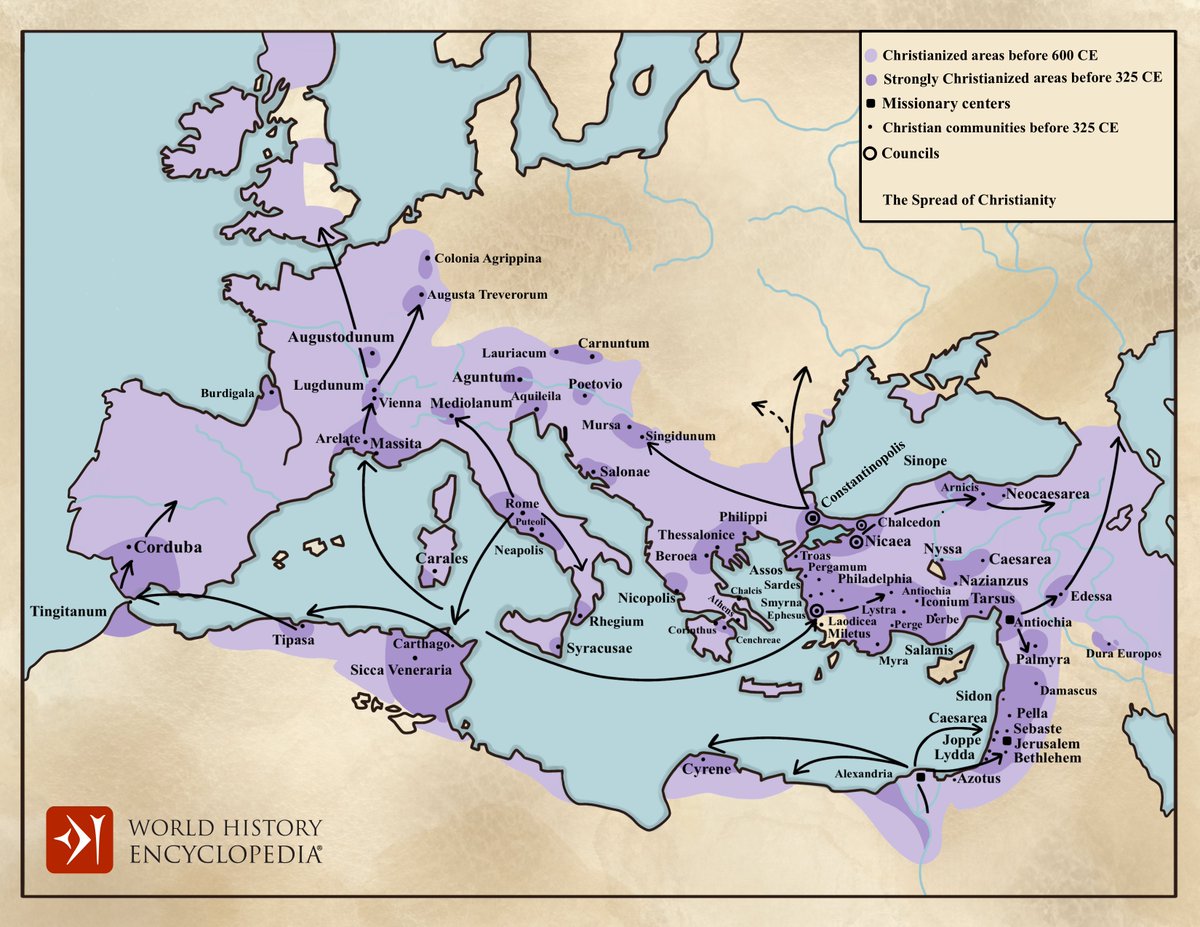
The Mediterranean coast of North Africa was part of the Roman Empire. During the early centuries of Christianity, the region became such a stronghold of the faith that one historian described it as the “Bible Belt” of the ancient world. Three popes came from North Africa, and Latin became the dominant language in urban areas. This strong community of Christians in North African actually contributed significantly to the early spread of the faith into the Iberian Peninsula.
The character of the region began to change after Muslim Arab armies conquered the region in the seventh century. Those same forces also crossed into Europe, with the Moors conquering most of the Iberian Peninsula. Christianity survived in North Africa for several centuries but steadily declined as Christians faced forced conversion, persecution, and exile. Spanish and Portuguese efforts to recover territory in North Africa met with limited success. One notable exception was Ceuta, which Portugal captured in 1415. Ceuta held an important strategic location, as it had been a base used to launch the attacks on Spain and Portugal that led to the long subjugation by Muslims there.
After its conquest by Portugal, Ceuta again became overwhelmingly Christian. It later came under the Spanish Crown in the late 16th century. Morocco besieged the city from 1694 to 1727 in one of the longest sieges in history, but Spain retained control. Since Morocco gained independence in 1956, it has continued to dispute Spanish sovereignty over the territory.
Over the centuries, Muslims gradually returned to Ceuta. Economic migration, combined with higher birth rates among the city’s Muslim population, has substantially changed its demographics. Today, Muslims make up roughly half of Ceuta’s population.
Looking at the last 2,100 years of Ceuta’s history, the city has spent considerably more time as part of the Christian European world than under Arab-Muslim rule. It has never been part of the modern Kingdom of Morocco. The claim that Muslim-majority Morocco has an inherent right to Ceuta because it is located in North Africa ignores the greater part of the region’s history.
Soy de Ceuta, y lo que estamos viviendo ahora mismo es una auténtica invasión, por favor, necesitamos la difusión de todos para que declaren emergencia nacional. Por ahora ha sido solicitada por el gobierno de Ceuta y ha sido rechazada.
La prueba de que esto no es una avalancha espontánea, sino un ataque a la soberanía nacional.
Es decir, una invasión planificada de un gobierno hostil.
🔴 Si estos bomberos han hecho huelga con Madrid ardiéndose norte a sur, deberían acabar haciendo compañía a toda la tropa socialista en Alcalá-Meco, Estremera o cualquier hotel habilitado para los corruptos socialistas
RETUITEA si estás de acuerdo
🔴 Ferran Torres y su gorra se han hecho vírales durante la celebración del Mundial en Madrid: “Make Spain Great Again” (hacer grande España otra vez)
RETUITEA si este hombre TAMBIÉN TE REPRESENTA