Pixxel just raised $100M in India's largest private spacetech round ever.
Co-led by Temasek and Seraphim. Total funding now $195M. Valuation at $400M. (1/3)
They're building the Honeybee satellite constellation. Hyperspectral imaging from orbit to monitor climate, agriculture, and natural resources in real time.
Founded by Awais Ahmed when he was 20. From a college dorm room to building India's biggest space-tech company. (2/3)
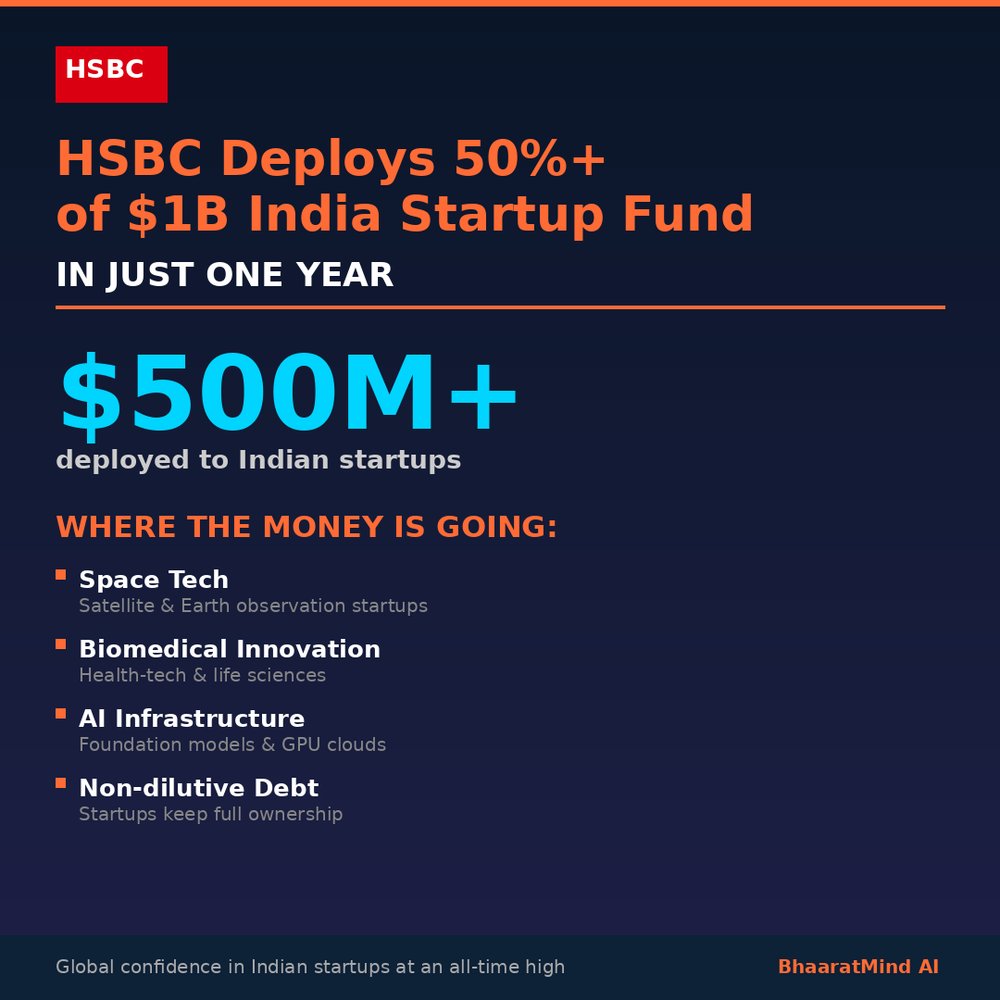
HSBC launched a $1 billion fund for Indian startups last year. In just 12 months, they've already deployed over half of it.
Not consumer apps. Space tech. Biomedical innovation. AI infrastructure. (1/4)
The shift is clear: global capital is flowing into India's deep tech and frontier innovation. The ecosystem has matured beyond quick commerce and food delivery. (3/4)
Bengaluru's Quanfluence just raised $10M to build a quantum computer that runs on light. Not silicon. Light.
Led by Chiratae Ventures, with Pi Ventures and Zerodha's Rainmatter backing them. (1/2)
Indian AI startups just had their biggest quarter ever.
$438 million raised across 35 deals in Q3 2026. That's a 265% jump from last year.
For the first time, AI became the most-funded sector in India's startup ecosystem. (1/2)
This is what building looks like.
Late night discussions. Whiteboard battles. Design reviews that go on for hours.
A team that doesn't just code. They care.
Every pixel matters. Every feature has a purpose. Every decision is made for the students who'll use it. (1/3)
We're building something exciting. Can't share details yet.
But I can share this: the best part of building isn't the product. It's the people who build it with you.
To my team - thank you for believing in the vision.
More soon. (2/3)
Indian deep tech is moving way beyond software.
Bengaluru's NuSynth Technologies just raised Rs 36.5 crore in seed funding, co-led by Avaana Capital and Shastra VC. Its AI platform rethinks how complex chemicals get made for pharma and electronics. (1/2)
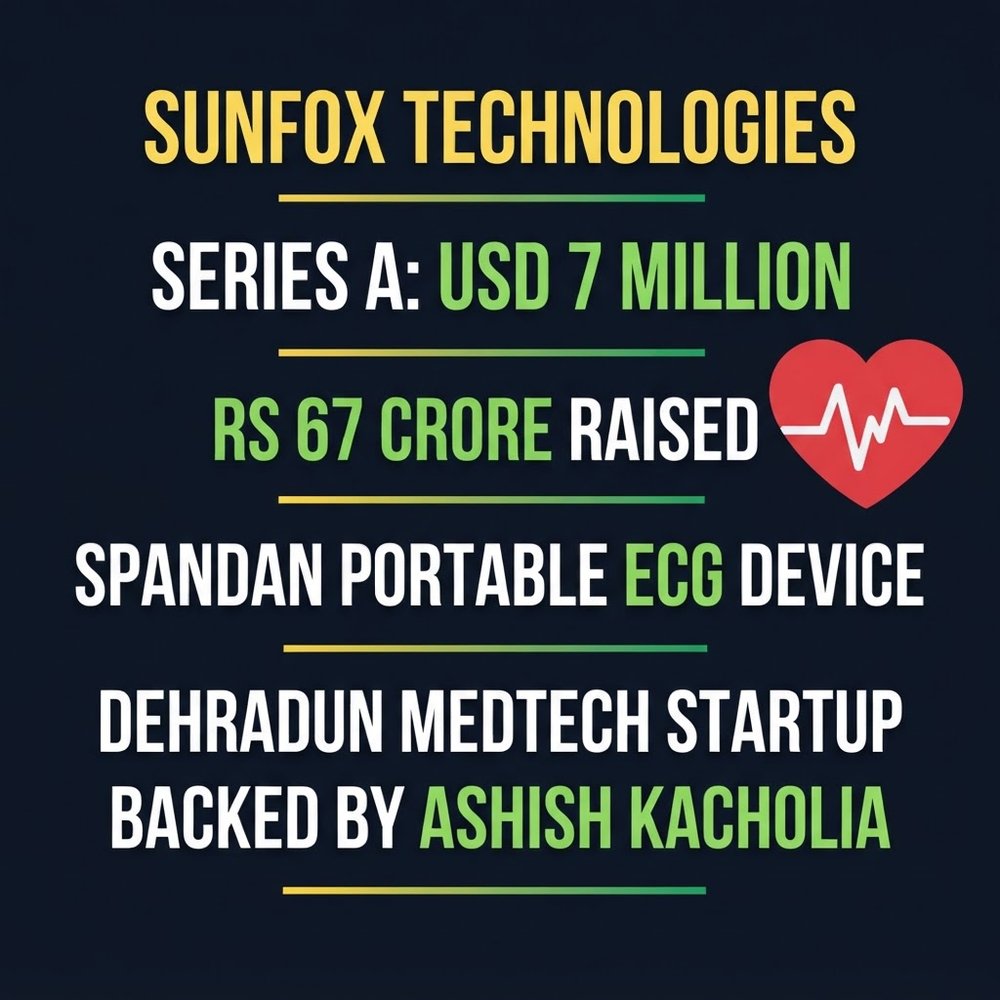
A medtech startup from Dehradun just raised $7M to make cardiac checkups portable.
Sunfox Technologies builds Spandan, a pocket ECG that connects patients to doctors remotely. Series A led by Ashish Kacholia with 3one4 Capital and Alchemy Capital. (1/2)
Aadit Palicha dropped out of Stanford at 19 to build Zepto in India.
Four years later, at 23, he became the youngest CEO of a publicly listed company in India. (1/4)
But Aadit built the tech stack that made it work at scale.
Here's what I take from his journey: age is just a number, but execution is everything. He didn't just have a good idea. He solved the hardest logistics problem in one of the most complex markets on the planet. (3/4)