1/
I’ve escaped two dictatorships – one by protest, the other by war.
Belarus, then Ukraine.
Now in Lisbon, figuring out what “home” means.
So I host salons & build experiments about Network-Society futures.
apparently I'm cursed:
updating a few portfolio case studies turned into
→ rebuilding the website, which turned into
→ creating my own design system v0.1
...okay, I just enjoy digital gardening there are worse addictions..
I guess I should talk more about my little (and not-so-little) projects
this, for example, is my personal graph of images, movies, tools, papers, and other bits of knowledge. runs on my home server
apparently i’m writing long essays again
this one starts with an ai feature test, accidentally summons Ivan Illich, and ends in a Tuscan monastery asking when help becomes the world you have to live inside
premium bees 🐝
https://t.co/NDqBlTS13W
day one started with a session on politics
I asked the most basic question I could: how does Illich even understand politics?
which was useful, because I’ve barely read him properly. so I mostly listened, asked questions, got lost, came back, got lost again
the group was ridiculous in the best way: a theologian, a historian with phd on Illich from San Francisco, a professor, one of Illich’s close friends, and a few others
I came in thinking about politics the way I usually do – Eastern Europe, protests, governments, people who make decisions, liquid democracy, network states..
the room took it somewhere else completely
we ended up talking about theology, the church, institutions, unity vs plurality, and what actually counts as political action
Illich was a priest, but also one of the people most willing to criticize the church from inside its own language
the question became:
- how do different communities stay different, but still live together?
- how do you keep plurality without losing the possibility of unity?
and maybe the answer is embarrassingly simple:
to live is already political.
not “post about politics”. not “become a politician”.
just live in a way that refuses the institutions that quietly assign people into castes –who gets to enter the room, who gets to speak, who gets treated as fully human.
I didn’t understand half of it
which is probably why it was useful
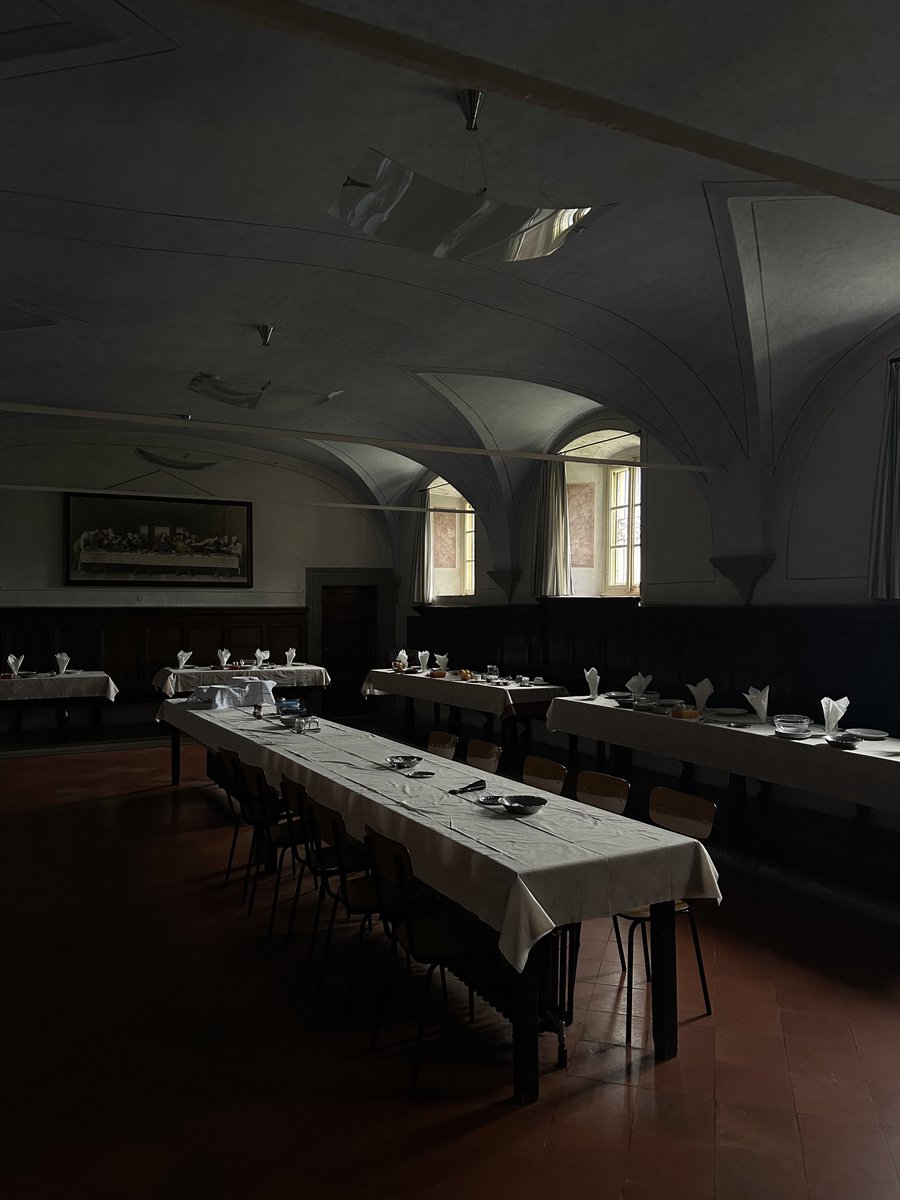
made it to Tuscany with half-dead airpods and monastery Wi-Fi
i’m here for a small gathering around Ivan Illich -the dead priest who still has better questions about tools, institutions, and dependency than most living product teams
strong cnct to god. weak connection to cloud
day one started with a session on politics
I asked the most basic question I could: how does Illich even understand politics?
which was useful, because I’ve barely read him properly. so I mostly listened, asked questions, got lost, came back, got lost again
the group was ridiculous in the best way: a theologian, a historian with phd on Illich from San Francisco, a professor, one of Illich’s close friends, and a few others
I came in thinking about politics the way I usually do – Eastern Europe, protests, governments, people who make decisions, liquid democracy, network states..
the room took it somewhere else completely
we ended up talking about theology, the church, institutions, unity vs plurality, and what actually counts as political action
Illich was a priest, but also one of the people most willing to criticize the church from inside its own language
the question became:
- how do different communities stay different, but still live together?
- how do you keep plurality without losing the possibility of unity?
and maybe the answer is embarrassingly simple:
to live is already political.
not “post about politics”. not “become a politician”.
just live in a way that refuses the institutions that quietly assign people into castes –who gets to enter the room, who gets to speak, who gets treated as fully human.
I didn’t understand half of it
which is probably why it was useful
4/4 Rousseau wrote about the social contract in 1762. 264 years later we still haven't shipped v2
if that's not institutional tech debt, I don't know what is.
1/4 you signed a Terms of Service you never read when you were born
> it's called the social contract
it dictates where you can work, how much income you keep, what you can put in your body, who you can marry, what you can say.
you didn't agree to it. you can't fork it.
3/4 "you can cancel your subscription, but only if a competing product approves your transfer, and also you need to physically relocate your entire life."
the App Store would reject it. but somehow it's the foundation of modern civilization.
6/ I tracked my own screen for 16 days. the problem wasn't bad answers. I'd stopped asking my own questions. the tool was working perfectly. that was the problem
new 404embassy ↓
https://t.co/r4R2BCFCOk 🐌
1/ my @openclaw mentioned something called the "Illich test." I asked – is this about Lenin? different Illich. an austrian priest who wrote 110 pages in 1973 that predict AI dependency better than anything published since chatgpt
5/ Illich directly inspired the personal computer. @lfelsenstein from the homebrew computer club credited "tools for conviviality" as foundational. the idea that computing should be personal, hackable, yours. we went from that to subscription-gated cognition in about three years