The Bahá'í community has been part of Qatar's social fabric for nearly eight decades. Swipe to learn the story of a peaceful, contributing community, now facing an uncertain future.
Baha’i Boxing Coach and Federation Referee Sentenced to One Year in Prison in Babol
It was learned on 23 May 2026, that Mr. Amin Imanian, a Baha’i resident of Babol and an official referee affiliated with Iran’s Boxing Federation, has been sentenced to one year in prison on charges of “propaganda against the regime.”
Mr. Imanian was initially sentenced in absentia on 9 March 2026. The verdict was upheld in full during an appeal court hearing held at Branch 1 of the Revolutionary Court of Babol on 18 May 2026.
He was arrested on 2 February 2026, following what was described as a violent raid by agents of the Mazandaran Intelligence Office on his home. During the operation, agents broke the front door of his residence and conducted a search of the property.
Authorities confiscated books, printed materials, electronic devices, and computer hard drives belonging to Mr. Imanian.
Mr. Imanian was released on bail on 10 February 2026.
No further information has been released regarding the evidence presented in support of the charges against him.
#Bahai #Iran #Arrests #Imprisonments #AminImanian
Shahram Fallah Sentenced to Nine Years and Six Months Prison and One Year Exile
It was learned on 29 November that the Kerman Province Court of Appeals has sentenced Shahram Fallah, a Bahá'í currently imprisoned in Kerman, to nine years, six months, and one day in prison, along with one year of exile to Birjand.
The verdict was issued in absentia and is based on baseless charges including “deviant educational and propaganda activities contrary to Islamic law by making false claims in religious fields” and “organized contacts with foreign entities,” as well as “forming groups aimed at disrupting national security.”
On 23 October 2025, Mr. Fallah’s original sentence, handed down by Branch One of the Kerman Revolutionary Court, totaled thirteen years, six months, and two days in prison. His trial hearing took place on 18 October in the same court. Following the appeal, the term was reduced, but the one-year exile as a supplementary penalty was upheld.
According to the law, six years of the new sentence is to be implemented. The verdict, however, is no longer subject to appeal within the province of Kerman and can now only be contested at the Supreme Court.
Mr. Fallah, 64, was arrested by Intelligence Ministry agents on 18 August 2025 at his residence in Kerman.
During the arrest, authorities confiscated mobile phones belonging to his family and guests, along with several religious books and personal photographs. He was subsequently transferred to Kerman Prison.
Mr. Fallah has a history of previous legal actions, arrests, and convictions, all related to his faith.
#Bahai #Iran #CourtAppearances #ShahramFallah
At the 18th UN Forum on Minority Issues, Diane Ala’i—independent human rights expert and former Baha’i International Community representative—outlined the systematic persecution of Baha’is in Iran.
#UNMinorityForum#Bahai#Iran#HumanRights
Six Baha’i women in Hamedan Seek Retrial Over Prison Sentences
It was learned on 1 October 2025 that six Baha’i women in Hamedan, who had previously received prison sentences, have submitted a request for retrial to the Supreme Court. These women are: Neda Mohebbi, Atefeh Zahedi, Farideh Ayyoubi, Noura Ayyoubi, Zarrindokht Ahadzadeh, and Jaleh Rezaie.
The case files include copies of the issued sentences and portions of the lawyers’ defense statements, highlighting multiple violations of due process and disregard for the defendants’ rights.
The submitted documents emphasize that the lower courts and judicial authorities, through an expansive and unlawful interpretation of Articles 499 and 500 bis of the Islamic Penal Code, have criminalized any social or human relations among Baha’is—a point that has been formally contested by the defendants’ attorneys.
The appellate court issued its final verdict without notifying the defendants or their lawyers and without receiving either written or oral defenses. Moreover, the court rulings make no reference to the arguments presented by the lawyers, effectively disregarding the defendants’ defense.
In addition, the full texts of the indictments and verdicts were not provided to the defendants or their legal representatives, constituting a clear violation of legal due process. Available copies were reconstructed from lawyers’ notes, while the original indictment remains inaccessible.
During raids on the homes of these Baha’is, significant amounts of cash and gold were confiscated. Although the court ordered the return of these assets, a substantial portion remains in the hands of the authorities.
#CourtAppearances #Bahai #Iran #NedaMohebbi #AtefehZahedi #FaridehAyyoubi #NouraAyyoubi #ZarrindokhtAhadzadeh #JalehRezaie
Imagine being told you can’t go to university — because of your faith.
This is the reality for #Bahai youth in #Iran. Since 1979, they have been systematically excluded from higher education as part of a state-led campaign of persecution.
#HumanRights#RightToEducation
BIC Representative to the UN @ShaddadHaddad delivered a statement regarding the persecution of Baha'is in #Yemen at the 40th meeting of #HRC60 at the @UN_HRC in Geneva: "Houthi leaders have vilified the Baha’i Faith as foreign and heretical, branding its members as spies, while urging hostility and violence. This closely parallels Iran’s longstanding anti-Bahá’í propaganda.”
Thank you, as always, @nargesfnd Narges Mohammadi for your powerful and principled support for the Baha'i community in Iran. Fariba Kamalabadi has been in prison since 2022 for her beliefs—having already served a previous 10-year jail sentence.
#Iran#Bahai#HumanRights
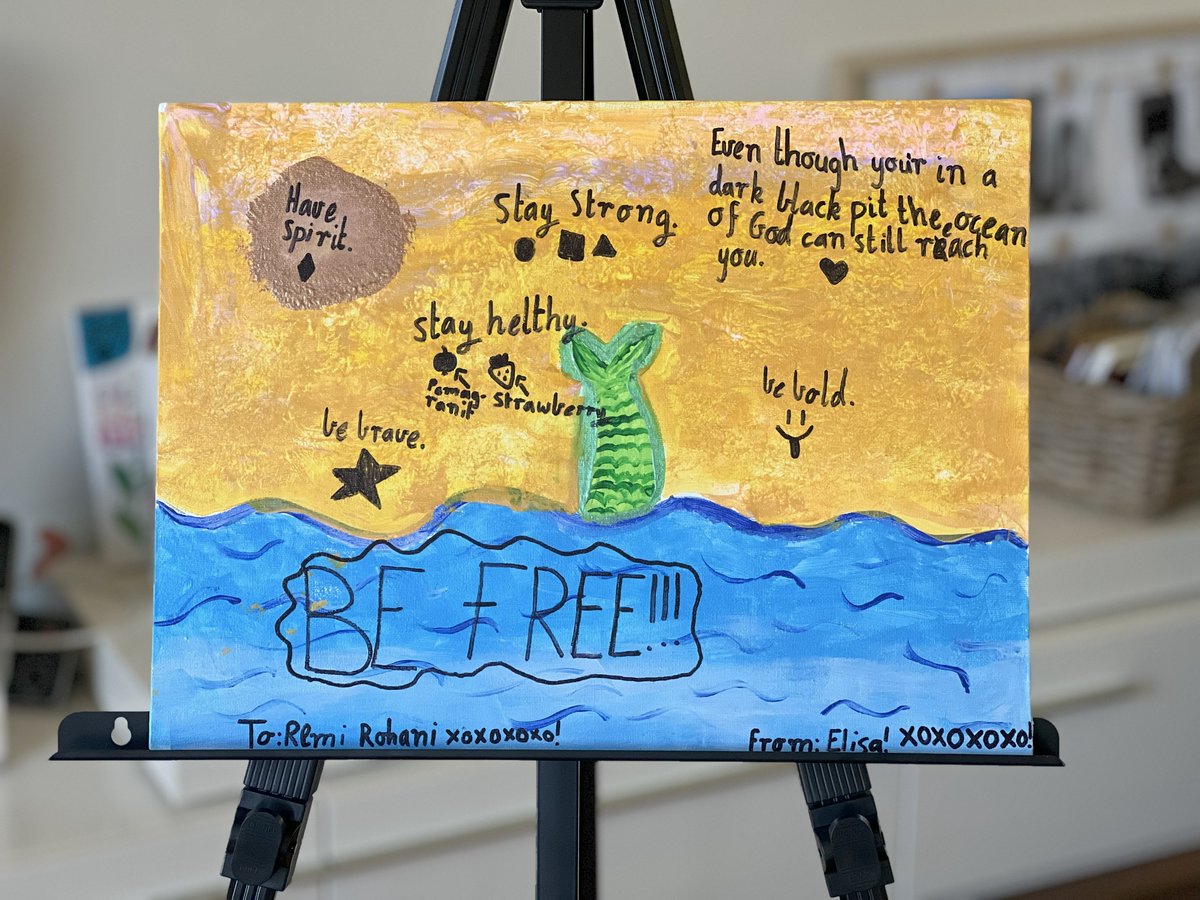
Remy Rowhani, a distinguished Qatari figure, father, and 71-year-old grandfather, has long been known for his integrity and his devoted service to his country, #Qatar, throughout decades of professional work and social contributions. He has recently begun serving a five-year prison sentence on baseless charges with no foundation in truth. A national figure of such standing deserves recognition and honour for his service to his country, and respect and esteem in his retirement years—not imprisonment merely because his faith is different.
From the small fingers of his granddaughter comes a heartfelt drawing wishing him to “stay strong” and “be brave."
#Bahai #QatarFreeRemy #FreeRemyRowhani
More attacks on the #Baha’is of #Isfahan: Iranian security forces raid at least 10 Baha’i homes and 7 businesses, using excessive force and violence causing injury.
This senseless act comes days after over 22 Baha’is in Isfahan were informed by SMS and outside of legal systems that their properties and belongings, including homes and vehicles were confiscated and bank account blocked through the misuse of Article 49 of the Constitution. These oppressive acts aim to further impoverish the Baha’i community and lead to a total economic abolishment of the Baha’i community in Iran and they must stop immediately.
#Qatar: UN experts gravely concerned about discrimination against the Bahai religious minority — I wonder when the authorities will finally heed all the calls! https://t.co/dVYk4yszks
Raquel Ataeian, Baha’i Citizen, Arrested by Security Forces
On Tuesday, July 1, Raquel Ataeian, a Baha’i citizen residing in Qaemshahr, was arrested at her home by security forces and taken to an undisclosed location. Agents also confiscated several personal items belonging to her and her family.
The arrest was carried out by seven IRGC Intelligence agents who presented a judicial warrant before detaining Ms. Ataeian and searching her home.
A source close to the family confirmed the incident, telling HRANA: “This morning, seven IRGC Intelligence agents arrived at Ms. Ataeian’s residence with a judicial warrant. During the search, they seized religious books, mobile phones, and laptops belonging to her and her family.”
As of the time of this report, no information has been released about the charges against Ms. Ataeian, the reasons for her arrest, or her whereabouts.
Raquel Ataeian has previously faced security-related harassment due to her Baha’i faith.
Over the past decade, the Iranian Bahá’í community has been disproportionately targeted by Iran’s security forces and judiciary—more than any other minority group. In the past three years, an average of 72 percent of the reports on religious rights violations collected by HRANA have documented the Iranian regime’s repression of the Bahá’í community.
#Bahai
https://t.co/9IhUfXMuwv
On Thursday, 1 May 2025, four Baha'i-owned businesses in Urmia were sealed by Authorities. This action followed the decision by these Baha’is to close their businesses in observance of a religious holy day.
The sealed businesses include Faraez Rezaie's clothing store, Enayat Javaherdoust's electronics shop, Shiva Dehghan's clothing store, and Shahab Najafzadeh's cooling equipment parts store.
On Saturday 3 May 2025, the business owners attempted to resolve the issue with the authorities but were informed that reopening the stores would require a judge's order, with no specific timeline provided.
Baha'is typically close their businesses for nine days annually due to religious observances. However, these closures have sometimes triggered responses from security and law enforcement agencies, leading to the sealing of their establishments.
According to Article 28(b) of the Trade Law, business owners are entitled to close their shops for up to 15 days a year without prior notification to the authorities demonstrating that these closures are purely based on religious grounds.
#FaraezRezaie #EnayatJavaherdoust #ShivaDehghan #ShahabNajafzadeh #Urmia #Iran #BahaiRights #BahaiBusinesses #EconomicPressures #OwnershipRights
BIC representative to the UN @ShaddadHaddad delivered a statement regarding the persecution of Baha'is in #Egypt at the 32nd meeting of the 58th Session of the @UN_HRC in Geneva: "We demand the immediate restoration of the civil rights of the Baha'is and call on the international community to hold Egypt accountable for upholding the fundamental right to freedom of religion for all, including the Baha'is."
Read full statement -> https://t.co/NgJDSKnD4r
#EgyptianBahaiRights
Iran’s government condemned at United Nations for blatantly denying Baha’i cemetery desecrations
Geneva—11 March 2025—
Iran’s government was rebuked by the United Nations Special Rapporteur on freedom of religion or belief, Professor Nazila Ghanea, who in strong remarks said the Islamic Republic could not “hide” its violation of the right of Baha’is to bury deceased loved ones.
The exchange occurred last week at the current session of the UN Human Rights Council (HRC), in Geneva, after an Iranian representative denied findings in the Special Rapporteur’s report A/HRC/58/49(link is external) on freedom of religion or belief and the prohibition of torture and other cruel inhuman or degrading treatment or punishment, that "members of the Bahá'í faith [are] being prevented from burying their dead in available cemetery land and instead being forced to bury their dead on top of a mass grave site."
In a blatant attempt to mislead, the Iranian government made a statement reacting to the Special Rapporteur's report on cemetery destructions and the systemic restrictions imposed on the Baha’is in Iran. The Iranian representative falsely claimed that land allocation for private cemeteries follows national regulations aimed at ensuring equitable access and proper burial site management. This assertion was made to deflect from the real issue and falsely equate these regulations with standard practices observed in other countries, despite clear evidence to the contrary regarding discrimination against the Baha’is.
Professor Ghanea, in a direct response to this denial, stressed the larger context of persecution faced by religious minorities in Iran and criticized the Iranian delegation’s attempt to dismiss the issue.
“One cannot hide behind claims that a cemetery is private, to sideline state obligations in relation to its largest non-Muslim religious minority community, the Baha’is in Iran,” the Special Rapporteur said. “Hundreds of Baha’i cemeteries throughout Iran have been destroyed, burnt, and bulldozed over decades. Baha’i burials have been needlessly delayed due to groundless and cynical impediments raised by the authorities.”
A former Special Rapporteur on the freedom of religion or belief, Heiner Bielefeldt, had in previous years also said the persecution of Baha’is in Iran extended from “cradle to grave” and called it “one of the most extreme manifestations of religious persecution today.”
“This recent report by the Special Rapporteur comes as Iran has intensified its pressures on Baha’i cemetery lands in Iran,” said Simin Fahandej, Representative of the Baha’i International Community to the United Nations in Geneva. “In Iran, the Baha’is have been denied not only the right to live peacefully, but even to die in peace. Any human being with a conscience would at least allow the dignity of the dead to remain and respect the right of families to mourn and bury their loved ones in accordance with their faith. The Iranian government’s actions represent not only a calculated effort to culturally cleanse the very identity of Iranian Baha’is but to further add to psychological and mental suffering.”
In the past 12 months alone, Baha’i cemeteries in at least 14 major Iranian cities have faced either desecration or other interference in their operations by the government. Intelligence agents have forcibly taken over management of cemeteries, forcing Baha’is to pay fees for burials in their own land, and in some cases denying the Baha’is the right to bury their loved ones in accordance with their religious practice.
These injustices have occurred in cemeteries in cities across Iran including Tehran, Karaj, Shiraz, Ahvaz, Kermanshah, Kerman, Yazd, Semnan, Mashhad and Rafsanjan.
During the Human Rights Council session, Canada also voiced its support for the rights of Iranian Baha’is, saying that Canada “remains concerned by disrespect for funeral rituals and the destruction of cemeteries and places of worship,” and that the “burial rights for members of religious minorities, such as the Baha’i community, must continue to be protected.”
For 46 years, since the 1979 Islamic Revolution, Baha’is in Iran have faced cemetery desecrations and the destruction of Baha’i-owned cemeteries. They have been denied funeral and burial rights according to Baha’i beliefs, barred from accessing the resting places of loved ones, and sometimes imprisoned for seeking justice. Baha’is in Tehran have also had to endure government agents forcibly burying their loved ones in the Khavaran mass grave site in their absence and against their wishes.
These violations are part of a broader effort to culturally cleanse Iran of its Baha’i community. In 1991, a confidential policy document, “The Baha'i Question(link is external)” signed by Iran’s Supreme Leader, Ali Khamenei, formalized the Iranian government’s plan to block the “progress and development” of the Baha’i community. The document reveals the government’s deliberate efforts to restrict Bahá’í access to education, employment, and cultural participation in civic life.
Baha’is in Iran are subjected to arbitrary arrests and detentions, physical and psychological abuse, enforced disappearance, forced business closures, property confiscation and destruction, including cemeteries, house raids, and hate speech by officials, clergy and state media. These actions have been widely condemned yet Iranian officials continue to deny such abuses.
The Baha’i International Community continues to call on the international community to demand an end to these unlawful actions and hold Iran accountable for its ongoing human rights violations.
https://t.co/laUTG8xS9H
#Bahai






![iranpresswatch's tweet photo. Iran’s government condemned at United Nations for blatantly denying Baha’i cemetery desecrations
Geneva—11 March 2025—
Iran’s government was rebuked by the United Nations Special Rapporteur on freedom of religion or belief, Professor Nazila Ghanea, who in strong remarks said the Islamic Republic could not “hide” its violation of the right of Baha’is to bury deceased loved ones.
The exchange occurred last week at the current session of the UN Human Rights Council (HRC), in Geneva, after an Iranian representative denied findings in the Special Rapporteur’s report A/HRC/58/49(link is external) on freedom of religion or belief and the prohibition of torture and other cruel inhuman or degrading treatment or punishment, that "members of the Bahá'í faith [are] being prevented from burying their dead in available cemetery land and instead being forced to bury their dead on top of a mass grave site."
In a blatant attempt to mislead, the Iranian government made a statement reacting to the Special Rapporteur's report on cemetery destructions and the systemic restrictions imposed on the Baha’is in Iran. The Iranian representative falsely claimed that land allocation for private cemeteries follows national regulations aimed at ensuring equitable access and proper burial site management. This assertion was made to deflect from the real issue and falsely equate these regulations with standard practices observed in other countries, despite clear evidence to the contrary regarding discrimination against the Baha’is.
Professor Ghanea, in a direct response to this denial, stressed the larger context of persecution faced by religious minorities in Iran and criticized the Iranian delegation’s attempt to dismiss the issue.
“One cannot hide behind claims that a cemetery is private, to sideline state obligations in relation to its largest non-Muslim religious minority community, the Baha’is in Iran,” the Special Rapporteur said. “Hundreds of Baha’i cemeteries throughout Iran have been destroyed, burnt, and bulldozed over decades. Baha’i burials have been needlessly delayed due to groundless and cynical impediments raised by the authorities.”
A former Special Rapporteur on the freedom of religion or belief, Heiner Bielefeldt, had in previous years also said the persecution of Baha’is in Iran extended from “cradle to grave” and called it “one of the most extreme manifestations of religious persecution today.”
“This recent report by the Special Rapporteur comes as Iran has intensified its pressures on Baha’i cemetery lands in Iran,” said Simin Fahandej, Representative of the Baha’i International Community to the United Nations in Geneva. “In Iran, the Baha’is have been denied not only the right to live peacefully, but even to die in peace. Any human being with a conscience would at least allow the dignity of the dead to remain and respect the right of families to mourn and bury their loved ones in accordance with their faith. The Iranian government’s actions represent not only a calculated effort to culturally cleanse the very identity of Iranian Baha’is but to further add to psychological and mental suffering.”
In the past 12 months alone, Baha’i cemeteries in at least 14 major Iranian cities have faced either desecration or other interference in their operations by the government. Intelligence agents have forcibly taken over management of cemeteries, forcing Baha’is to pay fees for burials in their own land, and in some cases denying the Baha’is the right to bury their loved ones in accordance with their religious practice.
These injustices have occurred in cemeteries in cities across Iran including Tehran, Karaj, Shiraz, Ahvaz, Kermanshah, Kerman, Yazd, Semnan, Mashhad and Rafsanjan.
During the Human Rights Council session, Canada also voiced its support for the rights of Iranian Baha’is, saying that Canada “remains concerned by disrespect for funeral rituals and the destruction of cemeteries and places of worship,” and that the “burial rights for members of religious minorities, such as the Baha’i community, must continue to be protected.”
For 46 years, since the 1979 Islamic Revolution, Baha’is in Iran have faced cemetery desecrations and the destruction of Baha’i-owned cemeteries. They have been denied funeral and burial rights according to Baha’i beliefs, barred from accessing the resting places of loved ones, and sometimes imprisoned for seeking justice. Baha’is in Tehran have also had to endure government agents forcibly burying their loved ones in the Khavaran mass grave site in their absence and against their wishes.
These violations are part of a broader effort to culturally cleanse Iran of its Baha’i community. In 1991, a confidential policy document, “The Baha'i Question(link is external)” signed by Iran’s Supreme Leader, Ali Khamenei, formalized the Iranian government’s plan to block the “progress and development” of the Baha’i community. The document reveals the government’s deliberate efforts to restrict Bahá’í access to education, employment, and cultural participation in civic life.
Baha’is in Iran are subjected to arbitrary arrests and detentions, physical and psychological abuse, enforced disappearance, forced business closures, property confiscation and destruction, including cemeteries, house raids, and hate speech by officials, clergy and state media. These actions have been widely condemned yet Iranian officials continue to deny such abuses.
The Baha’i International Community continues to call on the international community to demand an end to these unlawful actions and hold Iran accountable for its ongoing human rights violations.
https://t.co/laUTG8xS9H
#Bahai](https://pbs.twimg.com/media/Glw86ANXAAATDyg.jpg)


