Our second round was rough. I think I pitched every VC on the planet. Some of the weirder ones:
- I arrive at a Chinese VC firm on Sand Hill Road. The building is locked, lights off, nobody inside. I wait 10 minutes after meeting time. A car pulls up. The partner emerges, she has a large pack of toilet paper under one arm. She unlocks the building, turns on the lights, leads me inside. She disappears into the toilets with her rolls of paper. Then, toilets attended to, we start the pitch.
- Offices of a small deep tech investor. Receptionist greets me and leads me to the meeting room. I set up, wait, wait, wait. Eventually someone walks in, invites me to start. Something feels a bit off. It gradually dawns on me that I am pitching the receptionist. The partner had double-booked herself and apparently decided this was preferable to rescheduling.
- Pitching a London VC. He tells me he likes me as a founder but my business will never work. I've never had someone say this before, usually VCs like to preserve optionality. But he's very explicit. "You might close this round, but you will just waste a year or two of your life and then fail, this idea can't work"
A month later, I get a message from him. "I hear (big name) invested, can we get into your round?". Dude, seriously?
- Another London VC. I'm chatting to the associate while we're waiting for the partner to arrive. He tells me about one of their portfolio cos that needs a bridge round, he's working on squeezing them as much as possible. He's quite direct about it. Eh.. thanks for the transparency I guess, you seem like a great firm.
- The all time weirdest. A French VC with a London office. The associate meets me, as we're going up to the meeting he says something about how the partner can be a little unconventional. We start the pitch.
"What did your father do?" the partner asks me in a thick French accent. OK, this is a new one. I say he trained as a theoretical physicist, but then went into business. "Aha! Your father was a failure!"
"What did your mother do?" I say she was a biochemist and then became a school teacher. "Also a failure!" he exclaims. The associate is visibly dying inside. Is this some strange test, or is he just an asshole? I have a hundred employees and we need funding. "Would you like to hear about my company?" I ask him.
Institutional tokenisation succeeds when compliance, issuance, lifecycle management, and cross-chain movement are designed as integrated infrastructure, not a bolt-on.
The recent pilots connecting public blockchains to traditional settlement rails, alongside continued product expansion from major managers, underscore why purpose-built, regulated frameworks matter.
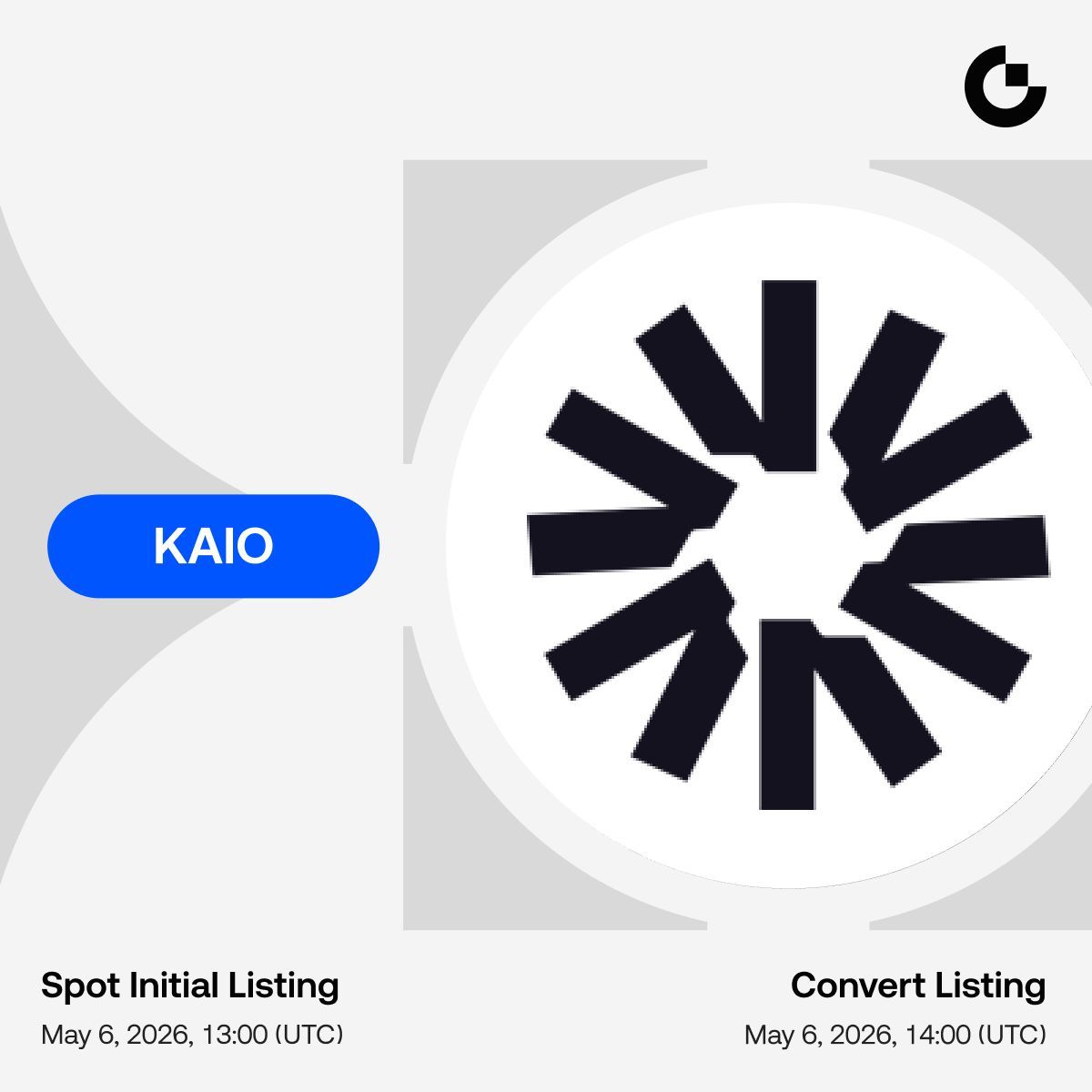
Coinbase will add support for KAIO (KAIO). You can now generate a deposit address for KAIO on coinbase․com, the Coinbase app, and Coinbase Exchange in regions where trading is supported.
Deposits of KAIO will not be available until the asset issuer unlocks transfers.
🎉 KAIO $KAIO is bringing rewards to #KuCoin!
🔹 Activity: KAIO GemSlot Carnival – Share a 1,500,000 KAIO Prize Pool
Don’t miss your chance to earn more as $KAIO goes live on #KuCoinSpotMarket!
https://t.co/CJFKSb02WZ
👉Follow @KAIO_xyz and @kucoincom on X or join our Discord to stay updated.
Today marks a major milestone for KAIO with the $KAIO TGE.
A quick reflection on where we stand after 2 years of building:
• ~$100M TVL live with tokenised top-tier funds from BlackRock, Brevan Howard, Hamilton Lane, Laser Digital, and Mubadala Capital.
• Live across 10+ Tier-1 chains with our cross-chain gateway including @solana, @SeiNetwork, @SuiNetwork, @Aptos , @hedera, and others.
• Backed by top tier institutions who are rewriting how capital markets and money moves including @tether, @LaserDigital_, @BHDigitalAssets, @Systemic_VC, @LyrikVentures, @Karatage_, @ShorooqPartners, and others.
• Building toward deeper DeFi composability that bring real utility to RWAs
• KASH, our retail RWA access product, is launching soon to open up even broader access.
The tokenised asset space is hitting a real inflection point. For KAIO it has always been traction and product before hype. We’re here to lead this transition to onchain capital markets. This is what we mean by Transforming Institutional Funds Onchain.
I don't understand why most VCs have such a hard time understanding this.
Both private markets and public markets are led by narratives that have exactly the same influence on the ability to raise new capital.
The difference is that in public markets it's visible in realtime in the stock price, which leads investors to draw insane conclusions about companies like Figma that would never occur to them if it was still private.
On top of that narrative element, public markets are simply more meritocratic. They reward business health, while private markets reward raw scale often via a mirage of questionable growth.
This is where the two disconnect, and why larger private markets have made IPOs feel more challenging.
But, for the 1000th time, public markets are not more demanding on scale, they just want solid economics.
Wheres scale in private markets often comes at a cost to economics. It is not a problem to be outgrown.
VC just needs to start properly lining companies up for an IPO once they are sufficiently derisked and growing predictably.
Introducing KASH, a yield-bearing token designed to give you access to institutional-grade real world assets.
A single tokenized product that represents a diversified basket of bluechip funds sourced from leading global asset managers including BlackRock, Hamilton Lane, and Laser Digital, tokenized through the KAIO protocol.
One product. A world of access. Open to all.
Join the waitlist now https://t.co/9GFHee9kvT
The SEC guidance is great not because of what it says, but because of what it means. For decades our system was built upon centralized intermediaries who for some time provided significant value. In the age of technology, specifically auditable smart contracts, the need for reliance on intermediaries who are more or less rent seekers is gone.
The guidance under Atkins' leadership suggests the Staff is recognizing this. That innovation is necessary to do the best by the Staff's constituents - market participants. Not just by the legacy market infrastructure.
Lots more to do, but this is an incredible moment. If decentralized applications meet their promise, you can pencil this down as the day centralized intermediaries were dealt a critical blow by allowing fair competition against them. (in before all the centralized intermediaries run the same playbook as the banks against CLARITY).
11 years ago I asked a dozen VCs how to get in
One told me three ways
1. Go to an Ivy League school (went to UMiami)
2. Have a successful exit (first startup failed)
3. Work at a top tier high growth startup (didn’t do)
I asked him for a 4th
He said “make yourself invaluable before you have the job”
For the next 4 months I worked 10-12 hours a day to accomplish that
I sourced the top deals in Boston for free and sent them to VCs in New York
I read every book, equity research report, funding announcement and S-1 I could get my hands on (podcasts weren’t big then)
I wrote investment theses and shared market and competitive landscape breakdowns with VCs I met
I put together lists of potential hired and customer intros I could make for each VCs portfolio
And I drove uber at night to make money
The truth is that this job has no normal path.
The only thing that stands out amongst those in my cohort who are still in the game is we’re obsessed with it.
A take on VCs, from a VC:
Most crypto VCs will not survive the next 3 years. And honestly, good riddance.
This industry has matured more in the last 12 months than in the previous decade. Real regulation. Real institutional adoption. Real revenue-generating products. Real founders building real businesses.
And yet most VCs in this space still operate like it's 2021. Only invest when they get ridiculous discounts, slap a logo on an announcement tweet, ghost the founder, wait for TGE and unlocks, dump on retail, repeat.
Zero conviction and zero value add. Many such cases.
Good thing is that this playbook is dying as we speak. And the age of AI is about to bury it even faster.
When any founder with a laptop and a Claude subscription can ship in weeks what used to take a team of 20 and $5M in funding, what exactly are you offering as a VC?
Just passive capital?
Founders need less of it than ever, and less and less will they care about your brand name or access to your network.
The VCs that will survive have three things in common:
1) They rip themselves apart for their portfolio companies. Not metaphorically, but actually in the trenches, investing their time to co-build and strategize with founders to accelerate their growth. They pick up the phone at 2am when shit hits the fan. And most importantly, they treat a portfolio company like it's their own.
2) They were here before the hype and stayed through every bear market. They have conviction that goes beyond a TGE because they actually think in years, not in weeks.
3) Perhaps most importantly in an age where AI makes it trivially easy to build, they help you get seen. When every founder can ship a great product in weeks, attention and distribution become the scarcest and most valuable assets of all. The VCs who can't help you compete for it become increasingly worthless.
All VCs that can't offer this will die, and we're already seeing it happen in real time. What used to be a landscape of hundreds of funds will consolidate until there are only 20-30 left that are actually serious about this industry and the longevity of it.
Sounds bullish to me.