I built Tamga, an experimental base-16 numeral system where each glyph represents a value through the binary weights 1, 2, 4 and 8.
If you want to try it https://t.co/PjobpfsQ1h
In the 13th century, Cistercian monks devised a system of numerals in which a single glyph can represent any integer from 1 to 9,999
Learn the nine digits in the top row and the rest follow: flip them for tens, invert them for hundreds, do both for thousands. Combine the four around one vertical stroke and you have any number under 10,000
Now that fewer people read, reading itself gets treated as a moral good. That’s not right.
Reading the wrong things can make you dumber than not reading at all. they miscalibrate you.
Books aren’t automatically good. Only some are. In some cases, you’re better off not reading at all and figuring life out solely through action and movement.
LLMs know way too many facts. you can ask Llama 1B about the history of pizza and it gives a decent answer. it shouldn't be able to do that. it should just do a google search. use those weights for something else
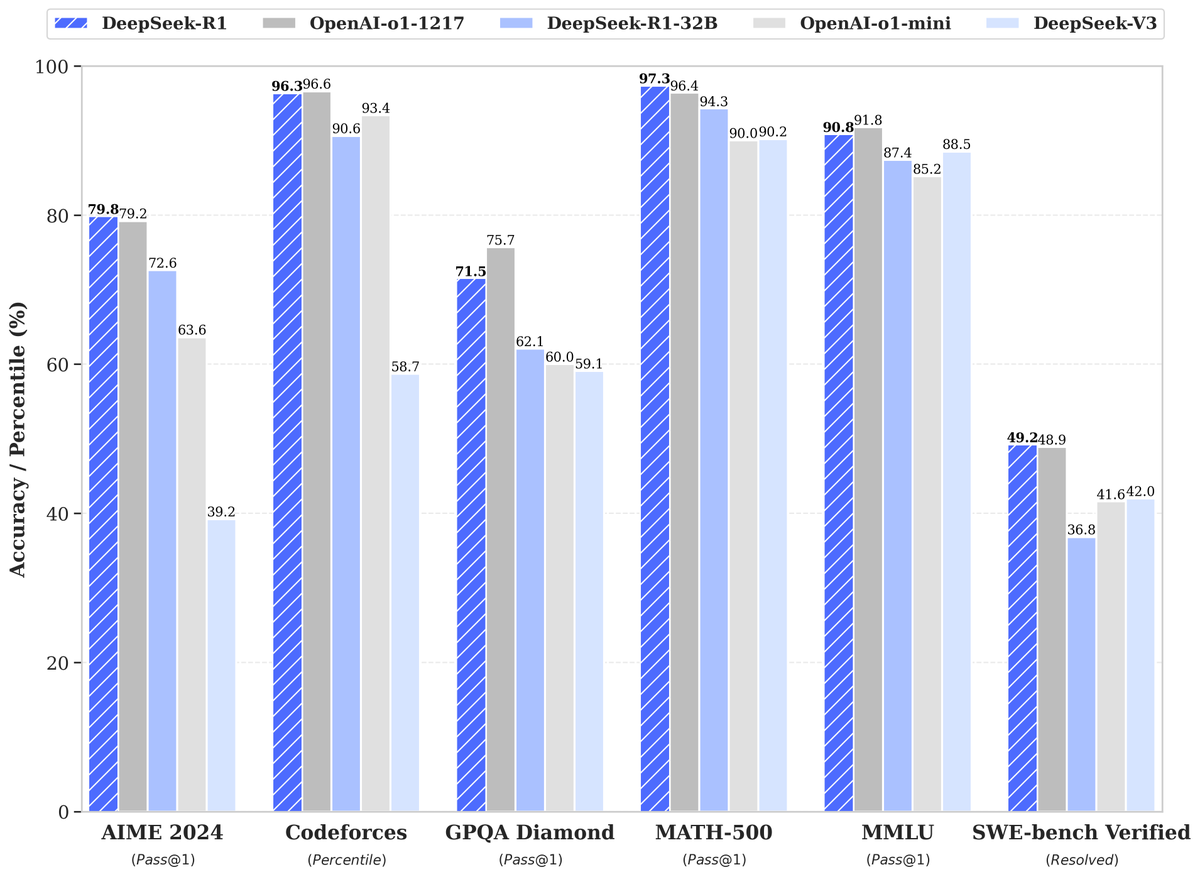
🚀 DeepSeek-R1 is here!
⚡ Performance on par with OpenAI-o1
📖 Fully open-source model & technical report
🏆 MIT licensed: Distill & commercialize freely!
🌐 Website & API are live now! Try DeepThink at https://t.co/v1TFy7LHNy today!
🐋 1/n
@mando_con_cable@rickasaurus The counting system that human call the 4-base system goes like this
0-0
1-1
2-2
3-3
4-10
5-11
6-12
7-13
8-20
When a human sees an alien from human perspective they are using the 4-base system, but from the alien's perspective the 10-base system is already a 4-base system