New: "#Humanities departments that are succeeding are able to do so by diversifying their faculty and curricula, emphasizing community engagement and programmatic interdisciplinarity, and providing financial incentives—using a “show, don’t tell” approach" https://t.co/j16TvH7xCo
"The NEA NEH FY2026 appropriations outcome suggests that Republican members, particularly those on the appropriations committees, calculated that the political cost of eliminating these programs outweighed any benefit" https://t.co/bFBCZrfoIS
“The Education Department is finalizing guidelines for an earnings test that would punish nearly half of all graduate programs in visual arts, music and performance based on the low income of recent alumni” https://t.co/SvSg9R7Mse
New message from NEH to former grant recipients: "NEH is currently preparing guidance, instructions, and a grant reinstatement form for affected award recipients. NEH will share additional information as it becomes available."
“Understand the career pathways connected to your major, and build additional skills that increase your value in the job market...pursue internships, and consider pairing your major with a minor or certificate that strengthens employment prospects.” https://t.co/t3FYTzRcCD
"the value of humanities has not always been communicated clearly enough by the departments themselves, who may have relied too heavily on historical assumptions about their place within universities." https://t.co/G3zRKLmdG8
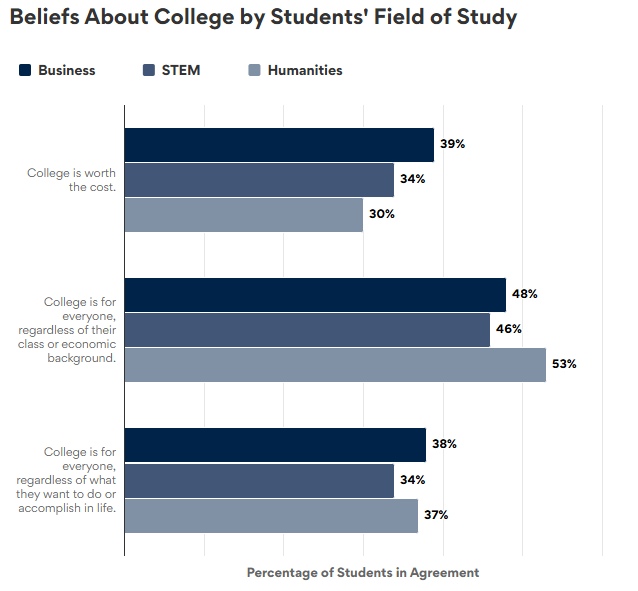
Humanities students "are less likely to say college is worth the cost (30%) compared to STEM (34%) and business students (39%). However, humanities majors (53%) are also more likely...to say that college is for everyone" https://t.co/NIHZXozqTh
"One of the most common verbs to appear across all definitions of the #humanities is understand... often paired with verbs like define, appreciate, express, interpret, evaluate, and connect." https://t.co/UFuWiN8MTr
NEW: Using their mission statements and how they define the humanities as models, a new HI report explores how the 56 state and jurisdictional councils put the public humanities into meaningful practice. https://t.co/UFuWiN8MTr
"In fall 2026, 14 fellows will begin two-year positions designed to take advantage of the numerous skills of PhD humanists while contributing to the work of host organizations." https://t.co/FXlrkDns3z
"John Dichtl, president of the American Association for State and Local History, questioned the fight’s billing as a celebration of the nation’s 250th anniversary: “What does a (UFC) fight have to do with America’s greatness?”" https://t.co/e18Bh1MJ5f
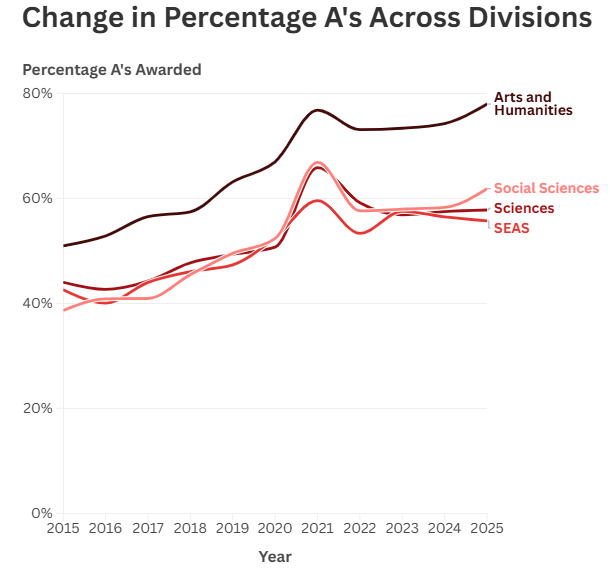
Harvard: "In Arts and Humanities courses, roughly 78 percent of students received A’s last year. In Social Sciences, the figure was 62 percent. In the Sciences and the School of Engineering and Applied Sciences, A’s made up 57 percent and 56 percent" https://t.co/KVPyD3RmOV
"instead of sweeping, university-level reorganizations, the humanities must be left to change on their own, reacting and responding to issues as they become specific to each discipline." https://t.co/9W1ykbTxMk
"Although the axe has mainly fallen on the humanities (and to some extent the social sciences), the natural sciences have also suffered from the corrosive effects of the funding system and of misplaced commercialism." https://t.co/GTZ83RoWdp
"In line with economic explanations, the decline in humanities majors at Chicago began with those entering the College around the 2008 financial crisis. The decline in humanities enrollments also appears around this time": https://t.co/PEWvbwDOym
"There is a paradox here. AI and automation are actually replacing routine technical work faster than humanistic abilities. Skills such as ethics, communication, narrative understanding... and media literacy are the hardest to automate." https://t.co/nL3F3rw3Pu
Criticized in the Public Historian for suggesting history PhDs might also find good jobs outside the academy. Sorry, I still think that is true (and don't think those careers are limited to public history jobs). https://t.co/n7sIxDuXzj
“A handful of humanities programs, like classics and music, saw an increase in enrollment. Digital arts saw the most consistent growth” https://t.co/jcnDisqmMN