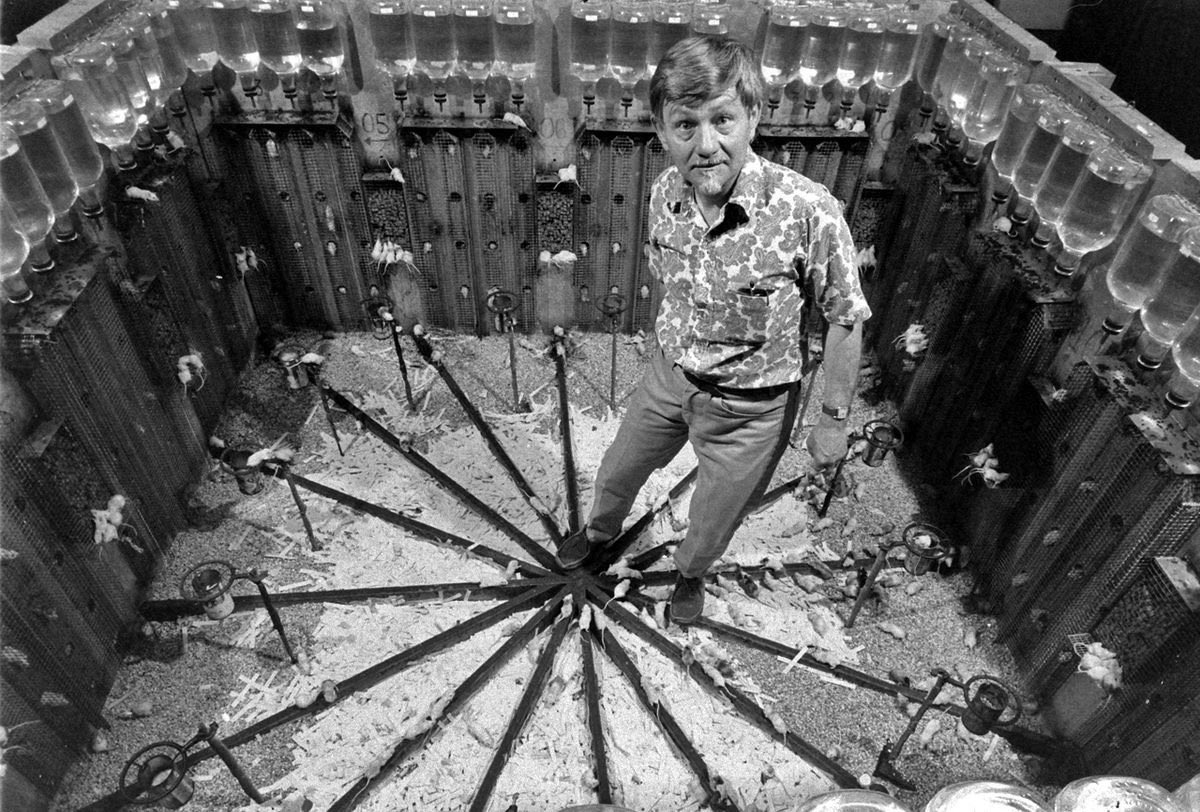
The "Universe 25" experiment it is one of the most terrifying experiments in the history of science, which, through the behavior of a colony of mice, is an attempt by scientists to explain human societies.
The experiment involved creating a utopian environment for a population of rats. The enclosure provided an abundance of food, water, nesting materials, as well as ample space for rats to roam and socialize.
Initially the rat population thrived and their numbers increased rapidly. However, as the rat population grew, social problems began to emerge. Rats became increasingly aggressive, territorial, antisocial.
Females showed more and more aggressive behavior, isolation elements and lack of reproductive mood. There was a low birth rate and, at the same time, an increase in mortality in younger rodents.
Then, a new class of male rodents appeared, the so-called "beautiful mice". They refused to mate with the females or to "fight" for their space. All they cared about was food and sleep. At one point, "beautiful males" and "isolated females" made up the majority of the population.
As time went on, juvenile mortality reached 100% and reproduction reached zero. Among the endangered mice, homosexuality was observed and, at the same time, cannibalism increased, despite the fact that there was plenty of food.
John Calhoun repeated the same experiment 25 more times, and each time the result was the same.
I can't fathom what I saw. A CM bites into an apple, flings it at the crowd. Picks up another, gnaws at it like a monkey, lobs that one too... and the crowd scrambles for it like a divine blessing. This country is beyond redemption. Nobody can save these people from themselves!
Something similar happened to भारत।
समाज विभक्त था
राजा आपस में लड़ते मरते थे
लोगों को ज्यादा tax के अलावा कुछ समस्या ना करते।
लेकिन विदेशी आक्रांताओं ने टैक्स धर्म और धर्म परिवर्तन हेतु बनाया
जीतने के बाद धार्मिक स्थल तोड़े।
Here’s a question nobody likes asking about Nazi Germany:
How did countries like Austria, Poland, and France collapse so fast? These were established nations with armies, governments, borders, and millions of people. France alone was considered one of the strongest military powers in Europe.
Traditionally, we are taught that Hitler’s army was simply this unstoppable military machine that steamrolled Europe because it was overwhelmingly powerful. And yes, Germany was militarily strong. But that explanation alone has always felt incomplete, because historically even very strong armies usually do not conquer enormous amounts of territory that quickly unless something inside the targeted societies is already collapsing first.
Austria disappeared almost overnight. Poland fell within weeks. France collapsed in six weeks. History usually does not work that way unless large parts of the population no longer truly believe the fight is about their own survival.
The uncomfortable and dark reality is that many people did not initially think Hitler was coming for them.
Austria is probably the clearest example. The Anschluss was welcomed by huge parts of the population. German troops entered to cheering crowds, flowers, and celebrations. Many Austrians convinced themselves that joining Nazi Germany would mostly affect the Jews while improving life, or at least preserving it, for everyone else.
That mentality existed across Europe in different forms.
The illusion behind Hitler’s message was essentially: you can still be French, Polish, or Austrian. Live your life. Raise your children. The real problem is your Jewish neighbor.
And for millions of people, that was enough to weaken the will to resist.
A society only fights with total determination when people believe defeat means the destruction of their nation, identity, and future. But many Europeans convinced themselves the Jews were the primary target, so they accepted things they never would have accepted otherwise.
Some collaborated. Some stayed silent. Some rationalized. Some simply looked away.
The tragedy is that they were wrong anyway.
Austria lost its independence. France was humiliated and occupied. Poland was devastated. Cities were destroyed, sovereignty disappeared, millions died, and entire societies were dragged into catastrophe.
People often think evil can be managed as long as it is directed at somebody else first.
History shows otherwise.
This is why I’m done trying to convince Americans or Europeans about the dangers of extreme Islamism. In many mosques and Islamist circles, hatred toward America, Christianity, Western civilization, and Jews is preached openly and repeatedly. Yet many people in the West still process it the same way many Europeans processed antisemitism in the 1930s: “Yes, maybe they hate the Jews, but that doesn’t mean they are coming for us.”
That psychological separation is exactly the point.
As long as people believe somebody else is the primary target, they convince themselves they can safely ignore the ideology itself. They assume the hostility will remain contained to Jews, Israel, or some distant “other.”
But ideologies built around civilizational hatred do not stay neatly limited to one target forever.
And the end result, increasingly visible already across parts of Europe, is collapsing social trust, collapsing law and order, ethnic fragmentation, parallel societies, radicalization, and the steady erosion of the very national identities people assumed were untouchable.
At some point, societies make their own choices.
And eventually they live with the consequences of those choices.
You reap what you sow.
BBC is fighting for India's independence, Qatar for India's secularism, China for India's territorial integrity, Pakistan for India's religious freedom, Canada for India's Moolnivasi rights and America for India's rightful place in the world but Modi is blocking them all ☹️
This is the condition of the Punjab mansion of Hindu businessman Todar Mal who paid 7,800 gold coins and bought 4 yards of land from the Mughal emperor Aurangzeb to bury the bodies of the 2 young sons and mother of Guru Gobind Singh on December 13, 1705.
The Mughal faujdar Wazir Khan had ordered the two young children be bricked alive as they refused to accept Islam. When they died, their grandmother died of shock
The Mughals did not want to allow the cremation to humiliate the martyrs. They stipulated that the buyer can take only as much space as he could cover with give gold coins for the land. All the Sikh chiefs just stood helplessly
That's when Todar Mal produced the coins and bought the piece of land, and cremated the three bodies.
This is biggest irony of life, India is only country where its true heritage is hidden from next generation and falsehood Is taught.
In 1898, an Austrian physicist published a radical mathematical theory that claimed the entire universe was slowly, irreversibly ticking toward its own death.
The elite scientific establishment mocked him so relentlessly that he slipped into a deep depression and eventually took his own life.
Only a few years later, the world realized he was entirely right.
His name was Ludwig Boltzmann.
Today, his breakthrough formula is carved onto his tombstone in Vienna.
Yet outside of the physics community, almost no one understands the brutal, mind-bending philosophical truth he discovered about how our lives actually work.
In the late 19th century, physics was neat, orderly, and beautiful. Scientists believed that if you knew the exact position and velocity of every particle in the universe, you could predict the future perfectly.
The universe was a flawless clock.
Boltzmann looked at the world and realized that was an illusion.
He wanted to solve a deceptively simple riddle: Why does time only move forward? Why does a dropped coffee mug shatter into a hundred pieces, but a hundred scattered pieces never spontaneously jump back together to form a mug?
The laws of standard physics said it could happen. The math didn't forbid it.
So why didn't it?
Boltzmann realized the establishment was looking at the problem completely wrong. They were trying to track every single particle individually. It was an impossible formula.
Instead, Boltzmann decided to use probability and statistics. He stopped looking at individual atoms and started looking at the chaos of the crowd.
He invented a concept called Entropy, the mathematical measure of disorder.
His breakthrough was simple but devastating:
There is only one specific way for the atoms in your coffee mug to be perfectly arranged. But there are trillions of disordered ways for those same atoms to be scattered across the floor.
Things don’t break because the universe is malicious. They break because chaos is statistically overwhelming. Order is rare; disorder is infinite.
Boltzmann proved that the universe is constantly, inevitably moving from a state of low entropy (perfect order) to high entropy (maximum chaos). This cosmic slide toward disorder is the very reason time exists. The "arrow of time" is just the universe getting messier.
The professors of his day were furious. They hated his math because it relied on probability instead of certainty. They refused to believe that the fundamental laws of reality were governed by statistics.
But Boltzmann’s math laid the groundwork for quantum mechanics and explained the fate of the cosmos.
The philosophical lesson Boltzmann left behind is a cold, liberating truth for everyday life:
Order requires deliberate energy. Chaos is free.
Most people treat problems in their lives, a collapsing relationship, a chaotic career, a messy mind, as a sign of personal failure. They think they did something uniquely wrong.
But Boltzmann’s math proves that if you leave any system alone, it will naturally decay into chaos all by itself. Your room doesn't get messy because you are a bad person; it gets messy because the laws of physics dictate that there are infinitely more ways for your clothes to be on the floor than in the closet.
If you want to maintain order, sanity, or success in any area of your life, you cannot rely on things "just working out." The universe is actively trying to scramble your plans.
What is an area of your life right now that is sliding into chaos? Stop waiting for it to fix itself. Chaos is the default setting of the universe. What is the precise, deliberate energy you need to inject into that system today to fight back against the entropy?
Dangers of working to the rule in this Nation.
Remember the doctor earlier thrashed by a civil servant!
And than citizens expect professional services.
The path ro dream outcome is Administration setting higher standard of behaviour for it's members.
https://t.co/BOhkmDZkoB
You probably have no idea who Salim Kumar is, but every Indian should read all about him today.
Salim Kumar was a Malayalam actor who passed away on Saturday night in Kochi at the age of 56. If you don't watch Malayalam cinema, strap in because his story is one of the most remarkable careers Indian cinema has produced, and it deserves to travel beyond Kerala.
He came from nothing. Born in North Paravur, a small town in Ernakulam, into a family that struggled with money. Government school. Graduated from Maharajas College.
So, no film connections, no family wealth, no shortcuts.
He started as a mimicry artist with Kalabhavan, a performance troupe in Kochi that has been the launchpad for dozens of Malayalam actors. Stage shows, comedy routines, television spots.
He was funny in a way that was impossible to ignore, the kind of performer who could make a room laugh in an instant.
His first film was Ishtamanu Nooru Vattam in 1997, a small role nobody remembers. For years he played supporting parts & background comedy.
Then the 2000s happened. His role as Mattancherry Mammathu in Satyameva Jayathe gave him his first real recognition, and after that the comedy roles started coming fast.
Pulival Kalyanam. Thuruppugulan. Kunjikkoonan. Marykkundoru Kunjaadu. If you grew up in Kerala in the 2000s, his face was in half the films you watched. He became the comedian audiences showed up for, the one whose scenes people replayed and quoted at family gatherings.
What separated him from most comedians was precision. He did not rely on volume or slapstick. He used his face, his body, his pauses.
He could get a laugh from the way he blinked. Directors started writing characters specifically for him, because they knew he would take whatever was on the page and make it three times funnier than they imagined.
For over a decade, he was the biggest comic face in Malayalam cinema.
Then came 2010 and a film called Adaminte Makan Abu.
A quiet, small-budget film directed by Salim Ahamed. The story follows an aging Muslim couple in a Kerala village whose only dream in life is to go on Hajj, the pilgrimage to Mecca.
They save every rupee. Things keep falling apart. The film is about their dignity, their patience, and their faith through one disappointment after another.
Salim Kumar played Abu. The man who owns nothing except his wife and his belief, and holds onto both with everything he has.
There is no comedy in the role. No punchlines, no funny faces, no playing to the gallery. It is the complete opposite of everything audiences had ever seen him do.
The entire performance is built on stillness, restraint, and pain carried quietly behind the eyes.
He won the National Film Award for Best Actor for it. That is the highest acting honour in Indian cinema. The film was also selected as India's official entry for the Best Foreign Language Film at the Academy Awards (Oscars) that year.
In one role, Salim Kumar went from "the funny guy from Malayalam films" to one of the most respected actors in Indian cinema.
He simply disappeared so completely into a character that you forgot you were watching a comedian at all.
He followed it with more serious work. Achanurangatha Veedu, which won him the Kerala State Award. Traffic, still considered one of the finest ensemble films in Malayalam cinema. Perumazhakkalam.
Each time, he proved the National Award was not a fluke. The man had range that most actors who only do drama cannot match.
Unfortunately, Salim Kumar suffered from liver cirrhosis, a condition he said was hereditary in his family and not related to alcohol. His brother had the same illness. He underwent a liver transplant a few years ago. He tried naturopathy. He talked about all of it openly, without shame, without self-pity.
He kept working between treatments. He kept being funny. He kept showing up, even when his body was failing him.
He was also fearlessly outspoken about politics and social issues, which in any film industry can cost you work. He did not care. He said what he believed and lived with the consequences.
He passed away Saturday night at a hospital in Kochi. He was 56. The Kerala government bore the funeral expenses and gave him police honours.
The Chief Minister paid homage personally. Mammootty, one of the biggest names in Indian cinema, mourned him publicly. Thousands of people lined up at the North Paravur Town Hall on Sunday to say goodbye.
350 films in three decades. A National Award for Best Actor. An Oscar entry. A career that started from mimicry stages and ended at the very top of Indian cinema.
The reason most of India does not know his name is because Malayalam cinema, despite being one of the best film industries in the country, still does not get the national attention it deserves.
Actors like Salim Kumar live and work in a language bubble, and their stories rarely cross over the way a Bollywood career would.
This is a loss for everyone who never got to watch him. A man who came from poverty, made millions laugh, then proved he could make them cry just as hard, and fought his own hardest battle with utmost dignity.
If you watch one film after reading this, make it Adaminte Makan Abu. It is a masterpiece.
Police have arrested this cook who was preparing food in the kitchen of Hotel Flourish Stays, where the fire reportedly started.
Next, they should arrest the vegetable, grocery, and dairy suppliers. Had they not supplied ingredients that day, there would have been no cooking and no fire.
After that, they should arrest the farmers who grew the vegetables, the factory owners who produced the grocery items, and the cows that gave the milk.
Sabko pakad lena. Kisi ko mat chhodna. Except, of course, the officials whose job it was to inspect such establishments and flag safety violations before a tragedy occurred.
Voyager 1 is 24 billion kilometers from Earth.
It communicates with us using a 23-watt transmitter.
Less than a refrigerator light bulb.
The signal takes 22 hours to reach us, traveling at the speed of light.
By the time it arrives, it's 20 billion times weaker than the power of a digital watch battery.
NASA's Deep Space Network picks it up using 70-meter dish antennas cooled to near absolute zero to reduce electronic noise.
The engineering required to hear a 23-watt signal from 24 billion km away is arguably more impressive than the spacecraft itself.
Launched 1977.
Still transmitting.
Still being heard.
We built something that works perfectly, 47 years later, in conditions no one has ever tested in.
That's what engineering for the long term looks like.
Global North must stop growing for India to catch up in prosperity: Piketty
Or
India should stop emulating/ imitating/ following
https://t.co/zKXT6sQLIn
people may celebrate decimation of dmk/admk. TVK is dravidian 3.0 will be more dangerous since he is a practising christian. missionary will have a free run. the danger will be the seeping in of KL model. TN has many important n old temples who have crores of assets. Lawyers defending these temples will have to work 48/7. TVK for TN is not good sign at all.
In the 1990s, Canadian ecologist Suzanne Simard made a groundbreaking discovery that challenged everything we thought we knew about how forests work. While studying managed forests in British Columbia, she noticed something puzzling: when birch trees were removed to promote the growth of valuable Douglas firs, the firs did not flourish as expected, they actually struggled and grew more slowly.
Determined to understand why, Simard traced the movement of nutrients using radioactive carbon isotopes. What she found was astonishing. Trees were actively sharing resources through vast underground fungal networks known as mycorrhizae. These delicate, thread-like fungi connect the roots of different trees across the forest floor, forming a complex web that allows the exchange of carbon, water, nutrients, and even chemical signals, sometimes between entirely different species.
She discovered that older, larger trees often serve as central "hubs" or "mother trees," supporting younger saplings by redistributing vital resources and helping the entire ecosystem remain resilient. When these key trees are removed, the underground network weakens, and the health of the remaining forest declines.
Simard’s research overturned the traditional Darwinian view of forests as battlegrounds of ruthless competition. Instead, she revealed a far more sophisticated reality: forests operate as highly cooperative systems where trees communicate, support one another, and even warn neighboring trees about threats like drought, disease, or insect attacks.
What appears to the human eye as a silent, still forest is, in truth, a vibrant, interconnected living network, built not on isolation and rivalry, but on deep connection and mutual aid.
"Women's Poverty"
Never thought of it that way & yet it rings a bell.
All those husbands beating women to usurp their earnings for booze regularly
At 1️⃣ level
And
Homemakers struggling for basics (Make shift period Supplies to daughters)
At other level
A new perspective
Why "freebies"?
- Because India has eradicated women's poverty through targeted programs in the last 12 years.
- Because economic growth in democracies is not sustainable at very high levels of poverty (~30% in 2011/12)
- Because not all "freebies" are alike. Some are distortionary, wasteful & some are hugely beneficial.
#KnowIndia #KnowWelfare🇮🇳
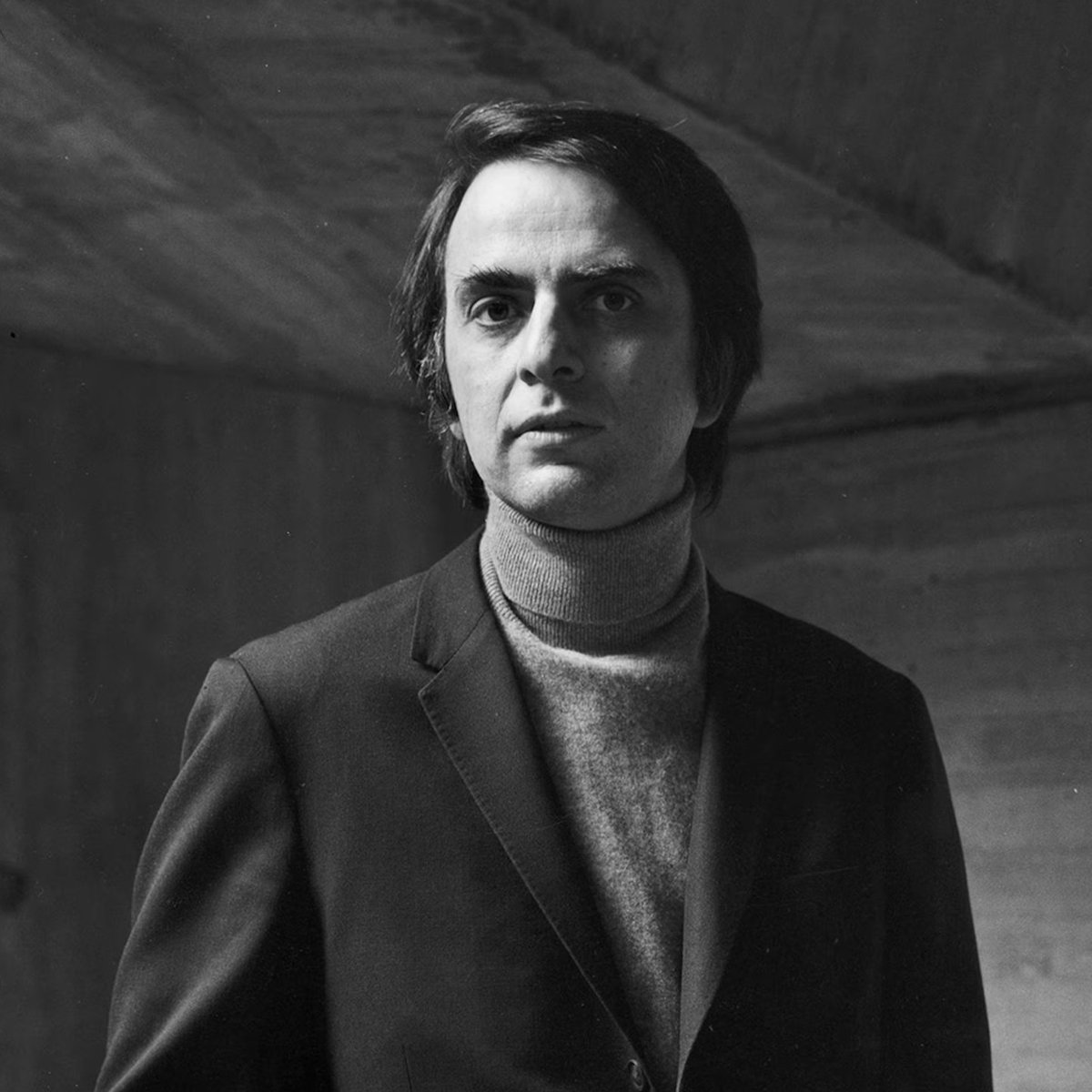
“I have a foreboding of an America in my children's or grandchildren's time -- when the United States is a service and information economy; when nearly all the manufacturing industries have slipped away to other countries; when awesome technological powers are in the hands of a very few, and no one representing the public interest can even grasp the issues; when the people have lost the ability to set their own agendas or knowledgeably question those in authority; when, clutching our crystals and nervously consulting our horoscopes, our critical faculties in decline, unable to distinguish between what feels good and what's true, we slide, almost without noticing, back into superstition and darkness...
The dumbing down of American is most evident in the slow decay of substantive content in the enormously influential media, the 30 second sound bites (now down to 10 seconds or less), lowest common denominator programming, credulous presentations on pseudoscience and superstition, but especially a kind of celebration of ignorance”
― Carl Sagan, The Demon-Haunted World: Science as a Candle in the Dark
You have to admire the commitment.
A mining project plants 16 lakh trees, restores 568 hectares.
And some people are still standing in 2026 shouting:
‘But did you see the tree Adani cut?’
The Chhattisgarh mine story now includes a 5 lakh-sapling nursery, restored land, native forest regeneration and a target of 40 lakh trees.
But that version of the story never trends.
Apparently outrage has better marketing than outcomes.
https://t.co/1Esi1MT2qj
The Cockroach Janta Party is riding on genuine Gen-Z grievances much like its progenitor AAP once exploited legitimate middle-class frustrations, but it will soon reveal its true colours: anarchism, state control, Hinduphobia, and fantasies of breaking up India.
My views: