Thank you Big Oil and enablers. The data is out: Our planetary energy imbalance has surged 40% since 2021, hitting 1.12 Watts per square meter. We are physically forcing extra heat into our system at a horrifying rate. What this actually means:
>Every single day, the sun shines down and pours clean, raw energy. In a healthy scenario, the Earth takes what it needs and radiates the excess heat back out into the cold vacuum of space in a self-regulating loop
>Big Oil has broken that loop: When we burn coal, oil, and gas, we dump billions of tons of greenhouse gases (like carbon dioxide and methane) into the atmosphere. This pollution acts like a suffocating blanket wrapped around the globe. Sunlight passes right through it to warm the surface, but when that heat tries to bounce back out into space, it hits the blanket and gets trapped
>The Earth Energy Imbalance is the difference between the amount of energy arriving from the sun and the amount that successfully escapes back into space. It is the planet's energy bank account
>Surging energy imbalance means the gap between incoming and outgoing energy is widening at an accelerating, hockey-stick rate. Latest data: Earth's energy imbalance surged by 40% in the first half of the 2020s, hitting 1.12 Watts per square meter
>That's 1.12 Watts of extra, unescaped energy for every single square meter of the entire planet's surface, running 24 hours a day, 365 days a year. It's the energy equivalent of exploding hundreds of thousands of atomic bombs inside our atmosphere every single day
>This trapped energy doesn't just vanish. First, over 90% of that trapped heat is forced straight into our oceans which are acting as a giant buffer. Result: marine heatwaves that bleach coral reefs to death, collapse fisheries, and structurally alter marine life. Second, the trapped energy powers the melting of permanent ice reserves at a record pace, which dumps trillions of tons of freshwater into the sea, driving up global sea levels. Third, trapping this much energy in the system supercharges the global weather machine to suck moisture out of the soil and give us devastating, multi-year droughts and apocalyptic wildfires. Then, because a warmer atmosphere holds more water, it dumps that moisture all at once in economy-wrecking floods
New Anthropocene paper. Earth still operates in "Holocene logic", buffering heat imbalance. Anthropocene = Pressure. But, BAU, reaching 3°C in 2100 & we get "stuck" in a Hothouse trajectory for 1000 years. Anthropocene risks turning into a state. No Good.
https://t.co/8gLxC9w7aX
La primera mujer presidenta de México llega manejando el primer automóvil eléctrico desarrollado 100% en México. Tenias razón, viejo, estamos viviendo momentos estelares 🤩����
Good take by @adam_tooze in the FT.
I think a good analogy to use is this: imagine Saudi Arabia offered to sell their oil wells at 80% off, and you could somehow ship them home. You'd call any leader who refused that deal a complete fool.
Well that's pretty much what China is doing with solar panels.
That's what people fail to understand: there's such intense competition and so much supply in China - the so-called "involution" phenomenon - that it's YOU, as a customer, who's getting subsidized when you buy solar panels. This is literally China paying your energy bill.
And it's like oil wells because, once it's installed, there's no dependency. You buy it once, and for three decades (the average lifespan of a solar panel) you're extracting energy from your own sun, just like an oil well extracts from your own ground. It's one of the most sovereign energy asset you can buy.
The rational response when you see this is to buy as many as you can, as fast as you can. All the more when you're Europe and you have massive energy supply problems (and no solar industry of your own to protect).
But no, we scream "overcapacity" and put up tariffs. We're so deep into geopolitical brainworms that we can't recognize the best deal in the history of energy.
Src for the article: https://t.co/BMB8wBJEAm
"Leaders who depend on imported fuel increasingly see solar, batteries, electric transport, and efficiency not as political burdens but as tools for containing the price shocks that drive their citizens into the streets. For the first time in the climate era, public interest in cheap, secure clean power and political interest in regime continuity point in the same direction"
By @Climate_Intel and me in @ForeignPolicy
https://t.co/q9xtEf7Jt5
The world today is characterized by large-scale inequalities. And a climate crisis is looming over us.
We urgently need a new vision for global progress in the 21st Century. One that grounds human development and equality in planetary habitability.
What would it take to achieve high prosperity and equality while remaining within planetary boundaries?
The World Inequality Lab is very excited to launch the #GlobalJusticeReport.
[1/7]
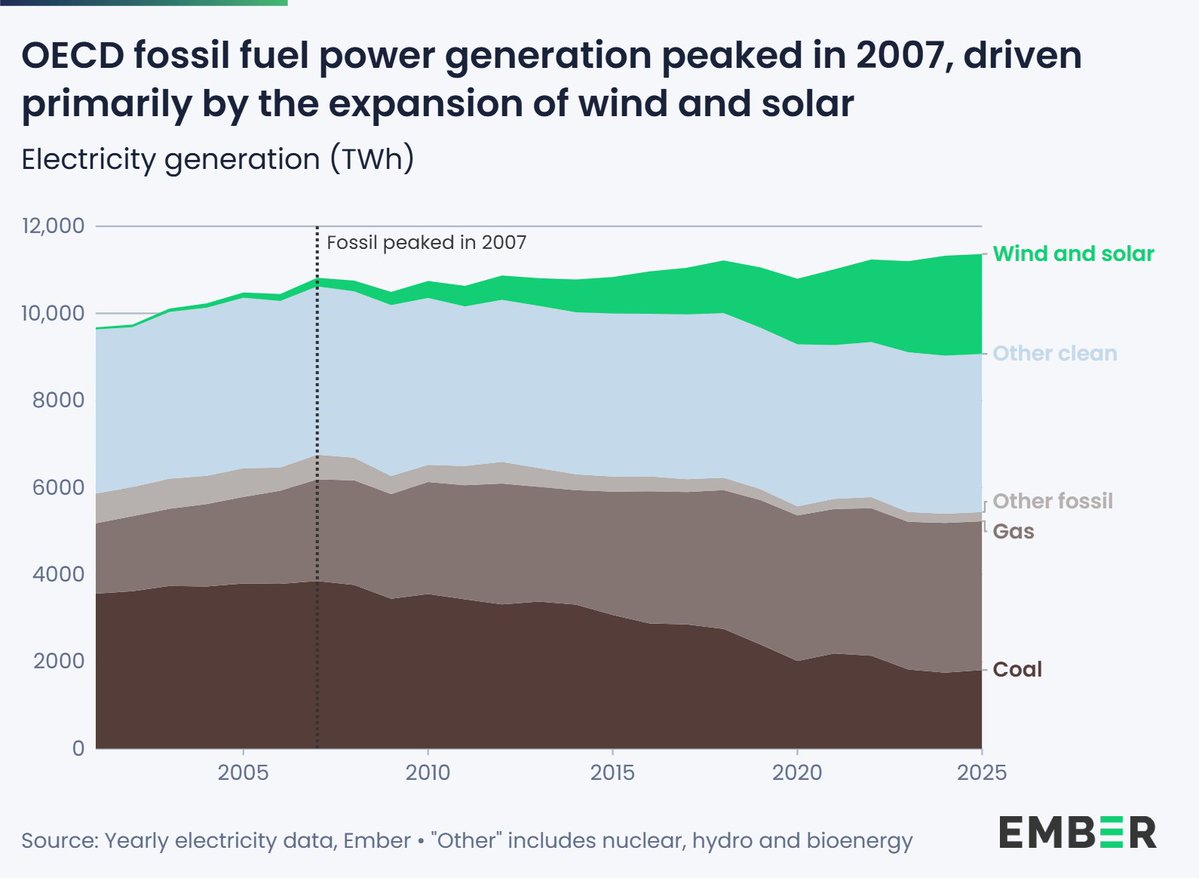
NEW | Every @OECD country is now below its fossil peak – and the decline is going global 🌍⚡
For the first time this century, non-OECD fossil generation fell too.
🔗https://t.co/RnXD54oCzy
🧵 1/6
‼️‼️ “Los riesgos y daños para la salud pública y el clima son reales y van en aumento" confirma una compilación (2023) de más de 2300 estudios internacionales en torno al fracking.
Building a coalition of the willing, breaking the deadlock, planning the transition without the blockers at the table…it hit me today that no matter what happens, Santa Marta is already a success. This conversation was unthinkable a couple of years ago. Overton window? Wide open
https://t.co/M51Or6uxbs
In a new major report, the World Bank conceded that its decades-long war on industrial policy was wrong, saying its old advice “has not aged well — it has the practical value of a floppy disk today.”
But this is not an intellectual awakening.
The World Bank's doctrine shifted because the means through which Western nations can maintain their dominance shifted — not because economists suddenly discovered new evidence.
The world’s wealthiest nations are now pursuing industrial policy so openly that it can no longer be denied to the rest of the world.
When the geopolitical winds shift, so does the ideology of institutions where wealthy nations' interests are deeply entrenched.
NEW | The world installed a record 814 GW of solar and wind capacity in 2025 ☀️⚡️
That's over 1,000 TWh of electricity generation per year...
...enough to displace nearly twice Qatar's annual LNG export volume in gas generation 🔥❌
Fossil fuels crisis? Wind and solar deliver.
""There should be a simple rule for being a thinker," says Cal Newport. "Don’t let AI write anything for you. Writing is to cognitive health what steps are to physical health"": https://t.co/wBuUR25McP
@PeterVerovsek Excellent piece, not shying away from controversies nor allowing for cynical despair. Very poignant, too - especially the opening and closing theme of 'Unheimlichkeit'. Thanks Peter!
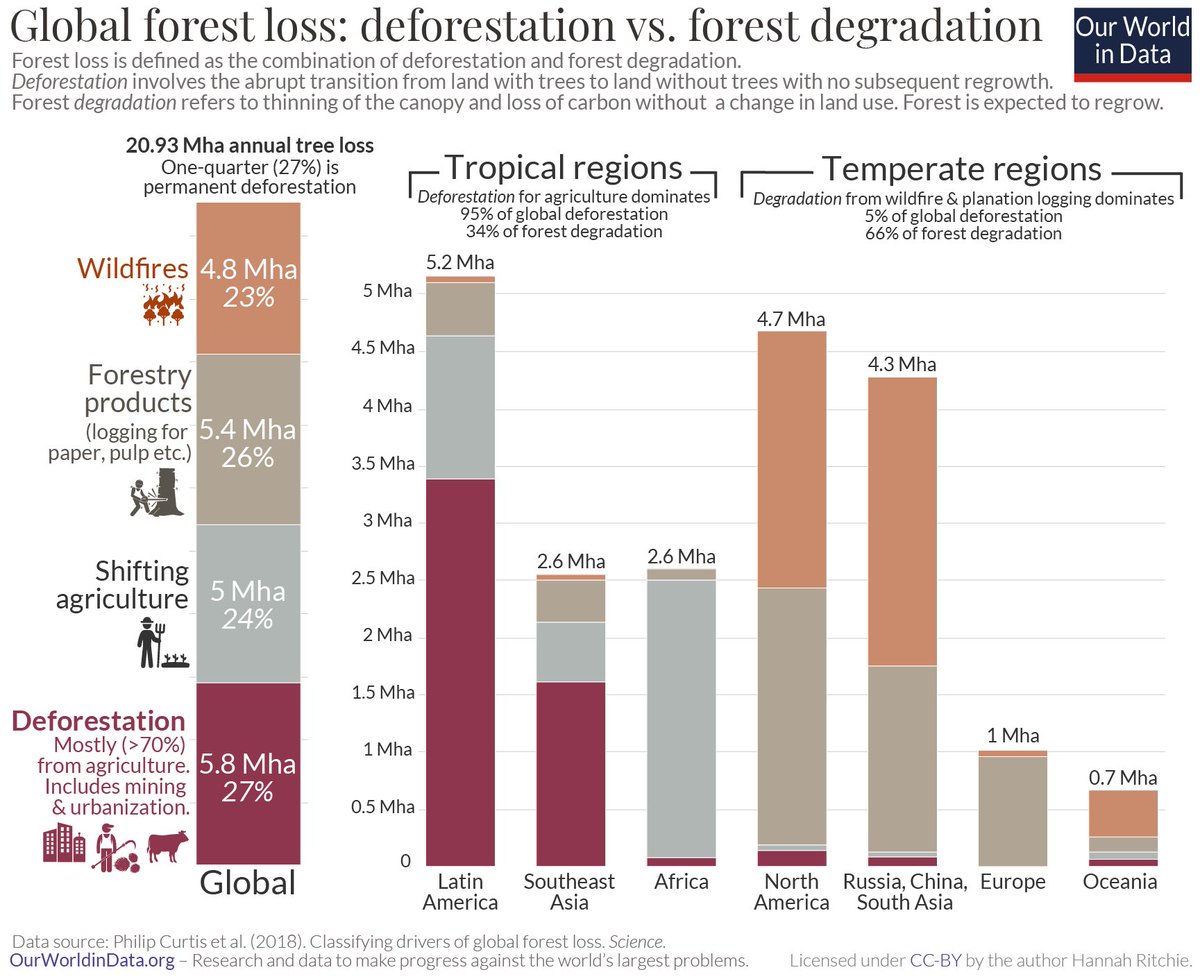
Since the end of the last ice age 10,000 years ago, the world has lost one-third of its forests. Two billion hectares of forest land, an area twice the size of the United States, has been cleared.
We cannot lose another acre.
WATCH: “The answer has to be a more progressive tax system. Give people the necessities of life for free — childcare, healthcare… the rich keep getting richer…”
Lloyd Blankfein, Senior Chair of Goldman Sachs, out here sounding like @AOC & Bernie 👀 🎯
(From @bluegeorgia)
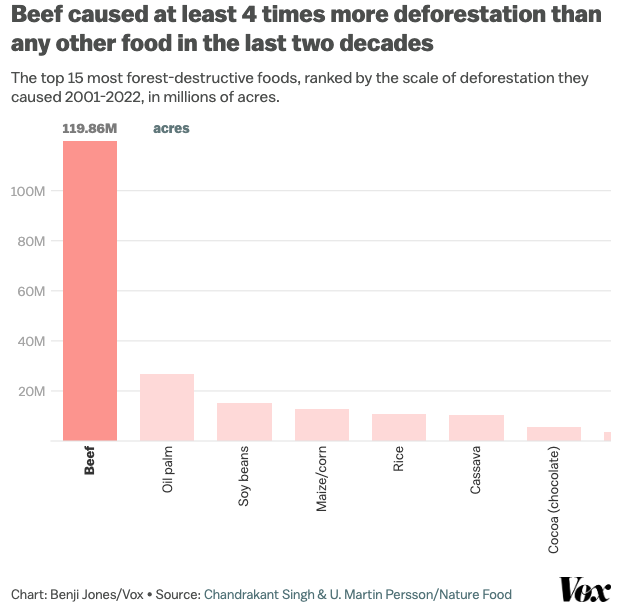
In just the last 20 years, beef production destroyed global forests the size of California, mostly in the tropics
Through tree loss alone (not including methane or feed crop production), this caused 3x the annual CO2 emissions of the US
It's the cow, not the how
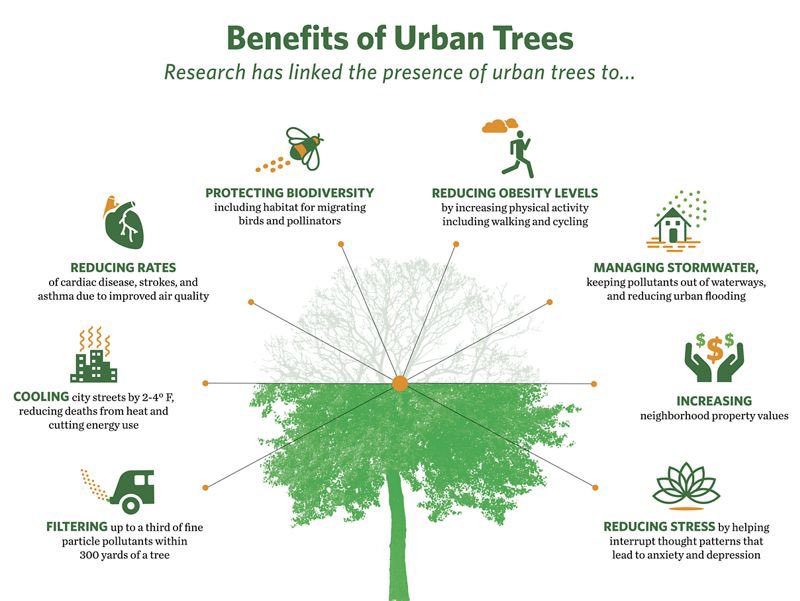
There’s no better time to invest in urban #forests, city trees keep temperatures and energy costs low while improving air quality, water quality & mitigating the effects of the climate crisis like pollution and flooding.
You torture one animal in America, and it's a crime. You torture millions, and it becomes a business model and you're richly rewarded. Folks, we have to rethink the way we abuse livestock and poultry on an industrial scale.
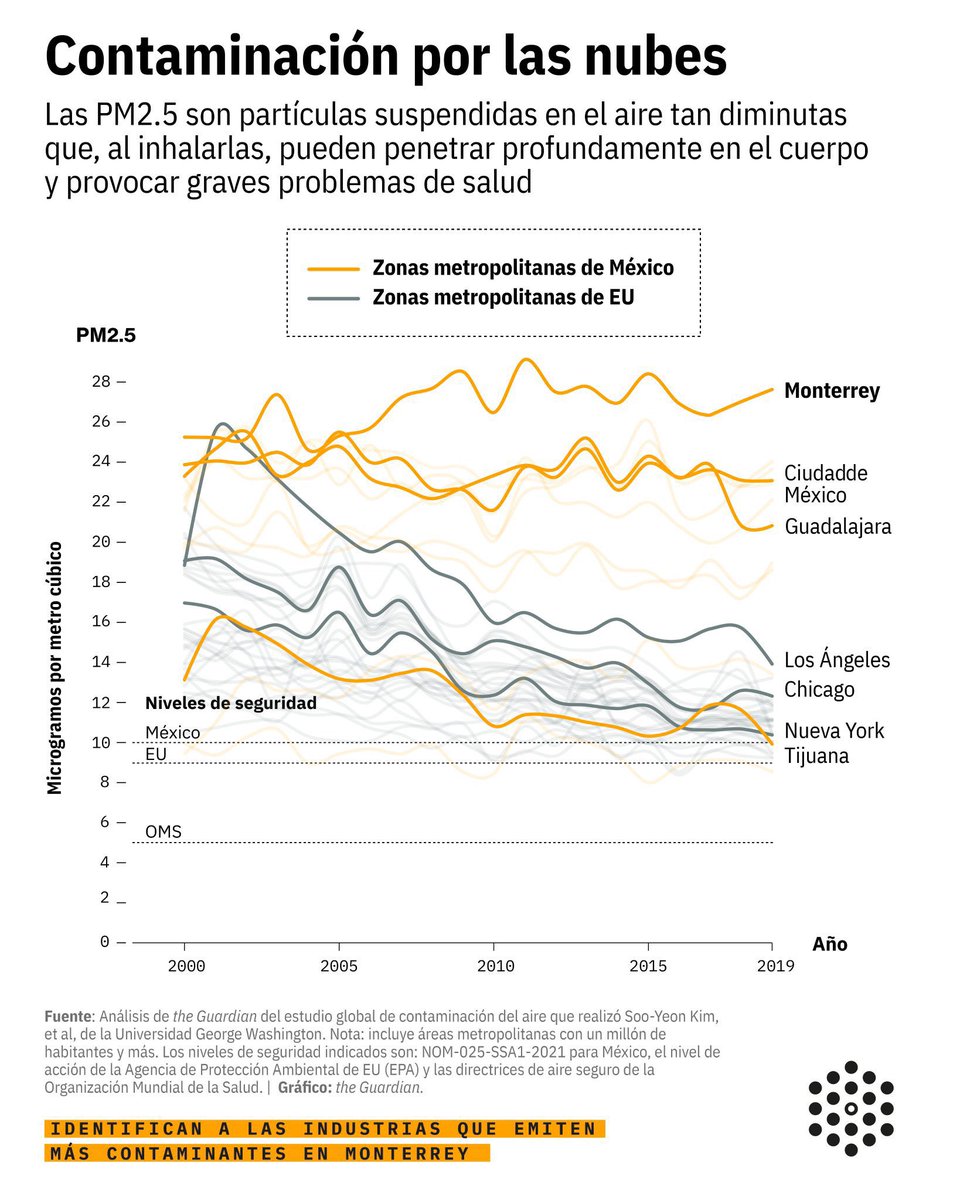
😷💨| La contaminación industrial en Monterrey, con una población de 5.3 millones de habitantes, es tan alta que figura como el área metropolitana con la peor contaminación por partículas suspendidas de México, Estados Unidos y Canadá, de acuerdo con un estudio global reciente que analizó las tendencias hasta 2019.
➡️ https://t.co/K8VLD8M6Ax




![PikettyWIL's tweet photo. The world today is characterized by large-scale inequalities. And a climate crisis is looming over us.
We urgently need a new vision for global progress in the 21st Century. One that grounds human development and equality in planetary habitability.
What would it take to achieve high prosperity and equality while remaining within planetary boundaries?
The World Inequality Lab is very excited to launch the #GlobalJusticeReport.
[1/7]](https://pbs.twimg.com/media/HJ6fXhVXwAEULdM.png)