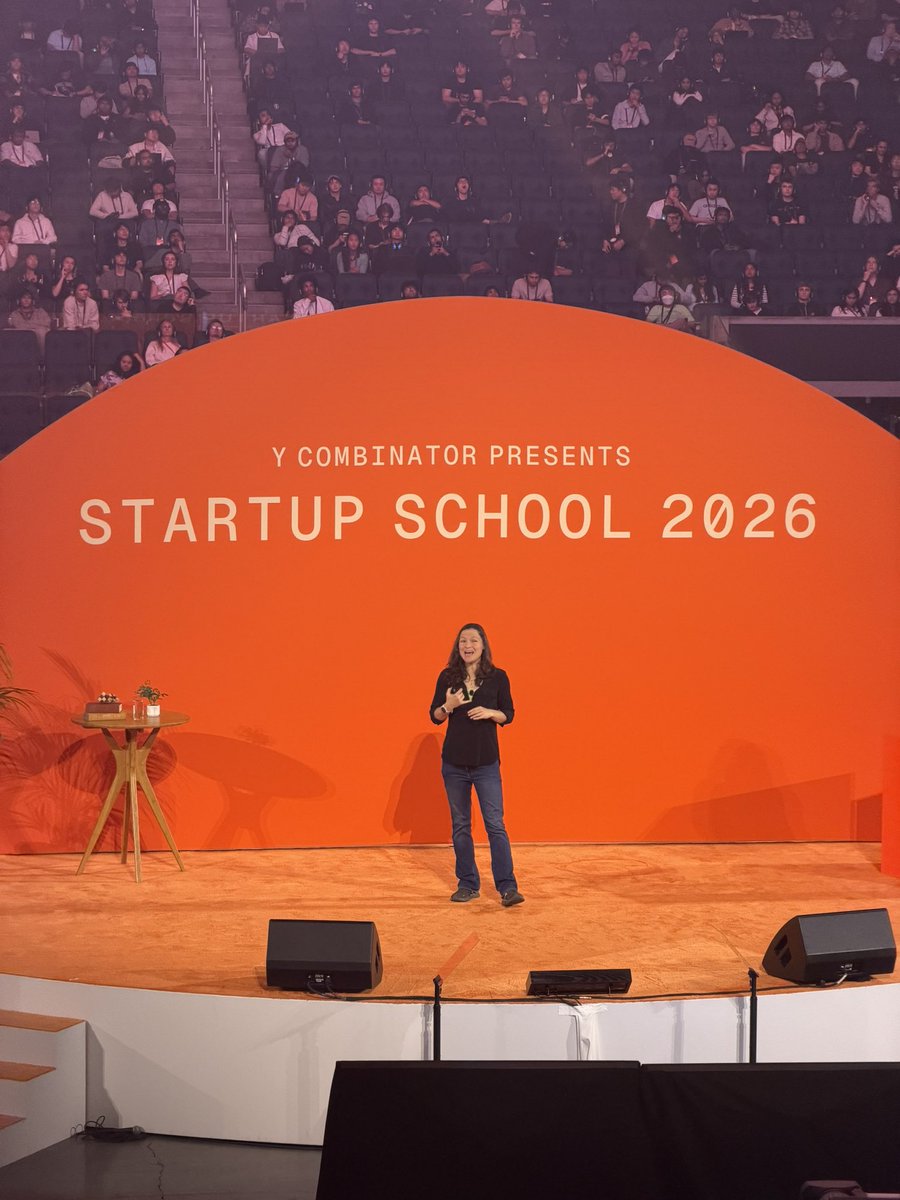
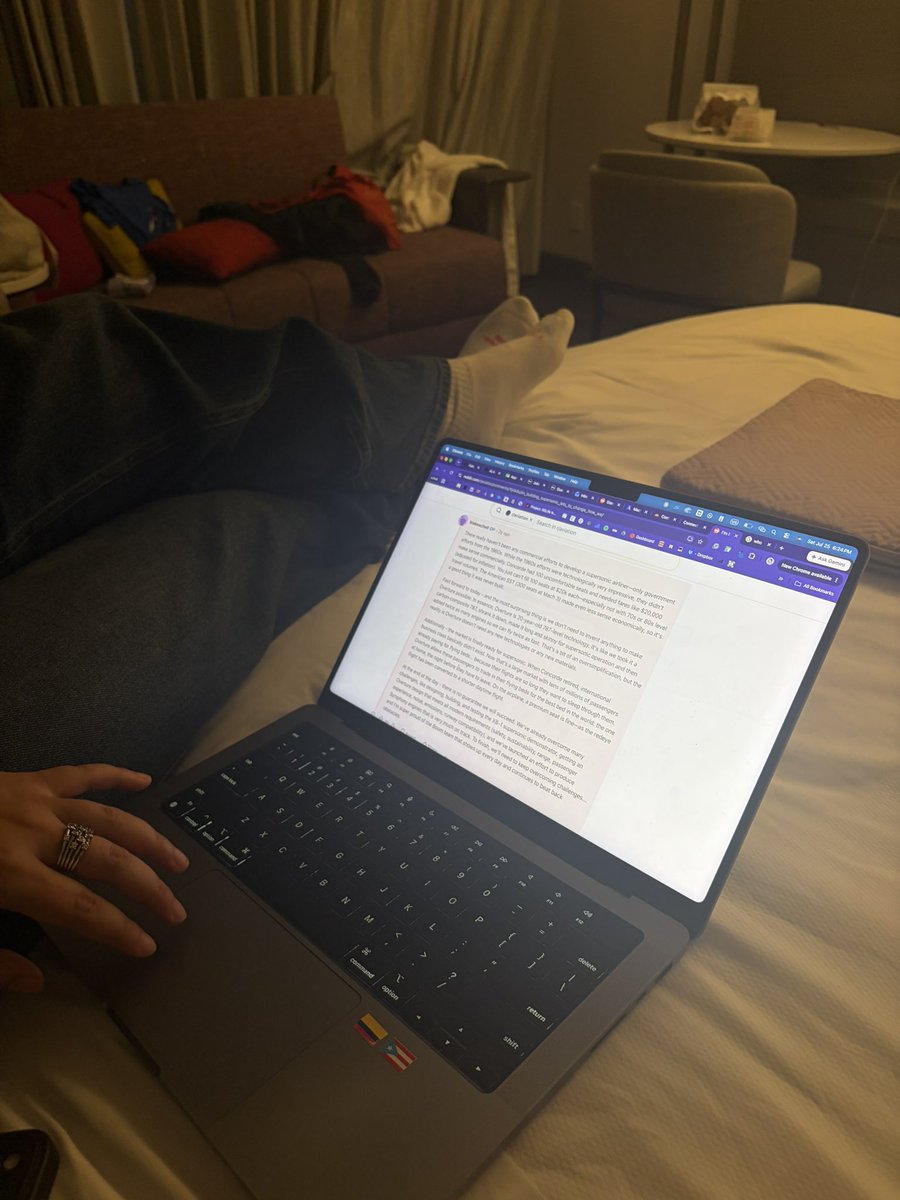
Highlights from Chelsea Finn’s (@physical_int Co-Founder) talk at YC Startup School:
> RL for robotics is bottlenecked by physical rollout cost, not just algorithm quality. 1M trajectories of a 1-minute task would take ~700 robot-days, which makes direct scaling of PPO/GRPO-style methods fundamentally different from LLM post-training.
> Memory is still a major missing piece in robot foundation model: most SOTA systems have effectively zero memory, and naive video history is too expensive (10s at 50Hz across 4 cameras ≈ 500K tokens). π solves this through short-term video memory plus long-term text summaries of the prior 10–15 minutes, which enabled a fully autonomous multi-step kitchen cleaning task.
> Generalist robot models may already be beating specialist pipelines: π0.7 mixed demos, rollouts, human video, and web data, then used rich prompting + metadata to make even lower-quality data useful — and it matched/outperformed fine-tuned specialists while showing compositional transfer to new tasks/platforms.
@chelseabfinn Thank you for the great talk!!
@fromsinaimportx@eve_bouff so grateful for the beautiful artistic minds at yc + beyond involved in designing this!! it’s another beautiful day without slop
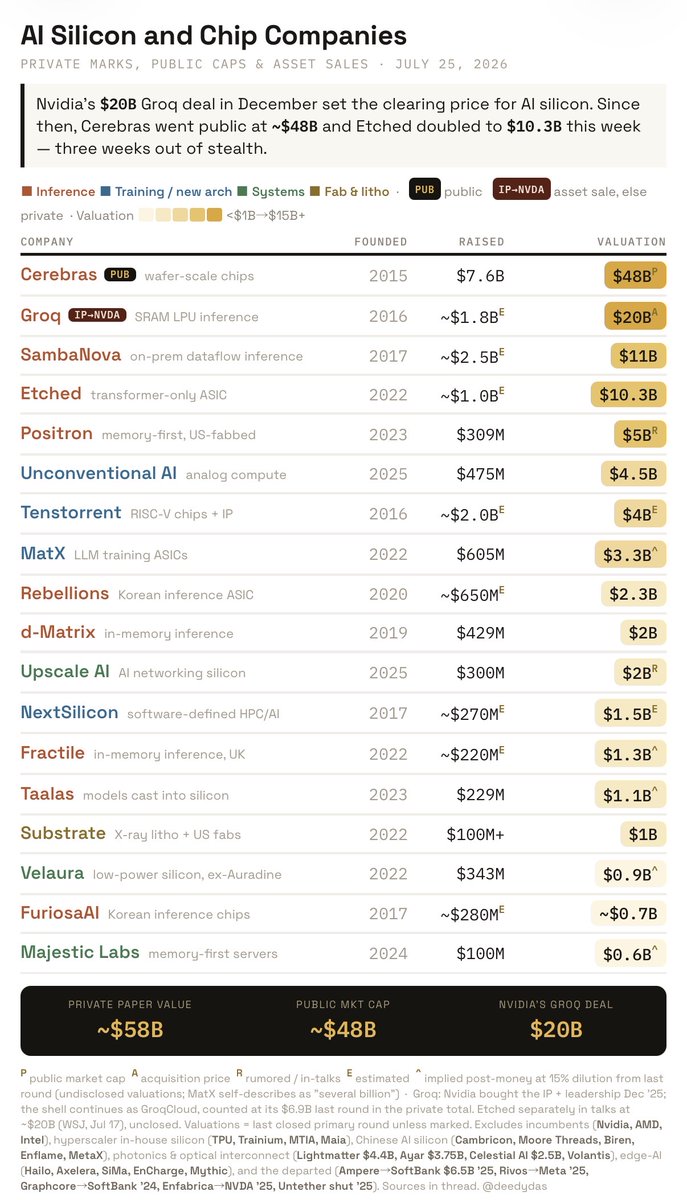
Every single startup working on next-gen AI chips (July 2026)
Every approach attacks data movement differently to break Nvidia’s dominance:
– eliminate DRAM (Groq)
– eliminate the interconnect (Cerebras)
– eliminate the compute/memory split (d-Matrix)
– eliminate the server’s compute-centrism (Majestic)
– eliminate generality (Etched, Taalas, MatX)
– or eliminate the $400M litho machine (Substrate)