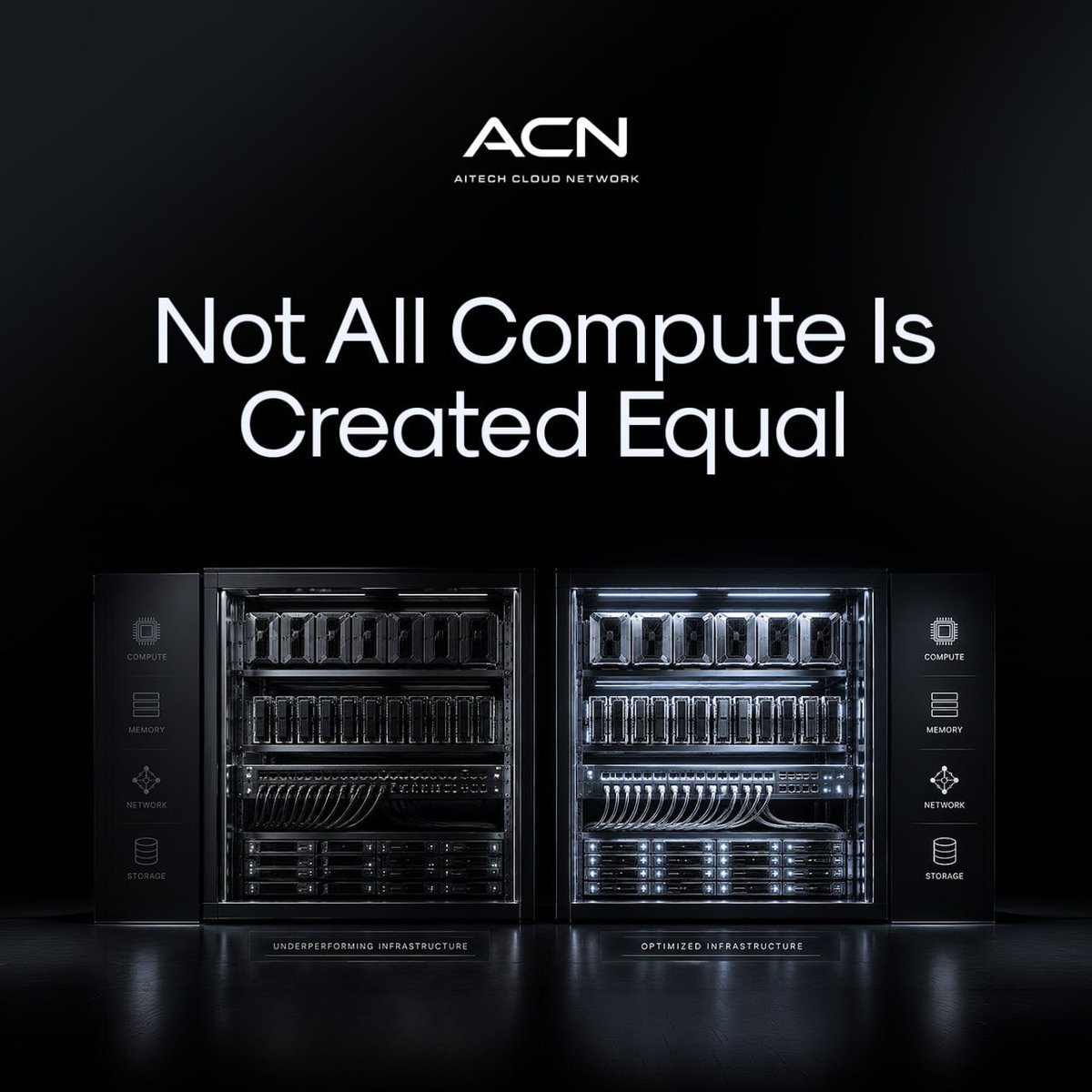
Not All Compute Is Created Equal!
Two GPUs can cost a similar amount to run and deliver very different results.
Why?
Because compute isn't just about processing power.
Memory, bandwidth, networking, and workload type all influence performance.
That's why the best infrastructure decisions aren't always about choosing the most powerful hardware.
They're about choosing the right hardware for the workload.
In many cases, matching the workload to the right compute resource can have a bigger impact on performance and cost than upgrading to a more expensive GPU.
Most AI Agents Never Leave The Chat!
A lot of AI agents today look impressive in demos.
Ask a question.
Get an answer.
But businesses don't need more conversations.
They need outcomes.
The real challenge starts when an agent has to pull data, make decisions, trigger actions, and interact with other systems without constant human input.
That's where most projects stop.
Agent Forge 2.0 is built to help bridge that gap, making it easier to build AI agents that can connect tools, workflows, and data into a single automated process.
The next phase of AI isn't better chat. It's getting things done.
A few years ago, access to high-performance compute was a differentiator.
Today, it's becoming table stakes.
The same thing happened with internet connectivity, cloud infrastructure, and data storage.
AI is following a similar path.
As adoption increases, access to reliable compute is becoming less of a competitive advantage and more of a fundamental requirement.
The companies that recognize that shift early will be in a much stronger position as AI moves from experimentation to everyday business use.
New Markets Coming Soon
Rewards for the latest Vision Markets round are currently being calculated and will be distributed based on voting performance.
No capital was required to participate. No positions to open. No funds at risk.
Just make your prediction, vote, and earn rewards if you're right.
A new batch of markets is on the way, giving the community more opportunities to participate and earn.
Stay tuned.
Crypto Created Digital Assets. AI Is Creating Digital Commodities.
For years, crypto has been built around digital assets.
Bitcoin introduced digital money. Ethereum introduced programmable contracts.
AI is creating something different. A digital commodity.
Every AI model, AI agent, inference, and automated workflow runs on compute. As AI adoption grows, demand for compute grows with it.
That's what makes compute different. Most digital assets are held.
Compute is consumed. Oil powered the industrial economy. Electricity powered the modern economy.
Compute is becoming the resource behind the AI economy. Crypto showed that digital assets could become trillion-dollar markets.
Compute may become the market that powers everything built on top of them.
AI Agents Without Payments Are Just Assistants!
An assistant can answer questions. An economic agent can create value.
The difference is simple.
Can it transact?
Can it buy services?
Can it sell services?
Can it manage resources?
Can it execute economic decisions?
This is where blockchain becomes far more interesting than most AI discussions acknowledge.
Intelligence is important, but intelligence combined with economic capability creates an entirely different category of software.
Web3 Is Getting More Operational!
The conversation is gradually shifting.
Less focus on experimentation. More focus on reliability, scalability, automation, and execution.
As adoption grows, operational excellence may become a bigger differentiator than innovation alone.
The next phase of Web3 could look very different from the last.
Weekly Development Update!
Development continues across the Compute Marketplace and Agent Forge, with ongoing improvements focused on workflow reliability, usability, integrations, and expanding agent capabilities.
Compute Marketplace
• CDC platform development continues
Agent Forge
• Knowledge Base management enhanced with support for editing and deleting entries directly within the platform
• Parallel block execution issue resolved, ensuring all parallel branches now execute correctly within workflows
• Lite mode text input upgraded to better support longer prompts, including proper Alt + Enter functionality and dynamic input expansion
• Wallet connection flow improved to prevent automatic selection of the first detected browser wallet, giving users greater control during connection
• Google Sheets block issue resolved, preventing workflow failures caused by incorrect ID handling within block operations
• Curated MCP server templates introduced to simplify onboarding and help users get started more quickly with MCP-powered workflows
• MCP management experience enhanced with a new “Add Server” flow, improved server organization, and refined template discovery and selection options
• Shopify Agent block completed, enabling direct interaction with Shopify tools including catalog search, product retrieval, cart management, and checkout workflows
• UCP agent profile handling implemented to ensure required profile information is automatically passed during MCP tool execution, improving compatibility with Shopify integrations
• HTML artifact editing accuracy improved with a fix ensuring edits are applied at the correct cursor position within artifacts
• OpenRouter integration block completed, providing expanded access to a broader range of LLM models through a unified API gateway
• Workflow interface refined with improved control bar positioning and visual cleanup for a more streamlined user experience
Every AI Agent Is A Compute Customer!
People often talk about AI agents as if they're software. They're also customers.
Every task they perform consumes compute. Every workflow they execute consumes compute.
Every decision they make consumes compute. If billions of AI agents eventually exist, we're not just building software.
We're creating billions of new consumers of infrastructure. That's one reason the growth of AI agents and compute are deeply connected.
Back in 2024, Bitcoin trading at similar levels was widely viewed as confirmation that institutional adoption was accelerating and that the market was entering a new phase of growth.
Today, Bitcoin is trading at similar levels, yet the conversation feels very different. Instead of optimism, many investors are focused on uncertainty, downside risk, and whether the best days of this cycle are already behind us.
What I find interesting is that the underlying asset hasn't changed nearly as much as the sentiment surrounding it. Institutions continue to allocate capital, the network continues to operate as expected, and the long-term investment case remains largely intact.
What has changed is perception.
Investors tend to become more confident after prices have risen and more cautious after prices have fallen, even when they're evaluating the same asset at similar levels.
That's one of the reasons markets are so fascinating. The narrative around an asset can change dramatically, even when the asset itself changes very little.
The AI Economy Needs Verification!
AI is becoming a massive consumer of compute, data, and digital services.
The issue is simple:
Most AI systems still require you to trust what they tell you.
Trust the model ran.
Trust the output is real.
Trust the payment happened.
That works until autonomous agents start interacting with each other.
This is why on-chain verification matters.
Ethereum gives AI systems a shared layer for coordination, payments, and transparent execution between agents, services, and machines.
Everyone on Crypto Twitter has an opinion.
Bitcoin to $200k.
Ethereum to new highs.
This token will 100x.
But opinions are easy.
Being right consistently is difficult.
Vision Markets turns predictions into a public track record.
Make your call.
Wait for the outcome.
Build a history of accurate predictions, and get rewarded.
https://t.co/HLPoVzpZmW
The Future Of AI May Look More Like An Economy Than A Product.
Today's AI products are mostly isolated tools.
Tomorrow's AI systems may behave more like economies.
Agents competing.
Agents collaborating.
Agents providing services.
Agents consuming services.
Agents paying one another.
The infrastructure required for that future extends far beyond models.
It requires identity, payments, ownership, settlement, and coordination.
The conversation around AI is gradually moving from intelligence toward economics.
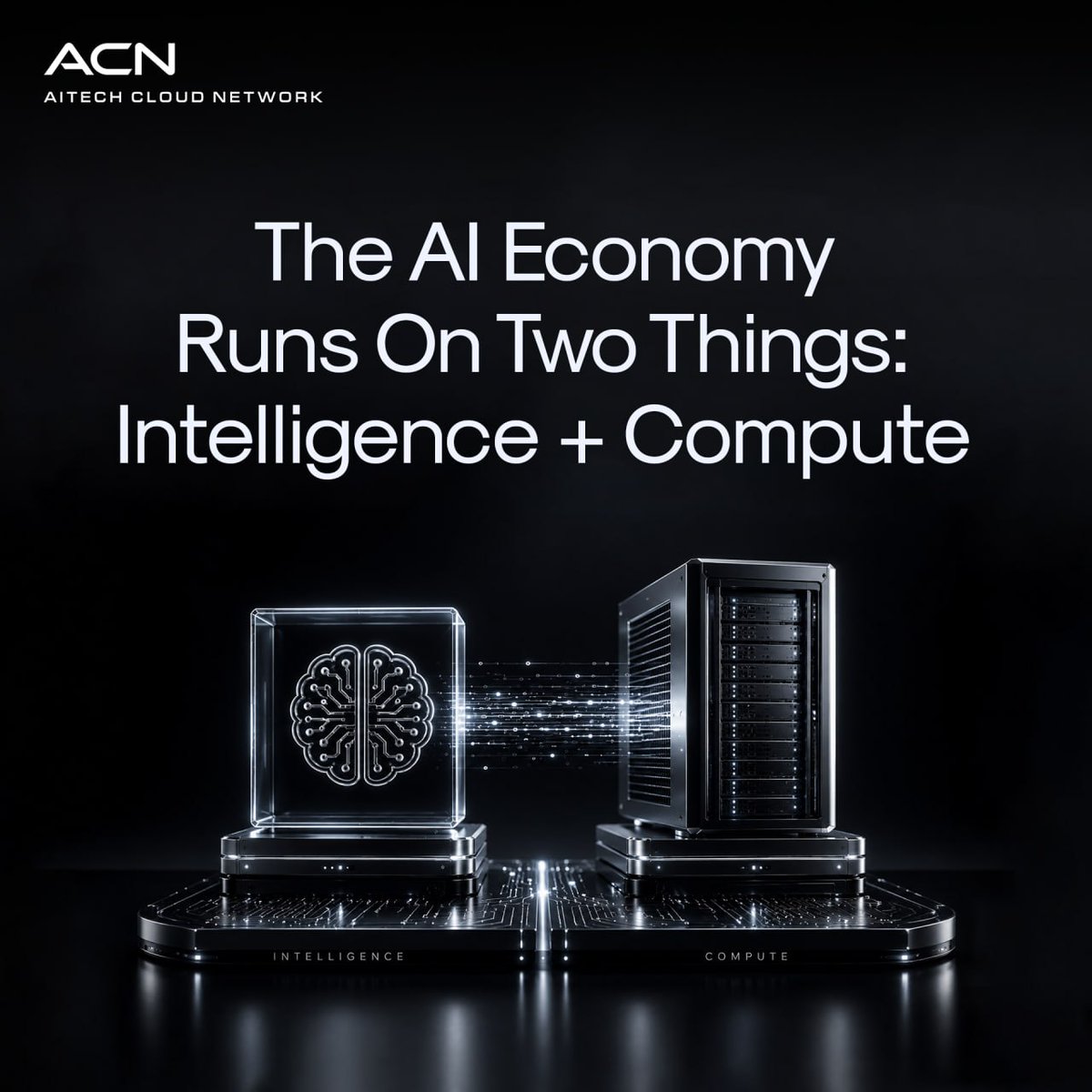
The AI Economy Runs On Two Things: Intelligence And Compute.
Most of the attention goes to intelligence.
New models.
New agents.
New capabilities.
But none of it exists without compute.
AI is creating one of the largest infrastructure expansions the technology industry has seen in decades. As adoption grows, compute is becoming a foundational layer of the digital economy rather than simply a backend resource.
The AI industry is moving through an interesting transition.
For the past few years, the focus has largely been on what AI can do.
Today, the conversation is increasingly shifting toward how AI can be deployed reliably inside real businesses.
Building an impressive demo is one thing.
Integrating AI into existing systems, workflows, compliance requirements, and day-to-day operations is something entirely different.
That's why many of the most important developments happening in AI right now aren't necessarily visible to end users.
They're happening in the infrastructure, orchestration, and operational layers that allow AI to function consistently at scale.
The companies that solve those challenges effectively will likely create far more value than most people currently expect.
What If Compute Becomes As Accessible As Electricity?
Most businesses don't think about where electricity comes from. They simply expect it to be available when needed.
AI infrastructure is moving in a similar direction.
The easier it becomes to access compute, the faster innovation can happen on top of it.
The long-term opportunity isn't just building more GPUs. It's making compute universally accessible.
More GPUs or Better GPUs?
The AI industry spends a lot of time discussing the latest hardware.
But performance is only part of the equation.
The most advanced GPU in the world creates little value if organizations can't access it.
For many teams, availability matters just as much as raw capability.
The future of compute isn't defined solely by more powerful hardware.
It's defined by making powerful hardware accessible to more people.