Anthropic’s IPO (ANT) is set to offer 825M shares, about 6.3% of shares outstanding after the deal. Orders exceed supply several times over, Bloomberg reports. The IPO price could top $78, according to the FT.
Since 2013, $1 has grown to $6.55 in the S&P 500 (SPXTR) and $1.48 in Russia’s MOEX index (MCFTR/USDRUB), with dividends reinvested. The gap is now 4.42x.
Strive holds 43,000 BTC and trades at about 0.96x the value of its Bitcoin. It bought 10,227 BTC in two weeks versus Strategy’s 267. The model depends on continued funding: its preferred stock costs 16% a year, so returns hinge on BTC rising faster. #Bitcoin#CryptoStocks
Since 2013, $1 invested in the S&P 500 Total Return Index grew to $6.69, versus $1.52 in Russia’s dollar-based total return index - a 4.4x wealth gap. Russia narrowed it as stocks rose 7.3% and the ruble strengthened. Long-term CAGR remains 15% vs 3%. #SP500#Investing
Russia’s budget gap is now driven by spending growth. Urals trades 98% above the budget base, while 2026 spending rose 10.1% and the deficit 94% to RUB7.35tn. Even 10% extra oil revenue would cover only one-tenth of the gap, leaving more taxes or debt. #Russia#Oil
Rate cuts could ease Russia’s corporate debt stress while extending inflation. The policy rate is 14%, overdue corporate debt has reached RUB3.24tn (+14.4% YoY), and the deficit forecast rose to 3.2% of GDP. Lower rates may delay downturn, not remove the risk. #Russia#Inflation
Token buybacks do not guarantee lower supply. Tokenomist says only 2 of 11 tokens with buyback or burn programs will shrink supply over the next year. The rest retain repurchased tokens or issue more through unlocks. Track net supply, not buybacks. #Crypto#Tokenomics
Russia and China face mirrored investment problems. China’s low rates have failed to revive domestic demand, while Russia’s 14% policy rate makes new projects too expensive. Investment is falling in both, raising risks to growth and corporate profits. #China#Russia
Strikes on data centers, warehouses and ports could cost Yandex 3.2% of H1 group EBITDA, NCSP 5.5% and Ozon 2.46% of its commerce-segment EBITDA, according to preliminary RDV estimates. Actual losses depend on downtime and recovery costs. #Russia#Stocks
Aerodrome and Velodrome merge on Oct. 21, expanding across 7 chains. Aerodrome already leads Uniswap on Base, but Uniswap controls 57-75% of volume on Ethereum, Arbitrum and Optimism. Every 1% captured there could lift token-locker revenue by ~3%. #DeFi#DEX
The IMF raised its 2026 global growth forecast to 3.1%, yet cut estimates for 47% of countries. Just 32 economies now generate 95% of global GDP growth, down from 54 in April. AI investment is lifting a narrower group, while inflation limits rate cuts. #IMF#GlobalEconomy#AI
Attacks on Russian refineries, ports, warehouses and data centers add a new risk premium to stocks. 12-month returns diverged: NMTP -19.7%, OZON recovered after a 23.3% drop, while FESCO +28.5% and Gazprom Neft +20.4%. Downtime and repair costs now matter. #Russia#Stocks
Since 2013, $1 invested in the S&P 500 Total Return Index grew to $6.73, versus $1.34 in Russia’s dollar-denominated total return index. SPXTR gained 573% vs MCFTR 34%, leaving the US passive investor about 5x wealthier. #SP500#Investing#Markets
AI chip suppliers are winning orders as customers take on more debt. SpaceX may raise $40B for Nvidia accelerators, while Broadcom is arranging $30B-$50B+ tied to OpenAI chip supply. Rising SpaceX CDS spreads show credit markets are already pricing the risk. #AI#Chips#Credit
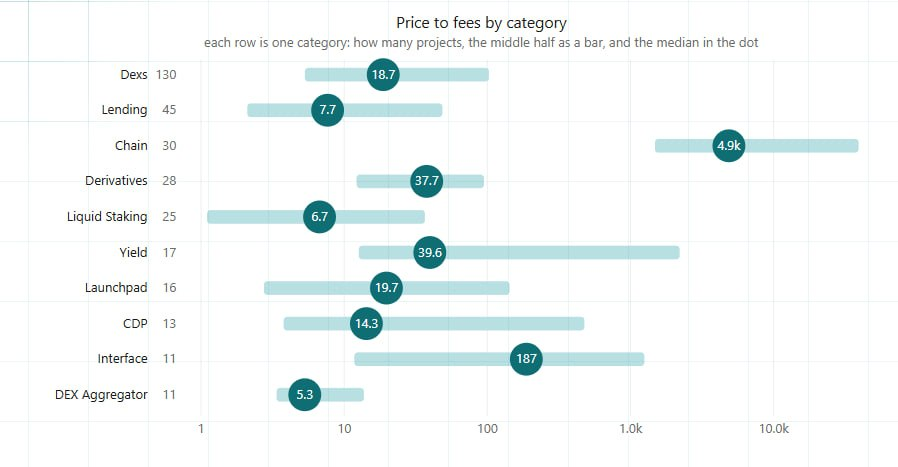
Price-to-fees multiples only work within the same category. Median FDV/annualized fees is 7.7x for lending protocols vs 4,872x for blockchains. Even peers are comparable only if they retain a similar share of fees. Gross fees are not protocol revenue. #Crypto#DeFi#Tokenomics
Weak US jobs data cut October Fed hike odds to ~18%, but the 10Y Treasury yield remains near5.27%. Payrolls rose just 29K, while July and August were revised down by 60K. A Fed pause may lower short yields, but fiscal and inflation risks keep long rates high. #Fed#TreasuryYields
Rising Japanese yields add pressure to US Treasuries. Japan’s 10Y hit 3.11%, near a 30-year high, as the US 10Y reached 5.34%. Japan’s Treasury holdings fell from $1.24T in February to $1.10T in July. Repatriation could keep US long-term yields elevated. #markets
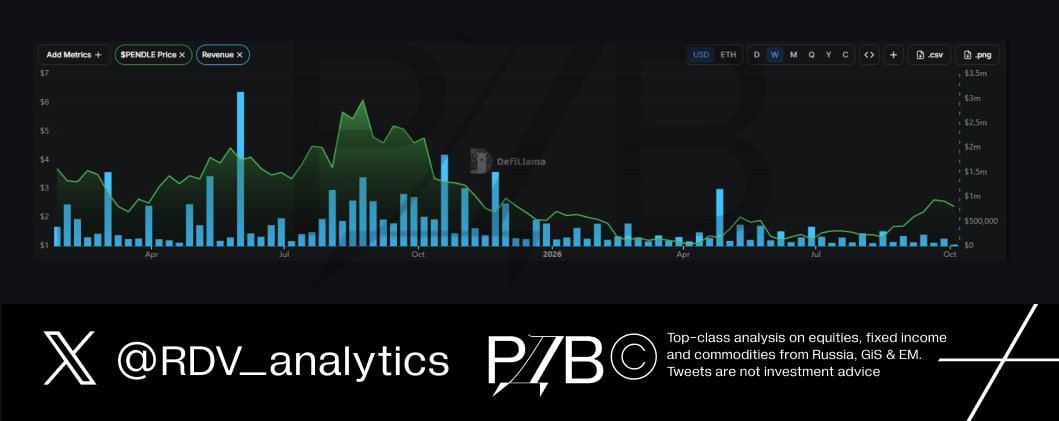
Pendle buys back 10x more tokens than it issues, but holder payouts equal only ~1.2% of market cap annually: $5M vs a $404M valuation. The headline is driven by a 78% drop in issuance. Tokens are redistributed to stakers, not burned, so total supply does not shrink. #crypto
Nvidia is outperforming semis after a record buyback expansion. It added $150B, bringing available authorization to $235B through FY2028. On Sept. 28, NVDA rose 1.71% as SOX fell 1.61%. The spread shows a key edge: funding AI capex and buybacks from its own cash flow. #AI