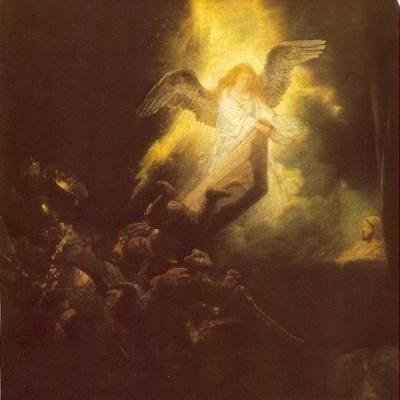
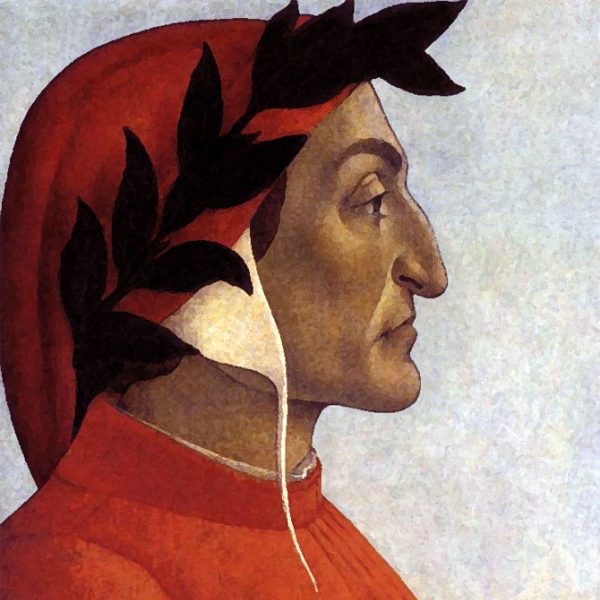
The pale early morning sky seeps through the thickly crowded branches of a dark wood, a wood which represents the darkness of Dante's heart, his backsliding, his rejection of the right and true way. But he is awake. And where there is life, there is hope.
https://t.co/NOZNMIvGfb
Having your students read just the Inferno? Let us help you compromise better.
The Essential Dante: https://t.co/gnzpxemCZq
Watch the Intro here: https://t.co/xXhwqSoNr1
“Dante foresaw the modern spirit of godless individual autonomy, and knew exactly what to do—burn it forever in Hell.”
First lecture free at https://t.co/4arBe2vSAJ
Remember this: Dante must be read in the medieval way. He must be read slowly (if possible, aloud), intently, ponderingly, repeatedly. Whosoever tries to speed through him as one rushes through the season's best seller, gets nothing, or next to nothing.
We have almost lost the art of reading. So prodigious is the mass of printed matter which year by year, month by month, day by day, obtrudes itself on our attention, and with which we feel in some fashion obliged to acquire at least a semblance of familiarity, that we have formed the habit of skimming, of leaping from peak to peak, instead of following the road up hill and down dale; and honest, thorough perusal has for most of us become nearly impossible.
Chief blame for our mental degeneracy falls on the daily paper, —I say nothing of the Sunday paper, which contains no news and therefore need corrupt only those willing to be corrupted, — but the daily paper, which we have to examine, to learn what is going on in the world, — the daily paper, which, with its preposterous bulk, its interminable long-windedness, its chaotic arrangement, forces us to practice every day for an hour or so a system of violent intellectual gymnastics adopted by us for the purpose of winnowing the few grains of corn which we assume to be there from the enormous mass of chaff which we know is there.
That is, we engage every day on a struggle to extricate from a formless and mostly void heap of print the few things we want while reading just as little as possible of the things that are of no interest. This method, slightly relaxed, we carry into our perusal of the weekly short-story periodical, to which we have been lured by the illustrations. With only a little diminution of tenseness, we apply it to the monthly magazine. Then, if we ever have time to read a book, the habit has become such a second nature that we find ourselves dodging from page to page, from chapter to chapter, breathless, cramped, un-enlightened, and unamused.
How happy were the people of the Middle Ages, most of whom could not read at all, while those who possessed the art could devote an undisturbed lifetime to the five-foot shelf, studying their choice authors phrase by phrase, reflecting, turning back, unconsciously committing to memory — something as we (I mean those of us who have lived half a century and more) used in our childhood to peruse the Bible and Shakespeare and Dickens.
The practice of real communion with an author, which until our own generation has been the chief delight and the chief education of cultivated people, has well-nigh disappeared. It can be restored only by a firm resolve, on the part of the seekers for light, to devote a certain portion of their week or their year to quiet concentration upon some writer whose unquestioned greatness is sure to repay them for the precious time thus spent.
The tendency to half-attentive fleetness can be counteracted in some measure by reading aloud. To me it seems — as it has seemed to many others, better judges than I — that among the authors who best reward such sacrifice Dante stands preeminent.
– CH Grandgent, 1917
NEW RELEASE!
The Deeper Heaven of Dante and Lewis, a five-part mini-series with Christiana Hale, author of Deeper Heaven: A Reader's Guide to Lewis's Ransom Trilogy, and Dr. Joe Carlson, translator of the Dante's Divine Comedy, poet, and author of the Dante Curriculum and Reader's Guides.
Sit down or queue it up for later (our new app allows downloading for offline use), and enjoy this discussion between two Lewis and Dante scholars!
https://t.co/CvUXnIHwYc
However long the festival
of Paradise will be, that is how long
our love will radiate such robes round us.
Their brightness comes behind our ardor’s fire;
the fire behind our vision, just as much
as it has grace beyond its worthiness.
And when the glorious and holy flesh
will be our dress once more, our person shall
more welcome be for being in all complete;
therefore that which the Highest Good gives us
of His gratuitous light will increase,
that light which makes us ready to see Him;
wherefore our vision also must increase,
the ardor which is fired by sight increase,
the brightening that follows fire increase.
As with a piece of coal producing fire,
its living whiteness mastering the flame
such that its own appearance is maintained;
so too this flashing now enwreathing us
will be surpassed in semblance by the flesh
that as of yet the Earth still covers up;
nor will such light have strength to weary us,
since organs of the flesh will then be strong
for everything that can bring us delight.”
So sudden and eager appeared to me
both choruses to say “Amen!” showing
a clear desire for their mortal bodies;
perhaps not for themselves alone but for
their mothers and fathers and all who were
precious before they were eternal flames.
-Paradiso 14.37-66
This was a really fun interview with a friend of mine who has collected over 350 unique English translations of the Divine Comedy, all of them first editions. Can we say book envy???
https://t.co/tIzQaFURxC
Gazing on His Son with the Love the One
and the Other eternally breathe forth,
the Primal and ineffable Power
with such order made all things wheel round
through mind and space, he who stands in wonder
cannot do so without a taste of Him.
Therefore, reader, raise with me your vision
to the high wheels, directly to that part
where the one and the other motion strike;
and there begin to lovingly admire
the Master’s art: He loves it, in Himself,
such that from it He never takes His eye.
Paradiso 10.1-12
The Complete Dante Curriculum includes texts (a new translation by Dr. Joe Carlson), Reader's Guides, The Dante Lectures: Teacher's Edition (with exams), a complete video course, audiobooks, and more.
The most comprehensive way to study Dante's Divine Comedy.
https://t.co/1MO3tZ2qrd
"Dante makes his reader tremble, shed tears, feel the thrill of honor in a way that is the height of art. Severe and menacing, he has terrible imprecations for crime, scourgings for vice, sorrow for misfortune. As a citizen, affected by the laws of the republic, he thunders against its oppressors, but he is always ready to excuse his native city. Florence is ever to him his sweet, beloved country, dear to his heart. I am envious for my dear France, that she has never produced a rival to Dante; that this Colossus has not had his equal among us. No, there is no reputation which can be compared to his."
– Napoleon I of France
"Dante and Shakespeare divide the modern world between them; there is no third."
– T. S. Eliot
Read Dante today:
https://t.co/1MO3tZ2qrd
The world is a poem, composed by the great Poet.
By developing poetic literacy we grow in our ability to read the world.
Fluency in the language of poetry is fluency in the language of creation.
Myth shapes culture.
Myth is not the opposite of history. It is the power behind certain stories (historical or fictional) to tell us who we are and why we are.
Watch the full interview here: https://t.co/qgElAyhPD1
Find Lay of Creation here: https://t.co/s12c04Rwm7
If you are signed up for the Great Books Reading Challenge, you just received Week 1 in your inbox!
If you aren't, sign up at https://t.co/e968drCpEf!
Don't forget to use the Roman Roads app for:
• Access to the archive of each week (week 1 active!)
• Additional media, such as the week 1 discussion video
• Downloading schedule
• Watching the associated videos
• Audiobook
• and extra resources!
Challenge app link:
https://t.co/ArNUA6DAee
We must read, write, and champion literature that seizes the imagination and stirs the affections toward truth and goodness.
@LennoxKal and @JoelikesDante discuss the importance of myth, story, and beauty for shaping people and culture.
LIVE NOW: https://t.co/p75Cqkqa6d
Obviously there is MUCH more that could be said. Let me know if there are other elements you would like to read about!
For more resources, including a brand new edition of Dante's complete prose works, see: https://t.co/FoUGtxKQPG
For everything on the app: https://t.co/IyGAZBBlKN
Paradiso is arguably the most difficult part of the Dante's Divine Comedy for moderns to understand. It is also arguably the most beautiful.
Here’s your quick guide to the who, what, and why of the most transcendent canticle of Dante’s grand masterpiece.
As are geometers who set themselves
to square the circle, and cannot obtain
by reasoning that principle they need,
the same was I, to this new spectacle;
I longed to see just how the image fit
within the ring, how there it finds its place;
but my own proper wings would not suffice,
had not a bolt of lightning struck my mind
wherein the whole of its desire came down.
Here failed the strength of my high fantasy;
already though my will and my desire
were, as a balanced wheel is moved, turned by
the Love that moves the sun and other stars.