In 2015 a writer named Tim Urban sat down and counted the days he had left with his parents. He was 34, healthy, both parents alive and well. The number came back around 300. Less time than he spent with them in any single year of his childhood.
The post is called The Tail End, on a blog called Wait But Why. The idea is to stop counting your life in years and start counting it in events. Reach 90 and you get about 4,680 weeks, and every one of them fits on a single sheet of paper. Maybe 60 more winters after that. If you read five books a year, that is 300 books, picked from every book ever written.
Those things at least spread out evenly. A third of the way through life means a third of the way through your pizzas. Time with the people you love does not work like that. Almost all of it sits at the very start. Then it is gone.
For your first 18 years you are around your parents nearly every day. Then you leave for college or a job in another city, and a normal adult sees their parents maybe 10 days a year. So the day you move out, you are already at 93 percent. Urban was living in the last 5 percent and had no idea until he drew the chart. He called it the tail end.
It does not stop at parents. His two sisters, after a whole childhood in the same house, had around 15 percent of their time together left. The four friends he played cards with most days in high school were down to their last 7 percent. Nobody had a fight. Nobody moved away angry. Life quietly spends the time for you while you assume there is plenty left.
You do not have to be old to be near the end with someone. If your parents are alive and you live in a different city, you have probably already used more than 90 percent of the days you will ever spend in the same room as them.
His one instruction is about that last stretch. When you are down to the final days with someone you love, treat that time like what it is, which is almost gone. The rest is the tail end, and it is much shorter than it feels.
My favorite line from Atomic Habits has been living in my head rent-free:
“It doesn’t make sense to continue wanting something if you’re not willing to do what it takes to get it. If you don’t want to live the lifestyle, then release yourself from the desire. To crave the result but not the process is to guarantee disappointment.”
Day 2 starts with CIO Panel : Re-invent IT for AI. CIOs here represent 800 million subscribers!!. Looking forward to great session. #DTW2026#DTWIgnite2026#telecoms
I learnt a long time ago that there is a big difference between making a living and making a life. In the times to come, AI will get increasingly better at the skills that we've used to make a living. Our imperative will be to instead make lives. Not artificial lives. Or artificial lives. But our own lives and of those we love. As machines get better at answering, and solving what they are asked, our work is to get better at asking, at making, creating, and deciding which questions are worth a life, and refusing to outsource that.
William Zinsser taught writing at Yale, then wrote the book that has fixed more bad writing than every English class combined.
Here are 10 cuts from "On Writing Well" that instantly make your writing twice as strong.
1) Delete every word doing no work
According to Neuroscience, if you repeat these 3 phrases each morning, you will start to rewire your brain to become more positive, confident, and grateful
1. “Show me how good today gets.”
This activates your brain’s R.A.S to notice more opportunities.
2. “I’m grateful for…”
Gratitude increases dopamine shifting your nervous system into a more regulated, positive state.
3. “I can handle anything that comes my way today.”
This builds self efficacy and reduces threat response to your brain.
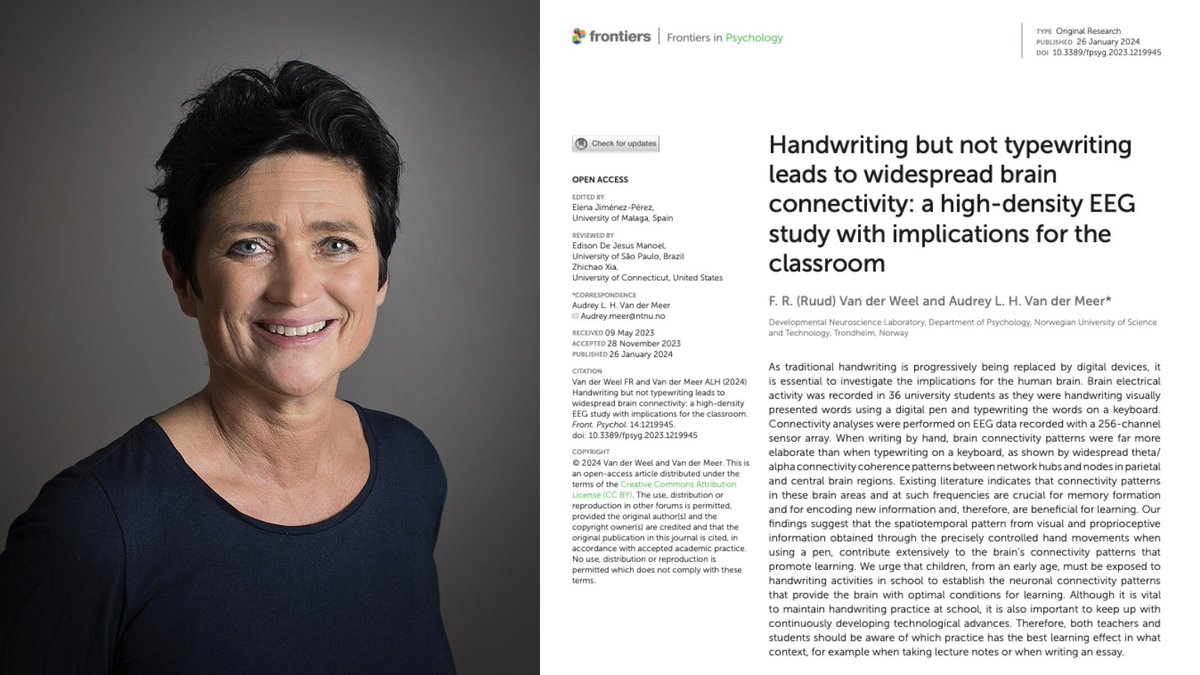
A Norwegian neuroscientist spent 20 years proving that the act of writing by hand changes the human brain in ways typing physically cannot, and almost nobody outside her field has read the paper.
Her name is Audrey van der Meer.
She runs a brain research lab in Trondheim, and the paper that closed the argument was published in 2024 in a journal called Frontiers in Psychology. The finding is brutal enough that it should have changed every classroom on Earth.
The experiment was simple. She recruited 36 university students and put each one in a cap with 256 sensors pressed against their scalp to record brain activity. Words flashed on a screen one at a time.
Sometimes the students wrote the word by hand on a touchscreen using a digital pen, and sometimes they typed the same word on a keyboard. Every neural response was recorded for the full five seconds the word stayed on screen.
Then her team looked at the part of the data most researchers had ignored for years, which is how different parts of the brain were communicating with each other during the task.
When the students wrote by hand, the brain lit up everywhere at once.
The regions responsible for memory, sensory integration, and the encoding of new information were all firing together in a coordinated pattern that spread across the entire cortex. The whole network was awake and connected.
When the same students typed the same word, that pattern collapsed almost completely.
Most of the brain went quiet, and the connections between regions that had been alive seconds earlier were nowhere to be found on the EEG.
Same word, same brain, same person, and two completely different neurological events.
The reason turned out to be something nobody had really paid attention to before her work. Writing by hand is not one motion but a sequence of thousands of tiny micro-movements coordinated with your eyes in real time, where each letter is a different shape that requires the brain to solve a slightly different spatial problem.
Your fingers, wrist, vision, and the parts of your brain that track position in space are all working together to produce one letter, then the next, then the next.
Typing throws all of that away. Every key on a keyboard requires the exact same finger motion regardless of which letter you are pressing, which means the brain has almost nothing to integrate and almost no problem to solve.
Van der Meer said it plainly in her interviews.
Pressing the same key with the same finger over and over does not stimulate the brain in any meaningful way, and she pointed out something that should scare every parent who handed their kid an iPad.
Children who learn to read and write on tablets often cannot tell letters like b and d apart, because they have never physically felt with their bodies what it takes to actually produce those letters on a page.
A decade before her, two researchers at Princeton ran the same fight using a completely different method and ended up at the same answer. Pam Mueller and Daniel Oppenheimer tested 327 students across three experiments, where half took notes on laptops with the internet disabled and half took notes by hand, before testing everyone on what they actually understood from the lectures they had watched.
The handwriting group won by a wide margin on every question that required real understanding rather than surface recall.
The reason was hiding in the transcripts of what the two groups had actually written down.
The laptop students typed almost word for word, capturing more total content but processing almost none of it as they went, while the handwriting students physically could not write fast enough to transcribe a lecture in real time, which forced them to listen carefully, decide what actually mattered, and put it in their own words on the page.
That single act of choosing what to keep was the learning itself, and the keyboard had quietly skipped the choosing and skipped the learning along with it.
Two studies. Two countries. Same answer.
Handwriting makes the brain work. Typing lets it coast.
Every note you have ever typed instead of written went into your brain through a thinner pipe. Every meeting, every book highlight, every idea you captured on your phone instead of on paper was processed at half depth.
You did not forget those things because your memory is bad. You forgot them because typing never woke the part of the brain that would have made them stick.
The fix is the thing your grandmother already knew.
Pick up a pen. Write the thing down. The slower road is the faster one.
One month remains! ⏳
The CFP for #AGNTCon + #MCPCon Europe closes on 8 June. We’re looking for technical deep-dives on #MCP, agent protocols, infrastructure + more. Show the world how you're building the open agentic ecosystem.
View all suggested topics + submit: https://t.co/iajL51Chgc
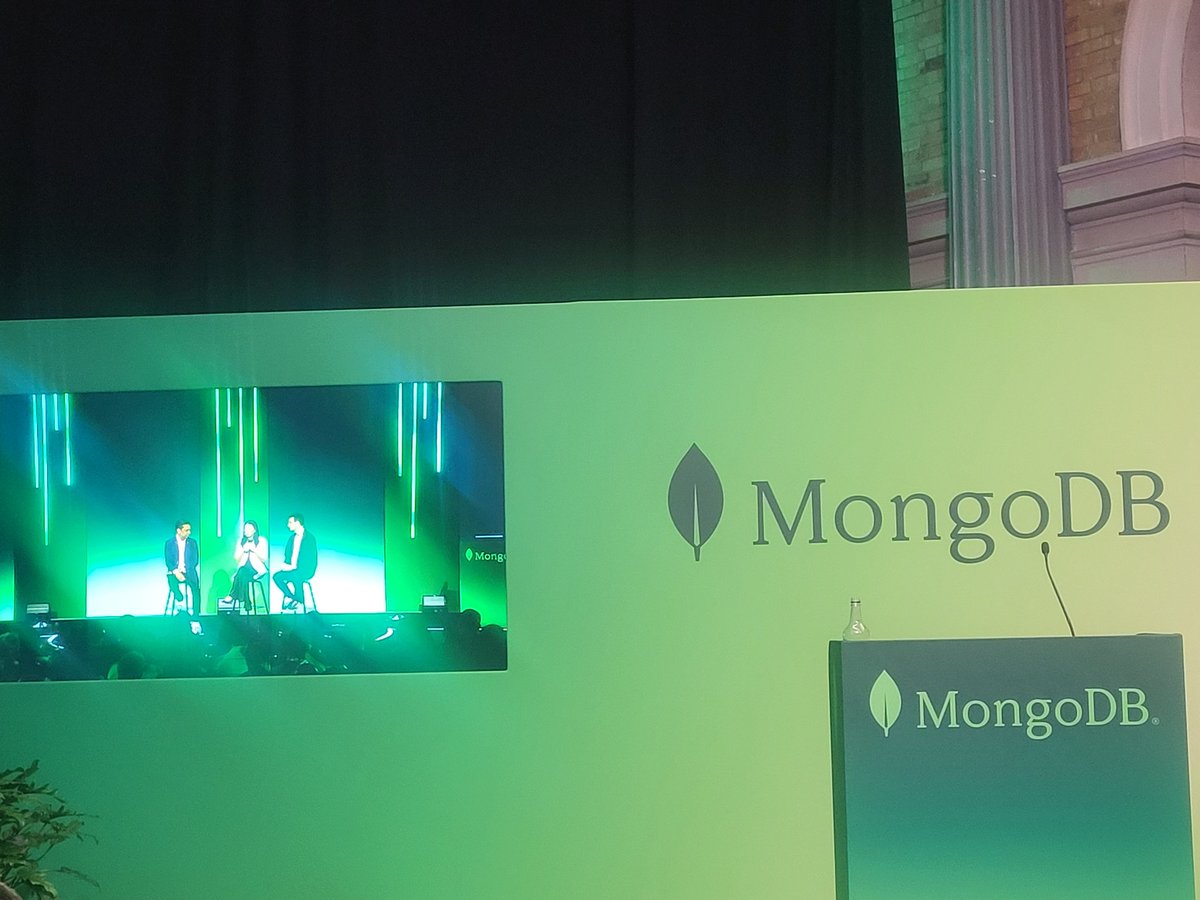
🎙️🔴 LIVE from London: today we're bringing together the developers, architects, and enterprise teams shipping AI-native applications on MongoDB, and streaming it all for those who can't be here.
If you're building with AI, this is where the conversation is happening.
🇬🇧 WATCH NOW → https://t.co/zxwCdio6hu
#MongoDBlocal