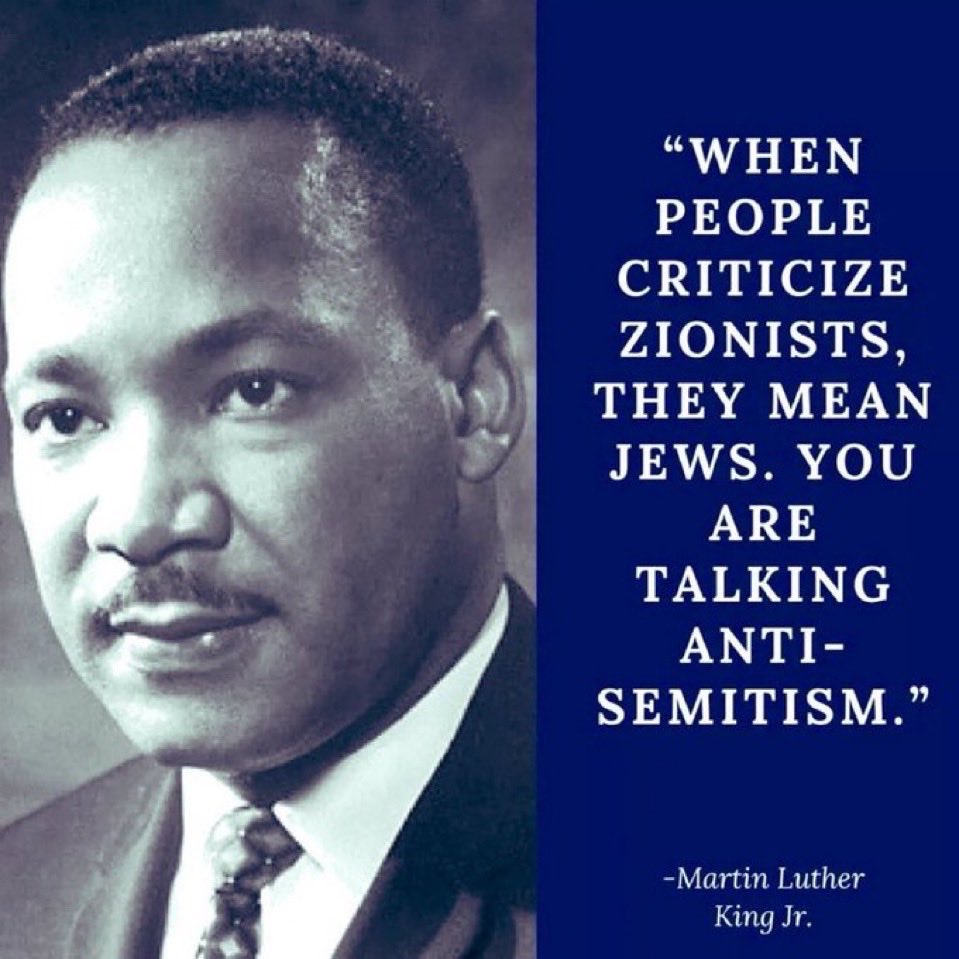
On a lighter ‘note’. Our community choir performing at the Forest Gate Festival this summer. (I’m the one doing a bad Blues Brothers impersonation at the back.) Makes me happy for a moment amid the madness of our frightening world.
How morally depraved do you have to be to claim Jews are ‘weaponising’ the horrendous bullying of our children in schools?
We are up against racists who claim they are good people as they do everything they can to attack British Jews.
Green councillors face Labour deadline to disown Zionism policy
Labour is set to decide whether to end power-sharing with Green councillors after demanding they disown their party's policy that Zionism is a form of racism.
The BBC has been told Green groups have been given until Sunday to respond to the demand, after which Labour's ruling National Executive Committee (NEC) will decide whether the party will continue with local deals to share power.
https://t.co/cpFqVVLYI0
The Green Party voted to declare Zionism racist.
Today, the Board of Deputies voted 118–1 to declare the Green Party racist.
You can criticise Israel's government without questioning the legitimacy of Jewish self-determination.
Perhaps it's time politicians started listening to British Jews rather than telling us what we're allowed to believe.
https://t.co/ZcF78YfhwE
"During my four years of psychiatric misdiagnosis, doctors filled me with drugs that made me dribble and twitch.
"The only way I was able to leave the NHS mental health system was to literally escape and run away to another country."
Misdiagnosed and heavily medicated, Alexis Quinn spent four years in psychiatric care before escaping to start a new life abroad 👇
https://t.co/B3g2euKxo5
Psychiatric drugs are first and foremost psychoactive substances... In that sense, psychiatric drugs belong to the same broad family as alcohol, nicotine, and caffeine – substances that alter how we feel, think, and behave, without correcting any underlying defect.
At a recent event where I spoke at a community center, a group of “pro-Palestine” militiamen appeared outside to protest and disrupt the event, along with agitated older white women who entered the venue to do the same on the inside. The organizers and I had arranged extensive security because these same “activists” had spent days trying to get the event canceled and openly vowed to do whatever they could to stop it from happening. As I walked in, a few masked “activists” in keffiyehs whispered, "is this the genocide guy?" I turned to them and said, "hi gentlemen, thanks for coming." One replied, "Free Palestine." I responded, "I agree, including from Hamas."
Once I began speaking, several disruptors engaged in a steady stream of whispering, side conversations, eye-rolling, posturing, and juvenile antics. I stopped and asked one of the women why she and her comrades were behaving like children. She admitted she knew nothing about me or my work but felt qualified to declare that if I were truly Palestinian, my Nakba-surviving grandparents would be rolling in their graves. I asked the agitators to be respectful, explaining that while security could remove them, I would rather they listen to what I actually had to say, instead of relying on misinformation spread about me by the local DSA, BDS, and other "pro-Palestine" groups.
What enraged me most was their reaction when I spoke about my family in Gaza, the relatives we have lost to Israeli airstrikes during the post-October 7 war, and the destruction of both my childhood homes. These white “activists” laughed and smirked as I described some of the most painful experiences of my life and the sense of personal loss that inspires my work. They showed shocking indifference toward the very Palestinians on whose behalf they claim to be acting.
I confronted some of the disruptors directly and asked why they get to define what it means to be "pro-Palestine," despite knowing nothing about me and showing no interest in the trauma my family has endured. Some stormed out shouting "Free Palestine." Others fell silent. One person, despite strongly disagreeing with me, acknowledged that my views were rooted in personal loss and genuine concern for my people and shook my hand before leaving.
On my way out, a pseudo-journalist known for glorifying Hamas and "the resistance" tried to ambush me with questions about whether I was paid by weapons manufacturers, oil companies, or, as he brilliantly misstated it, the "Arab Union Emirates." It struck me how absurd it is that I needed three heavily armed security officers and a bodyguard simply to speak about healing and reconciliation between Palestinians and Israelis, the dangers of extremism for both societies, the catastrophic damage Hamas has inflicted on the Palestinian national project, and the right of Palestinians to freedom, safety, and prosperity alongside a secure Israel.
.@TheGreenParty is back down to 8%, which is where it was when @ZackPolanski became leader
Partly due to ‘Burnham bounce’ but also because obsessing over Zionism isn’t very popular. Best to focus on practical policies to aid Palestinians, rather than ‘political purity’ votes
ADHD is a descriptive category, not something people "have" that manifests. This reifies a description into an explanatory entity.
Broadening the description changes what—and who—the category includes; it does not establish new manifestations of an underlying entity.
@mirandalevycopy@helensclegel Nicely put. The supporters of this bizarre, cynical motion can’t imagine that there is another point of view, Miranda. How could the others not agree?
@helensclegel It is actually really important that they do NOT support this ridiculous motion, which everyone except its supporters can see is thinly veiled antisemitism
What do the diagnoses of autism and ADHD explain, and what do they not?
Join my workshop on recognising difficulties and supporting needs while keeping questions of meaning, relationships, history and change open.
Thursday, 10th December, at 12pm.
https://t.co/EH53JcVTQw
Informative blog about how harmful it can be to tell people that emotional problems like depression are caused by their brains. It reduces people's sense of agency and stops people understanding their emotions as useful signals about their lives.
I think people are not aware of how much mis-information is propagated about this class of medications.
I remember being taught to say this to patients: that the increase in suicidality is caused by an increase in energy before an improvement in mood.
What studies show is simply an increase in suicidality when people are given these medications compared to placebo.
How many people have been talked into taking these medications because of the repetition of these talking points by prescribers?
Uta Frith & @naomicfisher on the role of private providers in the expansion of ASD and ADHD diagnoses. People are incentivised to get diagnosis 'by a system that positions diagnosis as the key to services and self understanding'. ihttps://www.bmj.com/content/395/bmj-2026-101196
When we tell people that their depression stems from a chemical imbalance, are we inadvertently giving them the wrong mindset, by telling them that they have little control over their own emotions? Are we depriving them of the tools they need to recover?" https://t.co/jRg9SgjmcJ
Watch the full interview of @ucl psychiatry professor Joanna Moncrieff (@joannamoncrieff) by therapist Piia Tuominen (@TuominenPiia) on an episode of the Astetta Parempi Elämä podcast titled “The Long-Term Effects of Antidepressants."
https://t.co/vzRDPDQrmv
@ZackPolanski Zionism definition:
The belief that Jews should have an autonomous place on their ancestral homeland.
Two questions:
1. Why aren’t you a Zionist?
2. Is there any other indigenous people you think shouldn’t have a home, or is it just the Jews?
@ZackPolanski As far as I am aware Zionist want a home in their ancestral homeland ?
What is wrong with that ? . In 1948 The UN split two states Palestine & Isreal . The Arabs were not happy & a war began . Isreal won . You enable racism & you know it .


![Mad_In_America's tweet photo. Read the complete review by Richard Sears here: https://t.co/LO9wNbnygy
[Science news, weekly digest, antidepressant, withdrawal, ssri, dysfunction, bleeding, risk]
#antidepressant #ssri #withdrawal https://t.co/noAqXo46be](https://pbs.twimg.com/media/HVZa7zZXUAAjRje.jpg)
![Mad_In_America's tweet photo. Read the complete review by Richard Sears here: https://t.co/LO9wNbnygy
[Science news, weekly digest, antidepressant, withdrawal, ssri, dysfunction, bleeding, risk]
#antidepressant #ssri #withdrawal https://t.co/noAqXo46be](https://pbs.twimg.com/media/HVZa7ymWkAAj2dw.jpg)
![Mad_In_America's tweet photo. Read the complete review by Richard Sears here: https://t.co/LO9wNbnygy
[Science news, weekly digest, antidepressant, withdrawal, ssri, dysfunction, bleeding, risk]
#antidepressant #ssri #withdrawal https://t.co/noAqXo46be](https://pbs.twimg.com/media/HVZa7ygWgAACU_I.jpg)


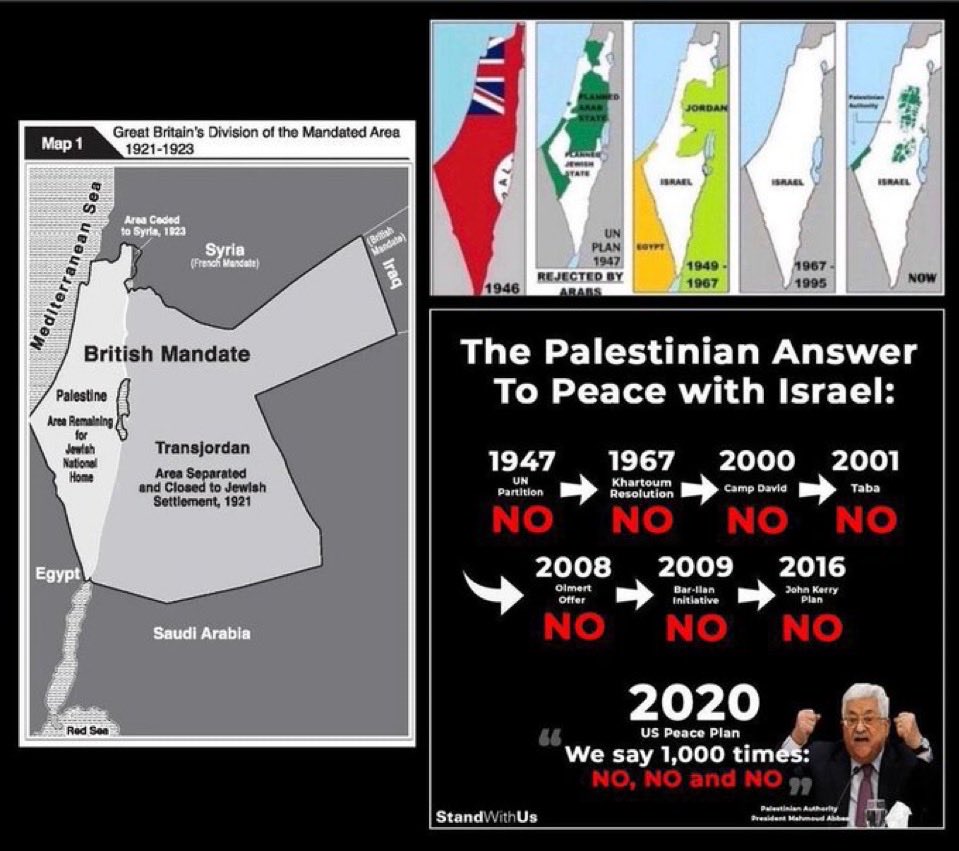


![Mad_In_America's tweet photo. Read the complete review by Richard Sears here: https://t.co/LO9wNbnygy
[Science news, weekly digest, antidepressant, withdrawal, ssri, dysfunction, bleeding, risk]
#antidepressant #ssri #withdrawal https://t.co/noAqXo46be](https://pbs.twimg.com/media/HVZa7zlXMAAmRZ2.jpg)