I stumbled across my 2022 response to a reporter who asked why I thought ACOG had taken down their "Facts Are Important" statement on fetal pain. It's a bit unusual (I must have just finished Return of the Jedi with my daughters) but I might as well post it:
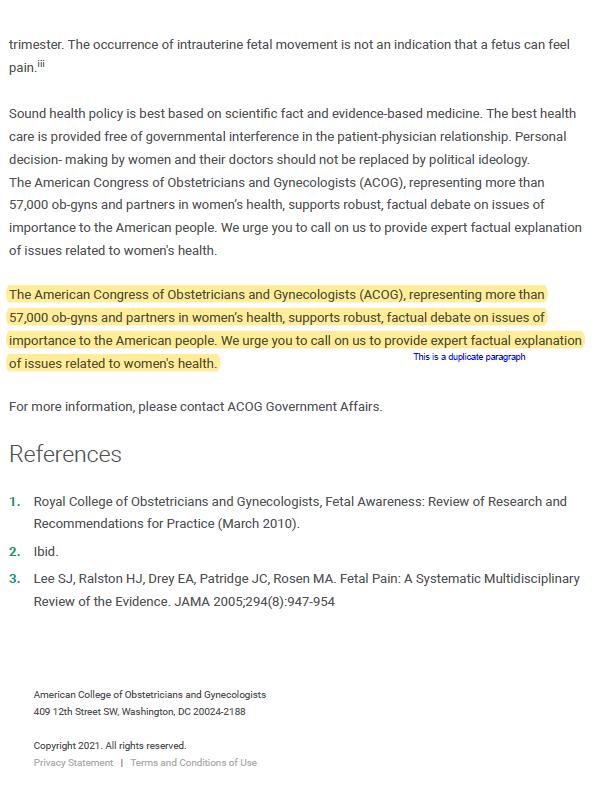
"I haven't asked ACOG why they took it down, but I asked them last summer to update it in specific ways, so maybe they listened. Maybe they were dismayed that Stuart Derbyshire, co-author of one of the two papers they cited, refuted that paper two years ago. Either way, ACOG's statement was desperately out-of-date and needed removal or revision."
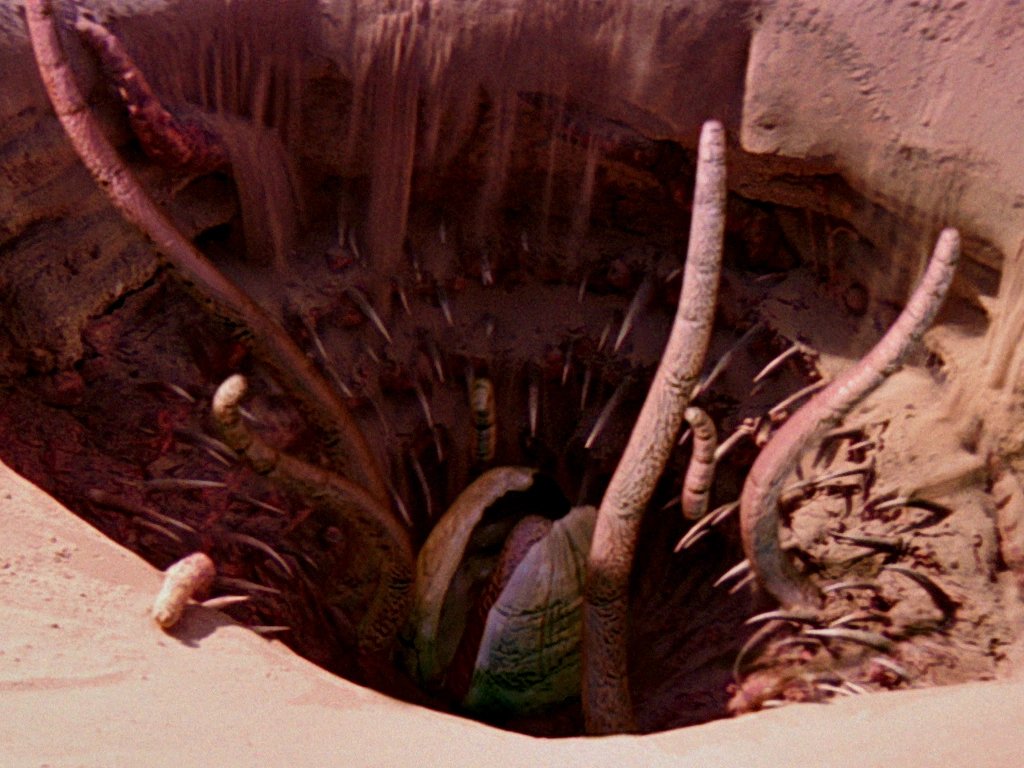
"I'd prefer they abandon their pro-abortion stance altogether and speak out against it. But if they must speak on fetal pain, they'd do well to leave any hint of abortion out of it. Acknowledging the fetus is anathema to abortion rights. It is the emotional Pit of Carkoon, wherein lurks the many-tentacled Sarlacc."
"For this reason, it intrigues me that fetal pain plays any significant role in the abortion debate. Stuart and I agree that, logically, it does not. That's how we were able to find common ground on the science of fetal pain to begin with. For example, if a fetus could not feel pain, I'd still be against abortion because it's the defining moral atrocity of our time. Likewise, Stuart would still be for abortion if a fetus could feel pain, because the fetus is in her mother's body, so her mother has a right to do with her whatever she wants. Stuart thus avoids the Pit."
"Dug a bit of a hole for themselves" - https://t.co/tsyHrDDmup
"But while I've heard many pro-lifers insist that fetal pain is irrelevant to abortion, ironically, Stuart is the only pro-choicer I've heard with the guts to say the same. We agree that advocacy groups like ACOG have dug a bit of a hole for themselves by coming out so strongly against the possibility of fetal pain; by indicating that it really does matter in abortion. In addressing fetal pain, they stumbled directly into the Pit: is abortion all about the mother's autonomy, and if so, how could fetal pain possibly matter? Every denial of fetal pain in abortion--especially when fetal anesthesia is standard in therapeutic fetal surgery--thus screams the fact that there are two human beings, two morally relevant people, involved in abortion. The Sarlacc's tentacles begin to writhe about the ACOG's ankles."
"It's true: fetal pain does matter emotionally--to mothers, fathers, and the public at large. But acknowledging fetal humanity in abortion sets up terrific emotional tension, and fetal pain drives that tension as a powerful sign of humanity, of moral and emotional significance. That's why acknowledging the fetus in abortion--whether to admit or even deny fetal pain, for example--invites all sorts of emotions into the discussion that ACOG truly doesn't want. Especially because science increasingly supports those emotions."
"I'd like to think ACOG will revise their statement by addressing research from the 2020s, or tell us what they would accept as evidence of fetal pain, or even say 'so what' to fetal pain in abortion because the mother's autonomy is all that matters. But it's quite possible ACOG will try to fill the hole, to escape the Pit, by invoking 'consensus,' by saying Stuart and I misinterpreted, conflated, or overlooked the science. But every struggling denial just slides them deeper into the toothy abyss."
"Ultimately, this dilemma can only be resolved by speaking honestly, factually, and good-heartedly with and toward each other. I hope that's the approach they take. We'll see."
Meanwhile, clinical procedures and public policy should reflect these findings.
Thanks for your consideration, ACOG, RCOG, and distinguished physicians. I welcome your feedback.
I got tired of people saying a) there's a consensus on fetal pain, and b) this JAMA 2005 study is the final word on it. Bullocks!
Also, irritation is my muse. https://t.co/OxNEWK5c5V
I stumbled across my 2022 response to a reporter who asked why I thought ACOG had taken down their "Facts Are Important" statement on fetal pain. It's a bit unusual (I must have just finished Return of the Jedi with my daughters) but I might as well post it:
"I haven't asked ACOG why they took it down, but I asked them last summer to update it in specific ways, so maybe they listened. Maybe they were dismayed that Stuart Derbyshire, co-author of one of the two papers they cited, refuted that paper two years ago. Either way, ACOG's statement was desperately out-of-date and needed removal or revision."
"I'd prefer they abandon their pro-abortion stance altogether and speak out against it. But if they must speak on fetal pain, they'd do well to leave any hint of abortion out of it. Acknowledging the fetus is anathema to abortion rights. It is the emotional Pit of Carkoon, wherein lurks the many-tentacled Sarlacc."
"For this reason, it intrigues me that fetal pain plays any significant role in the abortion debate. Stuart and I agree that, logically, it does not. That's how we were able to find common ground on the science of fetal pain to begin with. For example, if a fetus could not feel pain, I'd still be against abortion because it's the defining moral atrocity of our time. Likewise, Stuart would still be for abortion if a fetus could feel pain, because the fetus is in her mother's body, so her mother has a right to do with her whatever she wants. Stuart thus avoids the Pit."
"Dug a bit of a hole for themselves" - https://t.co/tsyHrDDmup
"But while I've heard many pro-lifers insist that fetal pain is irrelevant to abortion, ironically, Stuart is the only pro-choicer I've heard with the guts to say the same. We agree that advocacy groups like ACOG have dug a bit of a hole for themselves by coming out so strongly against the possibility of fetal pain; by indicating that it really does matter in abortion. In addressing fetal pain, they stumbled directly into the Pit: is abortion all about the mother's autonomy, and if so, how could fetal pain possibly matter? Every denial of fetal pain in abortion--especially when fetal anesthesia is standard in therapeutic fetal surgery--thus screams the fact that there are two human beings, two morally relevant people, involved in abortion. The Sarlacc's tentacles begin to writhe about the ACOG's ankles."
"It's true: fetal pain does matter emotionally--to mothers, fathers, and the public at large. But acknowledging fetal humanity in abortion sets up terrific emotional tension, and fetal pain drives that tension as a powerful sign of humanity, of moral and emotional significance. That's why acknowledging the fetus in abortion--whether to admit or even deny fetal pain, for example--invites all sorts of emotions into the discussion that ACOG truly doesn't want. Especially because science increasingly supports those emotions."
"I'd like to think ACOG will revise their statement by addressing research from the 2020s, or tell us what they would accept as evidence of fetal pain, or even say 'so what' to fetal pain in abortion because the mother's autonomy is all that matters. But it's quite possible ACOG will try to fill the hole, to escape the Pit, by invoking 'consensus,' by saying Stuart and I misinterpreted, conflated, or overlooked the science. But every struggling denial just slides them deeper into the toothy abyss."
"Ultimately, this dilemma can only be resolved by speaking honestly, factually, and good-heartedly with and toward each other. I hope that's the approach they take. We'll see."
“Brain death” was invented in 1968 by 13 men at Harvard Medical School to free up ICU beds and facilitate organ transplantation.
Their original manuscript stated:
“There is great need for the tissues and organs of the hopelessly comatose in order to restore health to those who are still salvageable.”
This statement was edited out before publication as being too telling.
Their final JAMA article never asserted that these neurologically injured people were actually dead. The Harvard Committee described them rather as being “desperately injured,” and “a burden to themselves and others.”
Probably the world’s greatest expert on the topic of brain death, D. Alan Shewmon MD, describes it this way:
“‘Brain death as death’ began as a utilitarian legislative decree and has remained a conclusion in search of a justification ever since: a conclusion clung to at all costs for the sake of the transplantation enterprise that quickly came to depend on it.”
Utilitarian philosopher Peter Singer has called brain death “…a concept so desirable in its consequences that it is unthinkable to give it up, and so shaky on its foundations that it can scarcely be supported.” He has also called brain death “an ethical choice masquerading as a medical fact.”
So-called “brain dead” patients are neurologically injured, not dead. Falsely labeling them as dead robs them of their protections under the law and violates their human rights.
@SteveTothTX@TXRightToLife@KenPaxtonTX
@God_trustmebro Not challenging; merely contradicting.
Clarifying that there's no humanity in the abstract; only in the concrete.
Also, none of this matters, which is why you spoke up.
Got it.
@God_trustmebro@HannahStrege polysemous. isn't that a light chicken gravy?
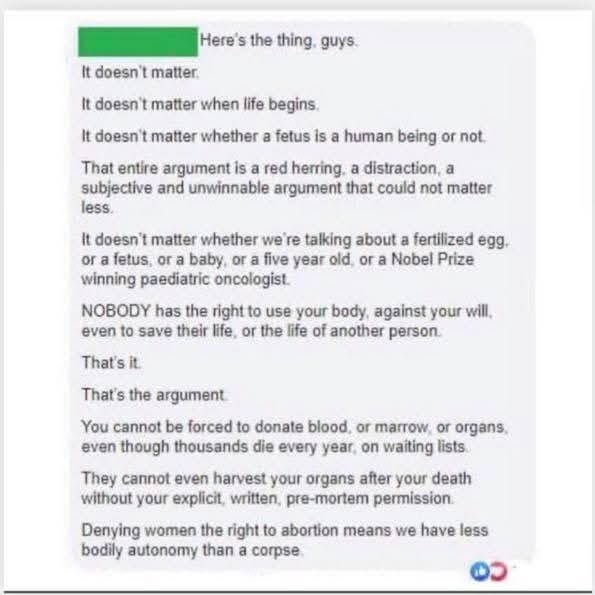
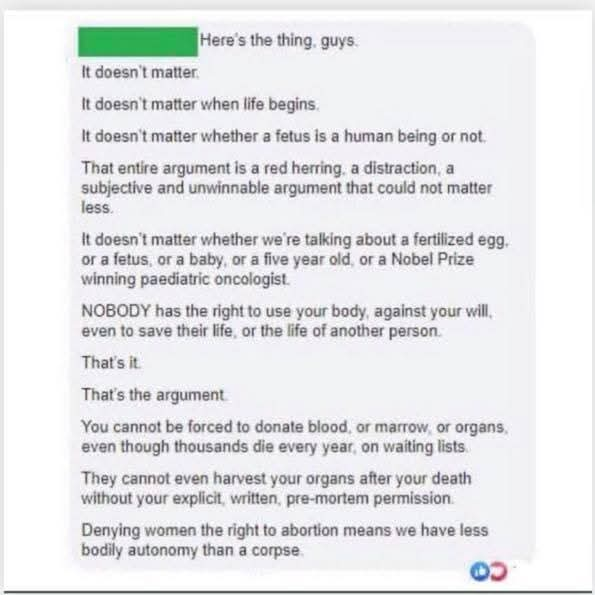
Love it when y'all start semantic arguments, then move the goalposts. Especially when "it doesn't matter." Classic.