How to set it up: add cache_control type ephemeral to the last stable block in your prompt (system instructions, tool schemas, reference docs). Keep user messages after that boundary. Reads cost 90% less. One parameter, real savings at scale.
Most devs using the Claude API are paying full price for the same system prompt on every single call. Prompt caching cuts read costs by 90%. Break-even hits at just two turns. It's been sitting right there the whole time.
600 million people in sub-Saharan Africa don't have grid access. The operators solving that are writing one of the most important playbooks of this decade.
$750M in solar mini-grids across Uganda, Rwanda, Ethiopia, and the DRC. 2.1 million new electricity connections. This is infrastructure built as a product.
Renewvia already runs 24 commercial mini-grids in Kenya and Nigeria. They're raising $45M to power 550,000 refugees in Kakuma and Dadaab. Not charity. Operations.
My playbook for staying relevant:
🛠️ Learn AI prototyping tools.
🤖 Pick your go-to AI coding agent and master it.
🧠 Provide the best context you can to your agents.
The tool is only as good as the engineer using it.
What AI coding tools do you use every day?
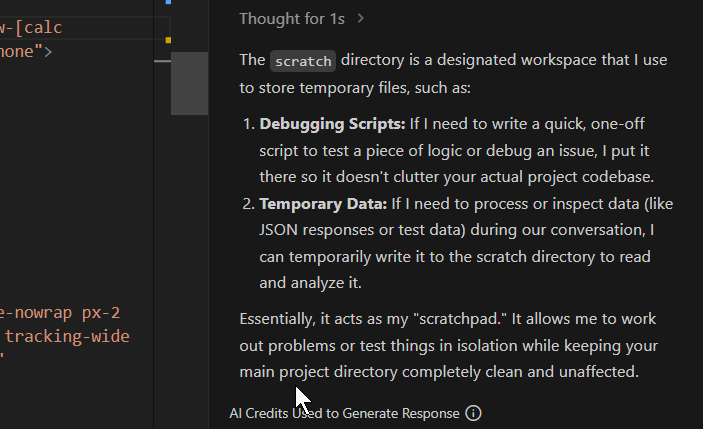
I had a chat with @Antigravity about a file it creates in my codebase. Watching it break down its own logic proved it: this is the best way to learn what’s actually going on in your projects.
Here is what I’ve learned from years of working with AI coding tools... 🧵
To stay ahead, lean into curiosity. Understand "what's going on here!"
Build projects at 10x speed by combining your Dev EXP with directed curiosity. Knowing HOW to build, not just WHAT to build, gives you an unshakeable edge over those just using AI to generate raw lines.
Microsoft analyzed 100,000+ workplace AI conversations. 80% of their most advanced users are producing work they couldn't have done a year ago. The average? 58%.
The insight worth stealing: if your production agents lack tracing, cryptographic identity, and lifecycle management, they are invisible to your ops team. Red Hat scaled from 10 to 200 agents because they built the observability layer first. What does your stack look like?
Red Hat went from 10 to 200 production agents internally. Every team — including legal and inside sales — contributed code. 85% running on open-weight models. At Summit 2026, they shipped the platform that made it possible. Here is what operators need to know.
Speculative Decoding is now GA - 2-3x response speed improvement with minimal quality loss. Safety scanning via Garak + NVIDIA NeMo Guardrails built in. Joe Fernandes: "We are defining the open standard for how the enterprise executes AI."
Four key primitives: Model-as-a-Service -> AgentOps (tracing, observability, cryptographic identity, lifecycle mgmt) -> Evaluation Hub (continuous evals) -> Prompt Management (prompts as versioned data assets). These are the production essentials most teams are missing.
Red Hat AI 3.4 is a metal-to-agent stack — from infrastructure to autonomous agent deployment across hybrid cloud. The goal: eliminate shadow AI and close the gap between builders and the infrastructure teams that run what they build. Open standard, not a cloud vendor lock-in.
IBM just shipped the AI operating model as a product. Not a framework. Not a whitepaper. A production stack you can deploy. Here is what it means for operators and builders. 🧵
It seems AI has taken over jobs for real. As a Dev, there is no more frontend & backend job roles. You need to learn:
* Fullstack Dev
* Mobile Dev
* Prompt Engineering
* Vibe Coding
* DevOps & Cloud Architecture
* Database Management
* System Design
* Product Management