2047|Beyond God & Capitalism|What Marx Left Unsaid|Great Indian Dream|Count Your Chickens Before They Hatch|Discover the Diamond in You|Thorns to Competition
BEFORE AI. BEFORE UNIVERSAL BASIC INCOME. BEFORE THE FUTURE-OF-WORK DEBATE.
IIPM was asking the big questions.
For over 50 years, IIPM lived by a simple philosophy:
“What We Teach Today, Others Adopt Tomorrow.”
Today, as the world debates AI, automation, inequality and the future of work, it is worth revisiting an intellectual journey that began in 1973.
That year, Dr. Malay Chaudhuri wrote his 1963 theory, as a chapbook for IIPM students— Production of Skills by Means of Skills— that challenged conventional economics.
Its central proposition was radical:
In an ideal economy, the highest-paid worker should earn no more than 1.25 times the lowest-paid worker.
In simple terms, if a sweeper earns ₹1,00,000, a CEO should earn no more than ₹1,25,000.
The theory argued that as education becomes democratized and knowledge more accessible, the scarcity premium attached to highly educated professions would decline, making extreme wage disparities increasingly difficult to justify.
In 2003, The Great Indian Dream transformed this theory into a broader vision for a developed India.
The book argued that true development could not be measured only by GDP, stock markets or billionaires. A developed India would also require dignity, fairness and a dramatic reduction in economic inequality. It repeatedly questioned whether a nation could call itself developed if prosperity remained concentrated in the hands of a few.
In 2019 came What Marx Left Unsaid.
For more than a century, Marx’s critique of inequality had been debated. Yet one practical question remained unresolved:
What should be the acceptable difference between the highest and lowest incomes in society?
The book attempted to answer precisely that question.
Then, in 2022, 2047: A Roadmap to Beating USA & China extended the discussion into the age of AI and automation, arguing that technology would increasingly reshape employment, entrepreneurship and the relationship between work and income.
Seen together, these four works represent one continuous intellectual journey:
📖 Production of Skills by Means of Skills (1973) — The theory.
📖 The Great Indian Dream (2003) — The vision.
📖 What Marx Left Unsaid (2019) — The framework.
📖 2047 (2022) — The future.
Across five decades, the central question remained unchanged:
How can humanity create a society that is prosperous, innovative, fair and sustainable at the same time?
Long before AI became a household term. Long before inequality became a global political issue. Long before the future of work became a worldwide debate.
These were conversations taking place inside IIPM classrooms.
Dare To Think Beyond was never just a slogan.
It was a way of thinking.
Some institutions prepare students for the future.
A few try to predict it.
IIPM attempted to redesign it.
#IIPM #DareToThinkBeyond #TheGreatIndianDream #WhatMarxLeftUnsaid #2047ARoadmapToBeatingUSAandChina #FutureOfWork #AI #EconomicJustice #MalayChaudhuri #ArindamChaudhuri
@iipm_in
#AlumniStories @
@iipm_in
A teacher’s true legacy is measured not by titles or accolades, but by the lives he has touched deeply enough for them to remember him — and by the good, humane human beings he helped shape. Any worldly success his students achieve beyond that is simply a beautiful bonus.
It’s such a pleasure to meet / bump regularly into former students who fulfill all the three criteria (at IIPM we created them by thousands)— carry the impact of the classes with them, have become remarkable human beings and have gone on to build remarkable careers.
Though this post is a little late, I was delighted to reconnect with one such #IIPM Alumnus recently — Prof. Dr. Valliappan Raju (Vally). What an outstanding individual he has become! He is currently serving as FinTech Specialist, Research Leader & Academic Innovator at GISMA University of Applied Sciences , Berlin.
Valliappan Raju is a distinguished scholar specialising in Financial Technology (FinTech) and Research Methodology. His postdoctoral research centred on developing FinTech-driven approaches to detect Anti-Money Laundering (AML) and other areas such as Unified payment systems.
A prolific researcher having published 343 research manuscripts, possess Scopus h-index of 17, he has supervised 63 doctoral candidates to successful completion, as of 2025. He serves as Editor for five Scopus-indexed journals, owns five research journals, convenes four IEEE conferences, and holds three globally recognised patents.
Above all else, Vally has been recognised in the Top 2% Scientists worldwide, as listed by Elsevier and Stanford University. He previously served as the Sr. Director of Research at MAHSA University, Malaysia, and contributes at World Bank’s Civil Society Organisation (CSO) initiatives. He also serves in adjunct research roles in Brno University (Czech Republic), Hengxing University (China), and few more.
Sky is the limit my friend— #DareToThinkBeyond!
#iipmalumni #IIPMalumnisuccessstory
We are absolutely thrilled to welcome back a true champion in education and placements — Pankaj Kumar Yadav — to the #PlanmanConsulting family!
For 9 incredible years (2006–2015), Pankaj led the Placement Cell at #IIPM Hyderabad with outstanding success. He brought hundreds of top companies to campus and transformed the careers of over 1,000 students, opening doors to life-changing opportunities and setting new benchmarks in campus recruitment.
After an 11-year break filled with many more accomplishments, we’re overjoyed to have him back where he belongs!
Pankaj will now be spearheading the Lucknow operations of our flagship, life-changing GOTA program under MYOD — empowering a whole new generation of ambitious talent with world-class opportunities.
Welcome back, Pankaj! Your energy, expertise, and proven track record are going to create magic in Lucknow.
#GOTA #MYOD #Planman #Leadership #Placements #NewBeginnings
@iipm_in
At #PlanmanConsulting — Indian Institute of Planning and Management (IIPM) group, we have challenged conventional systems before. We are known for being disruptors, and we take pride in that because meaningful change never comes from following outdated paths.
I have said this in past for more than three decades, and I repeat that degrees— specially those from Indian #UGC/#AICTE approved universities and colleges— are not worth more than toilet paper.
We at #IIPM always believed that education was never meant to be limited to classrooms, textbooks and degrees. It was meant to change lives.
Finally after decades, now people across the globe are realizing that traditional education mostly leaves students with formal degrees but little real world readiness. The need for the disruption that was started way back in 1973 by the founder of @iipm_in , Dr. #MalayChaudhuri and carried on relentlessly against all odds by me since 1994, has never been greater.
Employers today seek globally aware leaders-not just degree holders— and that’s where our more than two decade old #GOTA— Global Opportunity & Threat Analysis program becomes more relevant.
At #PlanmanGroup, MYOD - (Make Your Own Destiny) and Institute of Entrepreneurship , we did not create this model by chance. Since 2008, those who sat in my inner circle with, kept hearing that brick and mortar education with physical classrooms will have very limited place in the future of education!
Today, after almost two decades of that, as regular universities around the world officially see fewer students and many face closure — with experts saying nearly half of India’s educational places may shut down by 2030 — #Planman’s #IoE (#InstituteOfEntrepreneurship) has grown with clear direction and courage. As the future of education, we are disrupting education for the next generation of sovereign students: learners who prize autonomy, self-determination, and full ownership of their own education pathways.
We serve students who want to create their own learning path. These students mix free knowledge from apps, AI, YouTube, and open sources with carefully chosen online and live-online certificate programs from the world’s best research universities and teachers (like Harvard, Stanford, and others).
They understand one important truth: in-person classes are only needed when nothing online can replace them. A regular degree, if still required for some formal reason, is best gotten through an affordable and recognized online option. What really counts now is not the piece of paper, but the real ability to think, lead, create, and adapt.
IoE & #MYOD (#MakeYourOwnDestiny) bring this new way of thinking to life. Every hour is planned for the highest value and lasting impact — to create real changes in your thinking, personality, and view of the world.
Come join the new education revolution! #DareToThinkBeyond
https://t.co/d042J3xTKK
Power Brands- London International Forum for Equality (PB LIFE) Hall of Fame, announces its next edition in Nov, 2026.
Past inductees to PB LIFE HALL OF FAME include:
- Richard Dawkins, global icon of science and rationale.
- Laimdota Straujuma, the 12th Prime Minister of Latvia.
- The Right Honourable Baroness Cox, founder of HART and member of the British House of Lords.
- Laurent Salvador Lamothe, the 16th Prime Minister of Haiti.
- PETA represented by Ingrid E. Newkirk, PETA Founder.
- Heather Mills, Anti-War Activist, Business Woman, and Philanthropist.
- Dr. Zlatko Mateša, 6th Prime Minister of Croatia.
- H.E. Dr. Mohammed Waheed Hassan, 5th President of the Maldives.
- Helen McEachern, CEO of the Cherie Blair Foundation.
- Mayor’s Fund for London (charity focused on youth opportunities in London, represented by CEO Matthew Patten).
- Baroness Chalker of Wallasey (former UK Minister for Overseas Development, known for humanitarian work in Africa).
- Rt Hon Andrew Mitchell (British MP and former Secretary of State for International Development, advocate for global aid).
- Leymah Roberta Gbowee (Liberian peace activist and Nobel Peace Prize winner for women's rights in conflict resolution).
- Rt Hon Baron Trimble (former First Minister of Northern Ireland, Nobel Peace Prize co-recipient for the Good Friday Agreement).
- Mark Durkan MP (Northern Irish politician, advocate for peace and equality).
In past the POWER BRANDS London event has included a message from UK Prime Minister David Cameron, delivered in-person by British MP Caroline Nokes and seen the personal presence of The Right Honourable Priti Patel, Member of Parliament of the United Kingdom and Ex-Secretary of State for International Development; Ruby Dhalla, Canadian Politician and Former Member of the Canadian House of Commons; Guy Kawasaki, American marketing specialist, author, and Silicon Valley venture capitalist; Lord Meghnad Desai; Lord Swraj Paul; and Honourable Special Guest Jesse Jackson.
The evening will also witness the next edition of Power Brands ‘GLOBAL SPORTS FOR EQUALITY AWARDS’.
Since launching the platform in 2017 under Power Brands #LondonInternationalForumforEquality, we have honoured legendary figures and organisations whose work transcends sport to promote humanity, equality, and access:
Kumar Sangakkara
Gary Lineker
Alec Stewart
Graham Gooch
Kashif Siddiqi (Football for Peace)
Elías Figueroa, Chilean football legend
Baroness Tanni Grey-Thompson
Tracy Edwards
Street Child United
Homeless World Cup Foundation
…and many more. Our past recipients of Indian Sports awards include Indian icons such as Baichung Bhutia (who received ₹1 lakh and a gold medal), Virender Sehwag, Bishen Singh Bedi, Syed Kirmani, Karun Chandhok, and Siddarth Mallya, Royal Challengers Bangalore for building the greatest IPL brand.
This year the awards will expand its scope to include Movies & Music under the and be called the PB GSEEA: Power Brands ‘GLOBAL SPORTS & ENTERTAINMENT FOR EQUALITY AWARDS’.
NB. Power Brands is a Daily Indian Media initiative. #DailyIndianMedia amongst other magazines like ‘4Ps Business & Marketing’ etc, also used to bring out ‘The Sunday Indian’, world’s only News Weekly in 14 languages between 2005 and 2019.
Seen in the two collages below 5 global Presidents & PMs with their #PowerBrands Roaring Lions and 4 Global Sports icons with their Power Brands #roaringlions.
@BrandsPower #arindamchaudhuri @The_DailyIndian #pblife #pbgseea
A few months late, but what a pleasure it is to welcome back back both — Naved Yusufzai and Meenakshi Kakran — to #Planman!
They both used to handle placements of Indian Institute of Planning and Management students on behalf of Planman and were the stars who lead the Golden Era of @iipm_in Placements!
Their focus helped position #IIPM as a powerhouse for employability, particularly in marketing, sales, and BFSI sectors. Some of the Record-Breaking Placement Highlights Under Naved and Meenakshi’s Guidance were:
• Way back in early 2000s they made sure the average domestic package stood at around ₹5 lakh per annum (something I hear even the current crop 15 to 20 years later are struggling to get). In that particular year, I remember the highest domestic package reaching ₹12 lakh and the highest international package touching ₹27 lakh including offers from Al Mashriq LLC in Dubai.
• It was during their time, IIPM achieved massive placement volumes, with 10,000+ students placed over a five-year period across numerous companies. About three-fourths of these students opted for marketing and sales roles. One year alone saw 250 international placements.
• Recruiters from major Indian corporates actively participated in campus drives. BFSI giants such as ICICI and Reliance ADAG were prominent recruiters, with large-scale hiring drives that sometimes involved over 100 students per company in peak years.
In fact, their efforts in many ways translated into outstanding recognition of IIPM in independent B-school surveys that evaluated placements, industry interface, global exposure, and student perceptions and between 2008 & 2012 in survey after survey, while IIPM was #ranked No. 1 B-school in India in #globalexposure and often in industry interface, intellectual impact & CSR etc, it kept getting ranked in top 10 for placements.
These accomplishments were the direct result of Naved and Meenakshi’s tireless work in building recruiter relationships, designing global placement initiatives, and ensuring students received roles that matched their functional preferences. Their leadership made IIPM a preferred destination for companies seeking talented, industry-ready professionals.
Today, as they return to the Planman family, we celebrate and remember the extraordinary placement records they created — records that continue to inspire and set benchmarks for what is possible when passionate leadership meets unwavering commitment to student success.
Welcome back, Naved and Meenakshi! The legacy you built continues to shine bright and the students you placed are now at the top of the corporate rung globally.
As CEOs they will now be handling #GOTA—Global Opportunity & Threat Analysis Program of the Planman Group initiatives— #IoE & #MYOD, while also helping with the the new initiatives in the health and longevity sector of the group.
Here’s to newer benchmarks!
#daretothinkbeyond #gota #Instituteofentrepreneurship #makeyourowndestiny
> > #Iran shows India the only path to deter #China and #Pakistan — through precise mass at national scale <<
By Dr. #ArindamChaudhuri
Iran’s successful retaliation against the US proves we have entered the era of “precise mass” in warfare. Drones made up about 71 percent of strikes on Gulf states. The UAE faced 1,422 drones in just eight days. A Shahed drone costs around 35,000 dollars versus 4 million for one Patriot missile — enough for over 100 drones per defensive shot.
Bottom line — the attacker spends thousands while the defender spends millions. War economics have flipped.
The new way of fighting relies on cheap autonomous systems, AI targeting, commercial satellites, resilient networks and cyber tools. The old idea of depending on a few very expensive platforms is fading. Victory now belongs to those who can produce and connect enough capable systems quickly. Scale, speed and software now matter as much as sophistication.
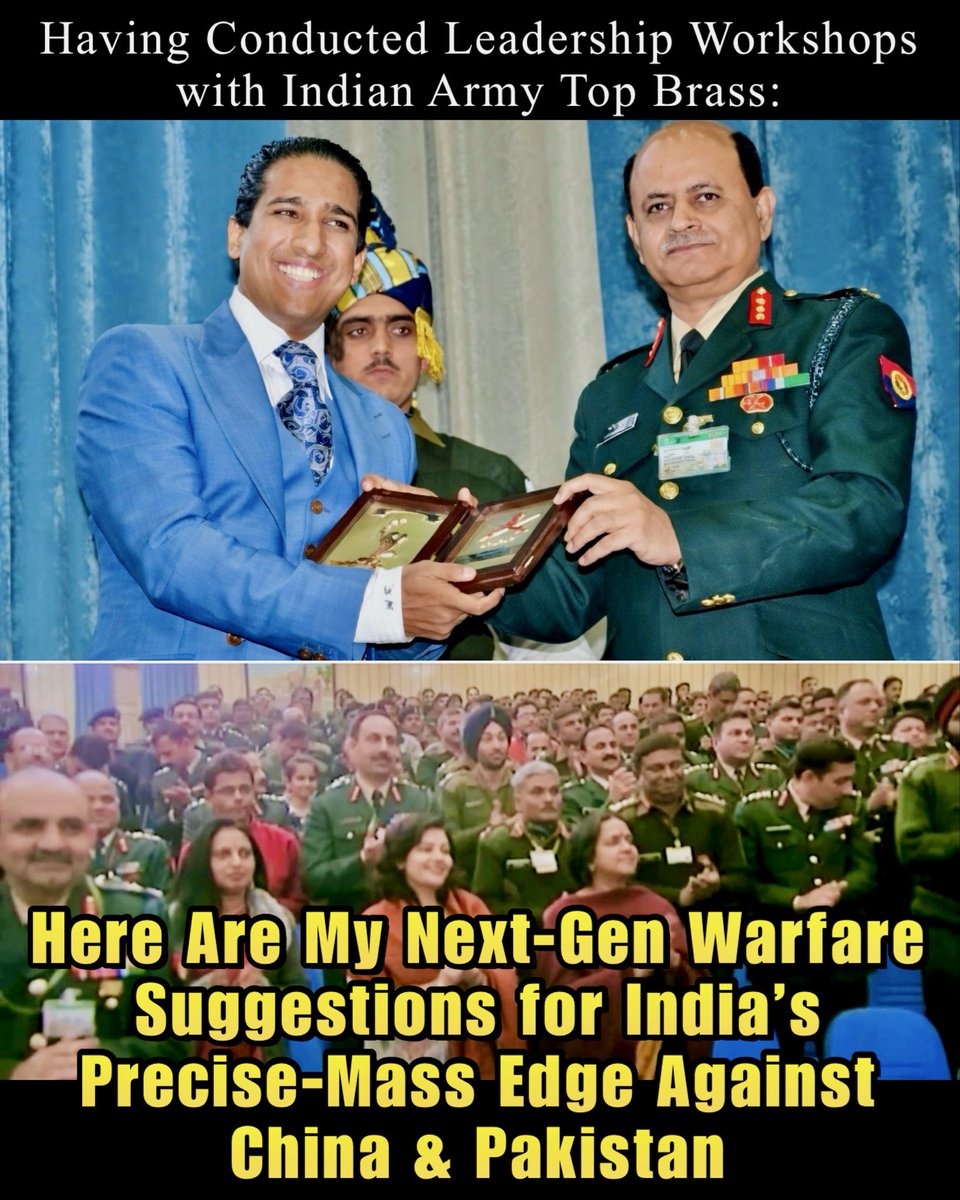
For India, this is an existential lesson. Fifteen years ago, my concerns about China raised with Indian Army top brass were taken seriously. Today, with China surging far ahead and backing Pakistan in Operation Sindoor and Iran in Operation Epic Fury, the challenge has become far bigger.
China’s superiority is overwhelming: 3,529 aircraft versus India’s 2,183; 841 naval vessels versus 343; 2,770 rocket projectors versus 300. It is racing toward 1 million tactical UAS by 2026 with kamikaze swarms and motherships. Its wartime production of FPV & loitering munitions reaches hundreds of thousands every month.
India cannot match China platform for platform. The cost would be fatal.
The real lesson from Iran is not just drones, but making precise mass the core of a hybrid doctrine.
Ukraine showed the same: low-cost drones paired with HIMARS and ATACMS forced Russia to waste expensive munitions unsustainably.
India’s viable path is a #precisemass hybrid doctrine:
1. Use everyday parts, AI targeting & private companies to build huge numbers of low-cost FPV and loitering drones. Secure batteries, chips and motors for fast self-reliant production.
2. Link them into a smart network so Rafale, Su-30, MQ-9, S-400 and future Ghatak act as motherships directing hundreds of AI drones.
3. Flood Chinese air defences, ships & missiles with massive swarms, backed by jamming, lasers, counter-drones and AI command.
4. Combine drones with cyber, space and electronic warfare. Even if 90% are shot down, low cost and huge numbers can still exhaust enemy defences when mixed with high-end weapons.
5. Leverage IT & AI talent, defence exports and partnerships like QUAD and iCET. Start fast Replicator-style programmes.
The current plan for 30,000 border drones is just the beginning — we need to scale up to produce millions of Indian-made FPV drones at thousands per day during wartime.
What Iran demonstrated, India must execute at national scale and surpass.
#IndiaDefense #DroneWarfare #IndiaVsChina #IndianArmy #ChinaThreat #DroneSwarm
The original management guru of India who changed lives—with wisdom, wit, and unforgettable style.
A Tribute to Dr. N.R. Chatterjee – The Original Management Guru of India by Dr. Arindam Chaudhuri
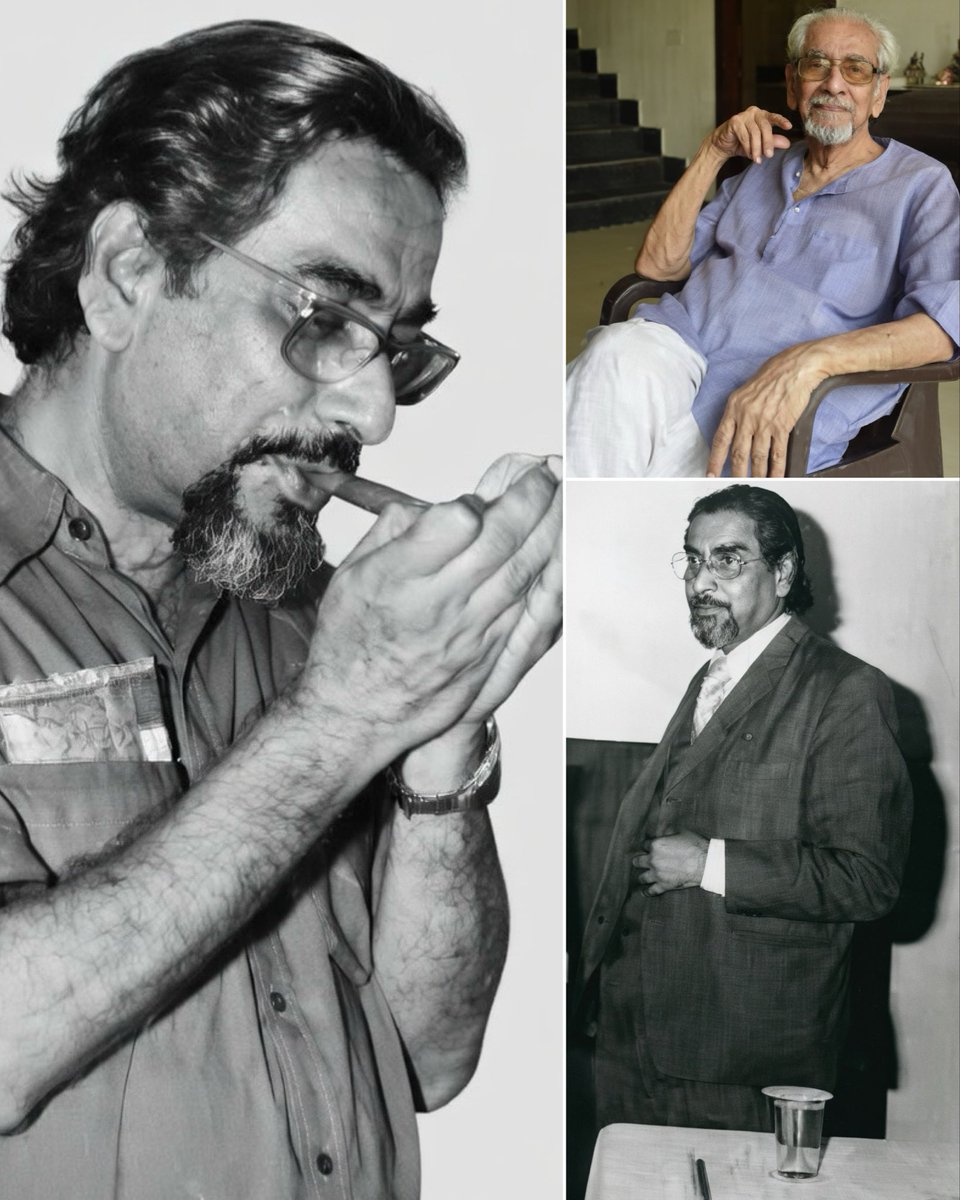
Today, on his birth anniversary, I remember Dr. #NRChatterjee, former Dean of the Faculty of Management Studies (#FMS), Delhi University—a true pioneer, eccentric irreverent intellectual giant whose brilliance lit up classrooms, shaped careers, and redefined what it meant to be a “guru.”
The third Dean of FMS Delhi and widely regarded as India’s original #ManagementGuru, Dr. Chatterjee held a Ph.D. and the prestigious International Teachers Program from London Business School. With over 45 years of expertise in communications, psychology, organisational behaviour, and HRM, he taught at premier institutions including Shri Ram College of Commerce, Delhi School of Economics, IIT Delhi, Ahmadu Bello University (Nigeria), and Cleveland State University (USA). He founded and headed several institutions, served as visiting professor in the US and Europe, and later became Dean of Career Development & Placements at IILM.
Yet beyond titles, it was his magnetic, larger-than-life presence that left an indelible mark. Students recall his lectures on Business Strategy and Behavioural Science as magical—blending wit, irreverence, deep insight, and practical wisdom that turned ordinary classrooms into arenas of intellectual awakening. Those who knew him best called him an “eccentric irreverent magician,” a phrase that perfectly captured his genius for making complex ideas come alive and inspiring generations of leaders.
For the #IIPM fraternity, NRC (as we fondly called him) was deeply personal. He was friend, philosopher, and guide to my father, Dr. #MalayChaudhuri, and my one and only Management Guru. His teachings on people, leadership, and Gita-inspired #Krishna-style leadership profoundly shaped my work, books, workshops, and vision for IIPM. I often described him as the brilliant professor “with a cigar in his hand who used to light up” the minds of his students. His ideas still echo through IIPM’s philosophy and the alternate budgets and national transformation frameworks championed by our family.
His legacy lives on in institutions. The Dr. N.R. Chatterjee Memorial Lifetime Achievement Award for the Most Influential B-School Dean stands as a lasting tribute. It was first conferred on his favourite student and former FMS Dean, Prof. Jay K Mitra , who recalled Dr. Chatterjee’s brilliance in the classroom and administration. Prof. Mitra, my father, and I have remained united in admiration for this extraordinary teacher who touched lives like few others.
On this special day, I honour a man who taught us that true leadership is irreverence to the ordinary, and an unyielding commitment to courage in thought!
The original guru who taught us to think, lead, and light up the world—one cigar-lit lecture, one profound insight at a time.
@iipm_in #DareToThinkBeyond #ArindamChaudhuri
On the right, Prof Chatterjee Awarding Various Luminaries with IIPM’s prestigious awards. And in the centre of the collage, receiving the Lifetime Achievement Award at the 2009, The Sunday Indian-IIPM Mega Excellence Awards, ‘Yeh Dilli Hai Meri Jaan’ for his pathbreaking contribution to Management Education in India
A Sunday Tradition That Feeds the Soul
— Dr. Arindam Chaudhuri.
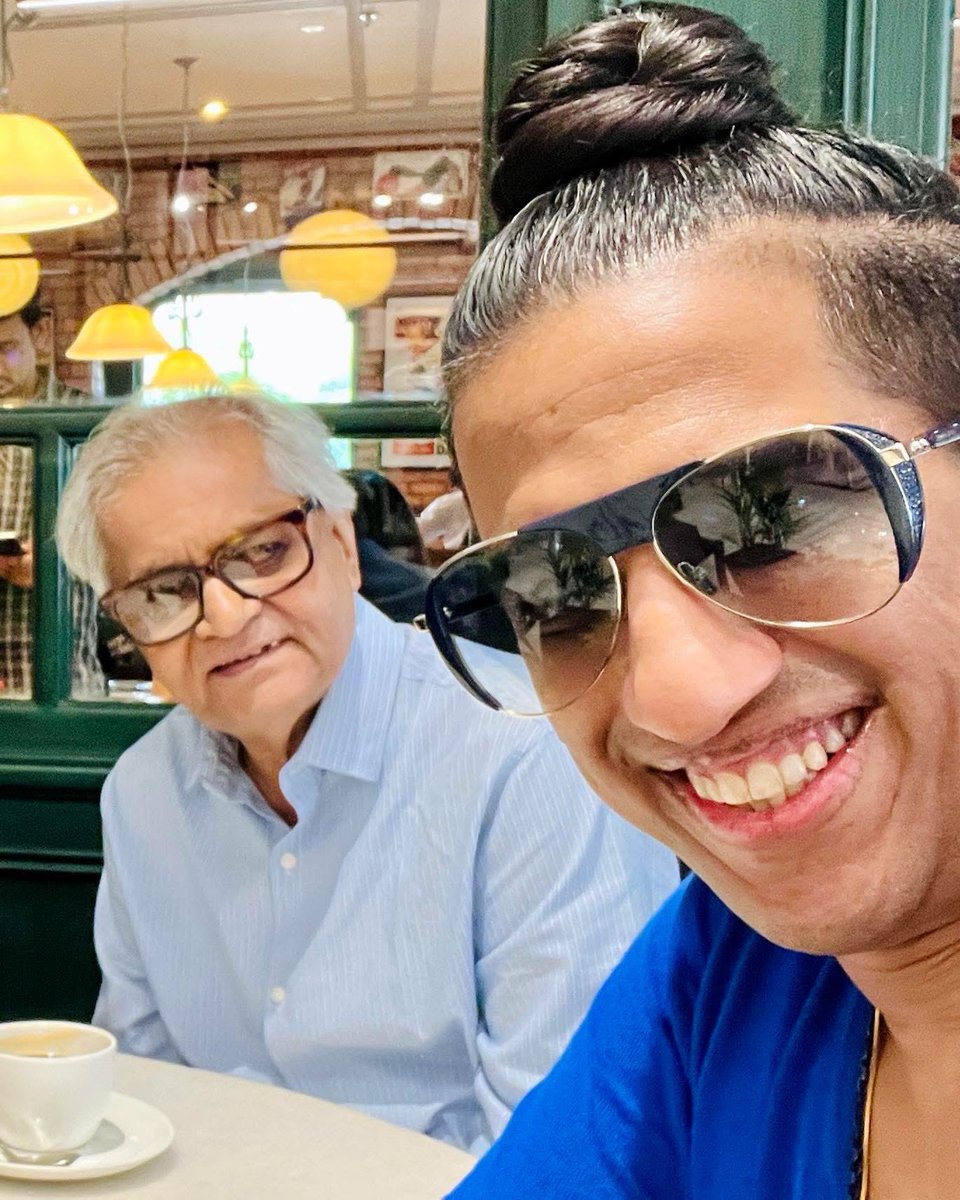
Whenever I’m in town, I make it a point to meet my guru, Prof. Jay Mitra , every second Sunday for lunch. It’s a ritual I cherish deeply.
Last time we skipped the table altogether and caught ‘#ThereWillBeBlood’ with popcorn. Yesterday, though, I was in a bit of a rush, so we kept it short — just one golden hour from 2 to 3 pm at Perch.
Over plates of sumptuous Miso Grilled Chicken and fragrant Vietnamese Hot Coffee, he gave me a brilliant strategy for a new business I’m planning. But what stayed with me long after the plates were cleared were four deep insights he shared — thoughts and ideas that have been swirling in my mind for the last 24 hours.
1. Reviving Bangla through Simplicity:
He is quietly working on making the Bengali script more relatable and user-friendly so that our language doesn’t fade away. “The Germans did it. Why can’t we?” he asked. He weighed the pros and cons, acknowledged how the establishment might resist, but stood firm: in an era of disappearing languages, simplification is the only way to give Bangla a longer, stronger life.
2. The Sanskrit Debate:
We moved to the government’s recent push to make Sanskrit compulsory in schools. Prof. Mitra explained the unique beauty of Sanskrit — its complete freedom from rigid sentence structure. Unlike English (“I had my lunch”), Sanskrit lets you rearrange words in any order without losing meaning. He believes mandating it in Devanagari script centuries later is pointless. Sanskrit has already evolved beautifully in every regional language — Bengalis wrote it in Bangla, Gujaratis in Gujarati, and so on.
3. The True Mahabharata:
That led us to the legendary Pune-based Bhandarkar Oriental Research Institute (BORI), which painstakingly compiled the original Mahabharata. It was never in Devanagari to begin with. The epic travelled orally across generations, in local languages, constantly evolving and growing richer. And here’s the beautiful revelation — its original name was simply “Jaya” (Victory).
4. Socrates, Plato & the Duty to Document:
We closed with Socrates, —who never wrote a word & everything we know came from his students— when I shared how vital it is for him to write down every thought before it’s lost. “Plato had nothing else to do,” I joked. “Today’s students may not have that luxury.” I told him I’ve tried to keep alive the theories of our common guru and professor, Dr. N.R. Chatterjee, through my management books, and my father Dr. Malay Chaudhuri’s ideas through our joint works (almost by force). He smiled and agreed that it’s time he starts documenting too.
Like Plato preserving Socrates, this is my small, heartfelt ode to Prof. J.K. Mitra — a humble attempt to keep his luminous & profound thoughts alive for whoever needs them.
All in just an hour!
One hour with your Guru— wisdom for a lifetime. 🙏🏾
#GuruShishya #Wisdom #Bengal #Sanskrit #Mahabharata #ManagementThoughts #NRChatterjee #MalayChaudhuri #jaymitra #daretothinkbeyond #iipm @iipm_in #arindamchaudhuri
NB. The snap used is from another day
Don’t compare #Dhurandhar to #Sholay. It is a fantastic film that will become just another film in 50 months.
—By Dr. Arindam Chaudhuri—
At the outset, I must mention that I watched both parts of #AdityaDhar’s Dhurandhar and loved them. I had written separately, after watching both, that I found no propaganda in the film — it was just pure, high-octane anti-terror action. The film is deservedly doing massive business at the box office and its box office comparisons to Sholay, though early, might be justified.
This article is limited only to its comparisons with Sholay, especially since some people are calling it a “100x Sholay.”
Here are the 5 reasons why Dhurandhar is no Sholay:
1. Dialogues: Dozens of Sholay’s lines and entire sequences became part of our daily language. People still quote the iconic #SalimKhan-#JavedAkhtar dialogues 50 years later. There was even a separate dialogue album released! Dhurandhar has a few good lines that people cheer for in theatres, but they haven’t entered our everyday conversations the same way. There is no dialogue disc, no cultural takeover.
2. The Perfect Masala Mix of Heroism, Humour, Time-Defying Romance and, Above All, Heightened Bromance: While Ranveer Singh, Rakesh Bedi, Arjun Rampal and R. Madhavan were all outstanding in Dhurandhar, comparing them to #AmitabhBachchan, #Dharmendra, Sanjeev Kumar, Amjad Khan, #JayaBachchan and #HemaMalini is an unforgivable crime. Even Asrani and Jagdeep’s cameos have no match in Dhurandhar. The acting, the emotions, the tears, the roaring laughter that provided humour relief at the right moments, the pain, the time-defying Amitabh–Jaya love story, and the millennium-defining villainy — none of them have any parallel. Above all else, any cinema-literate person would know that nothing has a greater impact on the big screen than #bromance, and Sholay was the absolute peak of that. That is perhaps the biggest reason why Sholay became what it is.
3. Music That Lives Forever: R.D. Burman’s songs in Sholay didn’t just play in the background — they carried the story and emotions. “Yeh Dosti” and others became anthems that are still loved by every generation. The music album sold like crazy and stood on its own. Dhurandhar has a good background score, but no song has yet become that kind of cultural property.
4. Technical Breakthrough: Sholay was India’s first big 70mm film with stereophonic sound in 1975. It changed how movies were shown forever. Dhurandhar uses today’s standard digital technology — nothing new or game-changing. #RameshSippy’s direction in Sholay turned a good script into something timeless. That level of craft and vision is still unmatched.
5. The Right Moment in History: Finally, Sholay released on 15 August 1975, right after the Emergency was declared. Its story of broken laws, vigilante justice and a village fighting back felt like a mirror to what India was going through. Even the censors made them reshoot the ending. It was the right film at the right moment in history. Dhurandhar talks about terrorism and nationalism, which are important today, but it doesn’t carry that same deep, once-in-a-lifetime national emotion.
In short, Dhurandhar is a fantastic, entertaining film that deserves its success. It has the action, the cast and the thrills. But Sholay became more than a movie — it became part of India’s memory, language and identity over 50 years. That kind of cult status cannot be decided in three weeks or even three years. It is earned slowly, through repeat viewings, across generations and through time. Times have changed, but the fact remains that Sholay didn’t explode on day one. It grew slowly, ran for five straight years in one Mumbai theatre, and sold an estimated 15–18 crore tickets, mostly through repeat viewings. It held the record for highest-grossing Indian film for nearly two decades.
Contd…
@SrBachchan@dreamgirlhema@rgsippy@Javedakhtarjadu
Trump’s “End of Civilisation” threat just proved he’s still the master of The Art of the Deal.
Hezbollah | Houthis | Hamas | Hormuz — Game over for Iran’s terror network.
—By Dr. Arindam Chaudhuri—
Hezbollah, Houthis, Hamas — Iran has backed terrorism across the Middle East for decades. Everyone knows this.
Japan, Korea, and China have captured huge chunks of American markets because of low tariffs in the USA. Everyone knows this.
Africa, Europe, & Latin America are steadily falling under Chinese influence. Everyone knows this.
Mexico, El Salvador, and India account for the top three sources of illegal immigration into the United States. Everyone knows this.
Any truly committed American President truly would address these issues. So why is Trump criticised? Because the media is packed with uneducated fools who lack the intelligence to understand him — something I have stated categorically in article after article. Yes, Trump is loud and unpresidential too. But that is not a crime.
For over four decades, Trump’s statements have been remarkably consistent: America must regain the competitive advantage it has been losing to Korea, Japan, and China; deport illegal immigrants; avoid prolonged wars while decisively dealing with Iran; reset relations with China; and secure the Western Hemisphere.
Since becoming the 47th President, his most extreme statement has been the warning of an “end of civilisation” if Iran refused a deal. But then, Trump has always maintained that the best deals begin from an extreme position. With China, it was 130% tariffs. So— with a terror-sponsoring nation like Iran, it was eliminating its top leaders and then warning that “civilisation as we know it” could end that very night.
The key point is: it was “just a threat”— and it worked. After weeks of refusing to negotiate, Iran is now at the table.
Look at Trump’s clear agenda:
- No more funding or support for Hezbollah, Hamas, or the Houthis.
- Shared revenues from the Strait of Hormuz (another big point of Iranian economic terrorism) through a joint checkpoint.
- A mutual security pact that sidelines China.
Trump’s America simply wants China out of the Western Hemisphere (Canada & Latin America), the Middle East, and Europe.
That is why he has taken a hard line with Venezuela, is pushing Canada and Greenland into line, is forcing NATO members to recognise American might, and has confronted Iran directly.
It is also a powerful statement that, despite China’s growing strength, American precision warfare remains unmatched. The swift rescue of American pilots demonstrated a capability that no European country, Russia, or China could have matched.
So yes — that “End of Civilisation” threat may well turn out to be Trump’s greatest-ever lesson in The Art of the Deal. And if it is, both America & the future peaceful world will have reason to thank him for years to come.
#TrumpArtOfTheDeal #EndOfCivilization #TrumpIran #MAGA #Trump47 #Hormuz #IranDeal #AmericaFirst
@realDonaldTrump #arindamchaudhuri #iipm #DareToThinkBeyond
>>In just 12 months #India loses all respect globally while #Russia-#China-#Iran-#Pakistan emerge clear winners in the new world order<<
Trump looks like a monster but at least no one questions American power.
—By #ArindamChaudhuri—
The great geopolitical reset is complete.
11 months back, while the world watched in stunned silence, Pakistan — backed by Chinese technology and intelligence — downed multiple Indian jets and shattered Modi’s ego decisively and with absolute guarantee that for the rest of his tenure, Modi will never again try to venture into any war mongering with Pakistan. Not even before elections.
A year later, cut to the other side of the chessboard.
Iran, armed with Chinese and Russian intelligence and systems, downed multiple American jets and publicly destroyed Trump’s ego.
Trump who repeatedly exposed to the whole world the downing of Indian jets and how he stopped the India-Pakistan war on Indian request, props up Pakistan further by using it as the bridge.
Islamabad is now the venue for backchannel negotiations.
Result?
Russia and Iran are swimming in money. All sanctions effectively evaporated. Their coffers are full, their alliances iron-clad, and their global leverage at an all-time high.
China Is smiling in the background as the ultimate architect and selling more of its jets across the world.
Pakistan thanks to their extraordinary ability to be friends with the two greatest enemies— China & America— have emerged as a key player.
Trump? Looks ruthless, looks monstrous… but nobody on the planet questions American power anymore.
And #Modi —who had spent years cozying up to #Trump, #Netanyahu, #USA & #Israel and deliberately ruining India’s historically strong relations with Russia and Iran— has ended up making India look weakest and most isolated.
India has in essence emerged as the big loser.
>>Respect gone.
>>Strategic autonomy gone.
>>Old friends turned cold.
>>New “friends” used India as a pawn.
As a patriotic Indian and co-author of ‘The Great Indian Dream’, it’s a sinking feeling. It’s not an anti BJP ideology talking. It is narrating the cold, hard realpolitik playing out in front of our eyes—as it is.
A respect built over decades, gone in less than 12 months.
Let’s stop pretending this isn’t happening— this is exactly where India actually stands today.
#Geopolitics #WorldOrder #StrategicAutonomy #RealTalk #DareToThinkBeyond
>>My love for sports, and cricket in particular, and how through #PowerBrands London International Forum for Equality (PB-LIFE) I hope to take it to the next level<<
I grew up wanting to be a cricketer because I was in love with #KapilDev. In my childhood, my parents wanted me to get braces for my teeth. I refused, saying that if Kapil Dev could have teeth coming out and still be an icon, why couldn’t I be? As I grew up, Kapil Dev and Gavaskar were the greatest icons of my life. When Kapil Dev stopped playing cricket, I stopped watching cricket.
Many years later, one of my life’s biggest highs came when I met Kapil Dev as part of an NGO we were associated with — Khushi Foundation — and he actually told me that he loved reading my book, ‘Count Your Chickens Before They Hatch’. The bigger high came soon afterwards, when I played a charity match with him in the same team against the Film Stars team led by Suniel Shetty, for the same foundation.
After Kapil’s retirement, #SachinTendulkar brought back my excitement for cricket. Watching him and Ganguly became the reason why I again started watching cricket! And as I have often written, it was just the highest of highs to get a call one day from Sachin Tendulkar’s office and know that Sachin had read my book that I co-authored with my father, ‘The Great Indian Dream’, and wanted to endorse our foundation pro bono. That was the greatest of charitable acts that even today has no parallels. Directing him for our ad film was an honour. And then it was time for him to retire.
Today, I watch cricket only when #ViratKohli plays — whatever he does. I haven’t had the good fortune of meeting him, but I think as a human being and a fearless champion of equality, very few perhaps come close to him.
The amount of happiness sports has given me is something I have always wanted to reciprocate. In 2008, I started Planman Stars to get into the world of sports management for good. From organising multiple Polo Tournaments to Managing IPL & Indian Cricket team Sponsorships to bringing in great innovations in advertising (https://t.co/CWjmWTBpvO) at #PlanmanStars, we made a big impact. We even bought the Delhi Franchise of the I1 Super Series (https://t.co/N0EzCr8MDO). But when that failed, I gave away the sports management piece to the wonder boys who started it and they went ahead and created magic with it under the name of ITW! For more reasons than one.
But sports refused to leave me. Because sports is more than the glam and the money. Sports is about equality. Sports stands as the greatest force of equality in the world, forging a true meritocracy where barriers of race, gender, wealth, caste, nationality, and social status dissolve the moment the game begins. On the field, track, or court, victory belongs solely to talent, sweat, and unyielding determination—allowing a child from a remote village or slum to compete on equal terms with the privileged elite. From Olympic arenas that defy political divides to local pitches that unite rival communities, sports has repeatedly proven that excellence recognizes no prejudices, inspiring humanity to embrace fairness and shared potential beyond every artificial boundary.
While we in our group have always recognised sports icons from Baichung Bhutia (with an award of ₹1,00,000 and a gold medal) to the greats like Virendra Sehwag, Bishen Singh Bedi, Syed Kirmani, Karun Chandhok and even felicitated Royal Challengers Bangalore for building the Greatest IPL Brand; when in 2017, I started the #PowerBrandsGlobal LIFE (#LondonInternationalForumforEquality), I was firm that this platform would become a global platform to recognise sportsmen and sports organisations who are promoting humanity, equality and access to make the world a better place through initiatives in the world of sports.
Since 2017, in our London @BrandsPower Sports Awards for Equality I am proud that we have been able to recognise the amazing work of:
Contd…
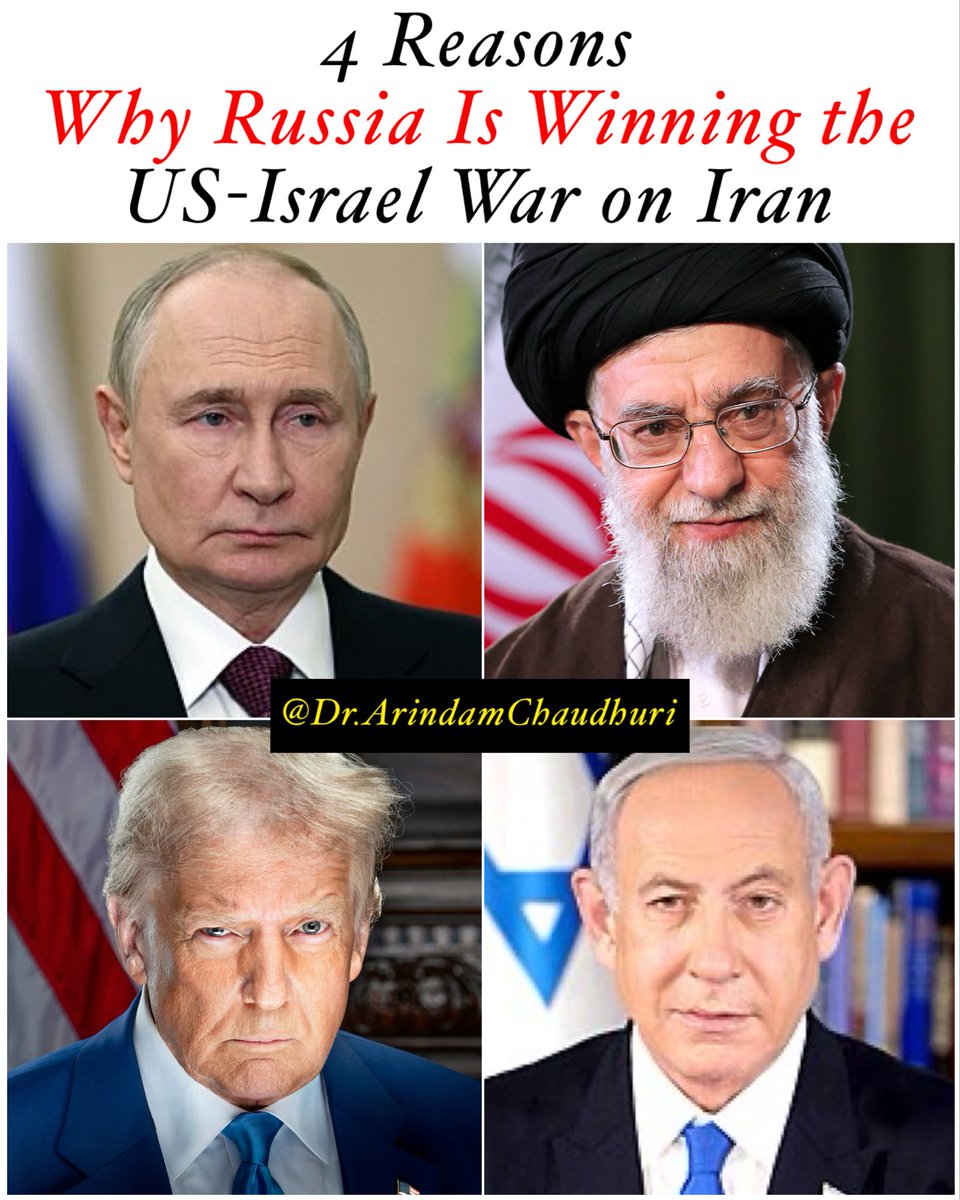
4 Reasons Why Russia Is Winning the US-Israel War on Iran.
—Dr. Arindam Chaudhuri
As the US-Israeli campaign against Iran hits week four in March 2026, Putin’s Russia is the only country reaping massive rewards—without firing a shot.
Reports actually indicate that when current Supreme Leader Mojtaba Khamenei was seriously injured, Russia helped evacuate him and he is now recovering there, with coordination reportedly flowing directly from Moscow. This is effectively a proxy war between Russia and the US—and Russia is winning all the way.
Here are the 4 specific reasons why Russia is the real winner:
1. Strategic Partnership + Sanctions Relief
For years it supplied Iran with advanced arms, drones, missiles, and critical intelligence—deliberately making Tehran far more lethal and capable. During this war Russia has been the only country openly providing intelligence and support. This ensured a prolonged, high-intensity conflict. In return, the US has quietly eased some restrictions on Russian oil to stabilize markets. Buyers who hesitated are back—India’s purchases have spiked. Russia has overturned sanctions and is thriving because of them. (Iran is also benefiting, with the US temporarily lifting sanctions on stranded oil, unlocking about $14 billion in potential revenue.)
2. Massive Oil Windfall
Iranian supply disruptions have sent oil prices soaring. Russian Urals crude, once trading at painful discounts as low as $40/barrel, is now selling at or above Brent levels with an 80% gain in one month. Moscow has already pocketed an extra $5–10 billion in weeks—breathing room for a budget that was under huge deficit pressure. Oil and gas revenues are funding the war machine.
3. Perfect Distraction Dividend
Western attention, weapons stockpiles, and political bandwidth are now split between Ukraine and the Gulf. European leaders openly call Russia the “only winner.” Every extra day of chaos means fewer interceptors and headlines for Ukraine. Putin’s playbook is working perfectly.
4. Fertilizer Jackpot
Russia is the world’s top fertilizer exporter (23% of ammonia, 14% urea, ~40% potash with Belarus). The Strait of Hormuz closure and higher energy costs have hammered Gulf supplies and European producers, driving fertilizer prices up 30–70%. Russian exports bypass the Gulf entirely thanks to cheap domestic gas. Importers in India, Brazil, and Africa are scrambling to pre-buy at premiums. Moscow is now the indispensable supplier keeping global food prices from spiraling higher.
Wars are tragedies that cost lives and destabilize economies. But geopolitically, Russia by seemingly staying on the sidelines is walking away with the biggest pot by playing 4D chess.
#Geopolitics #EnergyCrisis #Fertilizers #FoodSecurity #Russia #MiddleEast #GlobalEconomy #Leadership #StrategicThinking #SupplyChain #IIPM #ArindamChaudhuri #DareToThinkBeyond
@iipm_in
Finally a #Meditation Program that explained its link with #LongevityScience! Thank you #ArtofLiving!
My life has been a mission to promote GOOD SCIENCE. To me, a simple scientific research paper is of no use even if it has used large data sets, randomised controlled studies, and peer review because too many of these have been manipulated in the past by the funders, the research journals, and biased researchers.
So what is good science?
Good science to me must be based upon
1. Systematic Reviews and Meta-Analyses: These are the "gold standard" of the gold standard. They don't just look at one study; they combine data from multiple high-quality trials to find an overall truth, significantly reducing the impact of any single flawed study.
2. Randomised Controlled Trials (RCTs): These are individual experiments where participants are randomly assigned to a treatment or a control group. Randomisation is the key to trust because it ensures that differences in results are likely caused by the treatment itself rather than other factors like age or lifestyle.
Meditation and its link with longevity are based on extremely respectable good science. The connection isn't just wellness talk but is rooted in molecular biology, especially with respect to:
1. Telomere Protection: This is the "gold standard" of meditation-longevity research. Telomeres are the protective caps on your DNA. Every time a cell divides, they get shorter; when they're gone, the cell dies. Peer-reviewed studies show that meditation increases telomerase, the enzyme that repairs these caps.
2. Inflammaging: Chronic inflammation is a primary driver of aging. "Good science" shows that meditation downregulates pro-inflammatory genes, effectively slowing down the biological "rusting" of your body.
3. Brain Volume: Neurological research using MRI scans shows that long-term meditators have more gray matter in the prefrontal cortex compared to age-matched controls, suggesting it can offset the natural brain shrinking that happens as we age.
And globally one of the greatest organisations that has taken the art of meditation door to door is the Art of Living Foundation.
I have done science-based studies on almost everything possible to do with longevity over more than 15 years now.
And I'm a yoga practitioner for two decades plus. However, I have done meditation only on and off and never been happy with the results nor been able to practise on my own.
Art of Living conducts the most globally spread and appreciated — more or less — non-religious meditation programmes... and the rarest one that tries to link it systematically to longevity science.
So I got enrolled in this programme on MEDITATION FOR LONGEVITY— BEYOND SUCCESS 2.0, with an extremely limited purpose — to learn #SriSriRaviShankar’s Sudarshan Kriya for Meditation, and to find out if that helps me practise meditation any better than previously.
I have come back extremely happy with practical knowledge of meditation and a feeling that yes, now I think I will be able to do meditation on a regular basis on my own. The Sudarshan Kriya certainly helped me meditate, and I hope now at home I will be able to do the same on my own with the simple process that was taught.
I'm grateful to the foundation and the teachers!!
Cheers
*DISCLAIMER*
This content is provided for educational and informational purposes only and does not constitute medical advice, diagnosis, or treatment. Dr. Arindam Chaudhuri promotes science and rational thinking and is a Harvard- and Stanford-certified expert in Longevity Science. The information shared here is general in nature and based on current scientific understanding. It is not personalized medical advice. Always consult your qualified healthcare provider before making any changes to your health, diet, exercise, or lifestyle, and verify any information with a professional familiar with your individual medical history and needs. Individual results may vary.
@ArtofLiving@Gurudev
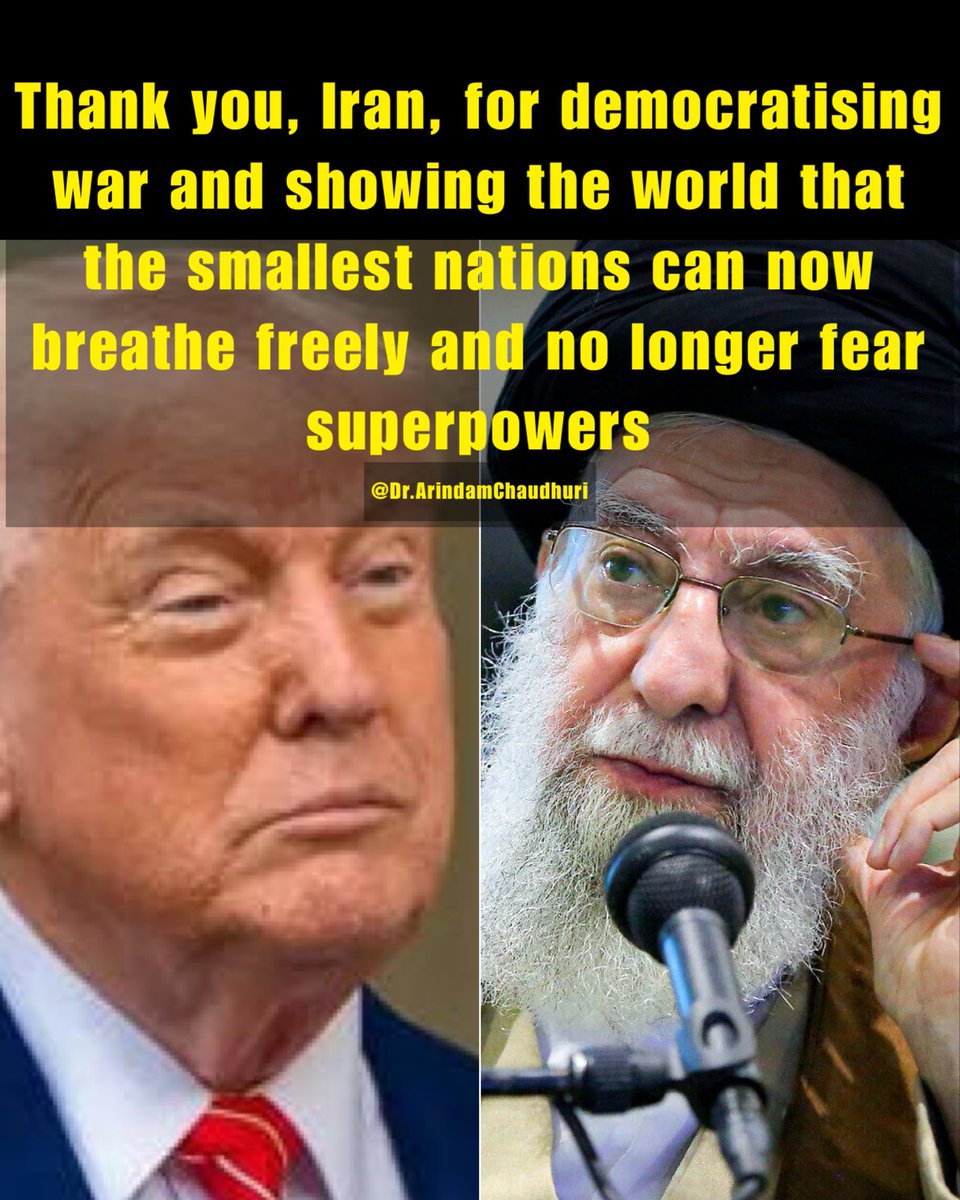
Thank you, Iran, for democratising war and showing the world that the smallest nations can now breathe freely and no longer fear superpowers ♥️
Fareed Zakaria did a brilliant video yesterday and explained how, beneath the strikes and counter-strikes in the US-Iran war, something seismic is underway: the very nature of war is changing.
He says, “We have entered the era of precise mass in warfare.”
In the first week of Iran’s retaliation, drones accounted for ~71% of strikes on Gulf states. The UAE alone faced 1,422 drones and 246 missiles in just eight days.
Precision no longer belongs only to great powers with Tomahawks and stealth jets. It now comes from swarms of cheap commercial drones. A Shahed-type drone costs ~$35,000. One Patriot interceptor? $4 million — enough money for over 100 drones.
The attacker spends thousands. The defender spends millions. The economics of war have flipped.
This goes far beyond drones. It’s a new military architecture: cheap autonomous systems + AI targeting + commercial satellites + resilient networks + cyber tools — all working together to compress the kill chain and outpace the enemy.
Old supremacy based on a few exquisite, expensive platforms is fading. Victory increasingly belongs to the side that can produce and network enough good platforms, cheaply and quickly. Lots of good stuff beats small numbers of great stuff.
Ukraine shows the future: $2,000 interceptor drones produced at 10,000+ per month, trained in days, and backed by millions of annotated battlefield images feeding AI.
Russia aims for 1,000 Shahed-type drones per day. Compare that to Lockheed’s plan for 2,000 Patriots by 2027. Scale, speed, and software now matter as much as sophistication. A mere 2,000 versus 1,000 a day!!
The implications are huge: the battlefield is everywhere, war may become easier to start but harder to end, and lethal capabilities are now within reach of non-state actors!
As Zakaria says: In 1991 the Gulf War proved technology could make war precise. In 2026, Iran is proving precision can be mass-produced.
The winning forces will blend a few high-end systems with vast numbers of cheap autonomous drones. Human judgment will increasingly yield to algorithms.
Clearly the age of precise mass is not coming — it is here.
The smallest of countries, like South Korea, have in the past shown how they can become economic superpowers. Now Iran has given hope to such nations that they can even be military superpowers and that no past superpower can easily overwhelm them. Unless, of course, they do the unthinkable — use the nuclear bomb.
#FutureOfWar #DefenseTech #Geopolitics #Iran #AIinWarfare #GlobalSecurity