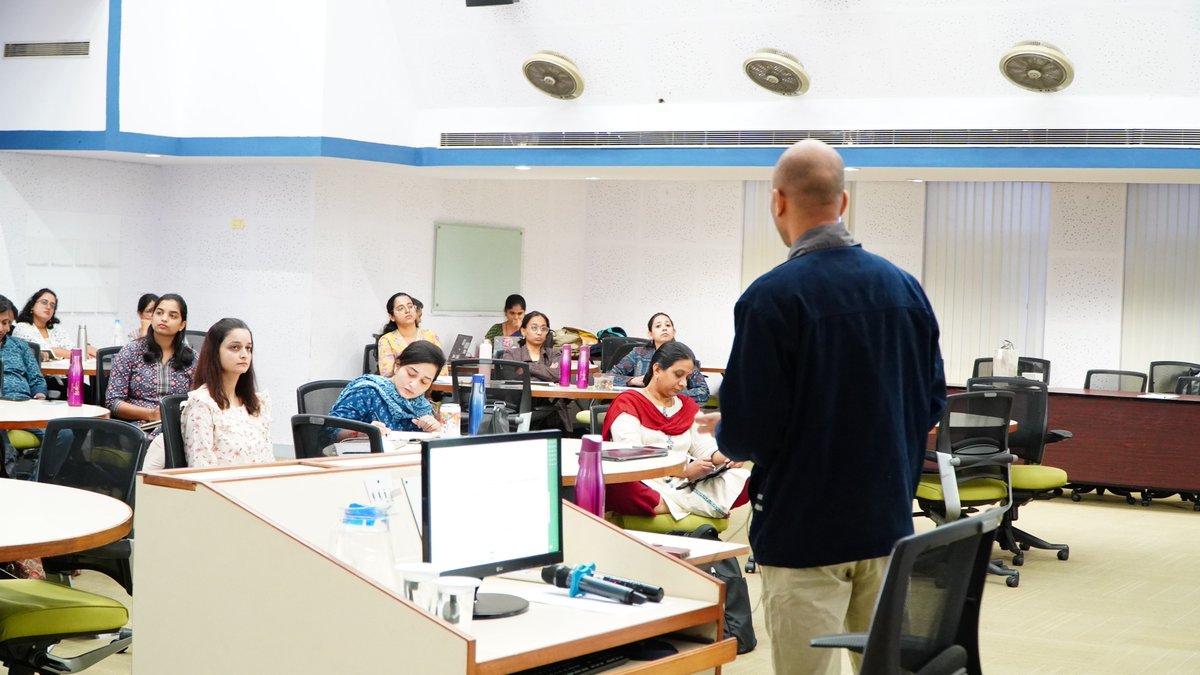
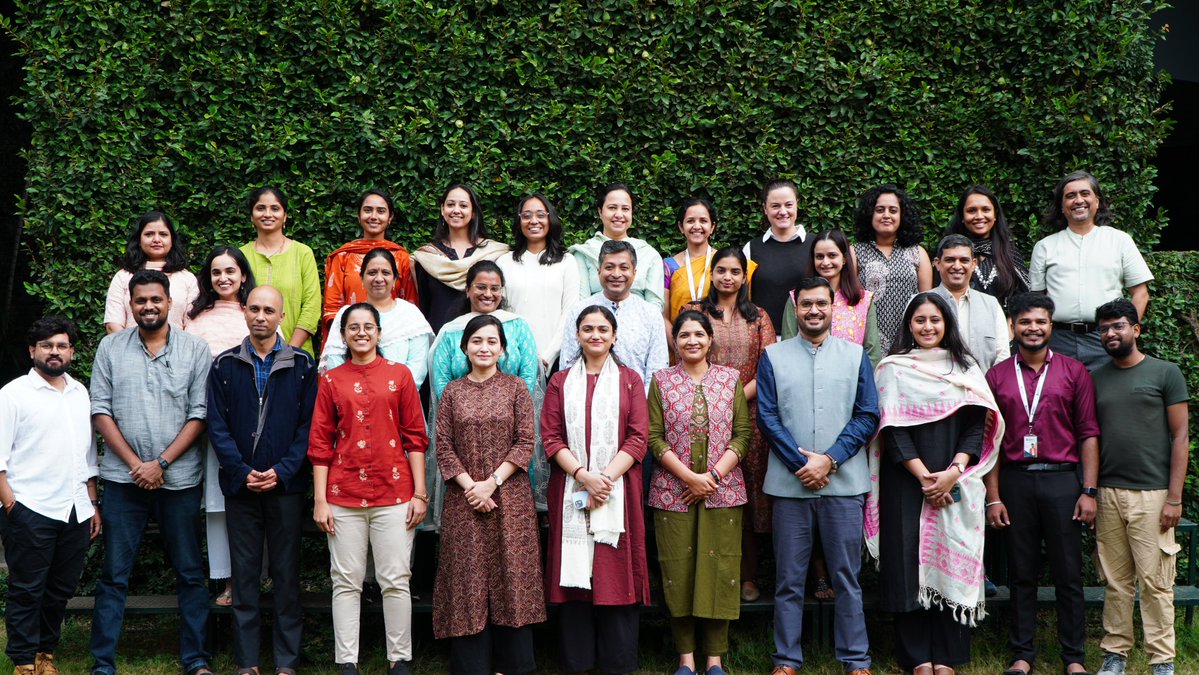
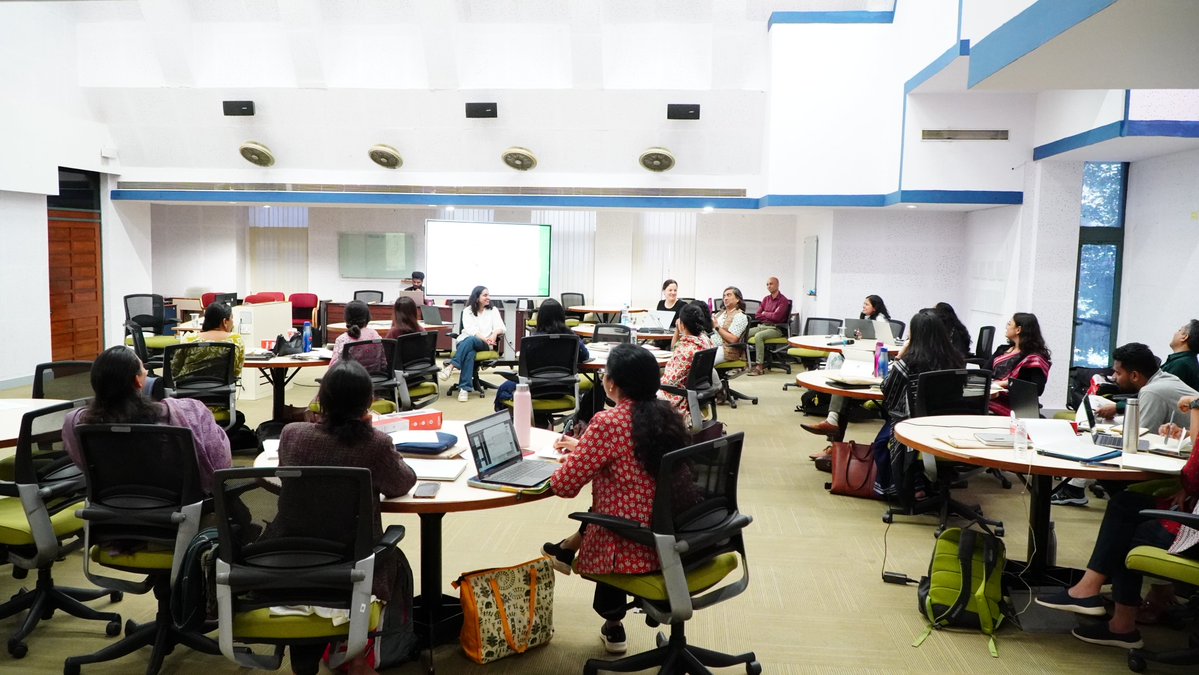
Day 3 of the #RealistResearchBlendedCourse began with two of our participants volunteering to share their insights and provide an overview of the Day 2 sessions.
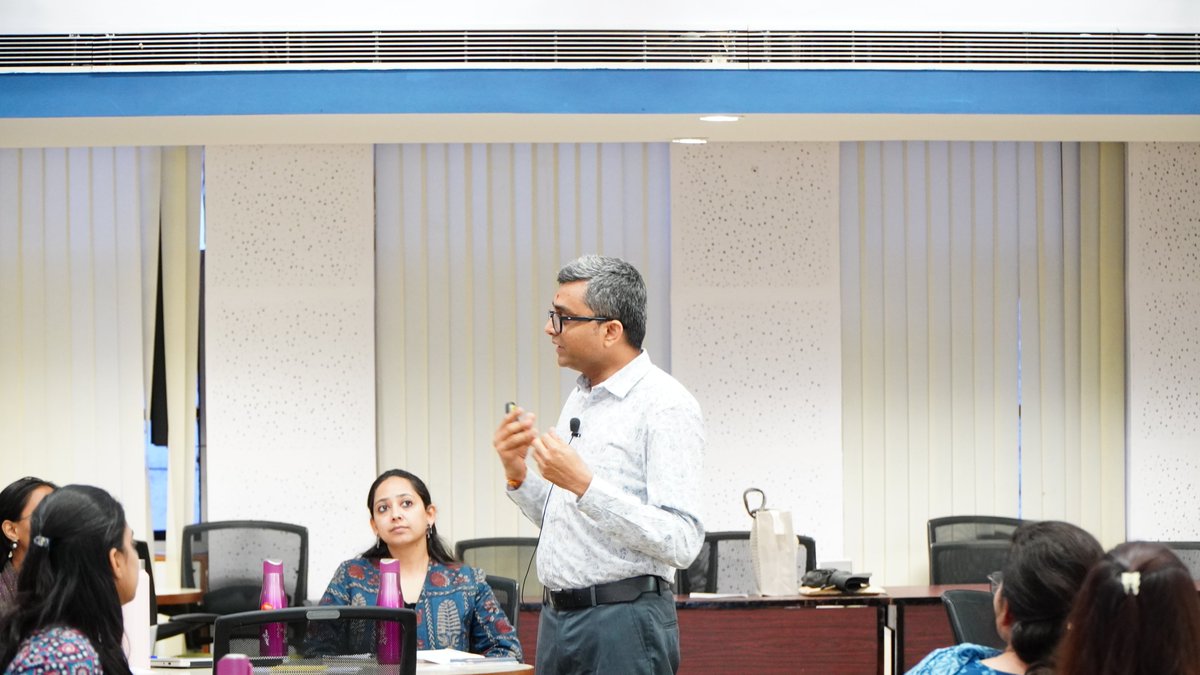
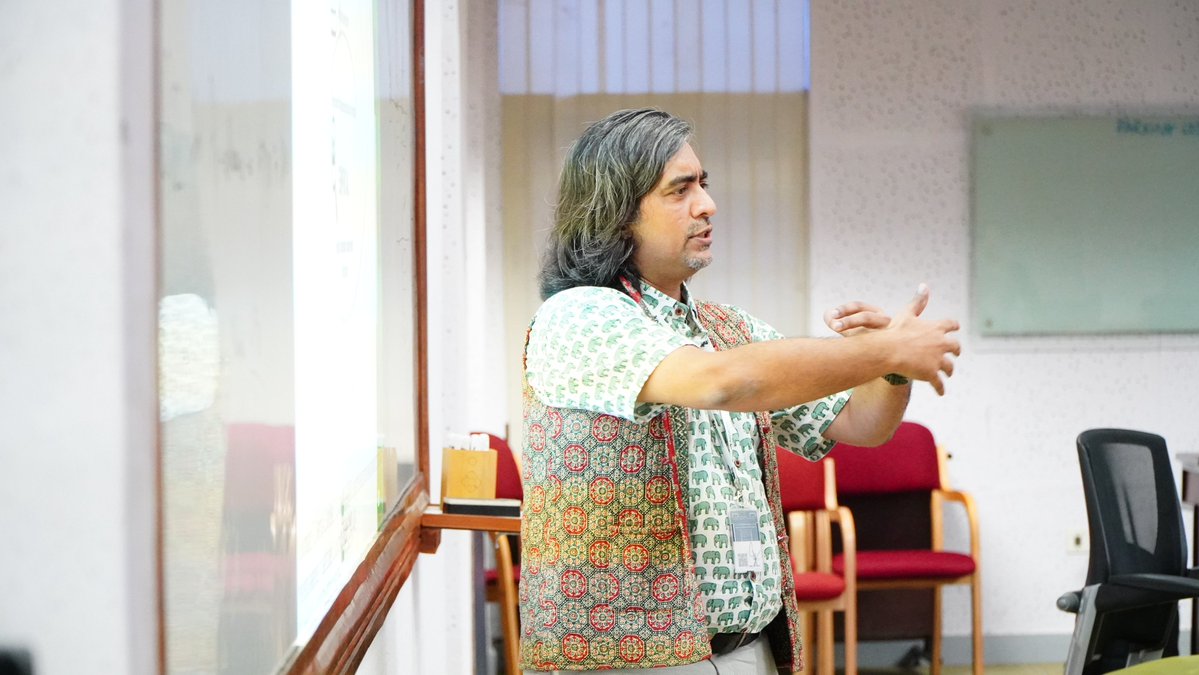
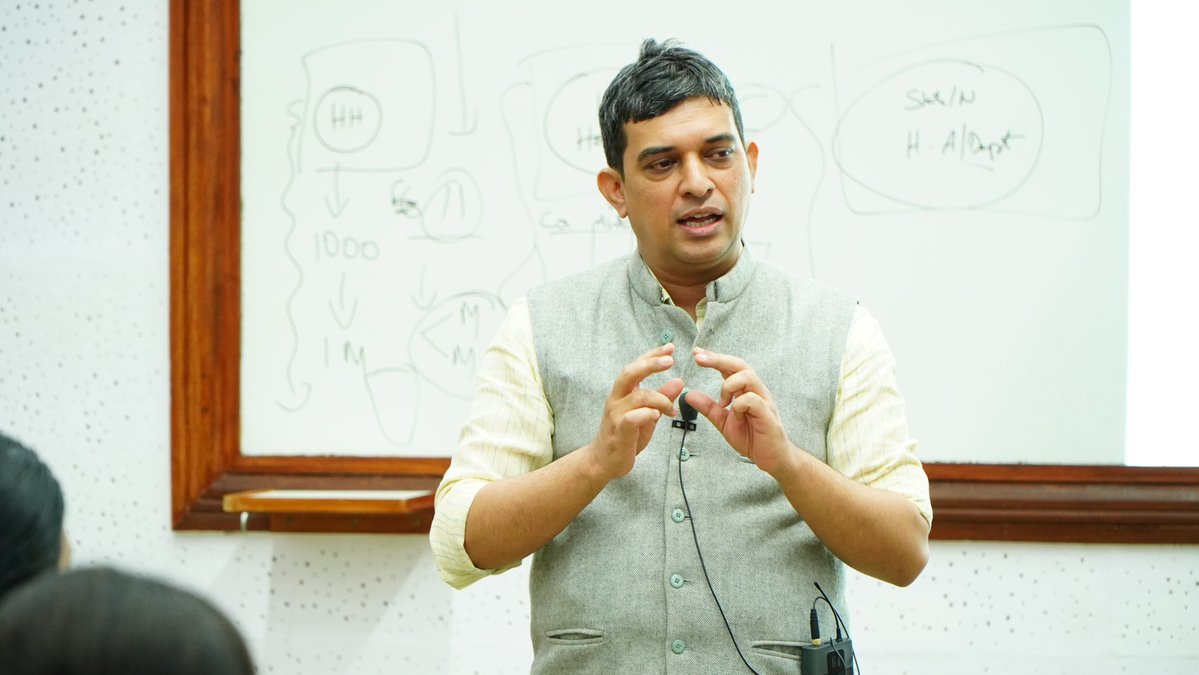
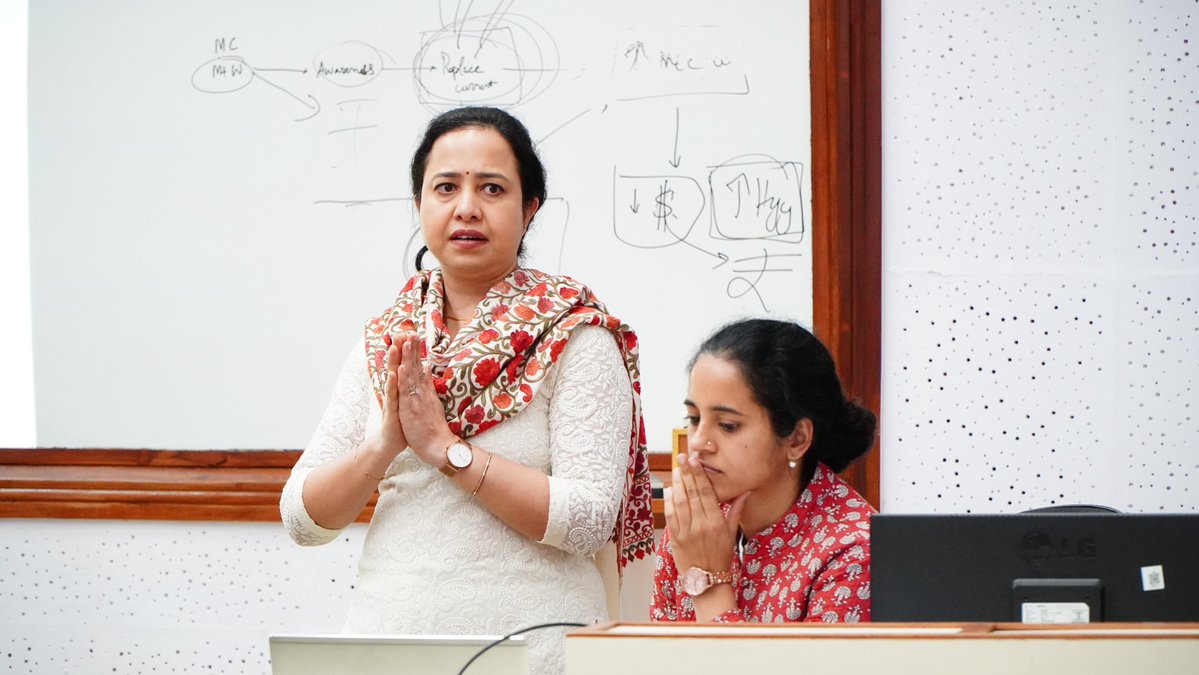
The workshop then moved to a glimpse of other theory-driven methods. One of the sessions was led by Dr Vaibhav Agavane and focused on the approach called “theory of change. ” He noted that every programme or intervention carries both implicit and explicit ideas about how change is expected to occur, and that a theory of change helps make those assumptions and the programme’s logic explicit. Through an example, he illustrated the various elements of a theory of change.
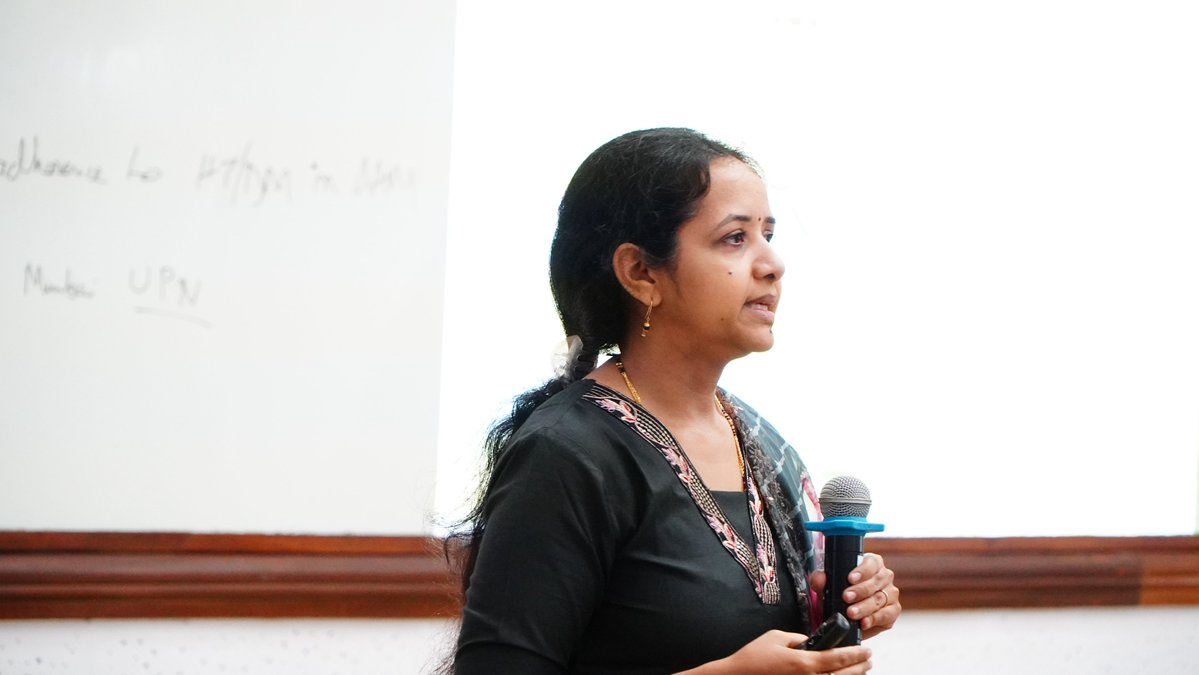
Dr Upendra Bhojani described another theory-driven method, Qualitative Comparative Analysis (QCA). He explained how QCA combines the strengths of both qualitative and quantitative approaches to identify deterministic outcomes and examine causal pathways. Drawing on an example, he walked through the different components of QCA including cases, outcomes, conditions, and the construction of a truth table.
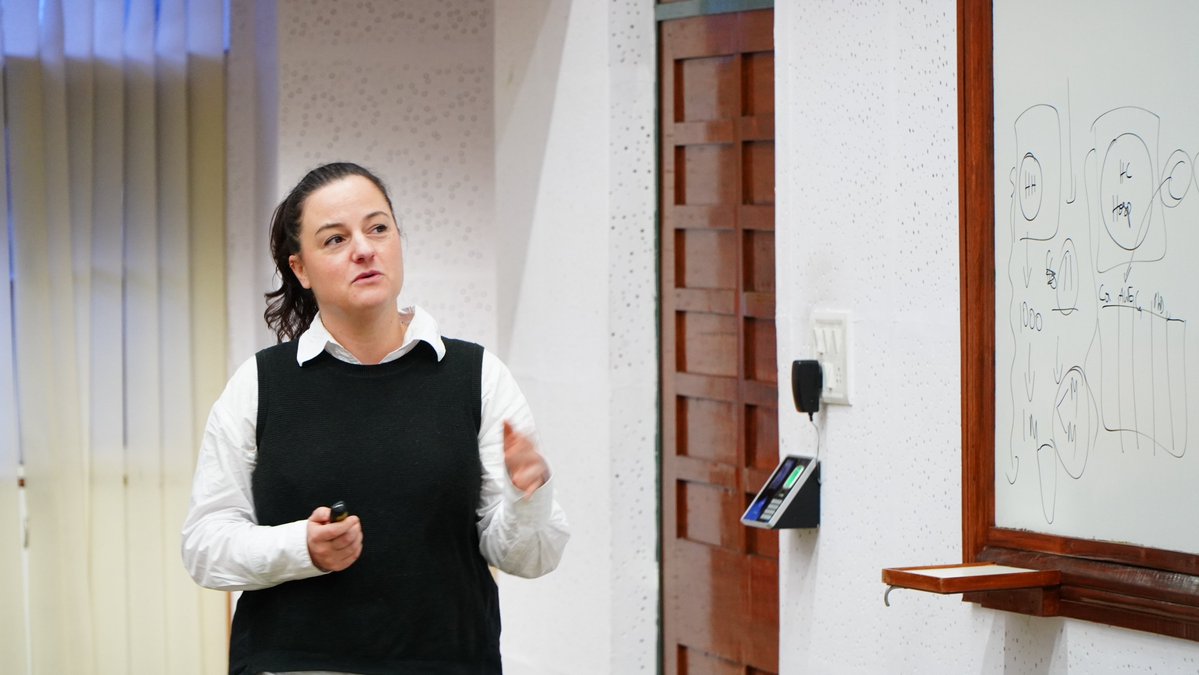
Dr Pragati Hebbar delved into what a realist synthesis is, and how it differs from a realist evaluation or a conventional systematic review. She explained the process of realist synthesis and underscored that realist synthesis is theorydriven, it does not place literature in a strict hierarchy, and allows the use of a wide range of sources, She highlighted both the strengths and the limitations of realist synthesis and demonstrated how to conduct a realist synthesis through an example.
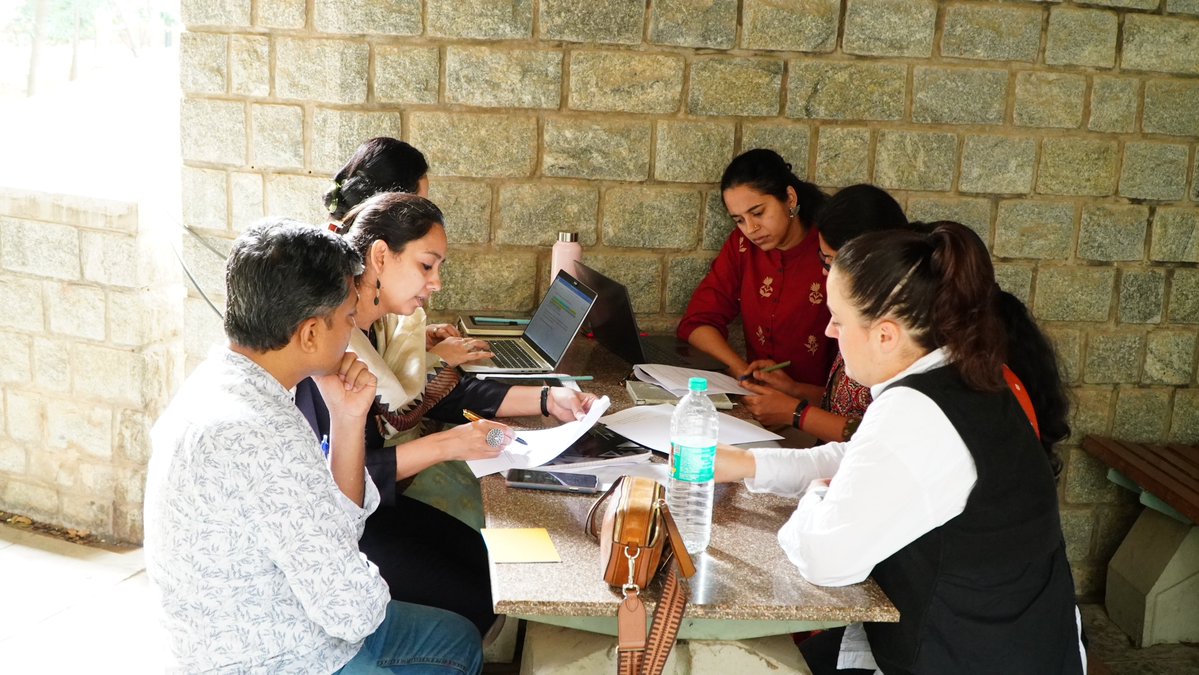
Following this session, the participants spent time reading a selected article on realist synthesis. Afterwards, they broke into small groups to critically appraise a published realist synthesis study. Once group work was complete, each team presented their findings to the rest of the participants.
The course concluded with an overview of resources and support for realist evaluation practitioners, including HSGSHAPES and RAMESES, followed by certificate distribution and a dedicated feedback session.
@Chaudharyadit23@AvishekHazra23, @commed_doc@MonicaShriv@punitrd@HiralkarSakshi@brynne_gilmore
#IPHBengaluru #TTNSoAS #RealistResearch2025 #IPHEvents #blendedlearning
Day 2 of the #RealistResearchBlendedCourse opened with a short recap from two volunteer participants, who shared their most important takeaways from Day 1 of the in-person session.
This was followed by a session led by Dr. Prashanth N.S., who walked us through the steps of conducting a realist evaluation from theory development to empirical testing and finally theory refinement and synthesis. He emphasised the importance
of developing a priori theories, which can be constructed using multiple sources such as literature reviews, programme documents, stakeholder interviews, hunches informed by field interactions, and empirical data.
Dr. Brynne Gilmore led a detailed session on data analysis and synthesis in realist evaluation and unpacked its methodological aspects. She introduced the teacher–learner approach, theory-driven interviewing, and the importance of asking questions in the right way. She also discussed in depth the concept of retroductive analysis to identify hidden causal factors, which draws on a combination of induction, deduction, and insights from intuitive reasoning (abduction).
After the session, participants worked in groups on a few casestudy examples to analyze data, refine the program theory, and apply their learnings. They then shared their insights with all participants.Professor Bruno Marchal demonstrated, through a variety of real-world examples, how realist methods can be applied across multiple levels of health systems.
Finally, Professor Arnab Mukherji discussed a case study to illustrate how patterns emerging from data can shape
development of initial program theory for realist research.
@Chaudharyadit23@AvishekHazra23, @commed_doc@MonicaShriv@punitrd@HiralkarSakshi@brynne_gilmore
#IPHBengaluru #TTNSoAS #RealistResearch2025 #IPHEvents #blendedlearning
Kicked off Day 1 of the #RealistResearchBlendedCourse (Face-to-Face Phase) at @iimb_official
The recap session explored whether research can ever be neutral, emphasizing that every method is grounded in its own philosophical roots. It revisited the philosophical foundations of realist research, highlighting realism as a bridge between the real world and the interpreted world. The session also underscored that people remain the driving force behind any programme.
Dr. Prashanth N. S. led a session on concepts and terminology that explored how programmes and policies are ideas shaped by underlying assumptions and contextual factors. It also featured an interactive illustration, where participants contributed a policy or programme idea and collectively unpacked its assumptions and contextual elements.
Dr. Pragati Hebbar used a variety of examples to explain how programme theories are developed, emphasizing the ontological layers. She also discussed why it is important to construct Initial Programme Theories (IPTs) and the different levels of programme theory. Although many possible programme theories exist, she pointed out that time and resource constraints force us to select only a few to address specific parts of the larger picture.
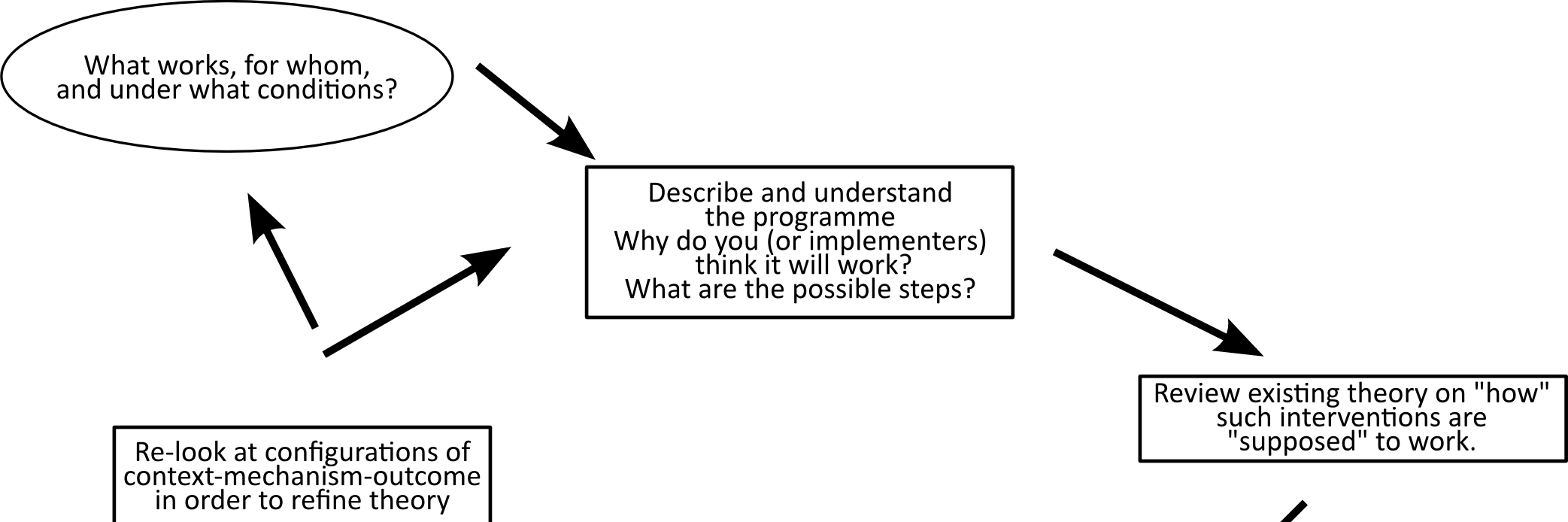
Finally, Prof. Sara Van Belle unpacked CMO (Context-Mechanism-Outcome) configurations, discussed different approaches to causalityand generative causation, introduced alternative frameworks such as CIMO (Context-Intervention-Mechanism-Outcome) and ICAMO (Intervention-Context-Actor-Mechanism-Outcome), and explained its use for data analysis in realist research.
@Chaudharyadit23@AvishekHazra23, @commed_doc@MonicaShriv@punitrd@HiralkarSakshi
#IPHBengaluru #TTNSoAS #RealistResearch2025 #IPHEvents #blendedlearning
Applications Open: Realist Research Blended Course Theory-Driven and Realist Approaches in Health Policy & Systems Research
The T.T. Narasimhan School of Advanced Studies at @iphindia is excited to announce the 5th edition of the Realist Research Blended Course!
@prashanthns
🤓 You know we love a #publication day & today is a big one!
✅ Final #PhD paper (Ch 6)
✅ 1st solo-author
✅ Last day at @ucl_GBSH!
This new paper in @aeaweb was inspired by that moment when you’re pulling your hair out and don’t know what to do next ➡️
https://t.co/MJypX7CDPd
Why do some mothers keep engaging with SMS-based nutrition programmes while others don’t? This realist evaluation from rural Tanzania explores the mechanisms behind sustained engagement. #RealistEvaluation#DigitalHealth
https://t.co/BYcA70kdVi
Key takeaway: Digital BCC programmes must go beyond content delivery. To foster sustained engagement, they need to be emotionally supportive, context-sensitive, and equity-oriented. Tech is just the shell—context is the fuel.
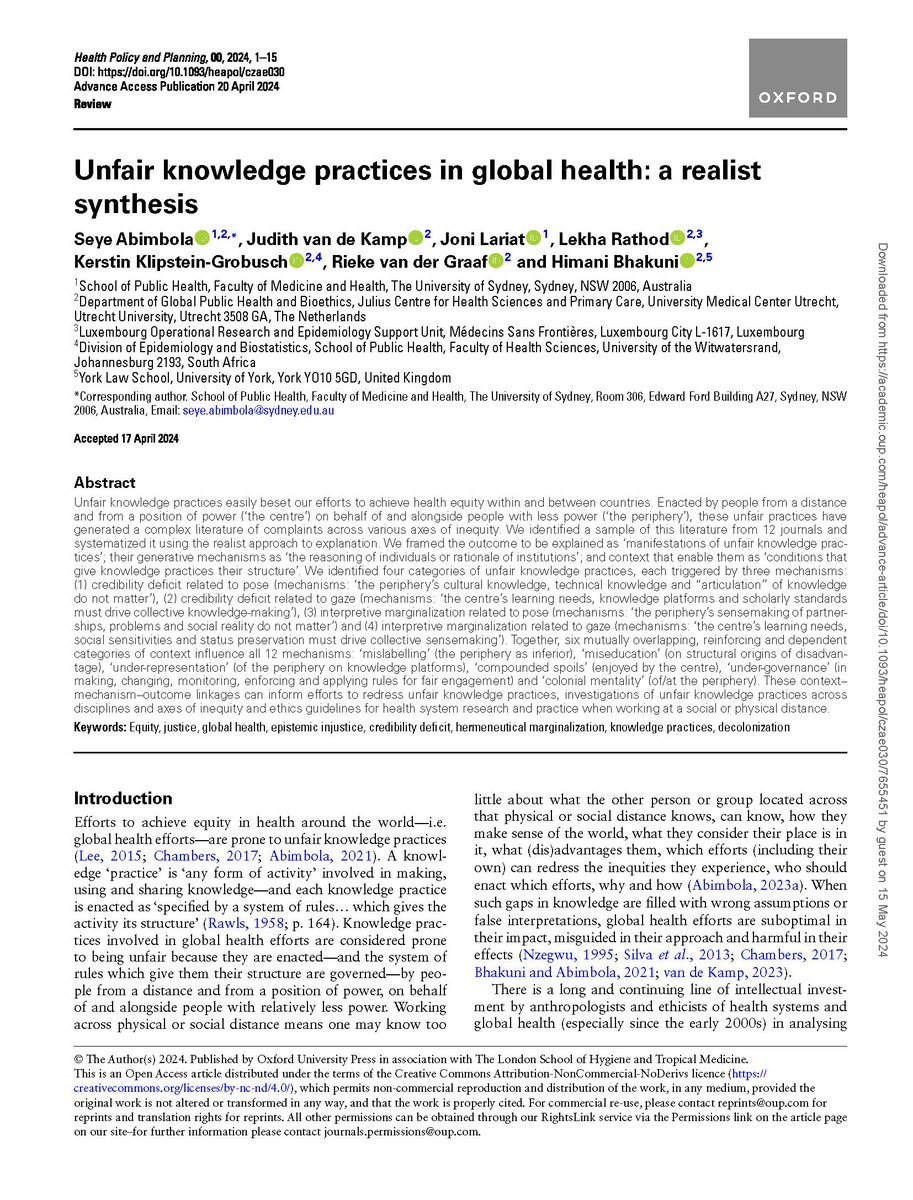
Please read our new @HPP_LSHTM paper: “Unfair knowledge practices in global health: a realist synthesis” https://t.co/Bo6J0pnq1J
We systematise the complaints literature in GH using epistemic injustice + pose/gaze + realist frameworks.
HT: Prince @ClausChair & @arc_gov_au DECRA
The authors argue that Indigenous realist evaluation is a promising pathway toward decolonising research partnerships, especially when it amplifies participant agency and foregrounds local epistemologies.
Fourth in our series of threads on #RealistMethods
How can realist evaluation meaningfully contribute to decolonisation? A new methodological reflection explores the promise of an Indigenous realist evaluation approach. #RealistEvaluation@Mcferdious
https://t.co/yeuePeGmgR
The Indigenous realist approach reframes evaluation as a tool not only to understand “what works for whom in what contexts,” but also to challenge power structures and catalyse transformative change.