Homework stress stops here.
Whether you're mastering basic fractions in grade school, tackling AP Physics in high school, or breaking down complex research papers in university, StudyBridge AI adapts to your level.
Get 24/7 step-by-step explanations, study guides, and instant academic support at your fingertips.
Tap the link in our bio or visit https://t.co/DT60GeG8GO to start studying smarter today!
https://t.co/2VsTVNXCeG
Which Elements of the Asian Development Experience Can Be Adapted to African Conditions, and Which Cannot?
THE DEVELOPMENT MODEL | AFRICA'S INDUSTRIAL FUTURE....
https://t.co/KwK2QAv6Kz
THE INDUSTRIALISATION OF CRIME: HOW CRIMINALS ARE WEAPONISING AI-
From individual fraudsters to automated criminal enterprises — is artificial intelligence creating a new global underworld?
The next industrial revolution may not only transform legitimate businesses. It may also transform organised crime.
For decades, criminal activity depended heavily on human labour, physical networks, specialist knowledge and geographical access. A fraudster needed convincing communication skills. A cybercriminal needed technical expertise. An impersonator needed to imitate another person's identity. An organised criminal network needed people to coordinate its operations.
https://t.co/SaSWjEvN7o
MAO'S CHINA: INDUSTRIAL TRANSFORMATION, POLITICAL CATASTROPHE AND THE COST OF IDEOLOGICAL CAMPAIGNS-
How did a revolution that promised equality, national independence and industrial strength produce mass famine, political persecution and one of the most turbulent periods in modern Chinese history?
The central question: Did Mao Zedong's revolutionary programme transform China into a modern industrial power, or did the pursuit of ideological objectives repeatedly override economic realities, scientific evidence and human welfare?
https://t.co/1oVwYsqO4B
WHY JAPAN MAY BE BETTER PREPARED FOR AN AGEING WORLD.
What Can the World's Most Aged Major Society Teach Countries Preparing for a Demographic Transformation?
The world is getting older.
For much of modern history, governments planned their economies around expanding populations, growing workforces and large numbers of young people entering employment. That model is changing.
People are living longer. Birth rates are falling in many countries. Families are becoming smaller, and the number of people available to support older relatives is declining in some societies.
This transformation will affect almost everything: healthcare, pensions, housing, employment, transport, technology, public finances and the organisation of families.
Japan has already been living through this future for decades.
https://t.co/38rpqVuSP4
What Lessons Has Taiwan Drawn from Hong Kong?
Hong Kong has become a central reference point in Taiwan’s debate over whether Beijing’s promise of autonomy under “One Country, Two Systems” could protect Taiwan’s political institutions, civil liberties and democratic choices.
The debate is not simply about whether Beijing would promise Taiwan a high degree of autonomy. It concerns the legal structure of that promise: who would hold ultimate authority over the arrangement, who could interpret its terms, and what remedies would exist if the central government changed how it was applied?
Hong Kong provides a real-world case study because it operated under “One Country, Two Systems” after the 1997 handover, yet experienced major disputes over political autonomy, civil liberties and national security. Taiwan’s political circumstances are different, so the comparison cannot settle Taiwan’s future. It does, however, give Taiwanese voters and policymakers concrete evidence to consider
https://t.co/SZSU5N3Ldg
France Student Protest Monitor —
Assessment
There are meaningful developments since the previous check. Tuesday's nationwide education strike took place, but participation was relatively limited compared with the major demonstrations of October and 5 November.
Five developments stand out:
The 10 November mobilisation: Students, university representatives and teachers demonstrated in Paris, Lyon, Toulouse, Marseille and Rennes.
Chelles: A regional councillor and deputy mayor was struck in the chest by a bottle containing petrol outside Lycée Gaston-Bachelard. A criminal investigation for attempted murder has been opened.
https://t.co/SnIPXTX5Th
Daily Market Briefing: Macro, Commodities, Tech, AI Infrastructure & Crypto-
Macroeconomic Indicators, Commodities & Fed Policy.
FOMC Target Rate & Fed Odds: Benchmark target rate holds at 3.75%–4.00%. Kalshi prediction markets and CME FedWatch data indicate an ~78%–81% probability of a 25 bps rate hike (to 4.00%–4.25%) at the upcoming December 9, 2026 FOMC meeting, driven by persistent core PCE inflation and resilient GDP momentum. The 10-Year U.S. Treasury Yield ($TNX) remains firm near 5.01%.
https://t.co/mua8mEPJ9U
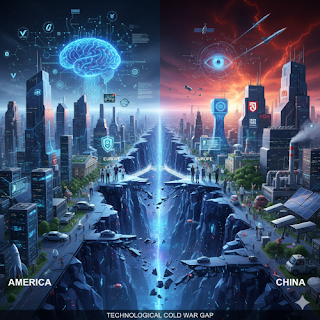
US-China AI Competition Daily Briefing-
1. The Major Story: U.S. Export Control Probe & Escalating Congressional Scrutiny.
Tensions surrounding hardware leakage and U.S. semiconductor export controls have spiked following major law enforcement and legislative moves in Washington:
DOJ & Commerce Department Inquiries: The U.S. Department of Justice has taken over a Commerce Department investigation into Singapore-based hardware supplier Megaspeed. Investigators are probing whether the firm acted as a proxy channel to purchase over $4.8 billion in restricted Nvidia GPUs for Chinese technology entities.
https://t.co/BOXPsI4hrz
The high frequency of cyber operations linked to Chinese state actors—and their targeting of the U.S., Europe, Japan, South Korea, and Taiwan—is documented by international intelligence agencies, threat intelligence firms, and defense analysts.
Rather than relying on opportunism or simple financial extortion, Beijing’s cyber activity is driven by a coordinated, state-directed framework focused on geopolitical strategy, economic intelligence, and military readiness.
Key Reasons Behind the Scale of State-Linked Attacks
https://t.co/5RGA7fBybt
What Happened?
Over two major waves (mid-October and early November 2026), thousands of commercial refrigerators and freezers in major supermarket chains across more than 11 European countries—including France, Belgium, Sweden, Luxembourg, and Ireland—were hit by remote temperature tampering.
Hackers gained access to central refrigeration controllers (many manufactured by industrial automation suppliers like Danfoss) and remotely cranked internal storage temperatures from $-20^\circ\text{C}$ to upwards of $+50^\circ\text{C}$ or $+80^\circ\text{C}$ overnight. This instantly ruined millions of euros worth of fresh produce, meat, and frozen food across hundreds of stores.
https://t.co/IcZGFw4ggp
What Did Japan, South Korea, Taiwan, Singapore and China Actually Do Differently During Their Industrialisation?
THE DEVELOPMENT MODEL | THE ASIAN INDUSTRIALISATION EXPERIENCE.
https://t.co/pIIdbylCqL
AI: HUMANITY'S GREATEST INVENTION OR ITS NEXT SECURITY CRISIS?
Artificial Intelligence, the Future of Human Civilisation and the Battle for Control of Intelligent Machines.
Artificial intelligence may become one of the most transformative inventions in human history.
It has the potential to accelerate medical discoveries, improve education, automate dangerous work, strengthen scientific research, increase industrial productivity and help solve problems that have challenged humanity for generations.
But there is another side to this technological revolution.
The same technology that can help doctors detect diseases can also generate convincing medical misinformation. The same AI that can improve cybersecurity can be used to develop sophisticated cyberattacks. The same technology that can democratise access to knowledge can industrialise fraud, manipulation and surveillance.
https://t.co/22Hi5YhnWY
WHY DID THE SOVIET UNION COLLAPSE?
Economic Stagnation, Political Reform, Nationalism and the End of a Superpower
The central question: How did a country that possessed vast territory, enormous natural resources, a powerful military, nuclear weapons and global political influence unravel in just a few years?
On 26 December 1991, the Soviet Union formally ceased to exist. Its dissolution ended a political and economic system that had shaped international affairs for nearly seven decades. Fifteen independent countries emerged from its former territory, the Cold War order came to an end, and the balance of global power changed.
But the Soviet Union did not collapse simply because communism failed, because its economy was weak, or because Western countries defeated it. Its dissolution resulted from several interconnected pressures: an increasingly inefficient economic system, political institutions resistant to reform, costly military commitments, rising national movements, and reforms that weakened the authority of the Communist Party faster than new institutions could replace it.
Understanding the collapse requires separating the weaknesses that accumulated over decades from the events that triggered the final breakup in 1991.
https://t.co/kDcZ4rjOv5
THE JAPANESE MODEL OF HUMAN–ROBOT COOPERATION.
Can Japan Build a Future Where Humans and Machines Work Together Rather Than Compete?
For decades, the global debate about robotics has revolved around one central fear: Will robots take human jobs?
Japan offers a different way of approaching the question.
https://t.co/DfpRp81uTz
Why Are Taiwan’s Political Parties Divided Over Relations with China?
Taiwan’s cross-strait debate is not simply a contest between parties that favour China and parties that oppose it. It reflects competing interpretations of history, constitutional identity, national security, economic interdependence and the democratic right of Taiwan’s people to determine their future.
The Kuomintang (KMT) and the Democratic Progressive Party (DPP) have developed different approaches to relations with Beijing. But neither party is politically uniform, and support for dialogue with China does not automatically mean support for unification, just as support for Taiwanese identity does not necessarily mean support for an immediate declaration of formal independence.
The central question is: How can Taiwan maintain peace and economic stability across the Taiwan Strait while preserving its democratic institutions and determining its own political future?
https://t.co/HJ5RHXgcMr
France Student Protest Monitor —
Significant political escalation.
National strike today.
Assessment
There are significant new developments since yesterday's report. The most important is that the government's attempt to establish a formal dialogue with student organisations has suffered a serious setback.
On Monday, 9 November, representatives of several major student and high-school organisations walked out of the first meeting of the Parcoursup reform committee at Matignon.
Their objection was the presence of representatives of the far-right Rassemblement National (RN), the Union des droites pour la République (UDR), and the right-wing student union UNI.