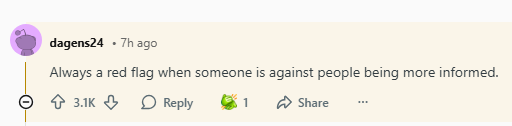
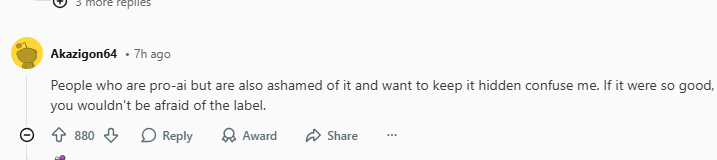
@ecutruin@AbstractDodgers@DarthMicroT dismissive ? What the hell is this, then point out exactly where you think I’m looking down on you? Or is the truth still the truth ? . If you mute me ? fine, go ahead, because the truth will keep slapping you in the face and I won’t read any of your responses anymore!
@AbstractDodgers@ecutruin@DarthMicroT I just browsed Reddit to learn more and accidentally came across these things, and luckily they apply to the chatbot that you and I are talking to haha
@ecutruin@AbstractDodgers@DarthMicroT Completely fine, why not, and users of those software will still be proud because they created those resources themselves.
Today I'm learning a lot of people don't know what a game engine actually is. That's fine, it's not that intuitive. But if you want to be a games developer it helps to know this stuff.
When you download Unity and start making a game, you're making it in the Unity Editor. This is not the same thing as the full Unity Engine. It may be tempting to compare the experience of using the Unity Editor with something like Photoshop - where the end product is 100% created and owned by you, and the app was simply a tool to help you make it. But that's not the case with game engines.
When you use the Unity Editor, you're building on top of a vast code framework that handles rendering, physics, and a million other low-level tasks. This framework gets compiled along with your scripts and assets to create your game's final executable. In many cases, the Unity Engine itself makes up a sizeable portion of your game's install size.
This is why there are often licensing requirements for the use of 3rd party engines. You're using their code. Your game IS their engine. It's like using a boxed cake mix versus baking a cake from scratch. The ingredients of that boxed mix will be a part of your final cake, even if you fancy it up with your own frosting and sprinkles