Excellent analysis, your thesis on the systemic importance of the company may be right like Google in 1999 but you may be in for a decade of portfolio underperformance and (market corrections) before you make money based on your inflated entry price. #DangoteRefinery#NGX
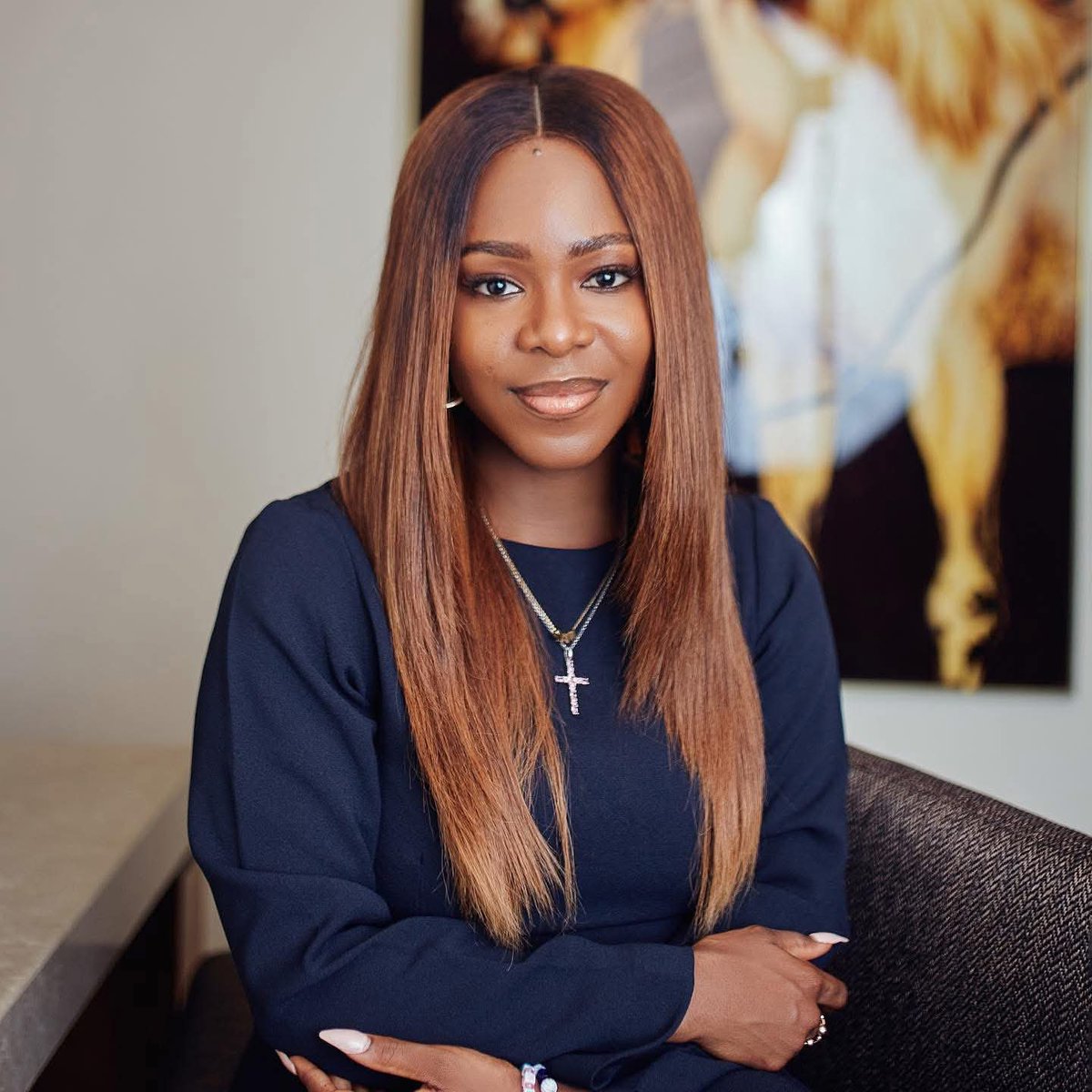
This is Dammy (Damilola) Feyide. She was in her 20s when she returned from the UK to Nigeria in 2017, ready to complete her NYSC and likely head back abroad. But today, the story is completely different.
What started as a one-year service term became a lifelong mission. One afternoon, a nudge from the Holy Spirit caused her to stop her car at a correctional center. She didn't see "criminals" or "street kids"; she saw a reflection of Jesus’ heart. She saw children with doctor-sized dreams living in paint-starved realities.
She started by giving money to children on the street and going to the correctional facility with gifts, but the Holy Spirit kept convincing her that there was more. That conviction led to the birth of Let It Shine Academy (LISA), a FREE boarding school for secondary school students in Lagos, Nigeria.
About 270 students are enrolled in her school. No tuition fee, no hostel fee, no feeding fee, no uniform fee, no textbook fee, everything is provided for free. A standard private secondary school for free in Lagos.
In a society where many children are pushed to the margins because of poverty, instability, family background, or lack of access, she chose to create a place where children can still dream, learn, grow, eat, create, think, and become who God wants them to be.
Today, LISA is a beacon of high-quality, completely free education. While the foundation is built on Christ’s love, the school is filled with children of all religions.
As I shared with my sisters Grow Her Faith Fellowship last week, faith isn’t a wall to keep people out; it’s a bridge that invites everyone in. When we serve, we don’t ask for a creed; we look for a need.
We often ask ourselves, "What is the meaning of life?" The answer isn't found in the degrees we earn or the titles we hold. The whole essence of man is to live for impact. We are stewards, not owners, of the grace we've been given. If your life doesn't leak hope into someone else’s darkness, are you truly living?
Impact isn't about having it all figured out. Dammy didn't have a background in education; she just had a "Yes" and a God who backs those He sends.
I love women who live beyond applause, who are not just building names, but building lives. Women who are not waiting for perfect conditions before they begin, women who understand that purpose is not always glamorous.
Dammy’s work reminds me again that impact is not about how many people know your name. It is about how many lives breathe better because you obeyed what was placed in your heart.
Education is one of the purest forms of impact. When you educate a child, you change their language, their exposure, their confidence, their options, their family story, and sometimes, the direction of an entire generation.
That is why I will always be drawn to people who build in this space, because clarity helps people see, education helps people rise, and impact helps people live better.
Dammy carries all three with conviction. I believe she deserves to be celebrated.
Today, I celebrate Damilola “Dammy” Feyide, for choosing to be a bridge between disadvantage and dignity, between “someone should do something” and “I will start where I am.”
May we never become so busy chasing visibility that we forget the beauty of living for impact, and may more women rise with the courage to build what they wish existed.
Let this be your stir to action: Stop waiting for the perfect timing or the full bank account. Go where the burden is, go where the heart breaks. Just as Dammy shows us, you won't know how deep the well of Grace is until you start pouring it out for others.
Dear Dammy, keep living purposefully and intentionally; the heavens are documenting your impact.
Tolu lope Ajayi
#impact #freeschool #nigeria #education #Bugatti
@Spearhead_Af The critiques have been well heard but none of the alternative materials hold up structurally for multi family dwellings or commercial high rise in urban centers where land is scarce. Other design principles highlighted should be adapted indeed…👍🏾
Public markets don’t like headless horses. Salute to the builders and to investors who help navigate to great outcomes for both customers and the risk takers.
People have asked me how I feel about Udemy’s sale to Coursera. Honestly, I’m kinda pissed about it.
I want to be clear - I’m grateful for the opportunity to start and benefit from Udemy’s success. It changed my life.
But there’s another side to Udemy. A story of what could have been.
After our Series B, founders owned less than 30% of the company. Our investors took over and installed their own CEO to run it. We all liked this new CEO and honestly, for years it looked like a brilliant move. The company kept growing and growing. They launched B2B and built a $500M ARR business. Eventually, the company IPO’ed for $3B.
Yet all along there were clear cracks under the surface. Over Udemy’s history, there have been 7 CEO’s. The board replaced the second CEO with dud after dud. I’d often try to meet with the board or the new CEO, and was completely ignored. Eren had influence as Chairman of the Board but Oktay and I were so ignored they didn’t even invite us to the IPO. LOL WTF. There are like 50+ people invited to these things and nobody thought: “oh maybe we should invite the people who fucking invented the thing we’re all celebrating.” It shows how little respect they had for founders and for product innovation as a discipline.
I think they wanted a CEO they could control, a buttoned-up suit instead of a brash founder/CEO that is risk-taking, visionary, but a bit of a pain. For awhile, it looked like it didn’t even matter who was CEO - the company was run by the incredibly talented team that reported to them anyways.
Well, it worked until it didn’t.
The company made no major product innovations for 15 years. Instead, they took the original idea (video-based courses) and sold it in every place imaginable. It got us to $800M run-rate. That’s no joke; that takes serious execution and a great team that hustled hard to win the market.
But eventually the consumer business stopped growing. The B2B business has now flattened out as well. Meanwhile, Coursera was catching up.
Original Coursera was a far worse product than Udemy, but it got a ton of press. Learning ivory tower bullshit from academics doesn’t get you a real education, but it does create prestige. They raised from better investors on better terms, and had better leadership.
Udemy to this day has more revenue than Coursera, but Coursera won the court of investor opinion. They got higher multiples from both private and public markets.
Coursera innovated heavily. They added corporate courses to their university catalog, built fully-online degree programs, and offered a B2B competitor that kept Udemy on its toes. Still, the Udemy B2B business (and team) out-performed and so the two companies were deadlocked. Coursera was better at B2C, Udemy at B2B.
A merger was inevitable.
But WHY IN GODS NAME did we sell to Coursera instead of the other way around? Why are the combined companies under $3B in market cap?
Three reasons:
First, edtech didn’t live up to its promise. While these two companies had solid revenue and cash positions, their growth slowed, and public markets balked. This meant compressed multiples and significantly lower valuations.
Second, the companies stopped innovating. They are selling a product to businesses that their customers don’t love. They were category leaders, but they lead the category into mediocrity. They captured a significant share of learning and development (L&D) spending, but L&D as a whole actually lost budget within their organizations. That’s Udemy’s fault, and it doesn’t even realize it.
That brings me to my final point: I personally believe Udemy traded upside opportunity for downside risk. Us founders were unproven and young. We made lots of mistakes, including fighting amongst ourselves. A good investor would have supported us through it because they believe founders drive the highest long-term returns. Instead, they brought in outside CEOs to replace us. I sometimes wonder if they recognize this error; everyone makes mistakes and maybe they learned from it.
Either way - the consequences are real. By ignoring the founders, Udemy failed to innovate, which led to slowing growth which led to mediocre public market results. Furthermore, they don’t have a good evangelist and public markets don’t like a headless horse.
I sold my Udemy stock awhile ago. I think the merger was critical for both companies’ survival. Now, though, the new combined entity needs to innovate again.
On B2B, Coursera needs to help L&D become the heroes of the AI era so the entire market starts growing again. On B2C, they need to build the most educational AI product on the planet. (I’d focus on the former, since the latter is a lot harder and riskier).
Coursera can still achieve our original vision and likely build a $10B+ company in the meantime. Even though I’ve got no stake in its future, I’m mission-driven and I REALLY hope they figure it out.
The current education system sucks and the world deserves something better.
I'm going to keep posting this Alstair Begg clip "The Man on the Middle Cross" (less than four minutes in length) every Holy Week, because its message is true in 2026, it will be true in 2036 and it will be true in 3036.
"If i take my eyes off the cross, I can then give only lip service to its efficacy while at the same time living as if my salvation depends upon me.
And as soon as you go there it will lead you either to abject despair or a horrible kind of arrogance.
And it is only the cross of Christ that deals both with the dreadful depths of despair and the pretentious arrogance of the pride of man that says you know, I can figure this out."
Rooftop Solar is the best diesel gen substitute but requires consumer financing to unlock…more devpt capital should be deployed but the relative cost vs grid (though unavailable) prevents many global and local DFIs directing concessional funds to it. Hope this changes soon!
I know we don't like the leapfrog phrase, but there is a good chance that Nigeria (specifically) will leapfrog grid power and go straight to residential solar.
It is one of the few places that 1. Has enough sun 2. Has low density building (for rooftop space) 3. Grid does not work.
Residential solar is SUPERIOR to grid power right now, it is only expensive. If lending rates went down, solar would spread at an insane rate.
There is a trend quietly spreading among many believers today, especially in Nigeria, that should deeply trouble anyone who loves the Church of Christ.
I’m not speaking about theological growth, which is good and necessary. I’m speaking about something far more subtle and far more dangerous: the slow transformation of humility into superiority, of gratitude into contempt, and of spiritual maturity into harshness disguised as doctrinal precision.
Many who once worshiped, served, and were nurtured in Pentecostal spaces, sometimes for years, are now discovering Reformed theology. That in itself is not a problem. Learning, reforming, and sharpening convictions is part of Christian growth.
But what is alarming is not the theological shift; it is the change in spirit that often follows.
People who once spoke with warmth now speak with scorn. Those who once honored pastors now mock them publicly. Voices that once prayed for the Church now ridicule it.
And suddenly, entire communities of believers who confess Christ, preach His gospel, and love His Word are dismissed as “counterfeits,” “false,” or worse because of misrepresentations in some quarters.
That is not reformation. That is not maturity. And it certainly is not the Spirit of Christ.
Scripture warns us that knowledge, even correct knowledge, carries a spiritual risk: “Knowledge puffs up, but love builds up.” (1 Cor 8:1)
When theological clarity produces contempt instead of compassion, it is no longer functioning as a fruit of the Spirit but as fuel for the flesh. Because the Spirit who leads us into truth also produces gentleness, patience, and humility (Gal 5:22–23). Truth and love never travel in opposite directions.
And this is where we must be honest: Pentecostalism has its excesses, but so does the Reformed movement.
History proves this.
Every stream of the Church, when untethered from humility and self-examination, develops distortions. Some Pentecostal circles drift into emotionalism, sensationalism, or shallow teaching. But some Reformed circles drift into intellectual pride, hyper-determinism, spiritual elitism, and a coldness that Paul himself would have rebuked as another distortion of the gospel if it undermines the sincerity of God’s call or the responsibility of man.
Paul not only warned against legalism but also warned against any message that reshapes the gospel’s character, saying, “If anyone is preaching to you a gospel contrary to the one you received, let him be accursed.” (Gal 1:9)
That warning applies to every camp, every century, every theological tribe, including ours.
So the question is not whether Pentecostalism has problems. It does.
The question is: what makes anyone think the camp they are migrating into is free from blemish?
The Church militant has never had a perfect theological culture. Only Christ is flawless.
To act as though one tradition has finally achieved doctrinal purity while others are beneath serious Christian recognition is not discernment; it is triumphalism. And triumphalism is the soil where pride quietly replaces grace.
Paul confronted doctrinal confusion relentlessly, yet he never taught believers to despise entire groups of Christians. Even when correcting error, his posture was restoration, not ridicule (Gal 6:1). His sharpest rebukes were reserved not for imperfect believers, but for attitudes that fractured the body of Christ through pride, factionalism, and spiritual elitism (1 Cor 3:3–4).
That is why the tone matters so much. Because when believers begin to speak as though they have finally “arrived” while everyone else remains blind, they step onto spiritually dangerous ground. The Pharisees had impeccable theological precision on some issues, but their certainty became the very thing that blinded them to the heart of God (John 5:39–40).
What is most concerning is not disagreement itself; disagreement has always existed within the Church. What is troubling is the growing ease with which believers dishonor those who once nurtured them, prayed for them, and played a role in shaping their faith.
Scripture calls that posture into serious question.
Publicly reducing entire streams of believers to “false Christianity” is not boldness; it is a failure to reckon with how vast and patient the body of Christ truly is. The Church has always been messy, diverse, and imperfect. Yet Christ remains committed to her, not because she is flawless, but because she is His (Eph 5:25).
We must also ask a harder question:
If a theological shift consistently produces harsher speech, diminished charity, and a growing instinct to divide rather than heal, what spirit is actually shaping that transformation?
Because the fruit of the Spirit is not arrogance. The fruit of the Spirit is not derision. And the fruit of the Spirit is not the constant need to prove that “we alone see clearly.”
Jesus said the world would recognize His disciples not by their theological tribe, but by their love for one another (John 13:35). Not sentimental love, but a love that refuses to treat fellow believers as enemies simply because they differ in emphasis or expression.
None of this means error should be ignored. Doctrine matters. The gospel must be guarded. But correction that lacks humility ceases to reflect Christ. And orthodoxy that produces contempt has already begun to drift from the heart of the gospel it claims to defend.
So this is not a call to abandon conviction. It is a call to examine our spirit.
Because it is entirely possible to become more theologically precise while becoming less Christlike, and that is not growth; it is imbalance.
My prayer is simple: that we would pursue truth without losing tenderness, clarity without losing charity, and conviction without losing the unmistakable fragrance of Christ.
Because the Church does not need more voices that win arguments while wounding the body. It needs believers who can defend truth and still sound like Jesus, full of grace and truth (John 1:14).
“Nobody should know my name. The fact that you’re reading this is proof of God’s grace. You can start out in the gutter, and still and still Your name can be on their lips for 1,000 years”
I went through a billion emotions reading this. @victorosimhen9 after your wonderful career, we need a biography.
A Prayer From the Gutter by Victor Osimhen | The Players’ Tribune https://t.co/zGcCeQRQi1
Who is Lumumba?
Previous Afcons have become synonymous with memorable moments. Whether on or off the pitch, they live on long after the tournament ends.
This time around, one man has secured his place in history as the icon of Afcon 2025 in Morocco without uttering a single word.
Be part of the conversation shaping Nigeria’s energy future at the 2025 Nigeria Petroleum Licensing Round Pre-Bid Conference.
📍 Eko Hotels & Suites, Lagos
📅 14th January 2026
🔗 https://t.co/JMAbBbtm17
🌍 50 oil & gas blocks
🛢️ Onshore | Offshore | Deepwater
📜 Transparent process under the PIA
#LicensingRound2025
#NUPRC
#RegulatingWithIntegrity
#NUPRCPreBidConference
Many nurses I met here in the uk were the one financing their home for the first few years of their relocation.
These are people who did not pay rent while in Nigeria.
These are people whose husbands were engineers, doctors, Lecturers in Nigeria but after relocation had to do menial jobs ti sustain the family.
The idea of “50/50 in marriage” sounds fair, modern, and balanced, but in real life, it’s one of the biggest fallacies we keep spreading.
Marriage has never worked on perfect arithmetic. It works on capacity, season, and sacrifice…not percentages.
Some days one partner will give 80 while the other gives 20.
Some seasons, one person will be strong, and the other will be fighting silent battles.
Some moments, one will carry the emotional weight, financial burden, or household responsibilities because the other is simply drained.
And that’s not failure.
That is marriage.
The truth is simple: no human being can wake up every day and contribute exactly “50.” People get tired. People get sick. People break down emotionally. People lose jobs. Life shifts. Energy fluctuates.
A healthy marriage is not two people calculating what the other has done, it is two people who are committed to showing up fully in whatever capacity they have each day.
Today you may carry your partner.
Tomorrow they may carry you.
Balance is achieved over time, not in one moment.
And here’s another reality people avoid:
Sometimes the person who is giving “30” is actually giving 100% of what they have in that season. And the partner giving “70” also gives because they can at that moment. That is partnership, not exploitation.
The people who survive marriage long-term understand one thing clearly:
Marriage is not 50/50. Marriage is 100/100.
Two people committed to giving their best, not an equal fraction, but a full effort according to their ability, their health, their season, and their reality.
When you insist on 50/50, you reduce marriage to a business contract.
When you understand 100/100, you embrace marriage as a covenant, a daily decision to love, support, and show up.
Some days you will be the one lifting.
Some days you will be the one leaning.
And that is perfectly fine.
Anyone who wants a mathematical marriage will never experience a meaningful one. Love has never been about counting. It has always been about giving.
Children standing barefoot in floodwater is not “content”—it is a cry for help. Poverty is not a joke, and these children deserve more from a government meant to protect them. Schools should be safe, not swamps. Posts like this shouldn’t mock or label them; they should spotlight the urgent need for better infrastructure and child-centred policies. Every child is a national priority, not a punchline. Let’s turn this moment into advocacy, not sarcasm—because a country that neglects its children is already flooding from within.
@popoolaadaniel@Dr__Pati
I think we love doomsday prophets, purveyors of hopeless narratives, painters of helpless hellscapes…when in fact the opposite, hope and help is often the reality around the corner. Yes automation often brings redundancies but the future is human+tech… https://t.co/2XGraeONJT