We need more good-faith conversations at work. TY to Nick Cave @redhandfiles for his response to the question, "Is it better to keep quiet or speak one's mind?"
This new book about the CEO of the famed hedge fund Bridgewater Associates is a fascinating read and an example of where good rebels can't effect change; their best action is to leave a company.
Being a good thinker is an important trait for leaders of change. It helps us understand our world, make better decisions and tackle complex problems. Being intellectually humble matters (without acknowledging the possibility that our current beliefs may be mistaken, we can’t learn anything new). AND good thinking is also about:
1) Being sufficiently motivated to figure out what’s true.
2) Focusing on the pertinent information and carefully seeking it out.
3) Being open-minded about information we may disagree with.
4) Confronting information or questions that are novel/different from what we generally engage with.
5) Being willing to put in the effort to figure it all out.
https://t.co/DUgky8ymNA Via @EJayawickreme @AdiGaskell
Carmen (@milouness) shared some leadership advice on her YouTube channel that Rebels at Work might enjoy. Here's her advice about how Trust is a Muscle. You can watch the full video here. https://t.co/uJEcxUCFZk
Why 2,000 college students came to this leadership lecture yesterday and what we came away with. TY @jacindaardern
https://t.co/vBywR4D4La via @LinkedIn
One of my favourite change quotes is from @nancymdixon: "The greatest knowledge deficit in organisations is not the lack of sharing nor poorly designed repositories. Rather, it is the inability to hold authentic conversations". So I was delighted to see these ideas expanded in this blog & sketchnote from @tnvora: https://t.co/sFtO3ZsbId. Conversations are the currency of great leadership.
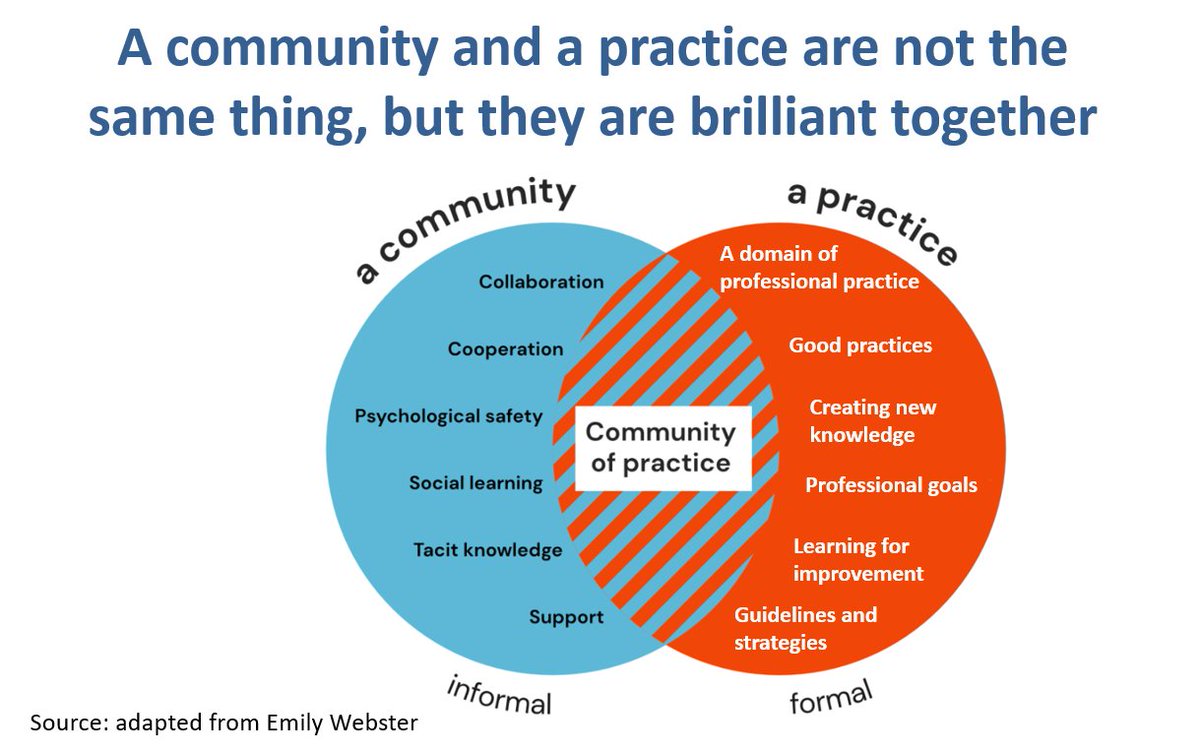
It's often lonely being a change agent. Communities of practice (CoPs) can give us a sense of belonging, support & courage. We don't need permission or formal power to create a CoP; just to connect with people who share our passion. Here's a straightforward guide to CoPs: https://t.co/wg54i4d8NH Via @Management30@FerraroRoberto
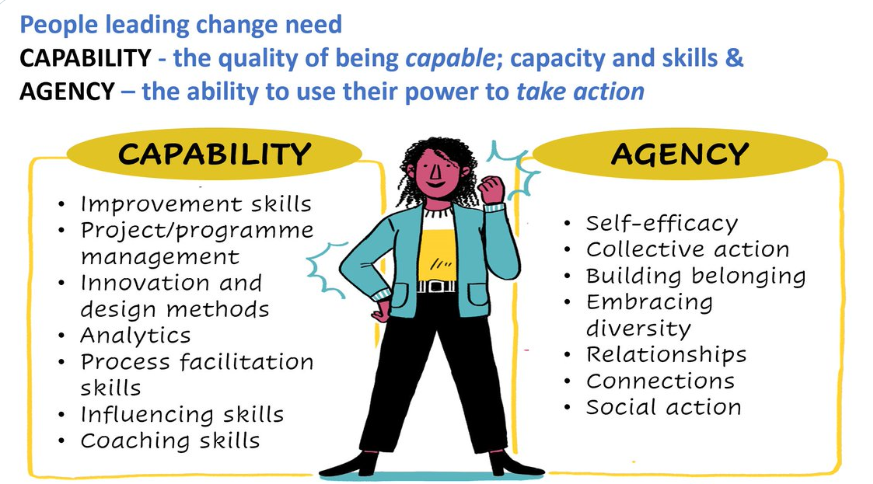
Having a sense of agency (the power/ability to make choices and act on them freely) is more important than improvement skills or resources or methods when it comes to making change happen. When we can go & take action, things change. Feelings of powerlessness dissipate & old assumptions fall away. As change leaders, helping others to build their agency is one of our most important tasks: https://t.co/eZDhFTHZyd By @samxyuan Graphic: by me (designed for @sch4ch)
Our takeaway: learning why some teams perform better than others is hugely important because if we crack that nut, we can exponentially improve the performance of our organizations. 6/6
This is probably the most complicated study we've shared on Twitter, but the results are fascinating. Team performance doesn't follow normal distribution. Really good teams are way better than average teams. https://t.co/4t4H0XFpDP
Temporal stability ended up being 4X more impactful on the distribution of team performance than authority differentiation. (apologies for using these confusing terms but we don't want to stray too far from their terms lest we misrepresent it.) /5
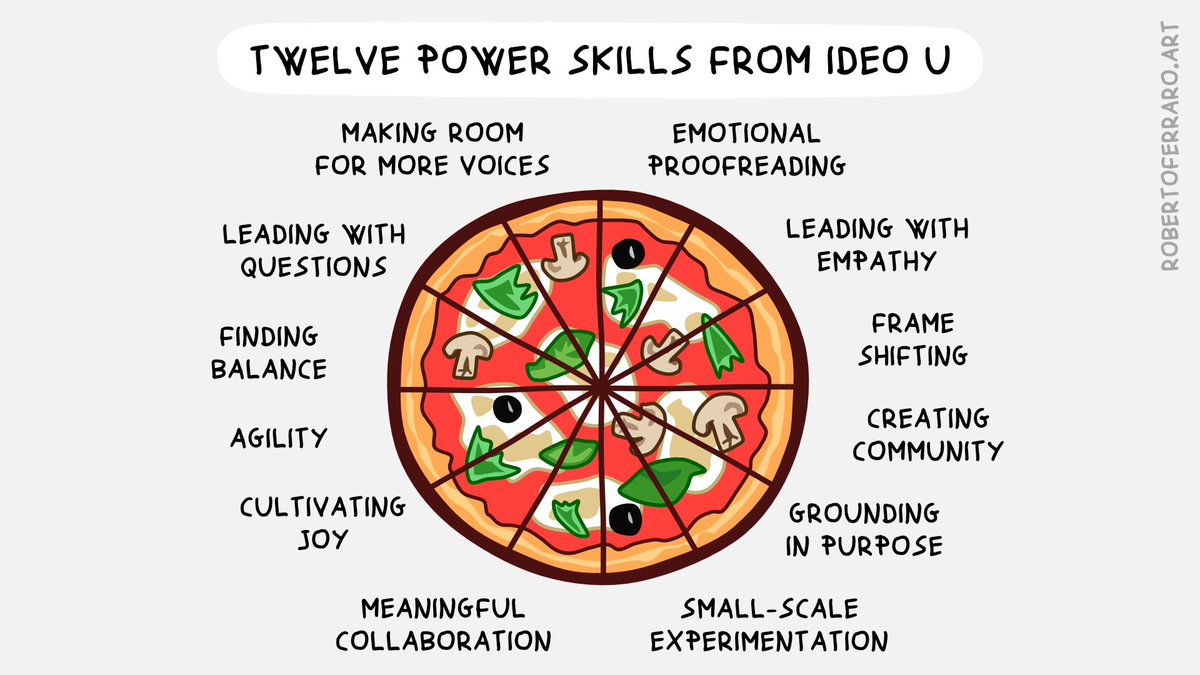
Many commentators talk about the importance of so-called "soft skills" for leadership into the future. @IDEOU has (so appropriately) rebranded them as "power skills". Here's their brilliant list of 12 key power skills:
1) Cultivating joy
2) Meaningful collaboration
3) Small-scale experimentation
4) Grounding in purpose
5) Creating community
6) Frame shifting
7) Leading with empathy
8) Emotional proofreading
9) Making room for more voices
10) Leading with questions
11) Finding balance
12) Agility
https://t.co/xosznr9fkc
Thank you @FerraroRoberto for the link & graphic