lol to be clear, uniswap is the number one DEX for stock token trading
v4 and v3 combined for 42.8% of all trading volume in the past 30 days
excited to see this continue to trend up as we see more value move onchain
recast reward refresh is live.
we’ve shipped a small but important update to the reward flow.
recast now refreshes wallet reward status more cleanly after changes in nft ownership.
if you mint a recast, receive one from another wallet, or buy one through the market, the system updates your nft-aware reward state without requiring any extra action from you.
the same applies in the opposite direction — if a recast leaves your wallet, the protocol state reflects that change as well.
that means every mint changes the system in two ways at once:
the liquid rcst supply becomes smaller, while the nft collection becomes more complete.
the market is now part of that same cycle. once a recast has been created, it can continue moving between wallets through the nft market, and ownership remains fully connected to the onchain state of the protocol.
if ownership changes, the system can recognize the new holder. if a wallet gains its first recast, the reward layer can recognize that too.
there is no staking requirement, no lock period, and no separate activation process.
the nft layer is working the same way as well.
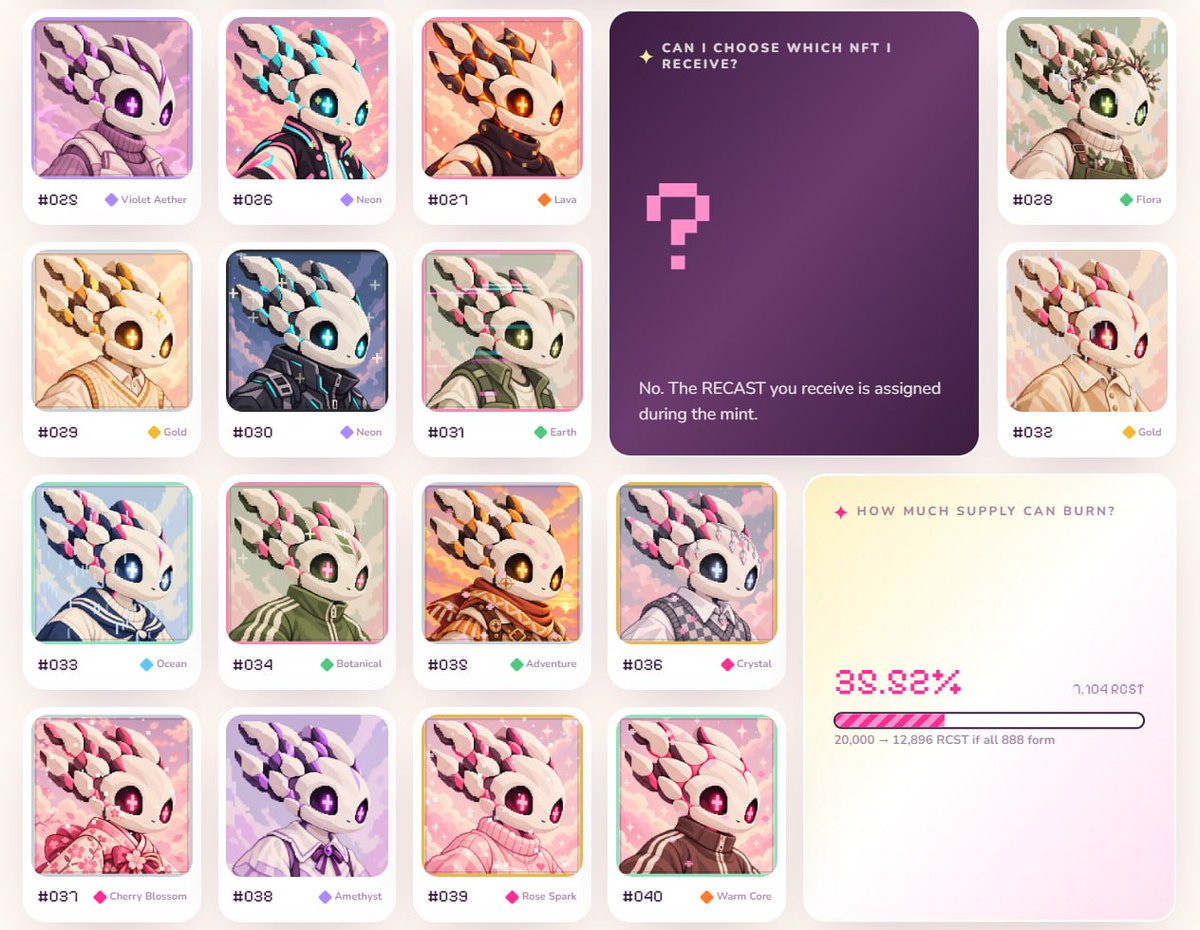
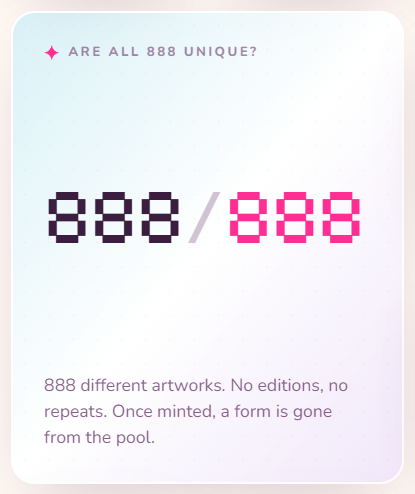
burning 8 rcst permanently removes those tokens from circulation and creates one unique recast nft from the fixed collection of 888. no image can be minted twice, and each wallet can mint up to 2 nfts directly from the protocol.
👀👀👀
everything inside recast continues to run exactly as designed.
rcst remains the liquid layer of the system, moving through the uniswap v4 pool and feeding the reward mechanism with real trading activity. the hook connects that activity directly to the rest of the protocol, keeping the core mechanics tied to what actually happens onchain.
holder rewards are active and continue to accumulate in eth. wallets holding rcst remain part of the reward flow, while wallets holding at least one recast nft are recognized by the protocol and receive the boosted reward path automatically.
https://t.co/HQbxu9GpJO
everything begins to feed back into the same system.
we’ve also been simplifying the way the website reads this information. instead of different sections behaving like isolated products, the goal is for the entire recast interface to represent the same onchain state everywhere - rewards, collection, wallet status and market.
what you see should reflect what the contracts see.
recast sync is not a new token mechanic placed on top of the project.
it is infrastructure that makes the mechanics we already built feel like one protocol instead of several features.
this also makes the market much more important to the larger recast cycle.
a recast is created by permanently removing rcst from circulation, but its story does not stop after minting. once the nft exists, it becomes a transferable part of the ecosystem — and when ownership changes, that change can matter to the protocol immediately.
the cycle is becoming increasingly connected:
trade rcst → generate rewards → burn rcst → reveal a recast → hold or trade the nft → protocol recognizes ownership → boosted reward path
if a wallet acquires its first recast, the rewards layer recognizes the change automatically.
there is no staking transaction.
there is no separate registration.
there is no “activate boost” button.
ownership itself is the signal.
if that nft later moves to another wallet, the protocol can recognize the new owner as well. the relationship between the nft layer and the reward layer follows what actually exists onchain rather than relying on an offchain profile or manually stored account state.
recast sync is live. (UPDATE)
recast was never meant to feel like a token, an nft collection and a marketplace sitting next to each other.
they were always supposed to behave like parts of the same machine.
with the new recast sync update, we’ve connected those layers much deeper.
the protocol now continuously reads the current state of a wallet directly from the contracts — rcst balance, recast nft ownership and its position inside the reward system are treated as one connected state.
there are no separate systems pretending to be connected — trading, rewards, burning, minting, nft ownership and the market all belong to the same recast cycle.
the important part is that nothing is waiting to be “turned on.”
UPDATE SOON
the burn-to-mint mechanic is also working as designed: 8 rcst disappears permanently and one unique recast takes its place. every mint reduces the liquid supply while expanding the fixed collection of 888 forms.
the nft market is live, transfers work normally, ownership updates onchain, and the website reads the current state directly from the contracts.
Everything inside recast is now running exactly as intended.
the rcst / uniswap v4 flow is active, eth rewards are being distributed through the reward layer, nft ownership is recognized onchain, and wallets holding at least one recast automatically receive the boosted reward path.
the burn-to-mint mechanic is also working as designed: 8 rcst disappears permanently and one unique recast takes its place. every mint reduces the liquid supply while expanding the fixed collection of 888 forms.
if a wallet holds at least one recast, the protocol recognizes it automatically and moves that wallet into the boosted reward path. no staking, no locking, no manual registration — ownership itself becomes part of the reward logic.
this creates a stronger connection between both sides of recast: rcst remains the liquid layer generating eth rewards, while the nft becomes an onchain signal that changes how the protocol treats the holder.
recast rewards just became more native.
the rewards layer now reads recast nft ownership directly onchain when calculating a wallet’s reward weight.
>>
function _rewardWeight(address account)
internal
view
returns (uint256)
{
if (recastNFT.balanceOf(account) > 0) {
return BASE_WEIGHT + NFT_BOOST;
}
return BASE_WEIGHT;
}
the market also gives us much more freedom to build features specifically for recast rather than adapting the collection to a generic marketplace interface. over time, this becomes another layer of the ecosystem where the token, the nft collection, ownership and the reward mechanics can exist much closer together.
recast is no longer only about creating the nft.