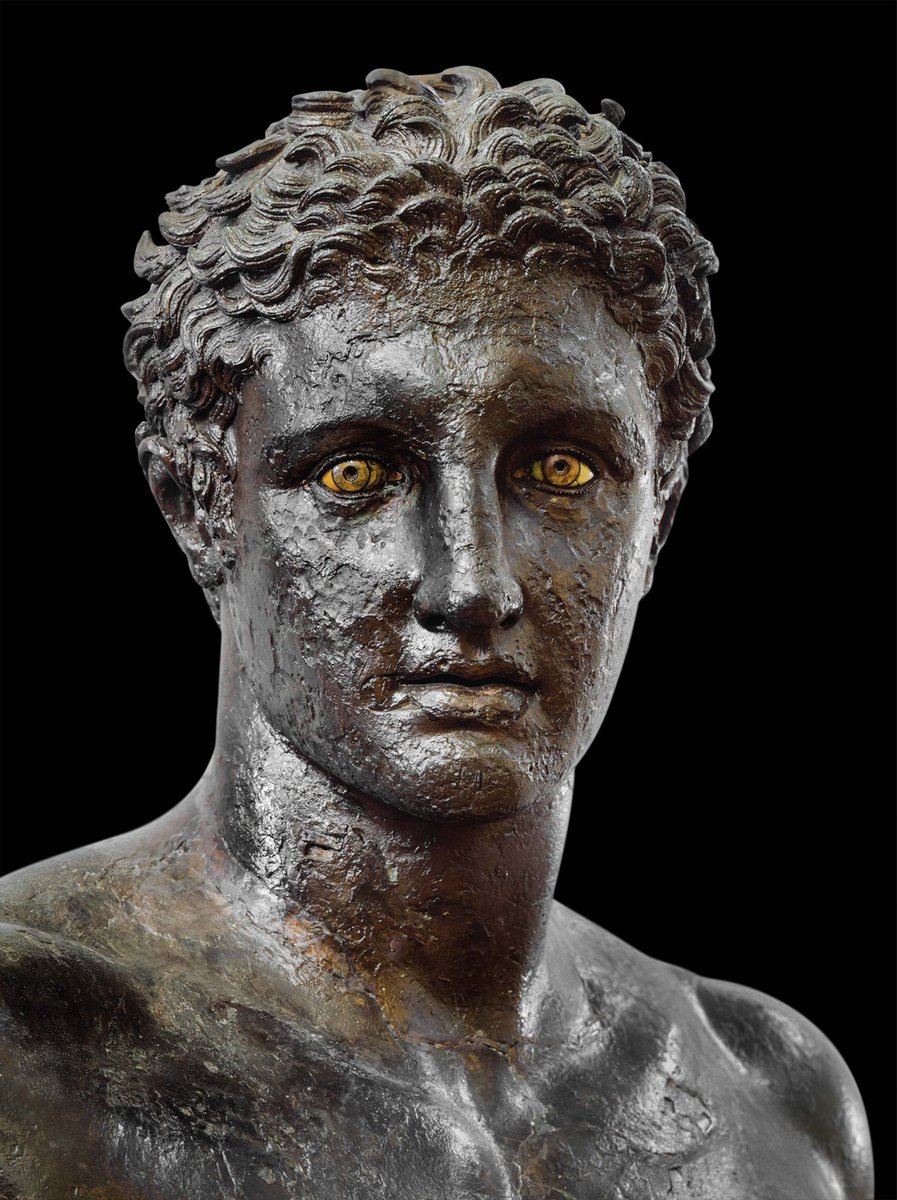
This statue is over 2300 years old.
It's one of the very few ancient sculptures left with its original eyes, and I can’t get over how real they look...
The statue is the Antikythera Ephebe, a Greek bronze of a young man made around 340 to 330 BC, and strangely enough, the reason it survived is because it sank. In antiquity, bronze statues were constantly melted down for their metal, turned into weapons and coins, which is why almost none survive.
This one went to the bottom of the sea in a shipwreck around 60 BC and lay there for nearly two thousand years, until sponge divers found it in 1900.
But let’s go back to my favorite detail: the eyes.
When a bronze statue is made, the eyes are often set separately, inlaid with glass, stone, and colored paste to make them lifelike, and over the centuries almost every ancient bronze has lost them, leaving those hollow, blank sockets we think of as classical.
The Ephebe still has his original eyes, made of glass paste, one of only a handful of ancient Greek bronzes in the world that do. And it changes everything because he does not gaze blankly into nothing, he seems to be looking, intently, at something that vanished more than two thousand years ago...
The 9/11 Memorial "Tear Drop" sit's directly across from NYC, in Bayonne New Jersey, just the other side of the Statue of Liberty, yet we hear nothing about it.
This beautiful, 100 ft tall monument was gifted to the people of the United States by the people of Russia in 2006, in memory of all those who lost their lives on that fateful day, September 11, 2001.
The breaking in the cracked façade forms the shape of the two towers.
The giant suspended tear drop signifies the tears of the entire world that day.
Maybe it's something that needs to be known, starting today.
The most powerful method ever invented for controlling a population is distraction. Ancient Rome perfected it 2000 years ago, and it is being used on you right now...
For centuries the Roman citizen was the proudest political animal on earth. He voted. He chose the men who led the legions, filled the high offices, and shaped the Republic.
Real power ran through the ordinary people. Then, slowly, they let it go, and they barely noticed it...
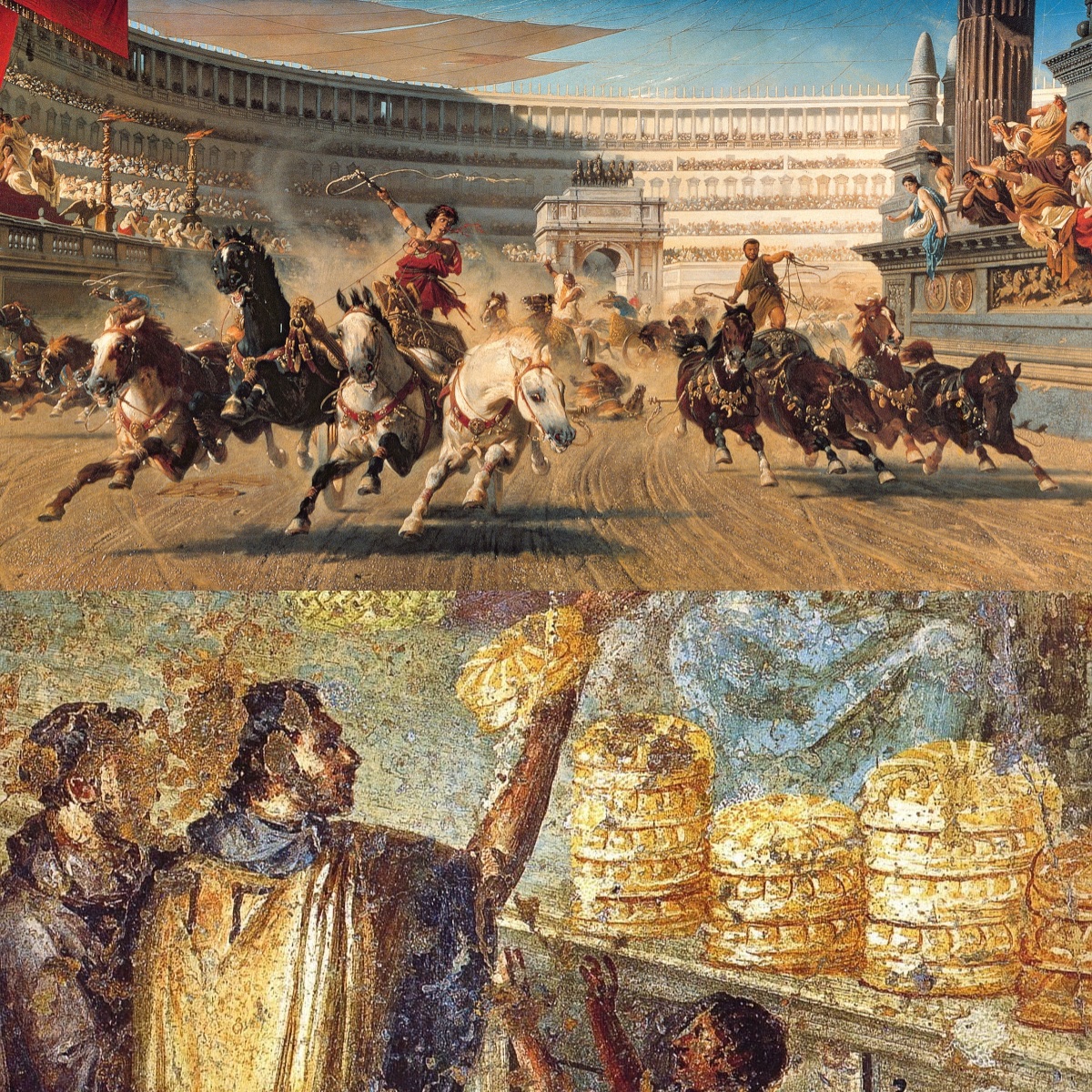
It happened through two things given freely by the state. The first was spectacle: chariot races in the Circus Maximus, gladiators in the arena, ever grander games, all free, all designed to keep the crowd entertained.
The second was grain: beginning in the second century BC, Roman politicians learned that handing out cheap or free food to the masses was the easiest way to win their loyalty, and over time the grain dole became a permanent fixture, feeding a huge share of the city at the state's expense.
Feed them and amuse them, and they would not ask questions about who was really running things...
You might remember this quote from the movie Gladiator: "Rome is the mob. Conjure magic for them and they'll be distracted. Take away their freedom and still they'll roar. The beating heart of Rome is not the marble of the Senate, it's the sand of the Colosseum. He'll bring them death, and they will love him for it."
A Hollywood screen writer put those words in a senator's mouth, but the Romans had said it first. Around 100 AD the poet Juvenal looked at his fellow Romans, once masters of their own Republic, now placid and passive under the emperors, and wrote with disgust: "The People who once upon a time handed out military command, high civil office, legions, everything, now restrains itself and anxiously hopes for just two things: bread and circuses." In latin, Panem et circenses.
Now think about how most days feel for most people in 2026. An endless stream of entertainment, sport, outrage and spectacle without end, and enough comfort that few are hungry enough to look up from the screen.
Panem et circenses names a truth about human beings that has not changed in two thousand years: give people enough to eat and enough to watch, and they will hand over almost anything, including the power that was theirs to begin with...
A proposito del mio post su AfD e propaganda facciamo qualche esempio concreto.
1. Energia e deindustrializzazione.
Non serve una troll farm di San Pietroburgo per spiegare l’operaio incazzato che segue AfD: dopo il taglio del gas russo, lo sconsiderato stop al nucleare, il costo della transizione in bolletta, i prezzi elettrici in Germania sono tra i più alti in UE. Il calo della produzione energivora, le chiusure (ThyssenKrupp, chimica, VW: decine di migliaia posti) hanno picchiato duro.
Il malessere è materiale, non ipnotico.
2. Migrazione e sicurezza.
AfD non ha inventato Magdeburgo, Aschaffenburg, coltelli, tensioni scolastiche o confini non controllati.
La popolazione era già convinta da post-2015 che l’integrazione fosse fallita, che alcune nazionalità fossero sovrarappresentate in certi reati, che accoglienza senza selezione/espulsioni fosse considerato dai governi un tabù maggiore della sicurezza.
È un problema reale, non un meme da Telegram russo.
3. Vuoto partiti di governo.
CDU, SPD e Verdi litigano su debito, clima, UA e asilo, non offrono soluzioni e poi si stupiscono se “la gente è polarizzata”. Non è Musk a creare il vuoto. C’è un muro che tiene lontana la politica dalla realtà e le ha impedito di recepire le istanze delle persone: confini, energia low-cost, meno moralismo. E l’ha regalata ad AfD.
La propaganda estera può amplificare, non inventa una Germania che ha spentole centrali, aperto confini senza piano, promesso decarbonizzazione senza proteggere l’industria e trattato i dubbi sull’immigrazione come razzismo.
Per togliere benzina a Putin, Trump, Netanyahu ecc., non basta denunciare “narrative warfare”. Devi risolvere problemi veri: energia, ordine, lavoro, confini. Finché fai finta che il problema sia lo smartphone dell’elettore, AfD sembrerà l’unica a parlare della realtà.