“The cockpit was my office. It was a place where I experienced many emotions and learned many lessons. It was a place of work, but also a keeper of dreams. It was a place of deadly serious encounters, yet there I discovered much about life. I learned about joy and sorrow, pride and humility, fear and overcoming fear. I saw much from that office that most people would never see. At times it terrified me, yet I could always feel at home there. It was my place, at that time in space, and the jet was mine for those moments. Though it was a place where I could quickly die, the cockpit was a place where I truly lived.”
Brian Shul, Sled Driver; Flying The World's Fastest Jet, 1992.
@pika_nekopanda Travel to Japan for work every few months.
Gyudon, Yakitori, even from the chain restaurants (Yoshinoya, Sukiya, Torikizoku etc.) are great!
Hitsumabushi in Nagoya too 😋
In the year 1942, a new fearsome weapon entered the battlefield, with armor so thick most Allied shells just bounced off.
88mm gun. 100mm of frontal armor. A weapon so dominant it made every Allied tank crew rethink how they fought.
Then, they found a way to tackle the beast.
🔸The Tiger I made its combat debut in September 1942 near Leningrad. German engineers had spent years designing a tank that could dominate any battlefield. They succeeded beyond anyone's expectations.
🔸The standard Allied tank at the time was the American M4 Sherman. Its 75mm gun could not penetrate the Tiger's frontal armor at any range whatsoever. To even scratch the side armor, a Sherman crew had to close to within 100 meters, close enough to see the German commander's face.
🔸The Tiger's 88mm gun was derived from a Flak 36 anti-aircraft cannon, whose extreme shell velocity made it devastatingly effective against ground targets. German engineers recognized this potential during the Spanish Civil War and developed a tank version. It became the most feared gun of the entire war.
🔸Allied tank crews were issued unofficial but very real advice: do not engage a Tiger from the front. Ever. The only chance of survival was to flank it, find its weaker side armor, and pray you got there before it spotted you.
🔸The psychological impact was as devastating as the weapon itself. Allied commanders reported soldiers refusing to advance when a Tiger was suspected in the area. A single Tiger could pin down an entire company just by existing.
🔸Germany's answer to Allied numerical superiority was technological superiority. One Tiger was expected to do the work of five Sherman tanks. On paper, the kill ratios proved them right, but in reality, it created a strategic problem Germany never solved.
🔸The Tiger weighed 57 tonnes. For comparison, the Sherman weighed around 30 tonnes. This meant the Tiger broke pontoon bridges, got stuck in soft ground, and could not be easily transported by rail without removing its wide battle tracks first.
🔸Maintenance was a nightmare. The Tiger required approximately 10 hours of maintenance for every hour of combat operation. Skilled mechanics were in short supply, spare parts were constantly delayed, and breakdowns were so common that more Tigers were lost to mechanical failure than to enemy fire.
🔸The Allies studied every captured Tiger obsessively. British engineers got their hands on an intact Tiger in North Africa in early 1943. They spent weeks tearing it apart, looking for weaknesses. What they found changed Allied tactics overnight.
🔸The top armor was only 25mm thick, the same as a tin can compared to its 102mm frontal plate. Allied tacticians built entire air attack strategies around this number. A Tiger that dominated every tank on the battlefield could be cracked open from above like an egg.
🔸The British responded by mounting the powerful 17-pounder gun on their tanks. The Sherman Firefly was born. Suddenly Allied tankers had a weapon that could penetrate Tiger armor at realistic combat distances. German crews learned to target Fireflies first.
🔸The Soviet Union took a different approach entirely. Rather than building a better tank, they built more tanks. The T-34 was faster, simpler, and could be produced in massive numbers. Soviet factories churned out thousands while German factories struggled to build hundreds.
🔸Allied air power became the Tiger's greatest enemy. The P-47 Thunderbolt ( on which I'm making a card next) and British Typhoon carried rockets and bombs that could crack a Tiger's thin top armor wide open. German tank commanders learned to fear clear skies more than enemy tanks.
🔸By 1944 the Tiger's dominance was fading. Better Allied guns, improved tactics, and overwhelming numbers were shifting the balance. The Tiger was still dangerous, but it was no longer unstoppable. Germany had built a masterpiece it couldn't afford to use at scale.
🔸Germany produced only 1,347 Tiger I tanks during the entire war. The Soviet Union produced over 57,000 T-34s. The United States built nearly 49,000 Shermans. The Tiger won almost every one-on-one engagement it fought. It just couldn't be everywhere at once.
🔸The Tiger's legacy influenced every major tank design that followed. The lesson it taught, that firepower and armor protection matter as much as speed and numbers, shaped how every army in the world thought about building tanks after 1945.
🔸In the end the Tiger didn't lose because it was outfought. It lost because Germany ran out of fuel, factories, and men to keep it running. A weapon is only as powerful as the industry behind it ( we can observe this lesson with the drones in Ukraine as wel). And by 1945, that nation was collapsing from every direction.
🔸The most fearsome tank of World War II was defeated not by a better tank, but by spreadsheets, factories, and logistics. The Allies out-produced, out-supplied, and out-lasted it. The Tiger was a masterpiece but the Allies built a machine for winning wars.
🔸The last Tigers fell silent in May 1945. A handful survive in museums today. I have never seen one in the flesh but I've heard that if you stand next one you immediately understand why men feared it.
As a final takeaway remember that 1,347 of them lost to 57,000 T-34s. That is the real lesson of the Tiger tank.
Quantity has a quality of its own.
Alright, that's a wrap. Thanks for sticking with me. Tomorrow I've got another fantastic story lined up for you.
Hope to see you there.
“But the curse of every ancient civilization was that its men in the end became unable to fight. Materialism, luxury, safety, even sometimes an almost modern sentimentality, weakened the fibre of each civilized race in turn; each became in the end a nation of pacifists, and then each was trodden under foot by some ruder people that had kept that virile fighting power the lack of which makes all other virtues useless and sometimes even harmful.”
-Teddy Roosevelt
Empires start to decline when money replaces honor as the ambition of the best young men.
In the Age of Conquests, boys are raised to be hardy, courageous, and truthful. Duty is drummed into their heads. Schools are intentionally rough with frugal eating and hard living.
The goal is to produce strong men, but when wealth arrives, the goal shifts from service to cash.
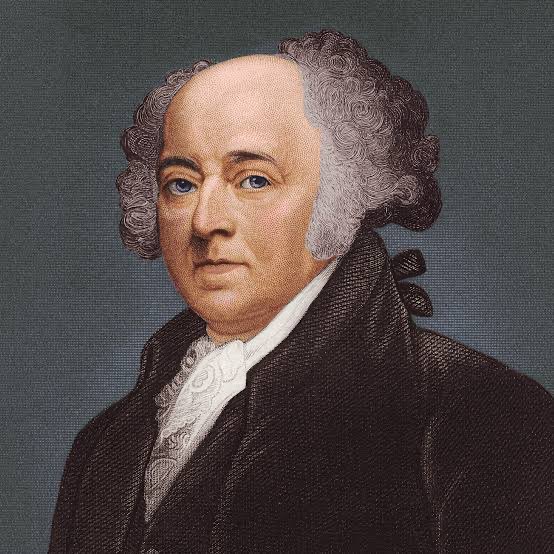
“Remember, Democracy never lasts long. It soon wastes, exhausts, and murders itself. There never was a Democracy yet that did not commit suicide. It is in vain to say that Democracy is less vain, less proud, less selfish, less ambitious, or less avaricious than Aristocracy or Monarchy. It is not true in fact, and nowhere appears in history. These passions are the same in all men, under all forms of simple government, and when unchecked, produce the same effects of fraud, violence, and cruelty.“
-John Adams, December 17th, 1814
OK, OK, some are asking me to get back to battleships!
Let’s talk about battleships vs carriers.
I have written several posts already explaining how battleships were not “obsolete” after WW2 and continued service until after the Gulf War.
No Navy admiral would ever claim they are useless…. the question has always been: are they worth the cost compared to other platforms?
And the answer to that question has for decades been no.
Battleships are more survivable than carriers. They pack a heavier punch. They have a number of other advantages.
The battleship’s primary disadvantage is RANGE.
The main gun on a battleship can’t shoot as far as an airplane. So if a carrier and a battleship are steaming across the ocean to fight each other, the carrier is going to get hits off first.
Except that’s no longer the case thanks to missiles.
Carriers also have a much larger reconnaissance range— planes can see further than ships— but modern satellites zero out that advantage.
Carriers also have a longer cruising range because they are nuclear-powered, BUT fuel is not the limiting factor…. Because the 5,000+ crew need to eat and the planes need aviation fuel and because they sail with gas-guzzling destroyers, they don’t really have “more cruising range” unless you can replenish them at sea.
We can of course replenish them at sea, but the Navy has been underfunding its @MSCSealift fleet, so this is no longer assured.
So the hitting range is no longer an advantage (especially with hypersonics aboard with thousands of miles of range), and cruising range isn’t an advantage because of the sorry state of our replenishment fleet.
So if carriers don’t have an advantage, then why did we build them and not battleships?
Well, battleships are more useful when you are taking the beach, but once the army moves inland, carriers have the advantage.
Sure, a tomahawk missile fired from a battleship or destroyer can provide air support from a long distance away, but it takes time for the missile to reach the battlefield.
Planes loitering nearby, however, can sweep in fast. They can also change targets easily if ground conditions change.
So, with limited funding, the Navy concentrated its budget on being a good joint player.
BUT THERE IS ANOTHER REASON THE CARRIER REPLACED THE BATTLESHIP
We had absolute dominance of the seas. There just wasn’t a need for ships, any ships, that couldn’t support Army and Air Force missions. There wasn’t a need for gunfire support of amphibious landings either.
And Congress wasn’t going to support a naval platform for a naval battle if there weren’t any serious opponents at sea.
So what changed?
China built a Navy larger than ours. And one focused on warships, not carriers.
China doesn’t need great range; they need to project force not across oceans but across nearby seas.
And they need to protect their 5,000+ merchant ships (we only have 82 Merchant Marine ships in international service).
Our carrier planes only have a few hundred-mile range, so merchant ships can spread out and avoid them.
Well, they can avoid them everywhere except choke points where ships must converge.
And carriers aren’t good at protecting merchant ships in choke points, as we saw recently when we sent two carriers at one time to protect ships in the Red Sea.
Submarines can sink ships approaching choke points, but they can’t protect them from drones and missiles.
What can protect ships in choke points are destroyers, but they are small and run out of fuel and missiles quickly. Plus, shooting multi-million-dollar missiles at $20,000 drones is not a winning formula.
So that’s why we need battleships now. It’s not because they ever became obsolete… it’s because we haven’t had a serious enemy at sea (the Russian threat was mostly underwater) and we haven’t needed heavy gunfire to protect choke points and amphibious landings since WW2
In 2025 carriers are still important but we need some battleships too.
The Army's Zero-Defect Cult: Breeding Commanders the Enemy Can Read Like an Open Book
# Why Understanding Your Adversary's Decision-Making Is Critical in Conflict
In any conflict—whether a tactical fight at the National Training Center or a near-peer war—**knowing how your enemy thinks is often more powerful than knowing their order of battle**. Adversaries don't just exploit your weaknesses; they predict your choices based on your patterns, culture, and incentives.
A weak or predictable position on routine decisions **telegraphs your thought processes**. If your leaders consistently prioritize "safe" options—covering every contingency, avoiding bold risks, and seeking consensus—your opponent knows exactly what you *won't* do. They can then assume risk where you won't, mass forces decisively, and defeat you in detail.
#### The Classic NTC Example: Attack Through the Whale Gap to Seize Razish/Barasu
In the standard Rotational Training Unit (RTU/BLUFOR) offensive scenario—pushing through the Whale Gap corridor to seize key objectives like in the East like Barasu—visiting brigades almost always default to the "risk-averse" scheme of maneuver:
- Spread forces thin across the entire area of operations.
- Assign separate battalions to independent axes or objectives.
- Ensure every possible enemy course of action is "covered" on paper—creating a flawless Combined Arms Rehearsal (CAR) that leaves no gaps uncovered.
It looks perfect in the TOC: Balanced, comprehensive, no vulnerabilities exposed.
But you've just surrendered the essence of the offense: **Mass**.
The 11th ACR (Blackhorse OPFOR) exploits this relentlessly. We know RTU commanders, shaped by a deeply ingrained risk-averse culture, hesitate to accept uncertainty or concentrate combat power at a decisive point. Through aggressive reconnaissance (our "Centaur" or recon strike squadrons), we identify the penetration point of our choosing, defend selectively, and fight one isolated BLUFOR battalion at a time—on our terms.
The result? OPFOR routinely defeats numerically superior forces by turning your caution into dilution.
#### The Deeper Issue: Unintended Consequences of Our Leader Selection System
This predictability isn't accidental—it's selected for.
Over decades, the Army's officer evaluation and promotion systems (OERs, boards, command assessment programs) have rewarded likability, agreeability, and zero-defect performance over bold, independent thinking. Risk-takers who prioritize mission over consensus often get sidelined; "middle managers" who play it safe and build palatable plans advance.
The result: A leadership cohort that defaults to group-think on critical decisions—prioritizing how a COA will be received over its tactical merit. When your system filters out audacity in favor of conformity, you broadcast to any observant adversary: "We won't mass. **We won't gamble. We won't leave a flank exposed—even if it means winning."
Real enemies (or even OPFOR) don't need SIGINT when your cultural incentives make your decisions foreseeable.
If we want to deter and win near-peer fights, we must reward leaders who can impose dilemmas on the enemy—not ones who avoid them at all costs. Predictability is a vulnerability we can't afford.
#Army #Leadership #NTC #Blackhorse #LSCO