With nearly 60 submissions, the winners of the Onchain Creator Rally: @EthereumDenver Edition have now been selected.
Congrats:
🏆 Mia Terracotta
🏆 @proofofella
🏆 @0xSavva
🏆 @BigTrav205
🏆 Sance Nspire
🏆 @dylangrabowski
🏆 @Lo_Key_CC
🏆 @DekanBro
🏆 @0xGramajo
🏆 @DimitarDrew
Huge thank you to everyone who submitted and our partners for making this the biggest and best creator rally yet.
The best events I've hosted didn't feature a single technical talk.
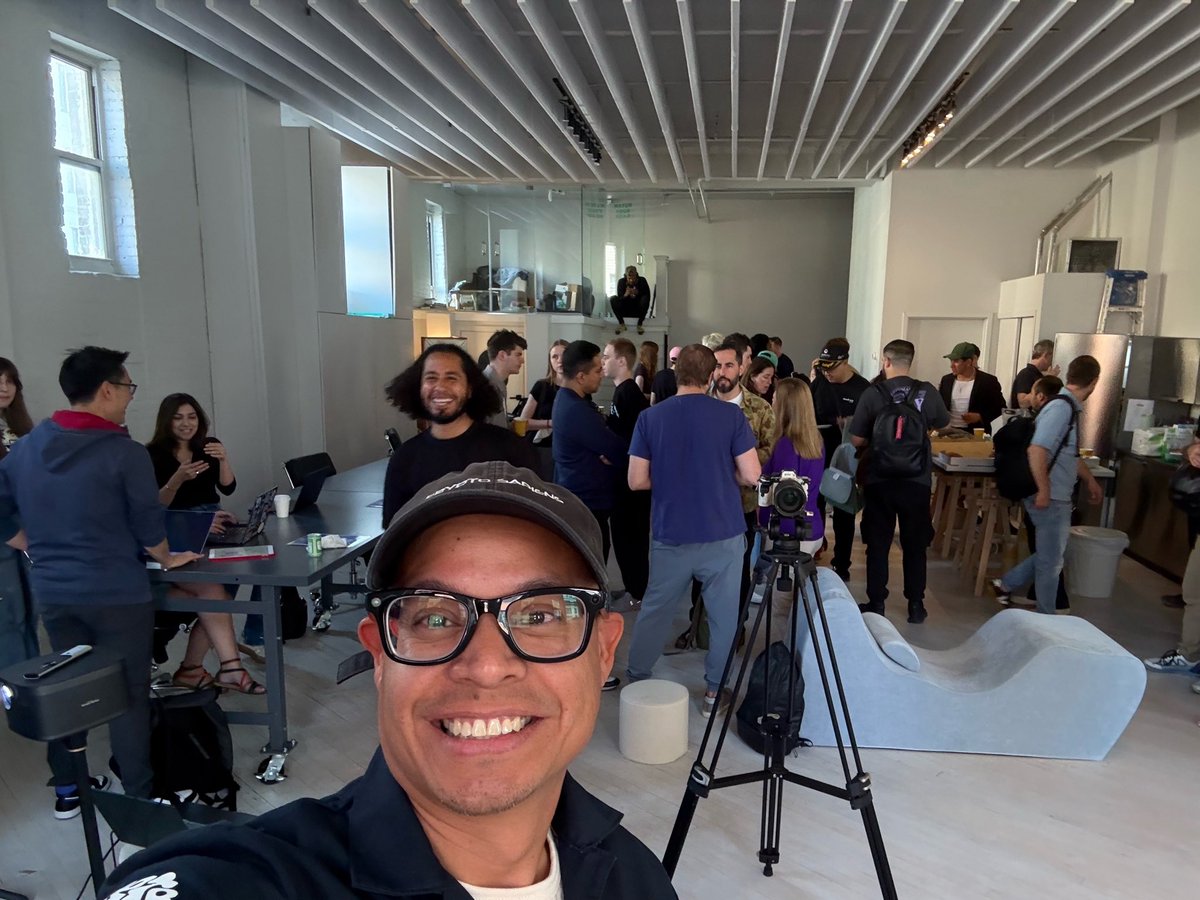
It started in Denver as a side event. I talked with everyone who walked in and realized people weren't there for the tech. They were there because the space spoke to them.
In an industry that spends tons of money on technical talks and hackathons, ours was built for consumers and creators.
The partners who got it early kept me experimenting. The people who showed up told me exactly what they wanted next.
That became The Onchain Creator House in New York, one of my proudest achievements. 331 people registered.
We collab'd with Coinbase around the launch of The Base App (I still dream about what that app could've become). And we opened the door for creators to step into something that almost never makes room for them: a hackathon.
Creators tested the product, gave feedback, made content, and realized they belonged there. I'll never forget that.
The most innovative technology shouldn't stay with the people who already know how to use it.
Whether it's crypto or AI, the teams building what's next can't do it alone. Creators, casual builders, and everyday consumers deserve a real way in.
Every event I've hosted since carries that same energy forward.
I attended the Claude Creator Summit yesterday. There were about 150 creators in the room, all from different backgrounds, and about half hadn't used Claude yet.
The intro from the hosts was short and sweet. Then the creators took the stage to share how they're using Claude.
No pitching the product. Letting the creators carry the message.
It's the same playbook I've used at my own creator events, which I briefly touched on a few days ago. It was great seeing it play out in front of me as an audience member.
I shared The Onchain Creator newsletter with attendees on the floor: what it is, and how it connects to the creator events I've hosted around the world.
People were excited to learn how it worked, so I shared the secret sauce: agents filter through hundreds of stories a week, and I step in to curate the finished letter.
The comment I kept hearing most was how those stories could be more actionable, so creators can use the tools we feature right after reading about them. Starting next week, that feedback goes into action. Each issue will lead with the latest trending frontier tool, backed with three stories of creators actually using it.
More action, less news.
I also realized I've done a poor job of continuing to talk about the impact of our work at OnchainCreators. That changes now.
The brand is now The Onchain Creator, led by the weekly newsletter and supported by events and media collabs with partners. I won't stop grinding until our community of 18K+ reaches 1 million. And even then, I'll keep experimenting to see how it can better serve our members.
I joined tons of other great discussions at the event too. We talked about ffmpeg as a creator tool, and about personal luxury in the age of AI: self-curated style with pieces designed and manufactured by humans you know and care about. I also talked with a UCLA doctoral student researching how AI can change medicine, and why patient data needs private AI.
Thanks to @EvanGrenda, @travcjohnson, and @gracepace_ for hosting, and allowing creators do what they do best. Create.
If you're a creator building with frontier tools, subscribe to the newsletter built for you: https://t.co/8f4tQvyKJv
What do agent-forward events look like?
this week my agents filtered through 800+ LA Tech Week events, flagged the creator and AI sessions worth my time, and RSVP with minimal input from me.
that got me thinking, what comes next?
> agents shake hands before we get to the event
> personalized experiences based on briefs shared by our agents
> warm follow-ups, brokered by our agents
The events playbook hasn’t changed in over a decade. Agents are perfectly positioned to rewrite it.
Who’s building this?
Creator-led growth is the hottest job right now
From running creator houses and rallies, I learned there are three things that make creators actually show up:
> put the product in their hands before anyone else gets it. at our NYC Creator House, people got first access to The Base App and created hundreds of pieces of content about it the same day
> value their worth and give them a stake in your success. across all our creator events we’ve stewarded over $8K in prizes to find top performers, pay them, and re-engage them for future partner campaigns
> curate the room to speak to their craft, not just yours. creators come to meet and collab with other creators, not for a pitch or presentation about your roadmap
the recipe for success is making creators part of the process and not treating them like just another distribution channel
Saying that crypto has an absence of young people is both agist and short sighted.
Firstly, crypto like any technology benefits from a balance of youthful energy and ideation as well as age-earned experience and acumen.
Secondly, the claim that crypto lacks young people is categorically untrue.
Having hosted various crypto/creator events, I can say with certainty that there are many talented young people eager to contribute to the space. The reason why they may appear invisible is because we, many times, do a poor job of engaging them with narratives that are meaningful to them.
Let’s spend more time crafting narratives and building for them rather than making deluded statements for virality’s sake.
Looking like ETHDenver will be back for its 10th anniversary next year.
Perhaps not in its original format, but still focused on Ethereum and its community.
ElevenLabs and Anthropic were both in the news this week.
Universal Music Group signed a multi-year licensing deal with ElevenLabs this week. UMG controls 30% of the global recorded music market. This marks the first time an AI company has access to a major label catalog... legally.
For creators, the copyright risk that has made AI-generated music legally dangerous is now being addressed at the source.
Anthropic is in a different position. Sony Music and Warner Music both filed suit this week, alleging the company torrented their catalogs and scraped lyrics to train its models. A cofounder is named personally in the filings. This follows a $1.5 billion settlement Anthropic already paid over pirated books. All three major music publishers are now in active litigation against the company.
The outcomes of both these cases will directly shape what AI tools can do with creator content and what you can legally do with AI-generated output.
Read the full story on this week's newsletter.
The Clarity Act failed. So what's next?
Regulatory clarity matters. But crypto's foundational value hasn't changed.
Now more than ever, our best shot at winning is DeFi.
If you care about crypto, it's on YOU to help grow that ecosystem until it's impossible for people, and governments, to ignore.
Three years ago Humpty scaled CryptoSapiens podcast to an audience of nearly a million with the help of ChatGPT
He’s now aiming to do the same for IRL events with the help of autonomous agents
Learn how you can do the same on the latest newsletter👇
Three years ago Humpty scaled CryptoSapiens podcast to an audience of nearly a million with the help of ChatGPT
He’s now aiming to do the same for IRL events with the help of autonomous agents
Learn how you can do the same on the latest newsletter👇
Three years ago I used ChatGPT to run my podcast. It wrote show notes, prepped interviews, and eventually helped me send a newsletter every week.
Now, two of the biggest AI labs are shipping the same product: an AI that keeps working after you walk away.
OpenAI is building one that stays active until you shut it down. GrokBot signs into your tools, runs overnight, and only comes back when it needs a human decision.
On this week's OnchainCreators newsletter, we covered what this means for solo creators, why GrokBot's X integration matters if your audience lives there, and how to build your own version today using tools you already have.
Are you building toward that, or still experimenting?
I've seen many founders make the mistake of thinking they can buy community growth
The truth is no matter how much money or freebies you throw at it, if YOU don't stand for something and build a culture around it, what you're building is a money pit.
Superfans don't show up for incentives. They show up for people with real beliefs, whose products ooze them.