🔍 A platform automatically monitoring your infrastructure ⭐ No installation, no internal access, no setup 🕵️ We always know all your assets - same as hackers
Only 2 DNS providers control 33% of all apex domains.
This gives us an idea about the scale when one of the big tech players have a global outage.
Do you know all the DNS providers you or your company uses?
@chmelarp This action will in most companies go unnoticed even though the consequences can be brutal, ranging from unauthorized access to critical services, email spoofing, domain takeover etc; That's why we believe monitoring of DNS is also critical
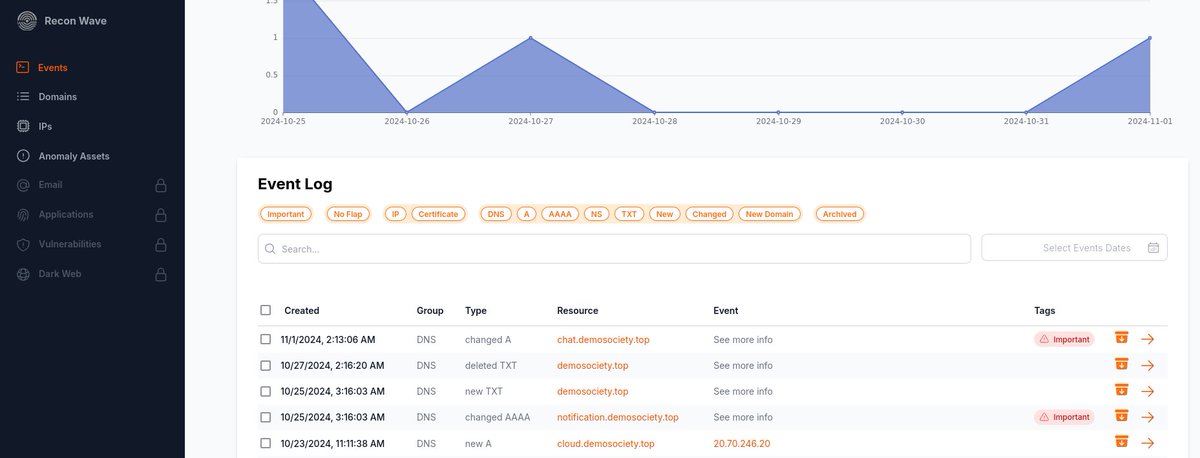
Would you know if a malicious actor added a new TXT record to your DNS? This silent move could compromise your organisation.
At Recon Wave, we track all infrastructure changes, including DNS!
Contact us for a free trial—no setup needed, we already have all the data!
@chmelarp True, they for sure can do more devastating actions.
However, it depends on the attacker's goal. If the goal is for example to stay hidden and hijack the domain in a 3rd party service, then adding a TXT record is usually enough.
1/2
Do you know about quite old (yet still sometimes working) technique to enumerate DNS zones using NSEC records?
I don't blame you, let me show you, it's fun 🧵
Open DNS zone transfers are 90s thing, right? Well our experiment shows that a shocking 8% of all global nameservers have still zone transfers publicly open, letting anyone dump entire zone records
1/4 🧵
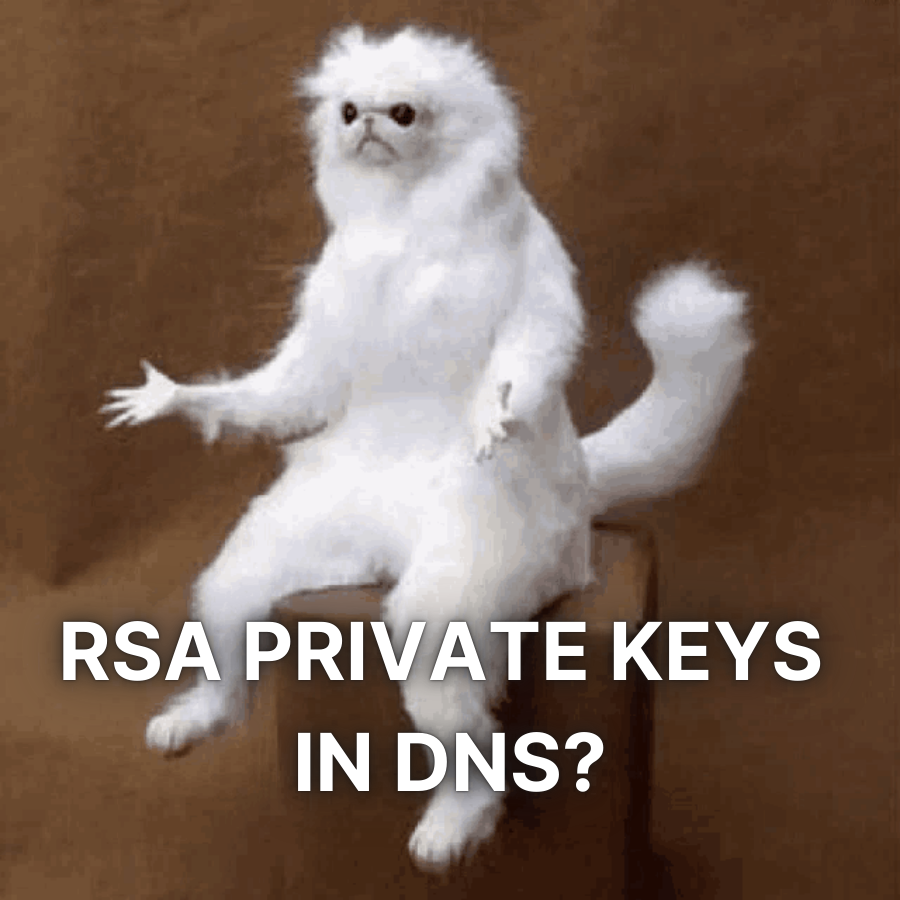
Our team has recently discovered a scary number of RSA private keys publicly stored in DNS TXT records.
To our surprise, there is a special case where it actually makes sense! 🤯
Find out more in our latest blogpost!
https://t.co/oMyv3TXDFv
We're excited to announce the launch of Recon Wave Search!
More than 10 billion of DNS records unlocked for security researchers, pen-testers and defenders. 🎉
One of the biggest reverse DNS database at your fingertips! See part of your OSINT fingerprint!
#ridereconwave
My first thought was "Wow malware is scraping images". Then I opened iPhoto and typed a few words that appeared in photos. Like "Stream Deck" pulled up a picture of my desk.
My guess is malware is just reading from the OS's photo index database and not doing any scraping at all. Which makes this more scary as if you are someone that takes a picture of your Ledger recovery phrase (or passwords), then it could be stolen in a couple-seconds if anyone ever has your phone.
All it takes is handing your phone to someone to take a picture, them opening the photo app, and searching "Recovery Phrase" to pull up the ledger sheet. No fancy malware needed.
I think it's important to emphasize how low-tech this hack can be as people think they are too small for sophisticated malware.
𝗢𝗻𝗹𝗶𝗻𝗲, 𝗵𝗮𝗻𝗱𝘀-𝗼𝗻, 𝗽𝗿𝗮𝗰𝘁𝗶𝗰𝗮𝗹, 𝗮𝗻𝗱 𝗳𝗿𝗲𝗲!
CTU's "Introduction to Security" Class opens online for free! Join us and register for free. Starting on Sep 26th. #cybersec#infosec#blueteam#redteam
https://t.co/Cnk6p1AmJl
HAs anyone worked out why Amazon has been issuing ssl certs for dyingbirds[.]com every second?
b7b7a13b51f467788d5d0f1b8e98f781713557967877[.]amdv[.]dyingbirds[.]com
san[.]b7b7a13b51f467788d5d0f1b8e98f781713557967877[.]amdv[.]dyingbirds[.]com
Have you also not heard about DNS zone enumeration using NSEC records before?
Check out our latest blogpost about this publicly less known but still relevant technique 🔍🔒
https://t.co/PGYn58D4iS
#dns#recon#enumeration
Web programmers seem to have no idea just how fast computers have become. The vast majority of all SaaS apps ever made could easily run on a single, beefy beast. Main reason to add multiple machines is for redundancy, and even that is something you can put off for ages.