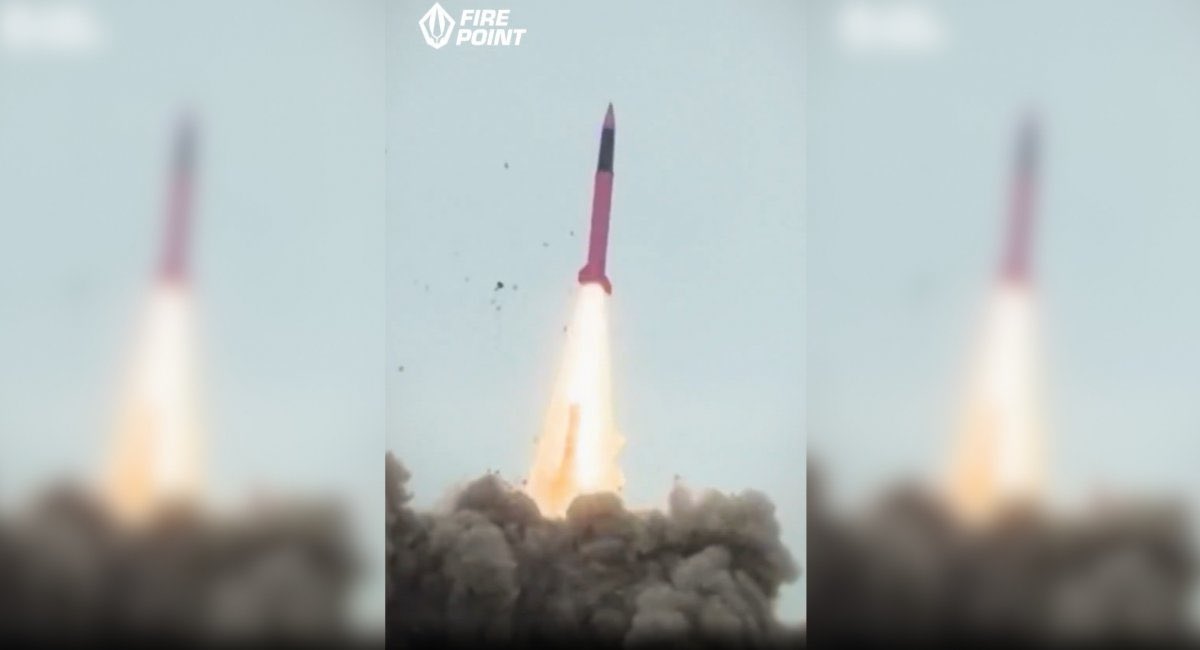
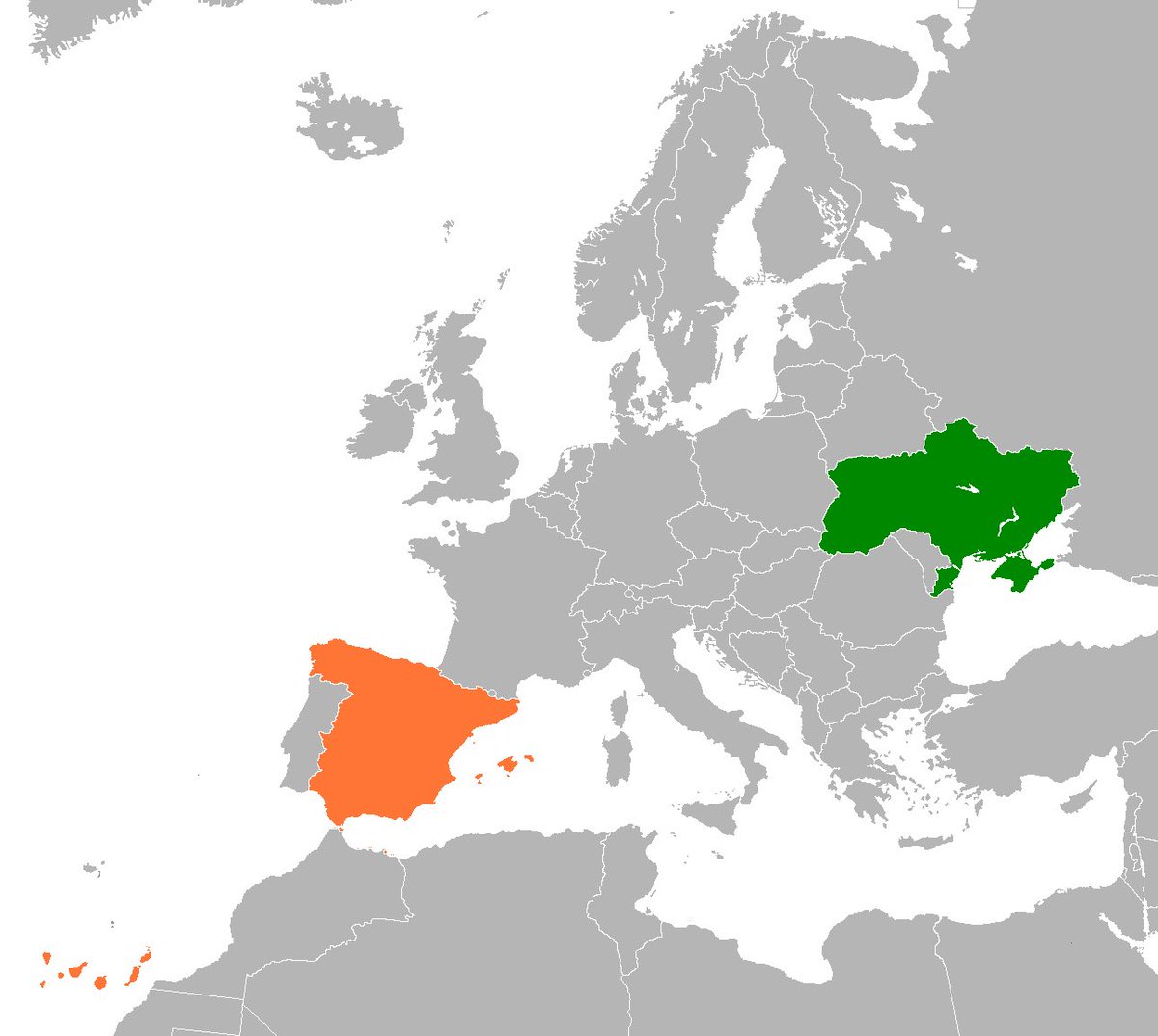
🇺🇦🇪🇺❗️After successful ballistic tests (interceptor) FP-7, Fire Point co-owner Shtilerman called on Europe to accelerate the implementation of the Freyja project
🔹One interception of a ballistic missile by the Patriot system costs at least $6 million. Stillerman sets a target goal of investing less than $1 million, and ideally up to $500 thousand. A launcher for four missiles, according to the developer, will cost about $150 thousand.
Any buyer, any country that purchases it, will be sure that neither the manufacturer nor the country-seller will ever be able to disable this system, - Shtillerman emphasized the advantages of the system.
🇦🇲 Pashinyan promises compensation for farmers hit by Russia’s new import ban
Starting June 2, Russia banned imports of Armenian apricots, peaches, nectarines, plums, cherries, sour cherries, and grapes.
Armenian Prime Minister Nikol Pashinyan said farmers who can no longer sell their produce on the Russian market will receive state compensation.
🇦🇲 Pashinyan promises compensation for farmers hit by Russia’s new import ban
Starting June 2, Russia banned imports of Armenian apricots, peaches, nectarines, plums, cherries, sour cherries, and grapes.
Armenian Prime Minister Nikol Pashinyan said farmers who can no longer sell their produce on the Russian market will receive state compensation.
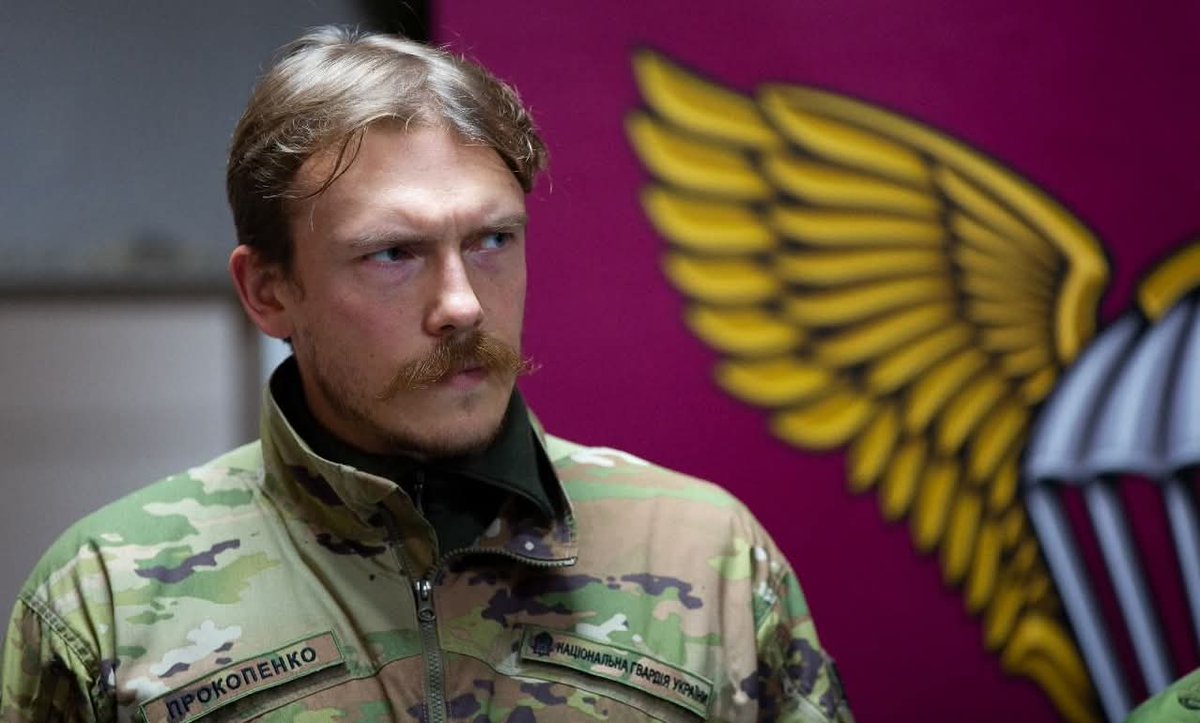
Brigadier General Denys “Redis” Prokopenko, commander of the 1st Corps of the National Guard of Ukraine “Azov,” has published a new essay explaining why many Western analysts in 2022 overestimated the Russian army, how the Ukrainian military differs from Russia’s, and why Russia will ultimately lose.
Here are the key points condensed:
• According to him, many analysts focused almost entirely on Russia’s numbers — equipment, manpower, and ammunition — while ignoring decisive intangible factors: command culture, morale, social cohesion, and the ability to adapt.
• “Redis” warns that this analytical blindness still partly exists today. Many in the West continue to see the war purely as a war of attrition where victory is determined only by resources. He calls this a dangerous misconception.
• The general contrasts two military models — the Ukrainian and the Russian. Russia’s system relies on a rigid Soviet-style hierarchy where officers are afraid to deviate from orders even when an operation is clearly failing. Such a structure leads to operational paralysis on the modern battlefield.
• One of the clearest signs of this systemic weakness is the chronic underdevelopment of junior leadership in the Russian military and the madness of senior officers willing to sacrifice enormous numbers of soldiers simply to please higher command.
• “Redis” stresses this point deliberately. He writes openly that they are fighting Russia directly, they understand exactly how Russia wages war, and that is precisely why they know Russia will lose — which is literally the title of his essay.
• In contrast, the Ukrainian military is built around a command philosophy based on decentralization and empowered initiative. This model reflects a modern interpretation of the German concept of Auftragstaktik (Mission Command), designed for warfare on a dynamic, nonlinear battlefield.
• A vivid example of this approach was the operation carried out by Ukrainian Defense Forces near Dobropillia in the second half of 2025 — essentially a modern rethinking of mobile defense warfare.
• Ukrainian forces conducted large-scale search-and-strike operations, concentrated fire raids, and precise surgical counterattacks that resulted in the encirclement of Russian units and the capture of hundreds of enemy soldiers.
• In March, the 1st Corps of the NGU “Azov” marked its anniversary. In a very short time, a corps command structure and headquarters were formed from combat officers with years of frontline experience — many of whom fought back in 2014–2015 while serving as ordinary soldiers and sergeants.
• Most of them have passed through every level of command, taking responsibility both in staff and field positions, and understand war from the trenches upward.
• The general also highlights the creation of entirely new units within the corps, including the 41st Unmanned Systems Regiment “Pilum,” the 14th Assault Regiment, support forces regiments, and others.
• The development of a deep reconnaissance-and-strike network now allows the corps to hit Russian equipment, warehouses, and logistics targets at distances of up to 250 kilometers.
• “Redis” writes that Western partners have begun learning from Ukraine and are now actively adopting Ukrainian battlefield experience. At the same time, the battle for Donbas is still raging, and the general emphasizes that they will continue striking the enemy and fighting for the return of their prisoners.
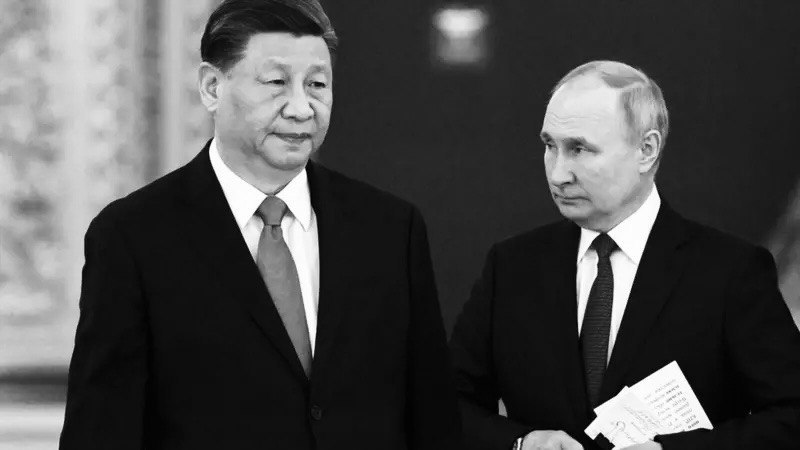
Putin has been summoned to China.
(Short summary of this long-read in first comment, if you're pressed for time)
Putin is heading to Beijing, which is positioning itself as the center of power.
Formally, they will discuss “strategic partnership,” stability, and multipolarity. In reality, it’s about coordinating the authoritarian bloc that is gradually building an alternative system of power, trade, and security outside of American control.
It is telling that the visits of Iranian Foreign Minister Abbas Araghchi and Putin effectively frame Donald Trump’s visit to Beijing. This looks like a demonstrative signal to Washington: China is negotiating with the United States while simultaneously coordinating positions with Moscow and Tehran.
Beijing is behaving like the center of its own geopolitical system.
These talks will take place under conditions of a new asymmetry. Russia has lost its position as a relatively autonomous geopolitical pole and is sinking ever deeper into dependence on China. The Kremlin needs the Chinese market, technology, financial channels, components, logistics, and diplomatic cover. In return, China gets cheap resources, a politically and economically dependent Russia, and a permanent war in Europe that exhausts both Russia and the West while distracting the United States from the Indo-Pacific region.
One of the main outcomes of the negotiations could be further progress on Power of Siberia 2. For Moscow, this is a matter of economic survival after losing the European gas market. For China, it is a possible element in preparing for a major confrontation with the United States. Beijing wants to reduce its dependence on sea routes that could be blocked in the event of a crisis around Taiwan. Russian pipeline gas gives China a land-based energy insurance policy. However, all the key terms - price, volumes, timelines, control - will be decided by China.
At the same time, the parties will likely deepen financial and technological integration: settlements in yuan, sanctions evasion, dual-use supplies, and logistical and insurance schemes outside the Western system. This is no longer just about adapting to sanctions, but about gradually building an alternative economic infrastructure that is less dependent on the dollar and American control over global finance.
In the broader architecture of this coalition, the roles are distributed quite clearly. Russia exhausts Europe through a protracted war and constant escalation. Iran destabilizes the Middle East, creates risks for the Strait of Hormuz, and supplies China with cheap sanctioned oil. North Korea maintains tension in Asia, providing Russia with ammunition, missiles, and personnel in exchange for money, technology, and combat experience. China, while formally remaining a “stabilizer,” gains strategic space for its own strengthening.
This was the Yakovlev family.
Now, only the mother remains.
In 2023, Russia took her husband—Yevgeny Yakovlev, call sign “Ryzhyi.”
He was a cook, but after the full-scale invasion, he volunteered to defend his children and his country. He was killed in the Luhansk region while carrying out a combat mission.
Their mother was left with two daughters.
Lyubava, 12, attended Kyiv Lyceum No. 323.
Vira, 17, attended the College of Arts and Design.
On May 14, 2026, a rocket struck a high-rise building in the Darnytskyi district of Kyiv.
Lyubava and Vira lived in that building.
Russia killed them too.
First—their father.
Then—their daughters.
May Lyubava, Vira, and Yevgeny rest in peace.
May their mother find the strength to endure what no one should ever have to endure.
💔🇺🇦
Remember that 19 Yazidi girls were burned alive in iron cages by ISIS for refusing to convert to Islam and become sex slaves.
ISIS paraded them through the streets of Mosul, then burned them in front of hundreds of people.
Not a single Muslim or Palestinian activist protested for the Yazidis!
📸 Exactly four years ago today — May 16, 2022.
This iconic photo from the depths of Azovstal was taken by Dmytro Kozatskyi (“Orest”).
He wrote:
“I posted it the moment we learned we would surrender. That beam of light… that was my hope that everyone would survive.”
Four years later, we still carry that light.
We remember every defender. We honour their courage.
And we will not stop demanding it: bring our Mariupol heroes home from russian captivity.
#FreeAzovstalDefenders #FreeTheUkrainianPOWs
🧐💪He killed 542 men in 100 days without ever looking through a scope.
Then he disappeared back into an ordinary life — so ordinary that the world nearly forgot he had ever existed.
Simo Häyhä was small in stature — five foot three — stocky and quiet. His hands were calloused from farm tools, not polished by ceremonial sabers. In the rural southeast of Finland, near the village of Rautjärvi, he was known as a dependable neighbor. He hunted. He farmed. He kept to himself.
Nothing about him suggested legend.
Then came November 30, 1939.
The Soviet Union invaded Finland, beginning what would later be known as the Winter War. Moscow expected a swift campaign. The Red Army brought roughly half a million soldiers, along with tanks, aircraft, and artillery. They outnumbered Finnish forces by nearly three to one. On paper, it looked less like a war and more like an inevitability.
But snow does not follow paper calculations.
That winter was merciless. Temperatures dropped to minus 40 degrees. Engines froze. Metal stuck to bare skin. Forests swallowed sound. The Finns knew the terrain the way farmers know their fields and hunters know animal tracks.
Simo Häyhä was one of those men.
He had grown up skiing through those forests, reading wind and shadow, standing motionless until game appeared. When he joined the Finnish Army, he did not transform into something new. He simply applied the skills he had built over years to a different purpose.
Dressed head to toe in white, he vanished into the snowfields. He packed snow in front of his rifle barrel so the muzzle blast would not kick up powder and reveal his position. He held snow in his mouth to cool his breath, reducing the visible vapor that could give him away in the cold air. He lay still for hours, sometimes entire days, letting the forest settle around him.
He did not stalk.
He waited.
What made him especially dangerous was a choice most snipers would consider illogical.
He refused to use a telescopic sight.
While others relied on scopes, Häyhä used only iron sights — the simplest aiming system available. He believed a scope could reflect sunlight like a signal mirror. It required lifting the head slightly higher, increasing visibility. In extreme cold, lenses could fog or freeze. Iron sights were lower, sturdier, and more reliable.
He trusted his rifle and his eyes.
In fewer than 100 days of combat, he recorded more than 500 confirmed kills with his rifle. Some estimates place the number at 542. That figure does not include additional enemy soldiers he killed with a submachine gun in close combat.
Five hundred men. In forests locked in ice. In a war his country was not expected to survive.
The Soviets gave him a name: the White Death.
White Death.
Sniper teams were dispatched to hunt him. Entire units were tasked with finding one farmer in a white jacket. Artillery shelled forests where scouts believed he might be hiding. Officers warned soldiers against careless movement across open ground. The idea that one man could inflict such damage deeply unsettled them.
He was no longer just a sniper.
He became winter with a trigger.
On March 6, 1940, a Soviet explosive bullet — designed to maximize damage — struck him in the face. It shattered his jaw, tore through his cheek, and disfigured the left side of his face. Comrades found him unconscious, barely recognizable, and carried him from the battlefield, assuming he would not survive.
He fell into a coma.
Seven days later, he opened his eyes.
The day he regained consciousness was the day the war ended.
Despite overwhelming odds, Finland endured. The country lost territory but retained its independence. Häyhä, disfigured and permanently changed, survived the conflict that turned him into a myth.
Then he did something almost no one expected.
He went home.
No book deals. No speeches about heroism. No attempt to turn reputation into money. He returned to Rautjärvi, to fields and forests.
Mało już żyje ludzi, którzy to pamiętają.
80 lat temu cała Europa była gruzem, świeżymi grobami ponad 40 milionów ludzi i traumą wszystkich, którzy zdołali przeżyć.
Ledwie 5 lat po wojnie – pewien francuski minister wypowiedział kilka zdań, które brzmiały jak szaleństwo: że Francja i Niemcy powinny połączyć przemysł stalowy i węglowy. Żeby się nie dało już zrobić czołgów bez zgody sąsiada.
Było to 9 maja 1950 roku. Z tego desperackiego – i jednocześnie wizjonerskiego – pomysłu wyrosło coś, czego nikt nie przewidział. Unia Europejska.
Wytykanie jej niedoskonałości i błędów przy jednoczesnym niedostrzeganiu tego, że dzięki niej Polska jest najsilniejsza i najbogatsza w całej swojej historii – to nieuczciwa manipulacja. Żadne państwo nie jest doskonałe – tym bardziej 27 państw godzących swoje interesy.
Antyeuropejska dezinformacja jest niestety często inspirowana i finansowana przez wielkich przeciwników UE: Chiny, Rosję, teraz też USA i oligarchów internetowych. Jest na to mnóstwo dowodów.
Wszyscy oni wolą rozgrywać 27 rywalizujących ze sobą albo nawet pokłóconych państw, niż konkurować z jedną silną UE.
Pamiętajmy o tym, zanim zalajkujemy albo podamy dalej kolejny fejk o UE.
#DzieńEuropy #EuropeDay #9maja
Na zdjęciu odbudowa Warszawy ze zniszczeń wojennych, 1948 (PAP)
Pilots of the Azov brigade are patrolling Mariupol with a reconnaissance and strike complex.
Russia's military objects are carefully studied. A "sanitary zone" for the Russian logistics is in progress.
📹: Azov
Pilots of the Azov brigade are patrolling Mariupol with a reconnaissance and strike complex.
Russia's military objects are carefully studied. A "sanitary zone" for the Russian logistics is in progress.
📹: Azov
For 177 days, a Ukrainian soldier lay trapped in a factory ruin, surrounded by Russians, with no way out.
Roman Mongold, 38, survived on drone-dropped food — and weekly voice messages from his wife that kept him alive, WP. 1/
Devoir de mémoire
Sur cette photographie célèbre, August Landmesser refuse de faire le salut nazi le 13 juin 1936.
Cet ouvrier allemand de 26 ans est marié à Irma Eckler, une femme de confession juive.
Elle sera assassinée 6 ans plus tard dans un camp de concentration.
Quant à August, après plusieurs années de prison, il est finalement envoyé de force dans un bataillon disciplinaire de l'armée et trouve la mort lors de combats en Croatie en octobre 1944.
A nous le souvenir, à eux l'immortalité !
RT @JTomachevs28880
The russian war destroys generations of Ukrainians. 4 yrs ago, the occupiers missile strike killed baby Kira, her mom Valeria, and granny Lyudmyla in their home in Odesa. Kira's dad Yuriy joined the army and fell in action in Nov 2023. I will never forget the Hlodan family.
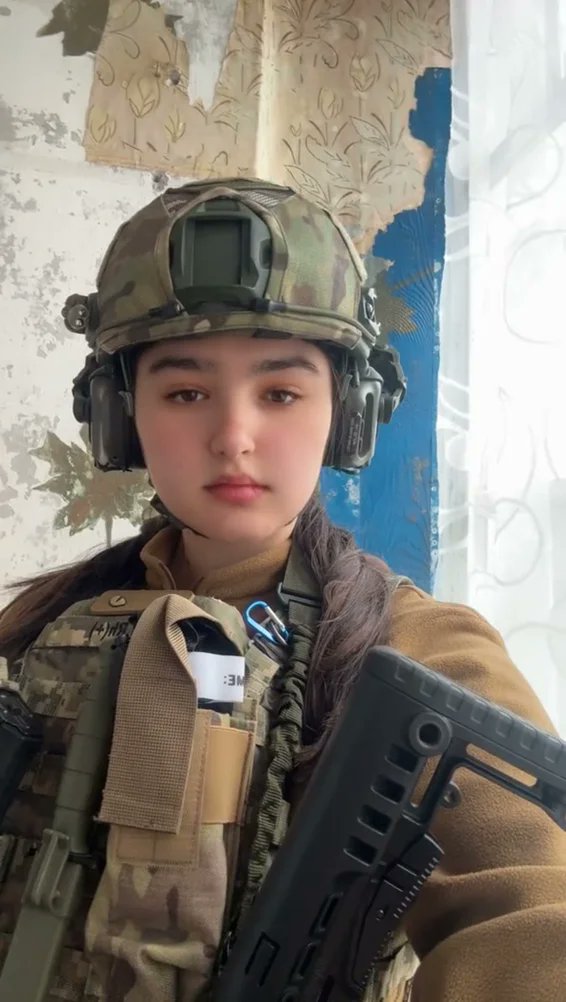
"Give me a pitchfork, give me a rake, I want to destroy the occupiers!" — Katya Lukomska shouted on February 24, 2022, hiding in a pine forest from Russian helicopters.
She was 19. She had signed her contract one month before the full-scale invasion, writes Hromadske. 1/
🇭🇺🇪🇺 Hungary votes today and Europe is watching.
After 16 years in power, Viktor Orbán faces his most serious challenge yet from Péter Magyar and his Tisza party. The outcome won't just reshape Hungary. It could shift the entire dynamic of EU decision-making.
The Europeans' guide to the key facts, scenarios, and what’s at stake 🧵👇