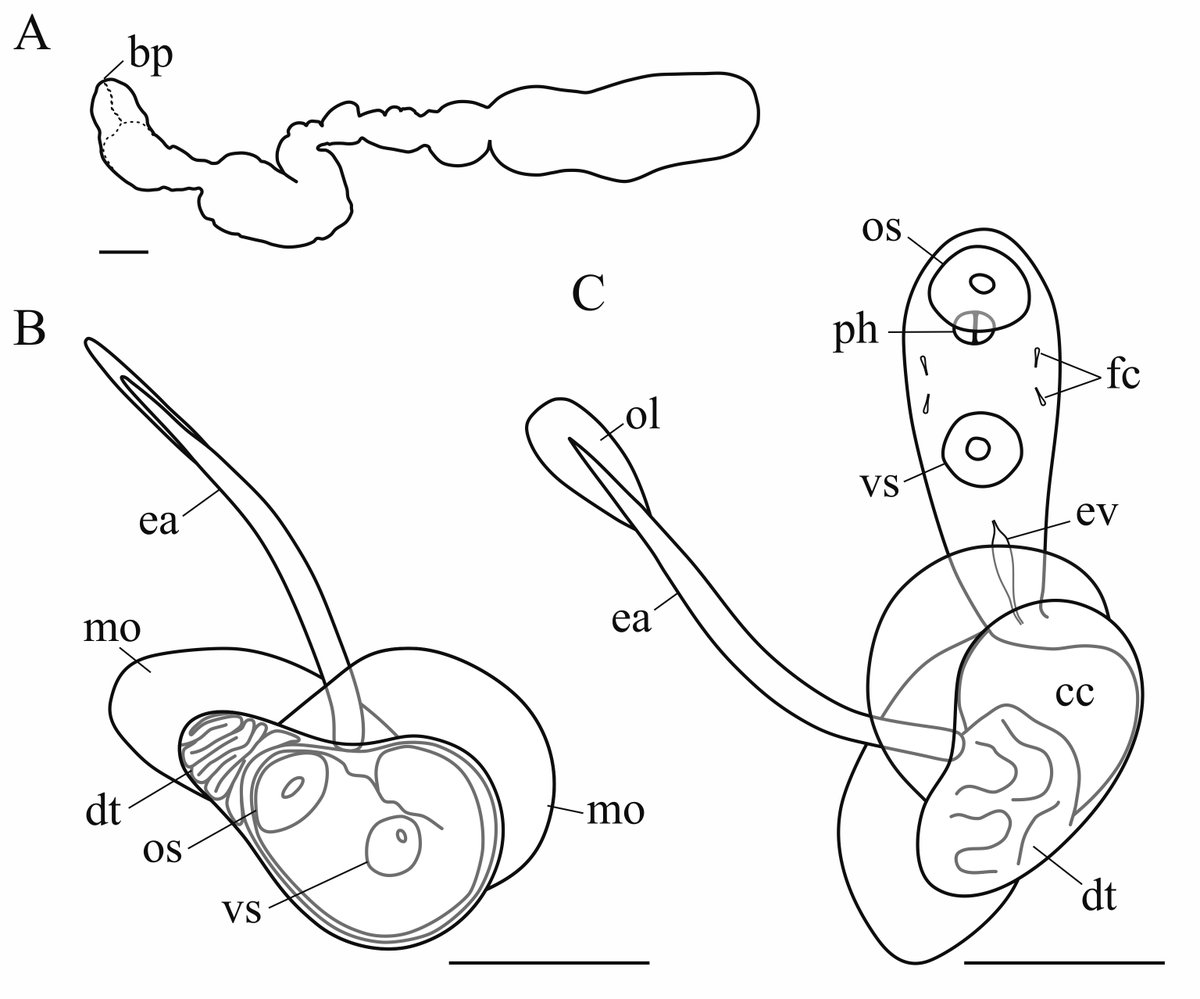
Digeneans of the family Brachycladiidae use marine mammals as the definitive hosts. The first life cycle for this group was elucidated recently by George Kremnev, my friend and PhD student.
https://t.co/7ozNt2ywHb
#WormWednesday#Flatworm#Parasite#Digenea
The infection of the next host (plankton copepod) is provided by a delivery tube: when copepod bites tail capsule, the tube is everted and cercarial body breaks into the host haemocoel through it.
#flatworm#parasite#plankton
My new life-cycle article is being published on #WormWednesday! @myope_ann is in business as well:)
https://t.co/TMlukTrbvO
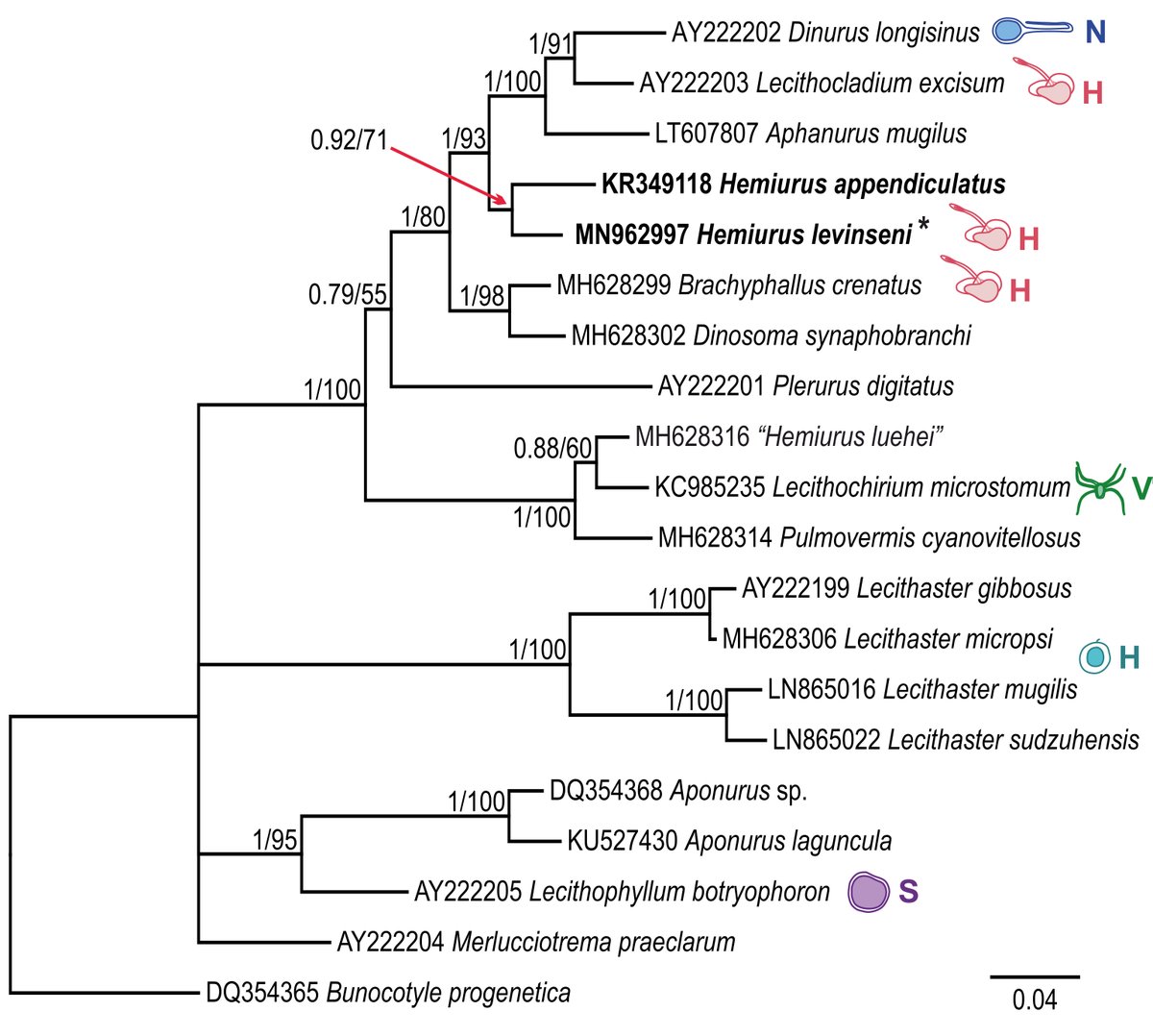
Here we described cercariae and sporocysts of marine digenean Hemiurus levinseni, and ran molecular phylogenetic analysis for this species.
Hemiurid cercariae are of cystophorous type, and thus demonstrate peculiar transmission strategy. Their tail forms a capsule within which the body is hidden – this provides the longevity. Cercariae development is here on pic
#WormWednesday Exfoliated tube of a Cretaceous serpulid worm tube exposing Fe-filled cavities created around the zooids and stolons of the symbiotic hydroid Protulophila. Gault Clay.
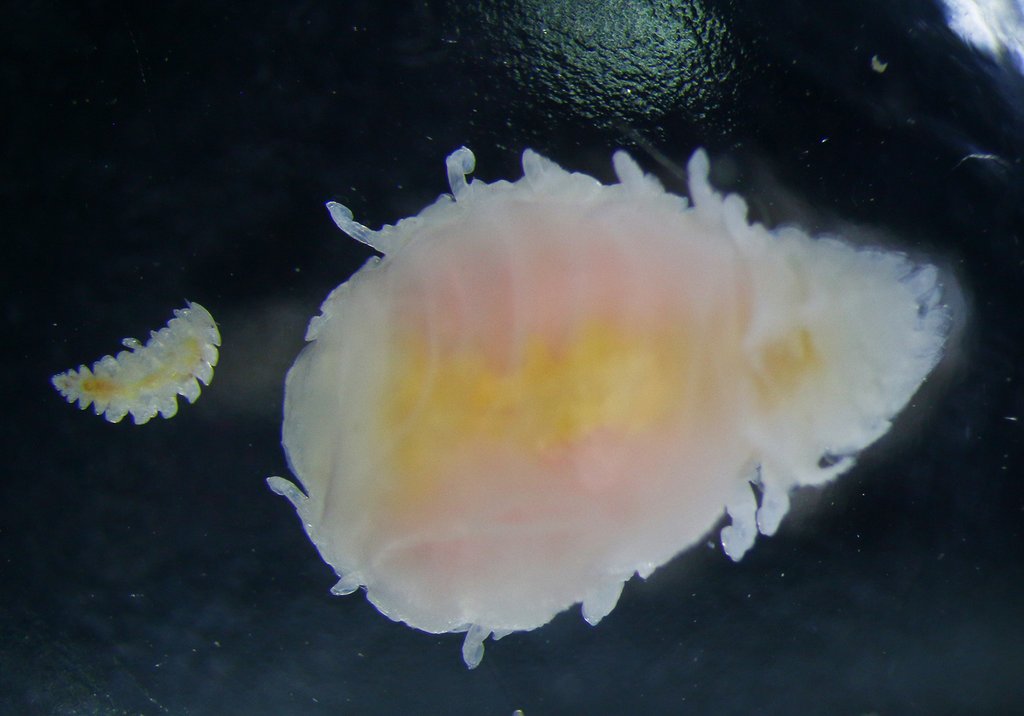
Bopyridae are isopod crustaceans with parasitize decapods. In the White Sea they are often found on the hermit crab Pagurus pubescens. Female and male live in the host's branchial cavity - note the inflated carapace on the first picture.
Male and female are on the second picture. This year I caught and fix adult bopyrids and microniscus larvae - hope to make some utrastructural and life cycle research on them.
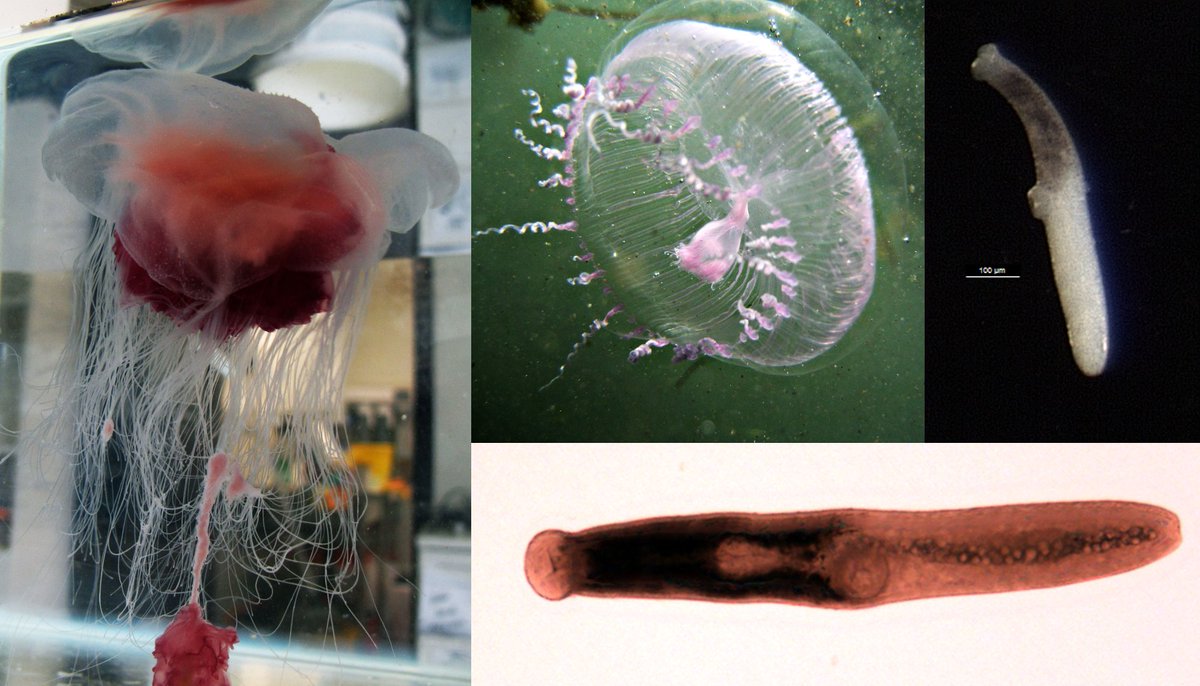
Jellyfish are eaten by a range of marine animals, and some parasites make use of that to complete their life-cycles.
This study looked at the role jellyfishes play in the life-cycle of lepocreadiid flukes.
#WormWednesday
(photos by Joanna Browne)
https://t.co/QsppPdgDJ1
While conducting students' summer practice at the White Sea (or just collecting digenean hosts for research), i often encounter various beautiful invertebrates like this syllid polychaete.
#WhiteSea#Polychaeta#Syllidae
Fellodistomids are in the focus of our research group (Anna Gonchar is also here as @myope_ann :); our new data on them were published recently in the @JHelminthology (https://t.co/pkUMzfjFiE) and summarized in bachelor's thesis of Sasha Uryadova.
For #WormWednesday here are two maritae of Fellodistomum fellis, one of the prettiest digeneans in the White Sea. They have an enormous red ventral sucker, inhabit wolffish gall bladder and feed on blood. Speed x9.
#WhireSea#Parasire#digenea#sealife
Apart from the passion for marine biodiversity in whole my primal interest is in Digenea - parasitic flatworms. Here we have cercariae larvae of Neophasis oculata, the species me and my team deeply work with at the White Sea now. #whitesea#digenea#Parasite#sealife