Two former @MaryPeltola staffers allege she used the "n-word" multiple times in 2024. One instance was in reference to a Black veteran who organized a dinner for Black soldiers who helped build the Alcan. The other was about rap music her son produced. https://t.co/I75meSkxGq
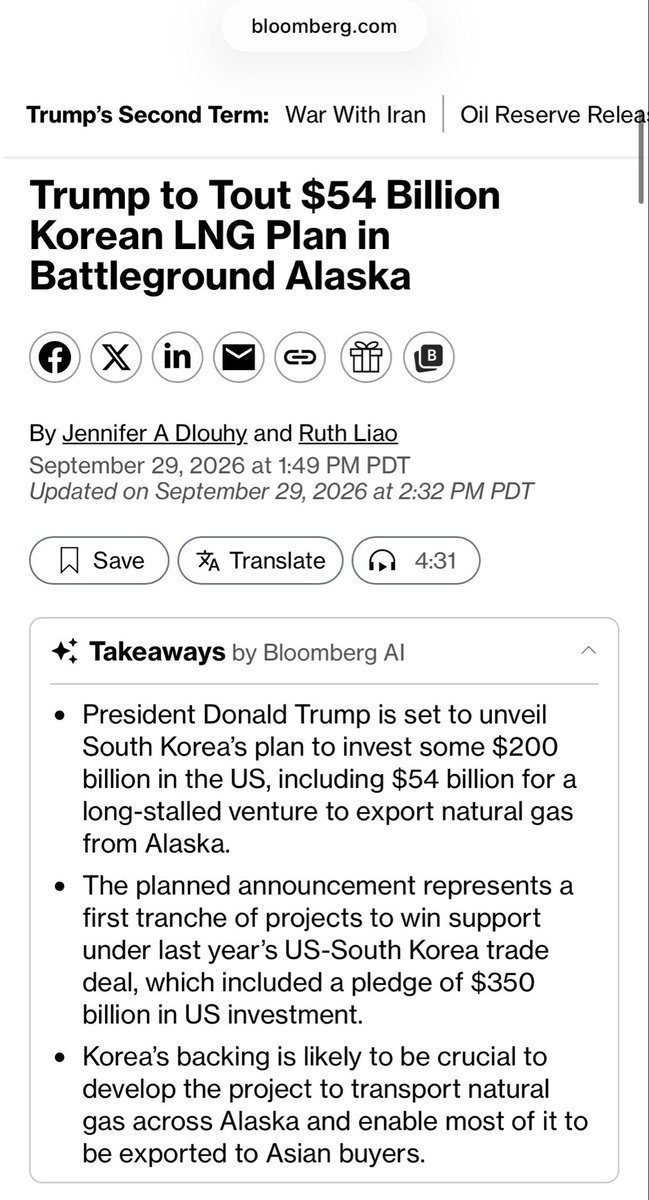
@adndotcom It's not like Alaska is sitting on over 100Trillion Cubic Feet of its own natural gas. Seems like something that should be invested in rather than paying exorbitant prices to have it shipped here.
Unlocking the Arctic: Inside the Alaska LNG Megaproject
Driven by booming growth across the Asia-Pacific, global demand for liquefied natural gas (LNG) is outpacing supply, leaving an estimated shortfall of ~180 million tons per year. Meanwhile, sitting dormant beneath Alaska's North Slope are 35 trillion cubic feet of stranded, conventional natural gas.
Because there is currently no transport infrastructure, producers are forced to reinject 8–9 billion cubic feet of gas back into the ground every single day simply to sustain reservoir pressure.
The Alaska LNG Project is designed to bridge this divide through an integrated, cross-state energy corridor:
Gas Treatment Plant (Prudhoe Bay): Serves as the intake valve for the entire system, pulling in 3.5 billion cubic feet of raw gas daily across three parallel processing trains. In a closed loop, corrosive carbon dioxide and hydrogen sulfide are stripped out and reinjected underground into oil reservoirs, while clean gas is pressurized to 2,075 psi.
800-Mile Pipeline: A 42-inch steel artery running from Prudhoe Bay to the southern coast, crossing permafrost, fault lines, and a 28.4-mile underwater trench beneath Cook Inlet. By including off-takes along the route, Phase 1 provides affordable baseline gas directly to Alaskan communities currently dependent on expensive diesel or coal.
Nikiski Liquefaction Terminal (Kenai Peninsula): The Phase 2 export hub processes 2.7 billion cubic feet of gas per day. Using a propane pre-cooled mixed refrigerant process, the gas is chilled to -260°F into cryogenic liquid, stored in two 240,000 m³ tanks, and loaded onto international carrier ships at 12,500 m³ per hour.
Logistical Feat: Building all three components simultaneously requires mobilizing over 3 million tons of materials, involving 225,000 truckloads, 40,000 railcar deliveries, summer marine sea-lifts of massive pre-built plant modules, and a workforce of up to 12,000 people across four key Alaskan ports.
Backed by an approved 33,700-page environmental impact statement, Alaska LNG aims to stabilize local power grids at home while supplying a critical energy lifeline to global markets.
Misdirection in Alaska: How Outside Money Frames Ballot Measures
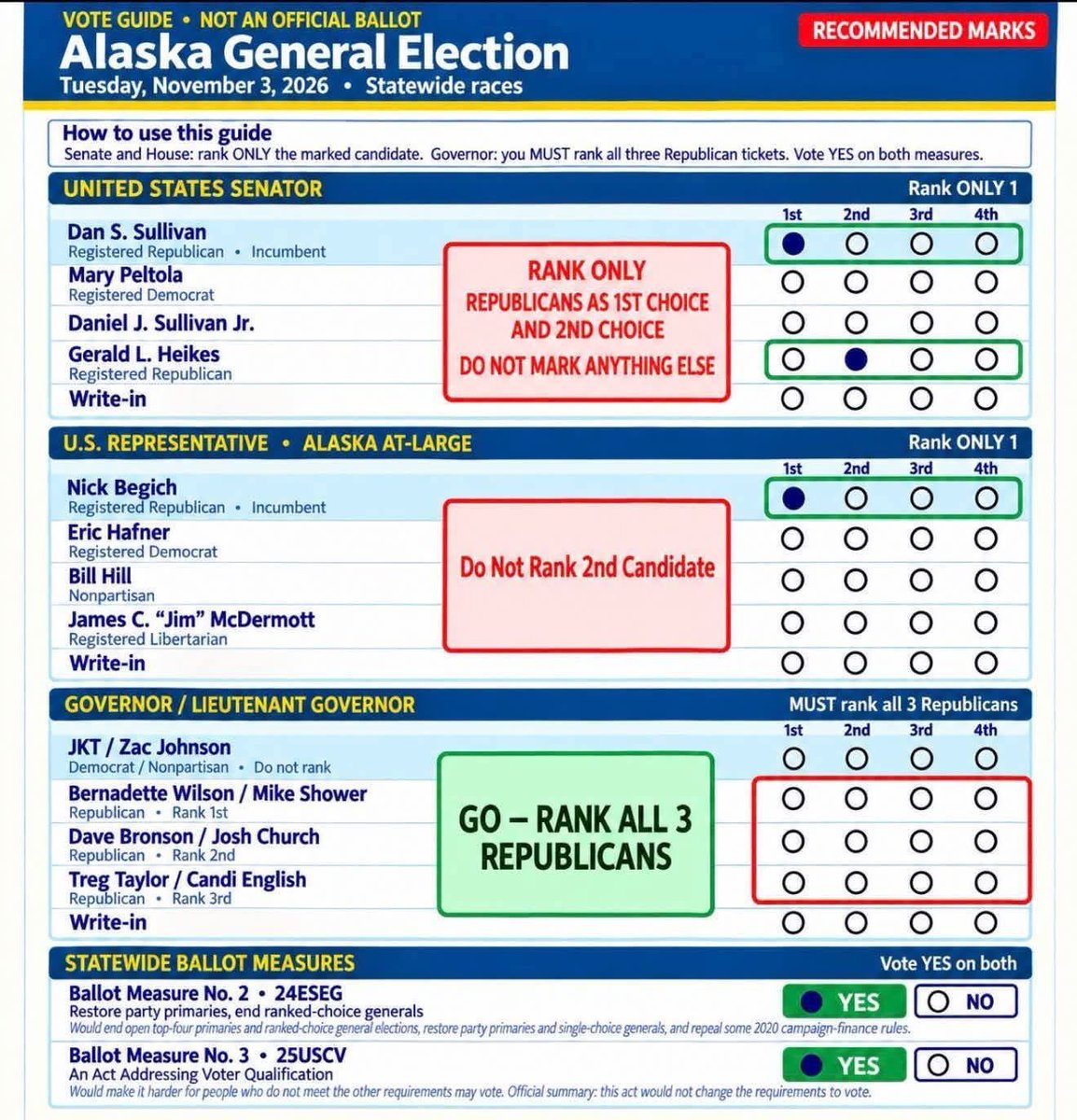
The Misleading Mailer: Recent campaign mailers featuring Elon Musk warn Alaskans that billionaires building AI data centers will spike energy costs by 30% and urge a "No" vote on Ballot Measure 2.
The Actual Ballot Measure: The measure has nothing to do with data centers, power grids, or AI; it focuses entirely on whether to repeal Alaska's ranked-choice voting system and alter election mechanics.
The Strategy of "Bundling": In 2020, ranked-choice voting was passed narrowly (50.6%) by packaging it alongside broadly popular "dark money" campaign finance disclosures. In response, defenders routinely cite the popular finance rules to protect the voting system.
Massive Spending Disparity: Grassroots efforts to repeal ranked-choice voting operate on small budgets (around $120,000–$150,000), while defense campaigns receive up to $15 million from outside groups.
A Reused Playbook: The campaign previously redirected voter focus to reproductive rights during a 2024 repeal attempt. For the 2026 election cycle, the defense strategy relies on emotionally charged themes, such as AI data centers and anti-dark money messaging, even though top donors backing the campaign are large out-of-state PACs based in Denver and Washington, D.C.
How Alaska’s Permanent Fund Dividend Changed Forever
The Original System: Prior to 2016, Alaska distributed oil wealth directly to residents through an untouchable mathematical formula.
The 2016 Crisis: Following a crash in global oil prices and a massive budget deficit, Governor Bill Walker used his line-item veto to cut dividend payouts in half.
The Legal Precedent: Residents sued, but the Alaska Supreme Court ruled that dividend payouts are "subject to appropriation" and must compete with state services for funding.
The New Reality: Lawmakers scrapped the old formula in favor of a fixed withdrawal limit, funding state agencies first and leaving whatever remains for citizen dividends.
Billions have since been redirected from resident payouts to sustain state government operations.
@adndotcom According to this, a family of four with two kids in childcare needs about $98K a year for just the basics.
Yet, the legislators continue to take the lion's share of the PFD away from residents year after year.
The Mechanics of Alaska’s $25 Billion Wealth Transfer
The Divergence: Between 2016 and 2025, the Alaska Permanent Fund balance grew toward $84 billion due to investment returns, while individual resident dividend payouts sharply plummeted.
Two Key Mechanisms:
Direct Shortfalls ($11.45B): Triggered by Governor Bill Walker's 2016 line-item veto and solidified by the 2017 Alaska Supreme Court ruling (Wielechowski v. State), which classified the dividend as a standard appropriation rather than a statutory guarantee.
Structural Transfers ($14B): Established in 2018 under Senate Bill 26 via the Percent of Market Value (POMV) rule, drawing up to 5% of the fund annually into the General Fund where dividends compete directly with state agency budgets.
Implicit Regressive Tax: Rather than enacting broad-based corporate, sales, or income taxes, the state effectively leveraged dividend cuts to balance budgets. Research indicates this functions as an implicit flat tax that raises poverty rates by 1% to 2%.
Disproportionate Rural & Generational Impact: In 2017, dividend cuts reduced household income by just 3% in affluent Juneau compared to over 10% in the rural Kusilvak Census Area. A child born in 2016 is projected to lose $42,577 in compounded dividend distributions by age 18.