Big if true!
“Venus Protocol left $500mm of customer funds vulnerable to hack while refusing to pay promised $1m bounty to security researcher who helped team save funds.”
As far as I understand, the attack is very similar to the Mango DAO exploit where the attacker amasses illiquid collateral, drives the price up to fake levels, and then deposits the collateral on the lending platform to withdraw all the TVL.
In this case the collateral was XVS, the Venus token. The exploiter had accumulated around $5m worth of the token on markets and was accumulating more to corner the market.
One sufficiently cornered, he would deposit it to Venus lending protocol, then use several million dollars in buys to drive up Binance price and other oracle prices, inflating the value of his collateral to a totally fake number (>$1b), and withdraw all the collateral from XVS.
The difference is Mango DAO used offsetting futures positions while the Venus exploit was purely spot-driven on a lending market.
Evidence below.
😳😳😳
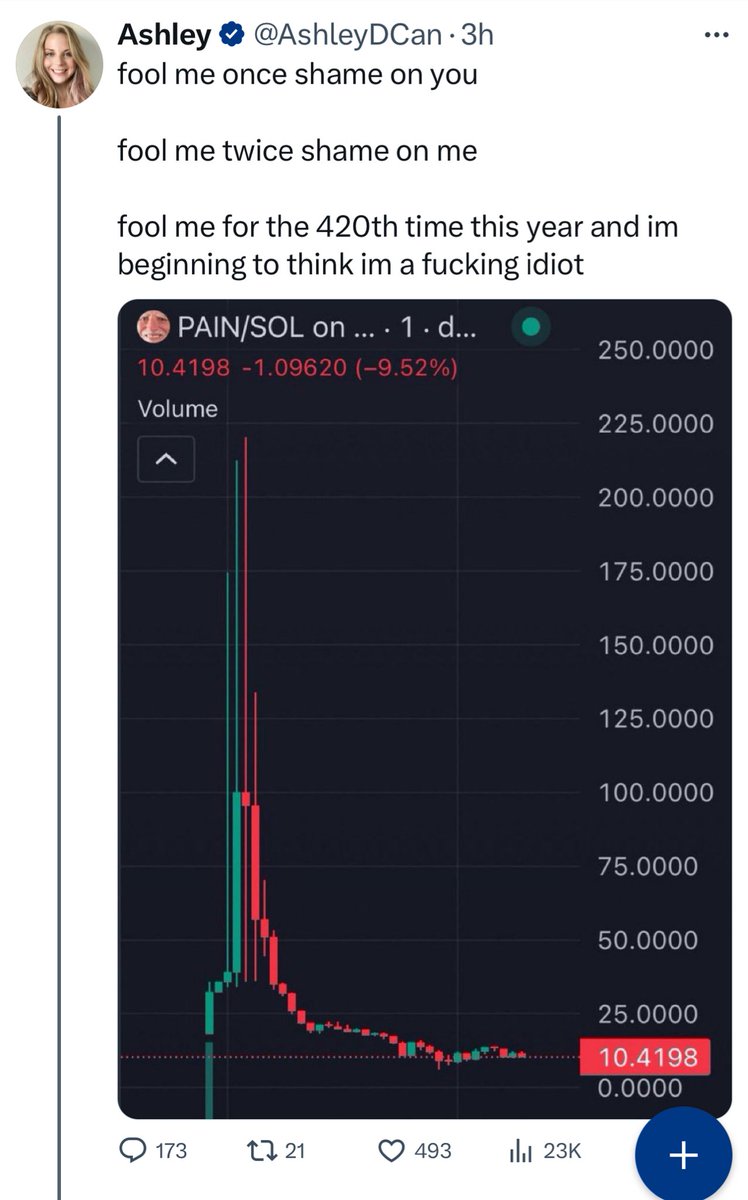
A handful of people dunking on this chart.
Just to put in as simple English as I can what happened.
When the token first launched and the Pain wallet started adding liquidity (basically buy and sell orders on chain), snipers started to instantly buy any token that was there.
They were so instantaneous that the vast majority of the market-maker liquidity didn’t have time to be put on chain.
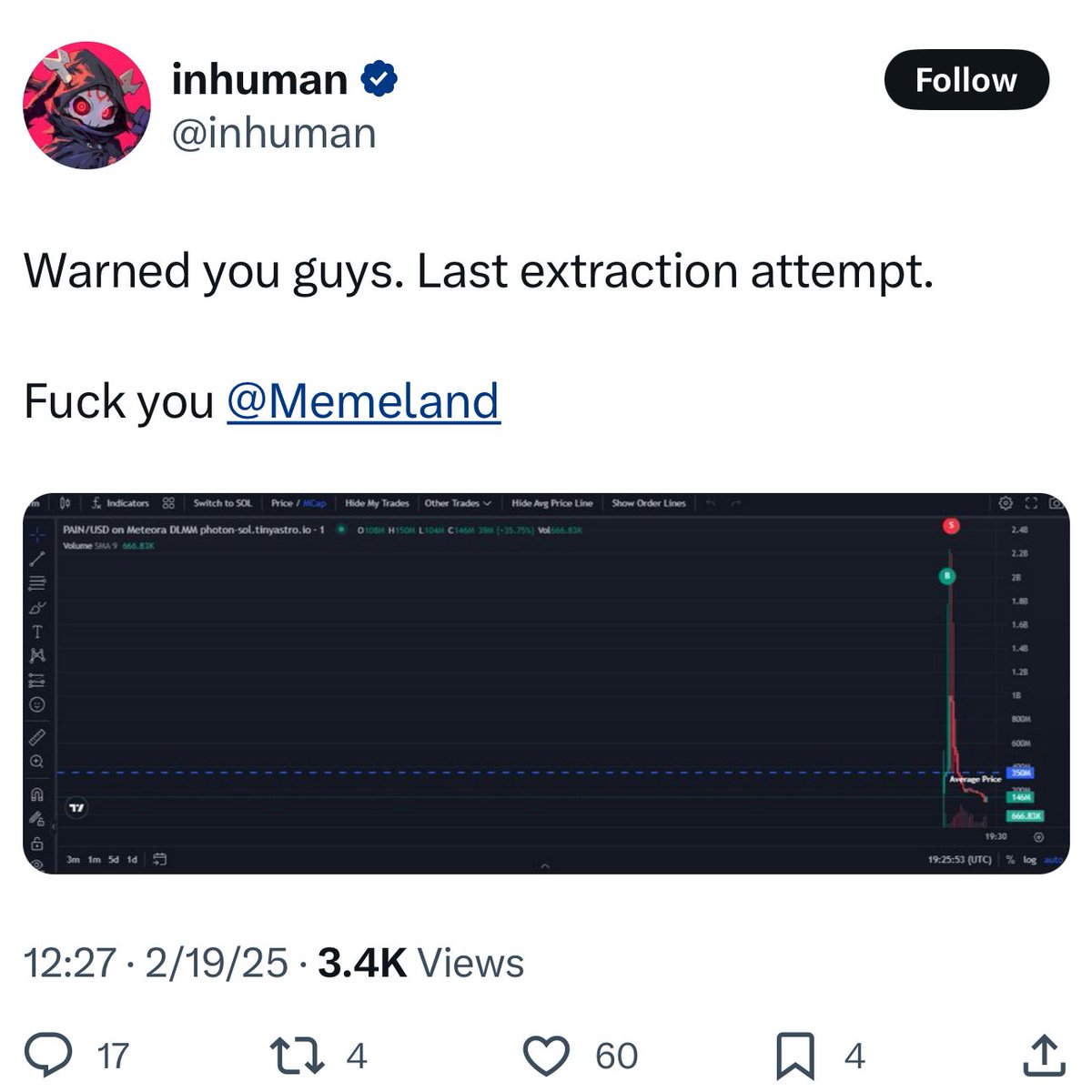
So the sniper bots basically had buy orders but nothing to buy. One bot listed their sniped token at a $2.2bn and others bought.
No $PAIN pre-sale buyers had even received their airdrop at this point.
As soon as the market-makers had time to get all buy/sell orders on-chain and as soon as everyone got their airdrop, the chart normalized.
A few sniper bots rekt. And the chart rekt.
But everyone who bought the pre-sale (basically all original participants who got into $PAIN) are up 4-5x on the port.
Harder to dunk on the reality.
Since guys on my team advised on the @pain deal I got a bit of insight into how these launches work.
First observation: snipers
1) Snipers were able to buy supply before the full LP was finished setting up on Meteora. The snipers spent $40k in fees fighting for first block access. This led to the chart going ballistic for the first 10 minutes. Was hard to avoid, despite working w the best in the biz at launches.
2) The snipers ended up having market orders that went out of control, sending the chart to $2bn. This was before anyone even received their airdrop.
3) The two casualties of it all were (a) the snipers who overpaid and lost a ton (buying from other snipers who were better) and (b) the chart (attached). Things settled to the $120mn range in about 15 minutes, once people started getting airdrops.
Second observation: fake Dexscreener page
4) A scammer set up a token with the name of the contract address as the token name. This made anyone who input the CA into dexscreener search get a fake token that ended up sucking up 6-figs of liquidity. There are so many scam tokens doing real volume. Awful to see.
5) To avoid this, you need to input the CA directly into the URL as opposed to searching anything on DexScreener. Only way. The scams spoof volume too to make them seem real.
Third observation: the team
6) The guys who worked w Harold recognize the environment we're in and wanted to make things as smooth as possible for the pre-salers and the community. All unreturned money from the pre-sale went into providing liquidity. Nice to see pre-salers have a W right now.
Just wanted to put this out as a warning about the CA scam and a bit of insight that I got to see about snipers and how these launches work.
@XterioGames It's crazy how bad this distribution is. Scammed all of NFT holders giving like $13 (380 $xter) for ~0.8 $eth losses. Bybit launchpad price is $0.04 per token. First scammers of 2025 @BybitRussia@binance
Let’s do some simple math on $USUAL! 🧮
Estimating @usualmoney's revenue is pretty straightforward. With a current TVL of around $1.8B and a conservative assumption of a 4% yield on U.S. short-term treasuries, we’re looking at an annual revenue of $72M. Out of that, 90% flows into the ecosystem, leaving a net revenue of about $65M. 💰
Now, applying stock valuation methods to token value isn’t easy, but honestly, following the traditional equity approach feels very conservative to me. Even calculating inversely with an ROI of 5% is an extremely cautious assumption. So, what’s the estimated market cap? Based on these conservative numbers, it would be $65M / 5% = $1.3B. The current market cap? Roughly $520M. That means it would need to climb 150% just to align with this cautious estimate. Using this as a baseline, the fair value of $USUAL would be around (at least) $2.7 🚀
Of course, there are no guarantees in crypto—or in traditional markets for that matter. But when it comes to real revenue generation, the narrative becomes a lot more compelling. Let’s see if my prediction plays out!
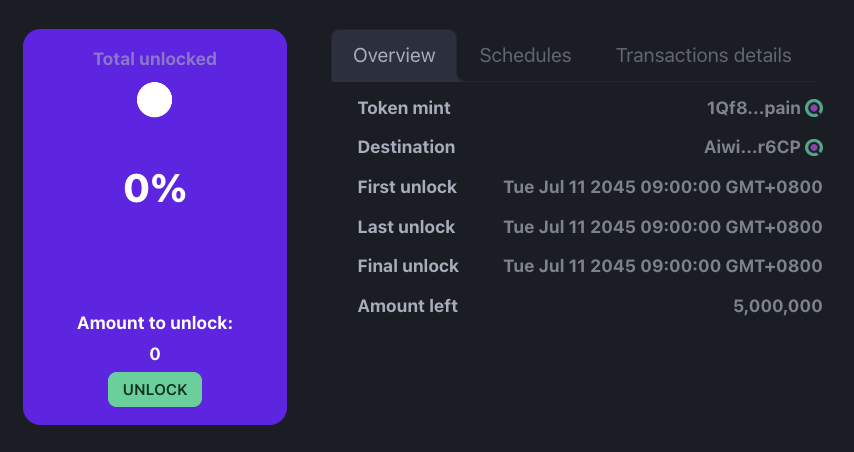
@PrimordialAA rn a lot of ppl in chats consider this as a 25% circulating making them extremely bearish on price and refrain from buying. You could do better at explaining it