Why Totem is Inventing a New Format of Physical Music
(3 minute read)
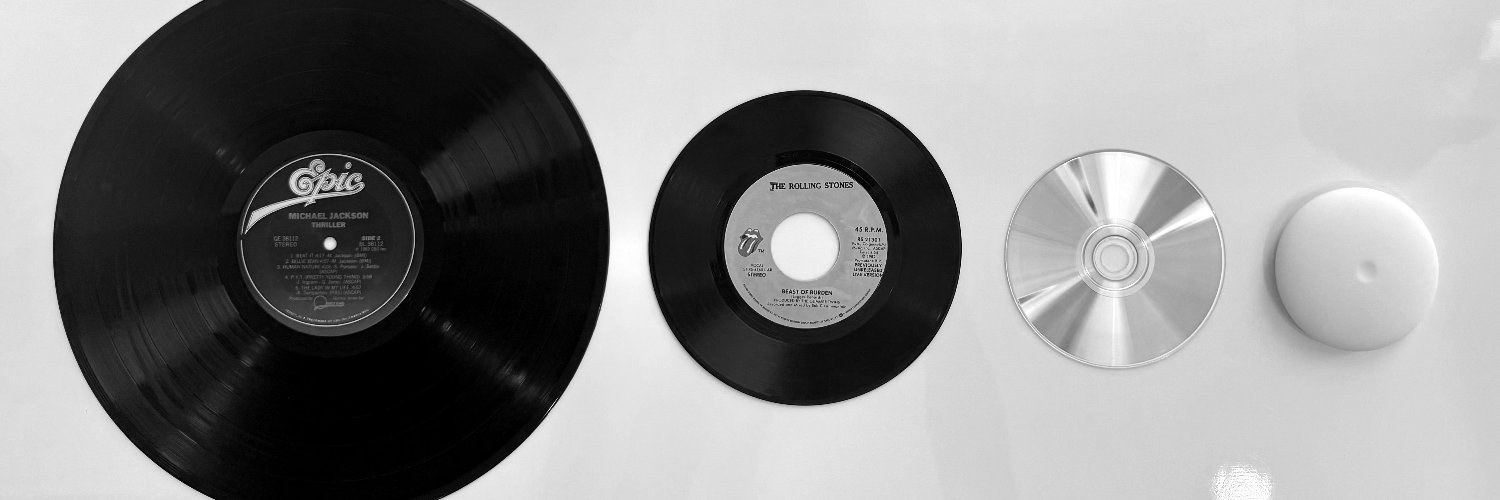
For two years, I have been developing a new music product and format of physical music. I believe a new format is needed for the survival of true, phenomenal artists.
The world needs phenomenal artists. Artists are capable of connecting and inspiring millions of people globally. They can spread stories and messages in ways that politicians, media, and institutions can not. Artists and their albums are already being systematically devalued in the current, prevalent music system. Collectively, we must chart a new path.
We launched this month with Jean Dawson's incredible new album, Glimmer of God. Within five years, we aim to standardize the product across the industry. Within ten years, we expect the format to contribute billions of dollars annually to the music industry.
The article below explores why we believe this product is so important. More information on our first release to be shared soon.
@tjcages@junmobius
Generate an image of a Space X rocket and ask your audience "in as much detail as possible what makes that image inferior" to Elon's.
Every brushstroke on that Monet exists as a trace of his life. One painting hangs in a museum and the other image confuses idiots on here...
i just generated an image in the style of a Monet painting using AI
please describe, in as much detail as possible, what makes this inferior to a real Monet painting
@SHL0MS You're missing the point... I understand the dumb stunt. But by asking how a recreation (a scan) is "inferior to a real Monet" is misleading. It's not the real Monet, just the same way a picture of a rocket or a 3D model of a rocket isn't a real rocket. Get serious.
@SHL0MS Generate an image of a Space X rocket and ask your audience "in as much detail as possible what makes that image inferior" to Elon's.
Every brushstroke on that Monet exists as a trace of his life. One painting hangs in a museum and the other image confuses idiots on here...
It’s important to not conflate terms here, music is simply the combination of sounds to express an idea or emotion. The article and (I think) this thread are talking about albums - a collection of music (recorded songs).
Spotify (and now AI platforms) intentionally fragmented albums because making playlists the product shifted the power dynamic labels had over partners. Now artists and albums are being undermined on an individual level by AI in a similar style.
Labels relied too long on someone that doesn’t sell their product to sell their product and predictably that someone is now actively devaluing it.
The future of the album needs to separate from streaming since (as software) it’s quickly upending and eating itself.
Explore, Manipulate, and Rethink Music Videos:
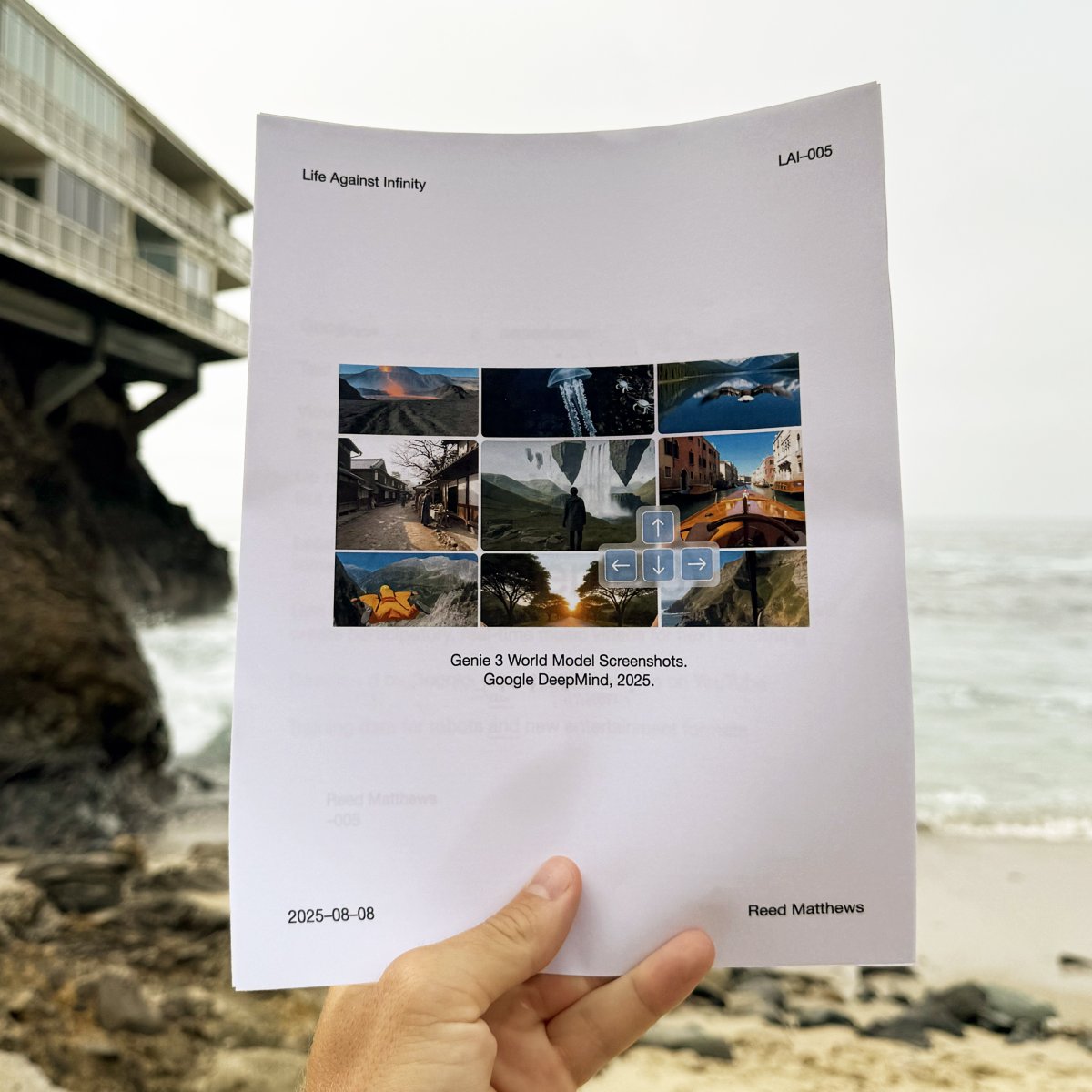
Google DeepMind just released Genie 3
Text prompt → playable, photorealistic, 3D environment
Viewers can explore and manipulate persistent, synthetic worlds in real time at 720p, 24 fps, for multi-minute sessions
Up next, multi-hour sessions to train robots and reinvent gaming. But now, it’s advanced enough to start rethinking music videos
Legacy artists with strong visual concept albums will soon remaster their music video catalogs into explorable worlds
Gen Alpha artists raised inside Roblox’s player-built-universes will create participatory, real-time music videos for next to nothing
Developed by Google, expect future versions on YouTube
Training data for robots and new entertainment formats
#musictech #musicbusiness #genie3
For the first time ever, a label just signed an AI music designer
ImOliver “[makes] music using AI, no instruments, no studio, just me, my lyrics, and some very clever machines”
By all formal definitions, ImOliver qualifies as an artist. So does every producer, songwriter, and studio musician
Why this title? Why now?
Labels sign artists to gain ownership of master recordings. That’s primarily how their assets and power are accrued
While AI music designers can generate songs at a prolific rate, are they actually the best option for labels to maximize profits when evaluated on the same timeline as a traditional artist?
After all, AI music designers still have a human bottleneck
On the leading AI music platform, users (not artists) can create personas from any public song with one click. Personas are “the soul of the sound” (vocals, energy, etc.)
Personas can be used to remix to any existing song or create new songs damn near immediately and damn near freely
Personas are the true prophecy, synthetic performing artists
For labels looking to maximize profits, a synthetic performing artist offers much more opportunity than an AI music designer
Similar to Grimes’s https://t.co/5PN5d7cINF, a synthetic performing artist could earn ownership in all songs generated with their “soul”
The potential catalog of a single synthetic performing artist is magnitudes larger than thousands of AI music designers
Technically, when everyone’s an artist “built for artists” could actually mean “built for shareholders”
It comes down to intention
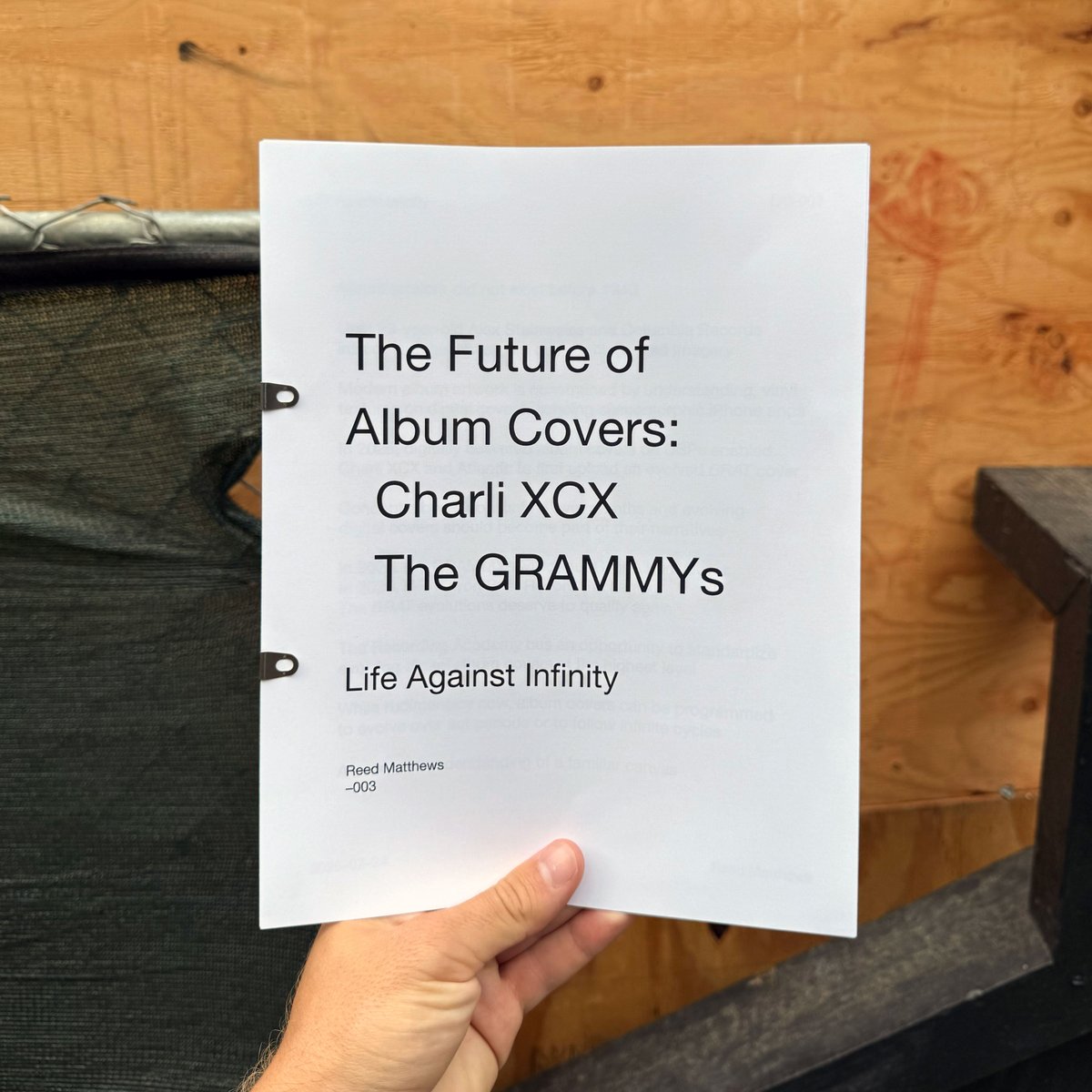
Album artwork did not exist before 1940
Until 23-year-old Alex Steinweiss and Columbia Records introduced the first album cover with printed imagery
Modern album artwork is constrained by understanding, vinyl textures on digital covers, echoing skeuomorphic iPhone apps
In 2025, digitally delivered album covers on DSPs enabled Charli XCX and Atlantic to first upload an evolved BRAT cover
Concept albums now unfold over months and evolving
digital covers should become part of their narratives
In 2026, the GRAMMYs will debut Best Album Cover
In 2025, BRAT won Best Record Packaging
The BRAT evolutions deserve to qualify again
The Recording Academy has an opportunity to standardize evolving digital album covers at the highest level
While rudimentary now, album covers can be programmed to evolve over set periods or to follow infinite cycles
An evolved understanding of a familiar canvas


![reedmatthews_'s tweet photo. For the first time ever, a label just signed an AI music designer
ImOliver “[makes] music using AI, no instruments, no studio, just me, my lyrics, and some very clever machines”
By all formal definitions, ImOliver qualifies as an artist. So does every producer, songwriter, and studio musician
Why this title? Why now?
Labels sign artists to gain ownership of master recordings. That’s primarily how their assets and power are accrued
While AI music designers can generate songs at a prolific rate, are they actually the best option for labels to maximize profits when evaluated on the same timeline as a traditional artist?
After all, AI music designers still have a human bottleneck
On the leading AI music platform, users (not artists) can create personas from any public song with one click. Personas are “the soul of the sound” (vocals, energy, etc.)
Personas can be used to remix to any existing song or create new songs damn near immediately and damn near freely
Personas are the true prophecy, synthetic performing artists
For labels looking to maximize profits, a synthetic performing artist offers much more opportunity than an AI music designer
Similar to Grimes’s https://t.co/5PN5d7cINF, a synthetic performing artist could earn ownership in all songs generated with their “soul”
The potential catalog of a single synthetic performing artist is magnitudes larger than thousands of AI music designers
Technically, when everyone’s an artist “built for artists” could actually mean “built for shareholders”
It comes down to intention](https://pbs.twimg.com/media/GxsQMWAawAAVQq0.jpg)
![reedmatthews_'s tweet photo. For the first time ever, a label just signed an AI music designer
ImOliver “[makes] music using AI, no instruments, no studio, just me, my lyrics, and some very clever machines”
By all formal definitions, ImOliver qualifies as an artist. So does every producer, songwriter, and studio musician
Why this title? Why now?
Labels sign artists to gain ownership of master recordings. That’s primarily how their assets and power are accrued
While AI music designers can generate songs at a prolific rate, are they actually the best option for labels to maximize profits when evaluated on the same timeline as a traditional artist?
After all, AI music designers still have a human bottleneck
On the leading AI music platform, users (not artists) can create personas from any public song with one click. Personas are “the soul of the sound” (vocals, energy, etc.)
Personas can be used to remix to any existing song or create new songs damn near immediately and damn near freely
Personas are the true prophecy, synthetic performing artists
For labels looking to maximize profits, a synthetic performing artist offers much more opportunity than an AI music designer
Similar to Grimes’s https://t.co/5PN5d7cINF, a synthetic performing artist could earn ownership in all songs generated with their “soul”
The potential catalog of a single synthetic performing artist is magnitudes larger than thousands of AI music designers
Technically, when everyone’s an artist “built for artists” could actually mean “built for shareholders”
It comes down to intention](https://pbs.twimg.com/media/GxsQLg5awAA9qC0.jpg)
![reedmatthews_'s tweet photo. For the first time ever, a label just signed an AI music designer
ImOliver “[makes] music using AI, no instruments, no studio, just me, my lyrics, and some very clever machines”
By all formal definitions, ImOliver qualifies as an artist. So does every producer, songwriter, and studio musician
Why this title? Why now?
Labels sign artists to gain ownership of master recordings. That’s primarily how their assets and power are accrued
While AI music designers can generate songs at a prolific rate, are they actually the best option for labels to maximize profits when evaluated on the same timeline as a traditional artist?
After all, AI music designers still have a human bottleneck
On the leading AI music platform, users (not artists) can create personas from any public song with one click. Personas are “the soul of the sound” (vocals, energy, etc.)
Personas can be used to remix to any existing song or create new songs damn near immediately and damn near freely
Personas are the true prophecy, synthetic performing artists
For labels looking to maximize profits, a synthetic performing artist offers much more opportunity than an AI music designer
Similar to Grimes’s https://t.co/5PN5d7cINF, a synthetic performing artist could earn ownership in all songs generated with their “soul”
The potential catalog of a single synthetic performing artist is magnitudes larger than thousands of AI music designers
Technically, when everyone’s an artist “built for artists” could actually mean “built for shareholders”
It comes down to intention](https://pbs.twimg.com/media/GxsQKoBawAYB0jy.jpg)







![reedmatthews_'s tweet photo. For the first time ever, a label just signed an AI music designer
ImOliver “[makes] music using AI, no instruments, no studio, just me, my lyrics, and some very clever machines”
By all formal definitions, ImOliver qualifies as an artist. So does every producer, songwriter, and studio musician
Why this title? Why now?
Labels sign artists to gain ownership of master recordings. That’s primarily how their assets and power are accrued
While AI music designers can generate songs at a prolific rate, are they actually the best option for labels to maximize profits when evaluated on the same timeline as a traditional artist?
After all, AI music designers still have a human bottleneck
On the leading AI music platform, users (not artists) can create personas from any public song with one click. Personas are “the soul of the sound” (vocals, energy, etc.)
Personas can be used to remix to any existing song or create new songs damn near immediately and damn near freely
Personas are the true prophecy, synthetic performing artists
For labels looking to maximize profits, a synthetic performing artist offers much more opportunity than an AI music designer
Similar to Grimes’s https://t.co/5PN5d7cINF, a synthetic performing artist could earn ownership in all songs generated with their “soul”
The potential catalog of a single synthetic performing artist is magnitudes larger than thousands of AI music designers
Technically, when everyone’s an artist “built for artists” could actually mean “built for shareholders”
It comes down to intention](https://pbs.twimg.com/media/GxsQNIrbUAAUG5R.jpg)


