“اللهم لك سجدتُ، وبك آمنتُ، ولك أسلمتُ، سجد وجهي للذي خلقه وصوّره، وشقّ سمعه وبصره، تبارك الله أحسن الخالقين”
«اللهم اغفر لي ذنبي كله، دِقَّه وجِلَّه، وأوله وآخره، وعلانيته وسرَّه.»
دعاء قصير… لكنه يجمع كل الذنوب:
الصغير والكبير، القديم والجديد، الظاهر والخفي.
والسجود هو أقرب ما يكون العبد من ربه، كما قال النبي ﷺ:
اللهم من أراد السعودية بسوء فاشغله بنفسه، ورد كيده في نحره، واجعل تدبيره تدميراً عليه، واحفظ البلاد والعباد من كل شر
حسبي الله ونعم الوكيل، اللهم أرنا فيهم عجائب قدرتك
احرصوا ماتتركون ثلاث اشياء بالعشر الاواخر
-قراءة سورة الإخلاص ثلاث مرات يوميًا
-الصدقة لو بريال يوميًا
-قيام الليل لو ركعتين يوميًا
ليلة خير من ألف شهر يعني عن 84 سنة !
إجتهدوا الله يجعلنا من الفائزين بهالليلة
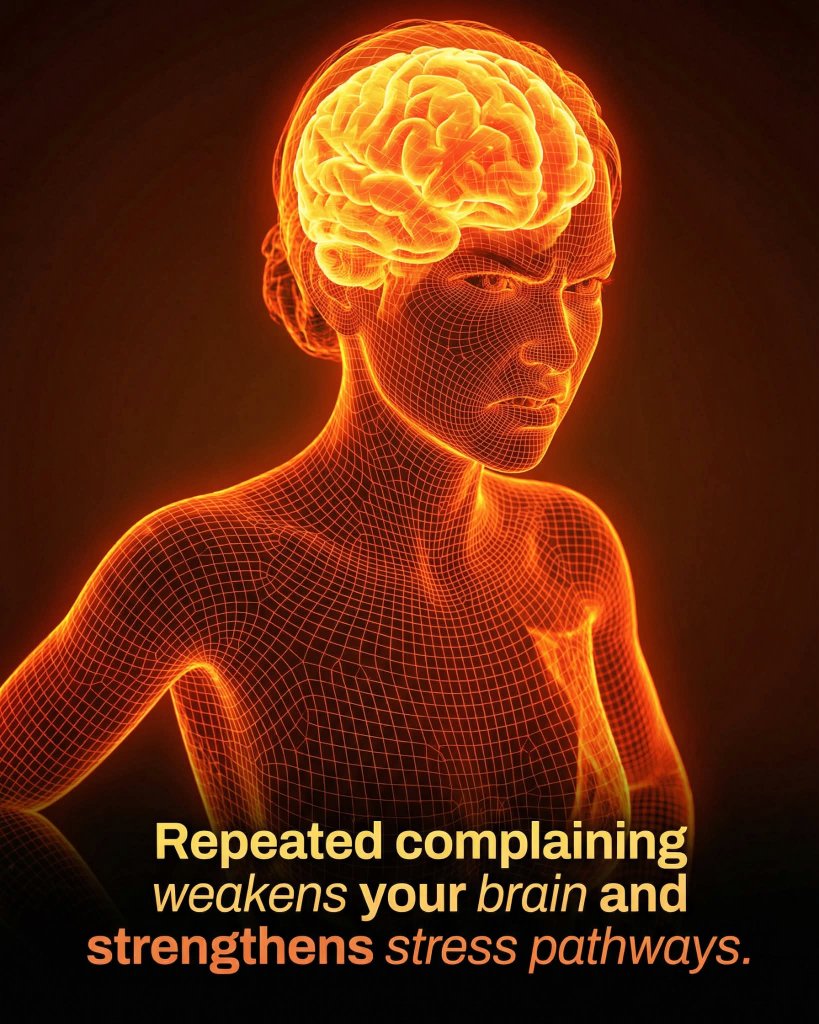
🚨 Research shows repeated complaining physically rewires your brain to prioritize stress and negativity.
The way we speak about our daily challenges does more than just vent frustration; it physically alters the architecture of the brain.
When we engage in chronic complaining, we repeatedly activate neural networks responsible for detecting threats and processing stress.
Through the biological process of neuroplasticity, these circuits become stronger and more efficient every time they are used. Essentially, the brain learns to become more adept at finding things to be unhappy about, turning a temporary mood into a permanent biological predisposition toward negativity and fear-based thinking.
As these negative pathways become the brain's default setting, individuals often experience a measurable increase in baseline stress levels and emotional volatility. This heightened sensitivity means that even minor inconveniences can trigger an intense stress response because the brain has been conditioned to interpret the world through a lens of threat. Findings discussed by the Stanford University School of Medicine emphasize that while this mechanism is powerful, understanding the science of affective neuroscience is the first step in consciously redirecting those pathways toward more resilient emotional patterns.
Source: Stanford University School of Medicine. (2023). Neural Plasticity and the Impact of Negative Thought Patterns on Emotional Regulation. Stanford Medicine News.
فخورة بكوني جزءًا من هذا الوطن العظيم الذي يواصل مسيرة التطور والريادة في شتى المجالات، وخاصة في قطاع الصحة. تجربة ملهمة من #ملتقى_الصحة_العالمي_2025 تؤكد أن المستقبل يبدأ من هنا 🤍
Proud to be part of a nation driving progress and innovation — especially in healthcare🇸🇦