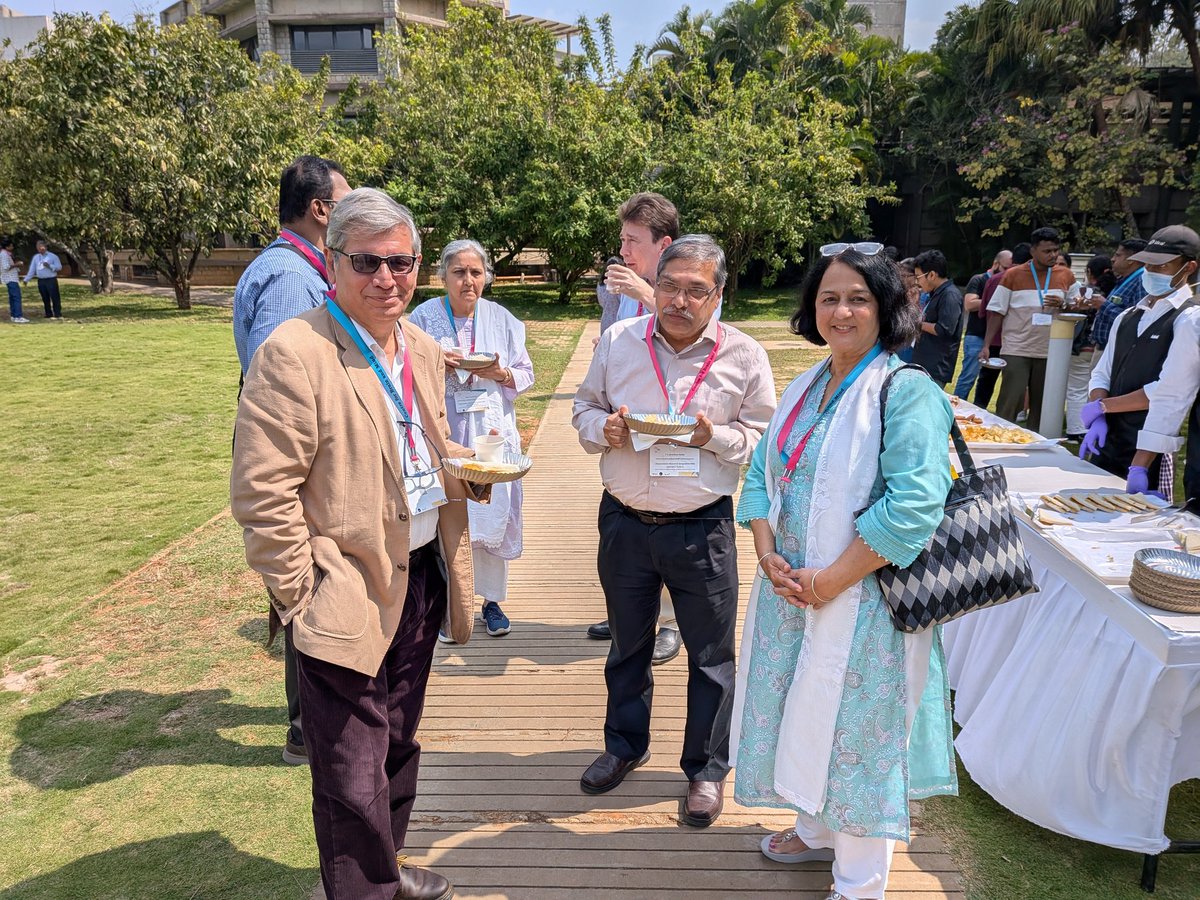
Her message is clear: stop expecting women to “plan better” around structural gaps. Career breaks shouldn’t define careers. We need childcare, flexible re-entry, mentorship, and research collectives that make science sustainable—for everyone.
Read the full conversation on IndiaBioscience- https://t.co/vKDMVgPJjF
"Why does our top performer get the worst reviews?" the boss asked.
I was reviewing their annual performance data.
"Show me," I said.
She pulled up the ratings.
Diana: 2.8 out of 5.
Below average on "collaboration."
Low marks for "team player."
"What's her actual performance?" I asked.
"Exceeded every target.
Landed our biggest client.
Trained three new hires."
"So why the low scores?"
"Her peer reviews are dragging her down."
I scanned the comments.
"Too direct."
"Challenges ideas too much."
"Not supportive enough."
"Let me talk to Diana," I said.
"I used to give honest feedback," Diana told me.
"Said our pricing model was broken.
Got dinged for 'negativity.'"
"What happened with the pricing?"
"They finally fixed it six months later.
After we lost two major accounts."
"What else?"
"I questioned why we needed
eleven approvals for a simple contract change.
Manager said I wasn't being collaborative."
"Are you still giving feedback?"
"No. I learned my lesson.
Now I smile. Nod. Say everything's great.
My reviews are improving."
"But nothing's actually improving?"
"We're making the same mistakes.
Just with better vibes." She chuckled.
I went back to the boss.
"Your review system doesn't measure performance," I said.
"It measures compliance."
"That's not true."
"When was the last time someone
got promoted for challenging bad ideas?"
Silence.
"When did someone get rewarded for preventing a mistake?"
More silence.
"You've trained your best people to stay quiet.
And your mediocre people to stay nice."
A few months later, they redesigned the system.
Added a category: "Constructive Challenge."
Points for identifying problems early.
Rewards for preventing costly mistakes.
Diana got promoted.
"What changed?" I asked the boss.
"We stopped confusing agreement with alignment.
Stopped mistaking silence for harmony."
"And?"
"Turns out our 'difficult' people
were our most valuable.
They actually cared enough to speak up."
Here's the truth about performance reviews:
Most companies don't reward performance.
They reward performance theater.
The person who says the meeting was great
beats the person who says it wasted an hour.
The person who agrees with bad ideas
beats the person who prevents disasters.
You think you're measuring contribution.
You're measuring conformity.
And your best people?
They've already figured out the game.
They're just deciding whether to play it
or find somewhere that values truth over comfort.
Every research journey takes its own shape.
In the first article of our How I Got Here series, read about Prof. @BijuViswanath13 & explore how patient stories led him from the clinic to the lab to study the brain and mind.
🔗: https://t.co/9wtuzBIldB
Watch our lab student Amirtha Varshini explain how we use expansion microscopy to probe cytoskeletal changes in psychiatric disorders @cbmnimhans
Work supported by Ben Barres Spotlight Award by @elife
https://t.co/BH7uVvqq7W
#microscopy#imaging#stemcells
Today, IBRO honors the vital contributions of persons with disabilities to brain science and the broader scientific community. Our organization remains committed to advancing diversity, equity, and inclusion across #neuroscience.
Stress’s benefits for the species come at the cost of long-term changes in defensive responses. For instance, it can exaggerate how you respond to a threat, writes @reeteka
https://t.co/gQCZ8O4TY5
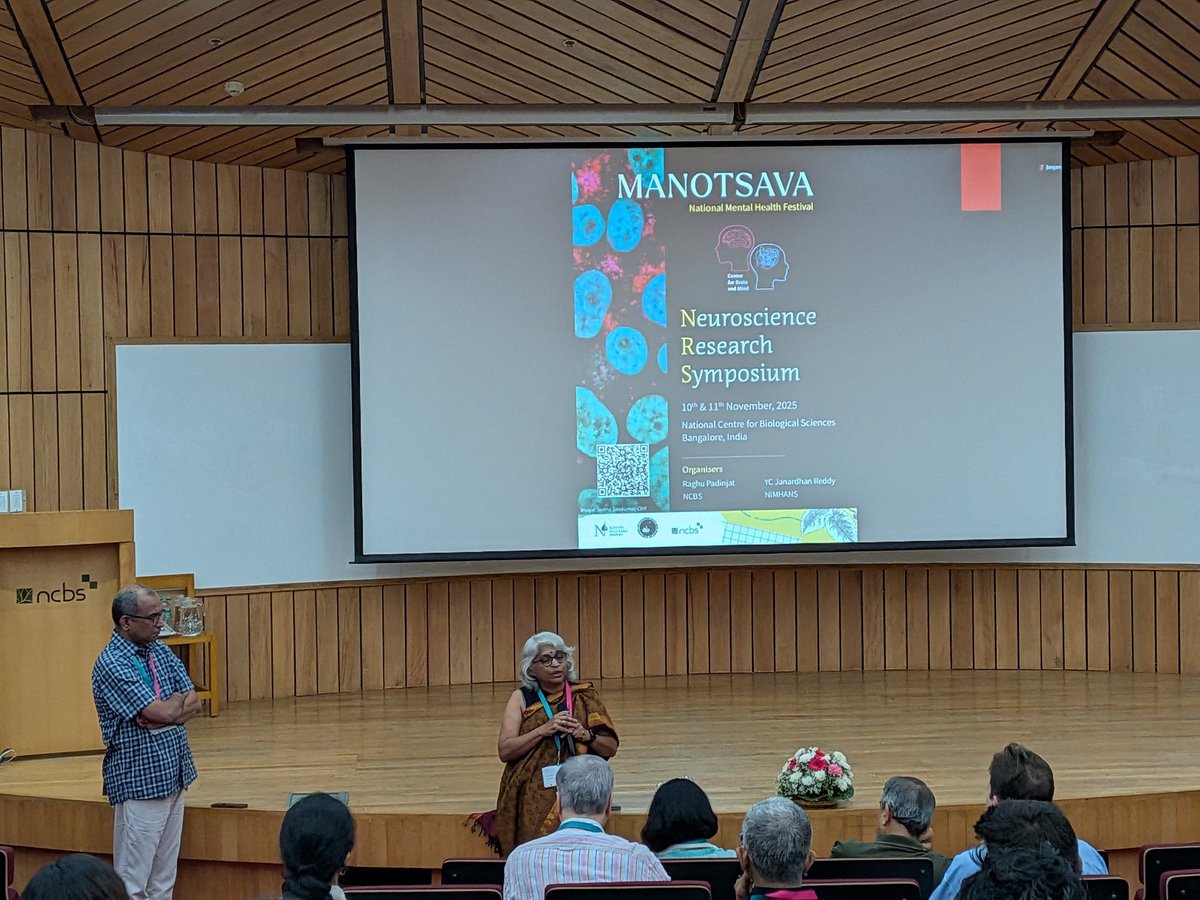
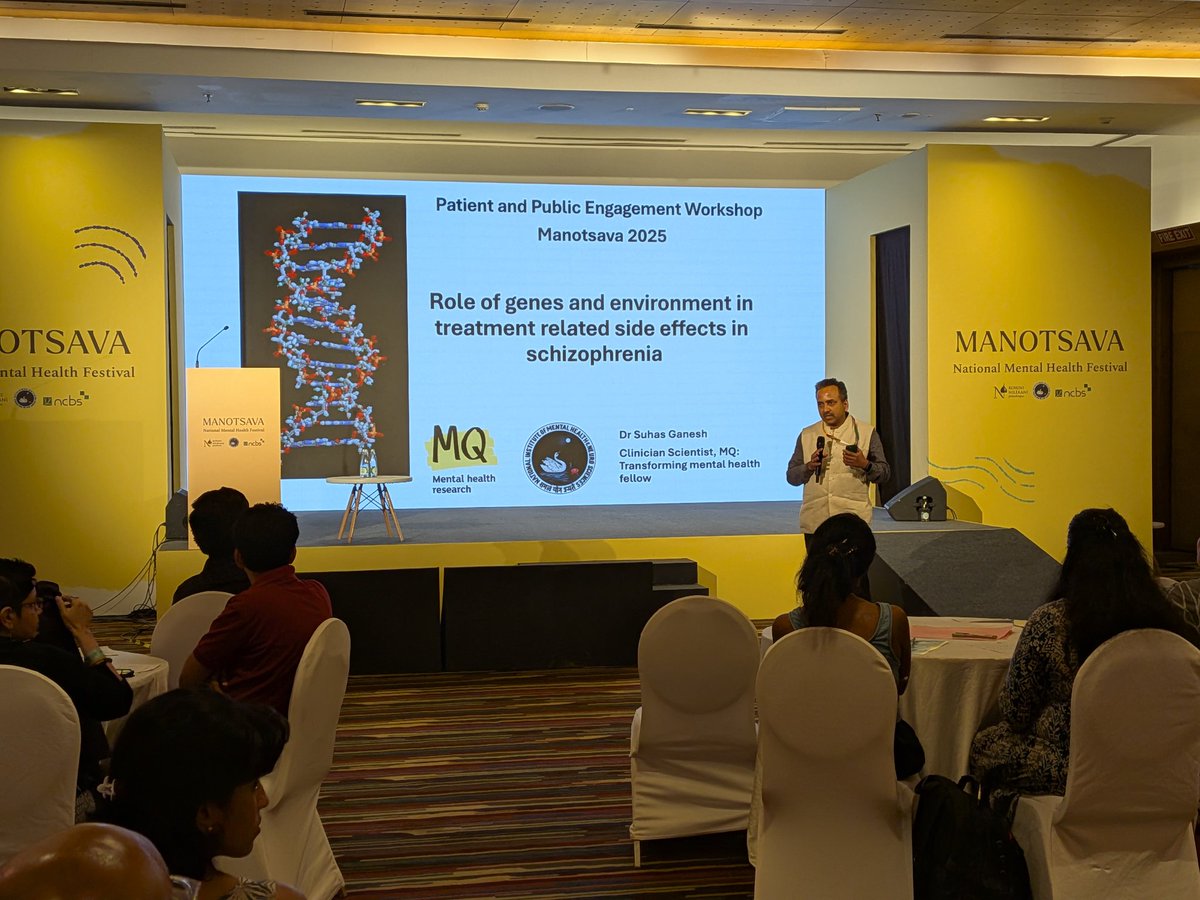
Dr Kalyani Bindu presents her work at the Neuroscience Research Symposium 2025. She is the centre's first Career Development Fellow; her work focuses on molecular mechanisms, underlying cross-disorder relationships & effects of psychiatric drugs acting across multiple disorders
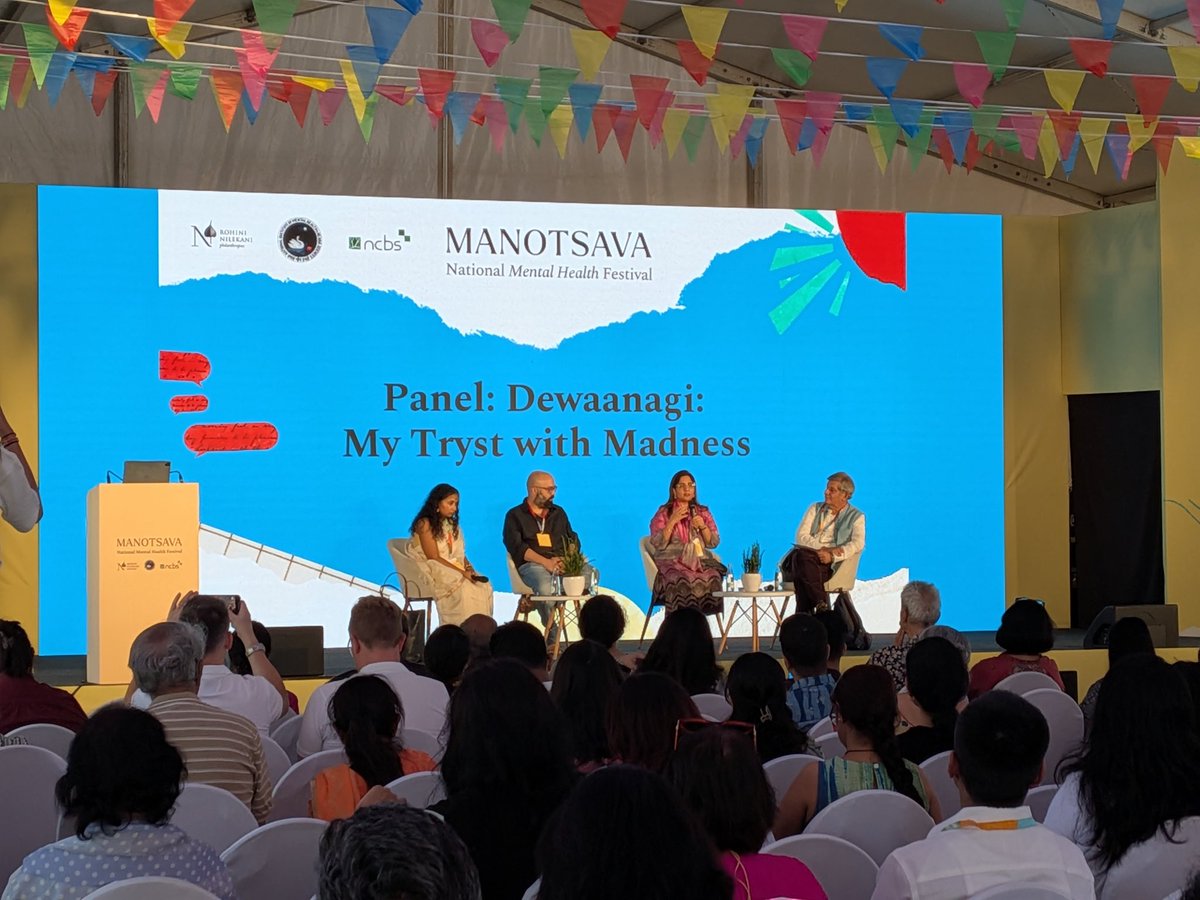
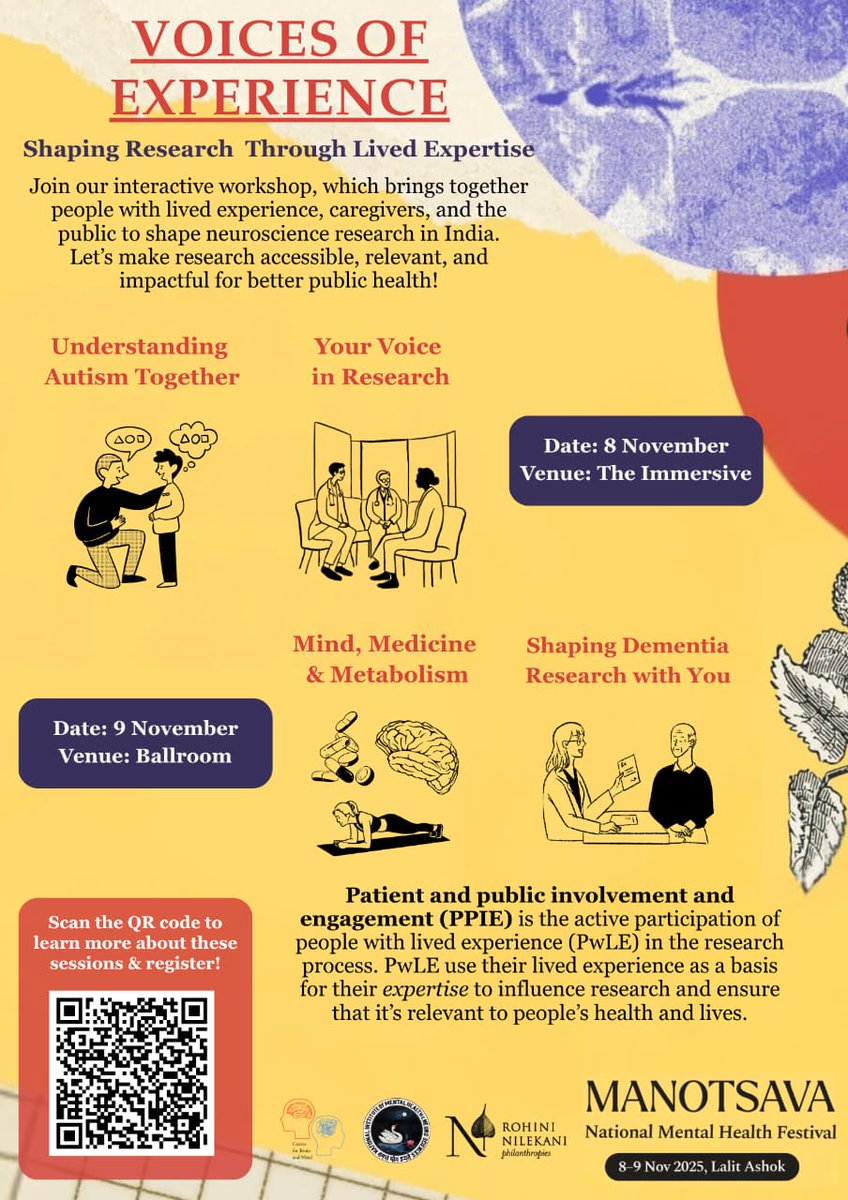
Registrations still open for our sessions on shaping biomedical research with lived experience, of #dementia, mood disorders and autism. Join us this weekend: https://t.co/sK3R6XSrgV
Registrations still open for our sessions on shaping biomedical research with lived experience, of #dementia, mood disorders and autism. Join us this weekend: https://t.co/sK3R6XSrgV
What if one idea could transform an entire tradition — and thousands of lives?
Meet Dr. Manoj Kumar, the scientist from Bihar who revolutionised how India grows makhana, helping over 3,000 farmers earn 10X more — safely, sustainably, and successfully.
Watch the full video to see how one man sparked a farming revolution!
#Inspiring #RealHeroes #ChangeMakers #FarmingRevolution #MakhanaFarming #Agritech #Bihar #ChattPuja
[Dr. Manoj Kumar, Makhana farming in Bihar, Rural innovation, Makhana, Chatt Puja ]
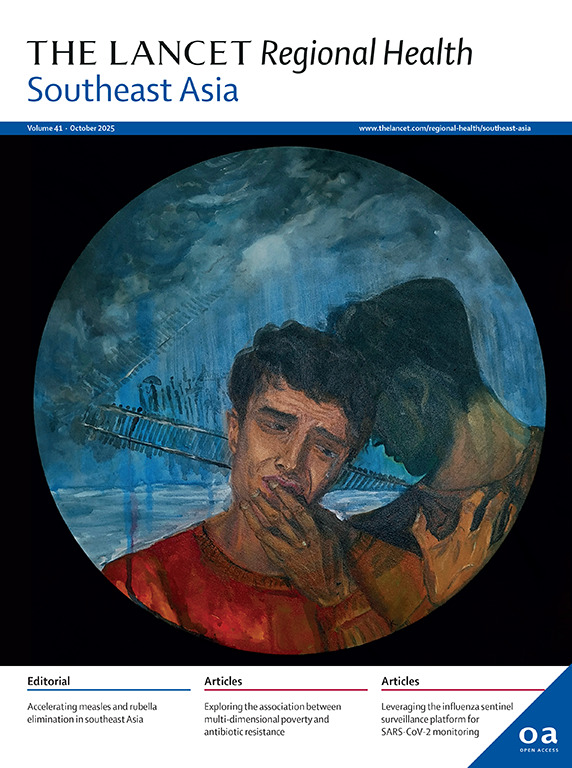
We're excited to share that a submission from our "Through the Looking Glass" art exhibition has been selected as the cover art for @TheLancet Regional Health - South Asia special issue for World Mental Health Day.
Congratulations Komal!
https://t.co/EnDyCXWHWw
We are thrilled to announce a webinar sponsored by R4E! This event welcomes anyone with an interest. Join us on Wednesday, November 19th, at 10 a.m. Eastern Time/4 p.m. Central European Time. For further information, please visit: https://t.co/PxikDm5cac #AcademicTwitter