Your €120 subscription is about to renew.
Before paying, open the cancellation flow.
Some services reveal a targeted “stay” discount only after you try to leave.
No offer? Exit without confirming.
The best renewal price may be behind the cancel button.
#money#moneysaving #savingtips #MoneyManagement #MoneyMindset
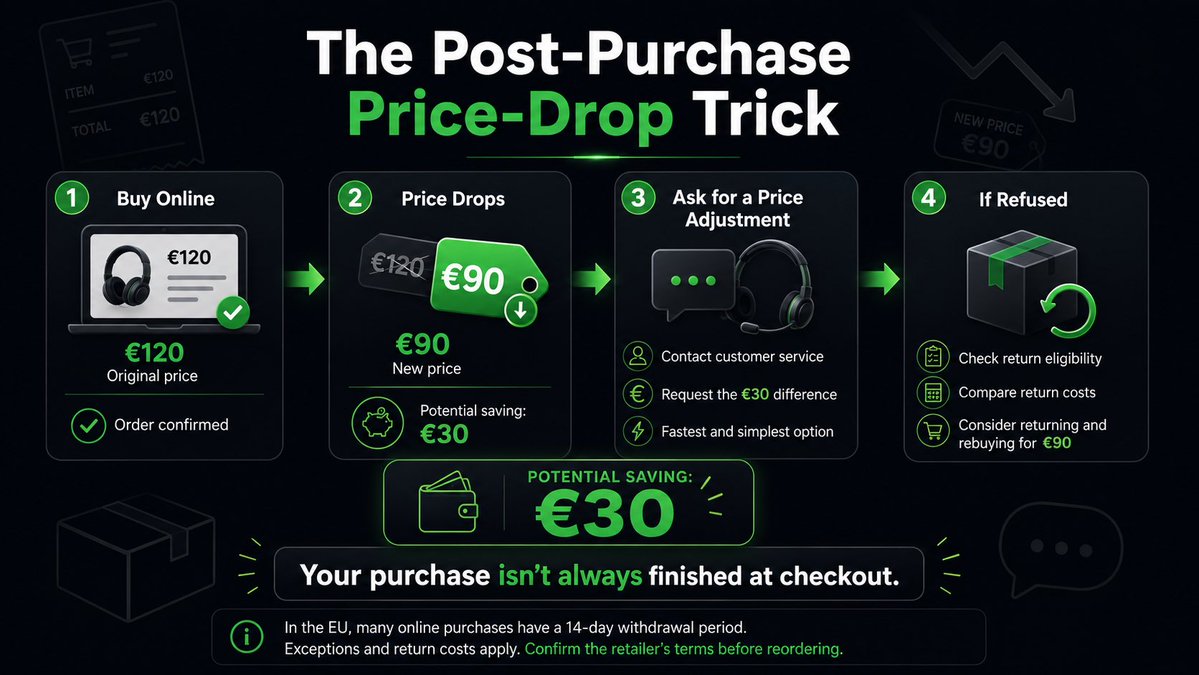
Bought something online in the EU and the price dropped days later?
Ask for a price adjustment first.
If refused, many purchases can still be returned within 14 days—so compare return costs with rebuying cheaper.
The checkout price isn’t always final.
EU distance purchases generally have a 14-day withdrawal period, although exceptions and return costs apply. Reddit shoppers also frequently report requesting price adjustments after subsequent discounts.
#money #savingtips #moneytips #MoneyManagement #MoneyMindset
A savings rate rising from 2% to 3% is not a 1% increase.
It’s a 50% increase in interest earned.
On €10,000:
2% = €200/year
3% = €300/year
The rate rose by 1 percentage point—but your return rose by 50%.
€10 every 4 weeks is not €120/year.
4 weeks × 13 payments = 52 weeks
€10 × 13 = €130/year
“Every 4 weeks” quietly creates an extra payment compared with monthly billing.
Check the interval—not just the price.
Spend €100, get a €20 voucher” is not the same as 20% off.
If the voucher requires another €80 purchase:
You spend €180
You receive €200 of goods
Your effective discount is 10%, not 20%.
Future credit only saves money if you return.
#savings#money#MoneyTips
Driving 20 km out of your way to save €0.05/L on a 40 L fill saves €2.
At 6 L/100 km, the detour burns 1.2 L. At €1.70/L, that costs €2.04—before your time.
The cheaper petrol station can cost more.
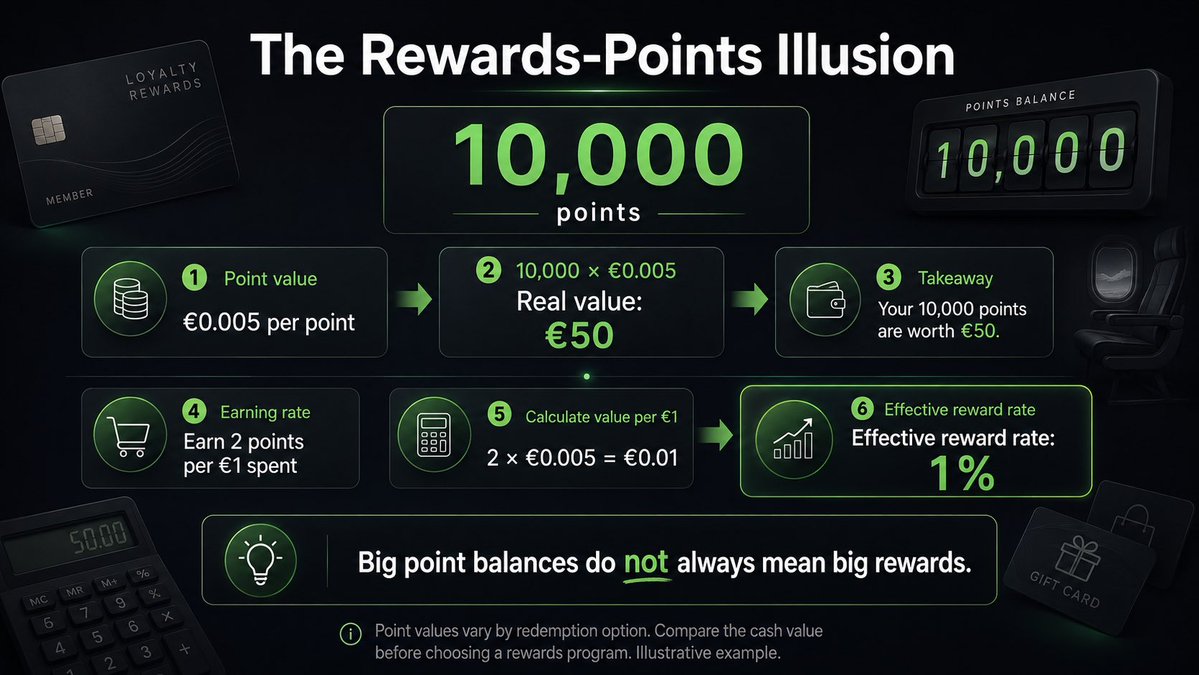
10,000 reward points sounds impressive.
But if each point is worth €0.005, that’s only €50.
And earning 2 points per €1 spent gives an effective return of just 1%.
Ignore the point total.
Calculate the cash value.
A more efficient appliance isn’t automatically the cheaper one.
If it costs €200 extra but saves €25/year in electricity:
€200 ÷ €25 = 8 years to break even
If you replace it sooner, the “efficient” option may cost more overall.