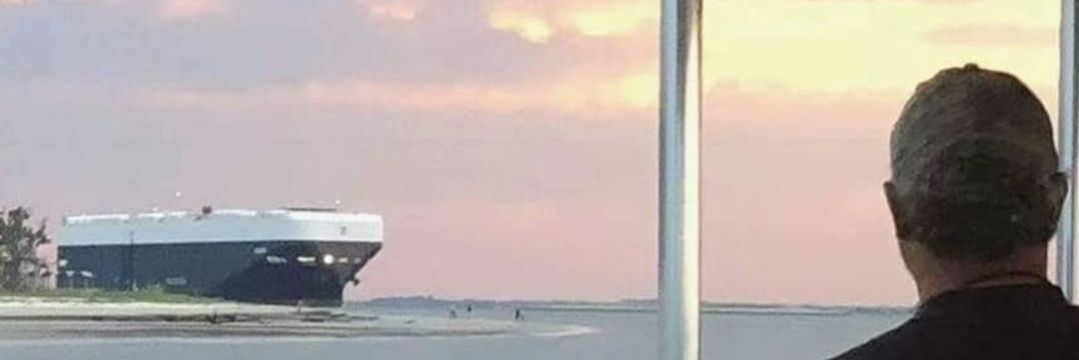
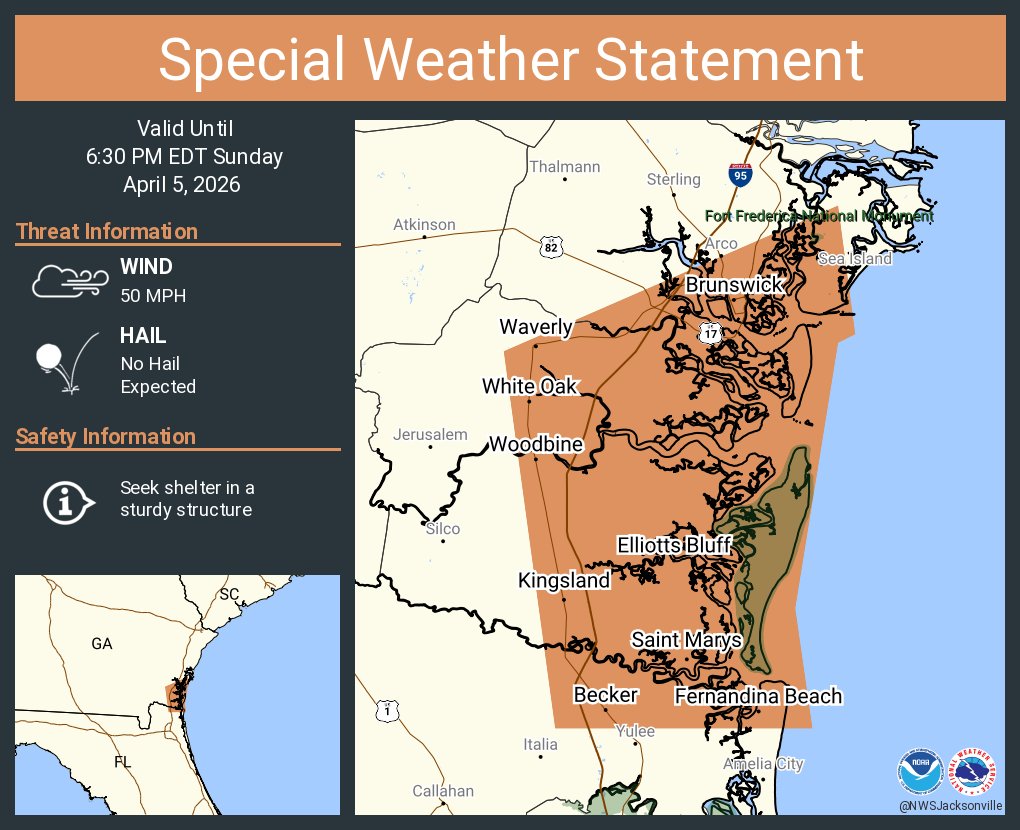
Monday NOON satellite on https://t.co/hC3lhmq5Xg. Tropical system starting to brew it appears. Slow movement expected a couple days before a general turn NE likely. Watching things close. https://t.co/vC1PyUzDkJ
Intuitive Machines’ lander is on its way to the Moon after Falcon 9 successfully deployed Athena into a lunar transfer orbit. Not a bad view!
Best of luck @Int_Machines, @Astroforge, @NASAJPL’s Lunar Trailblazer, and @EpicAerospace's Chimera GEO 1 on the remainder of your missions!
Soon, this will be the view on our way to Mars. It’s so beautiful
@MikeBenzCyber "You know something. What you know, you can't explain, but you feel it. You've felt it your entire life, that there's something wrong with the world. You don't know what it is, but it's there, like a splinter in your mind, driving you mad.". Orpheus to Neo The Matix
As some of you correctly pointed out, the claim that TON 618 is the largest object in the Universe is now outdated.
Recent discoveries have identified Phoenix A, a supermassive black hole with an estimated mass of around 100 billion suns—or possibly even more, as its exact mass has not yet been measured using orbital methods.
Phoenix A resides at the center of the Phoenix Cluster of galaxies and boasts some truly mind-boggling features:
- Mass: 24,100 times greater than Sagittarius A*, the black hole at the center of the Milky Way.
- Scale: Twice the mass of the entire Triangulum Galaxy, including its dark matter halo.
- Event Horizon: A Schwarzschild diameter of 590.5 billion kilometers (3,900 AU), roughly 100 times the distance from the Sun to Pluto.
- Circumference: Traveling around its event horizon at the speed of light would take 71 days and 14 hours.
- Growth: Gains about 60 times the mass of the Sun every year.
Given its immense size, Phoenix A might belong to a proposed class of stupendously large black holes —primordial black holes with masses potentially exceeding 100 billion solar masses. Such objects push the boundaries of what we understand about the formation and evolution of black holes, far surpassing the theoretical mass limits of luminous, accreting black holes in spiral galaxies.
Here's Tesla FSD 13.2 driving for an hour and 40 minutes through LA traffic with zero interventions.
I know watching a video of my car sitting in traffic may not be very exciting, but imagine what a life changer this is for people who do this commute every day.
Super Heavy will generate a sonic boom upon return, which is a brief, thunder-like noise we hear when an aircraft or other object travels faster than the speed of sound