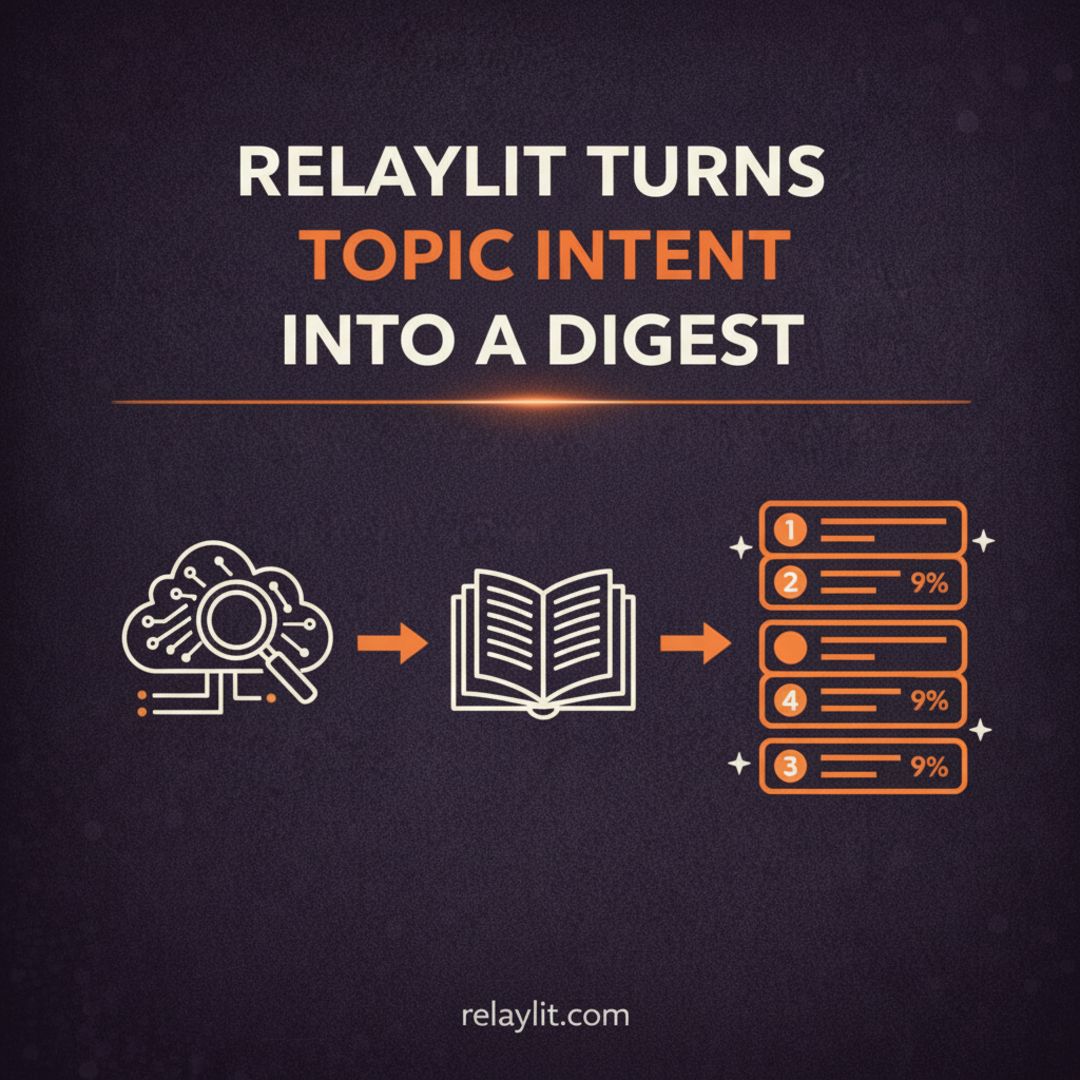
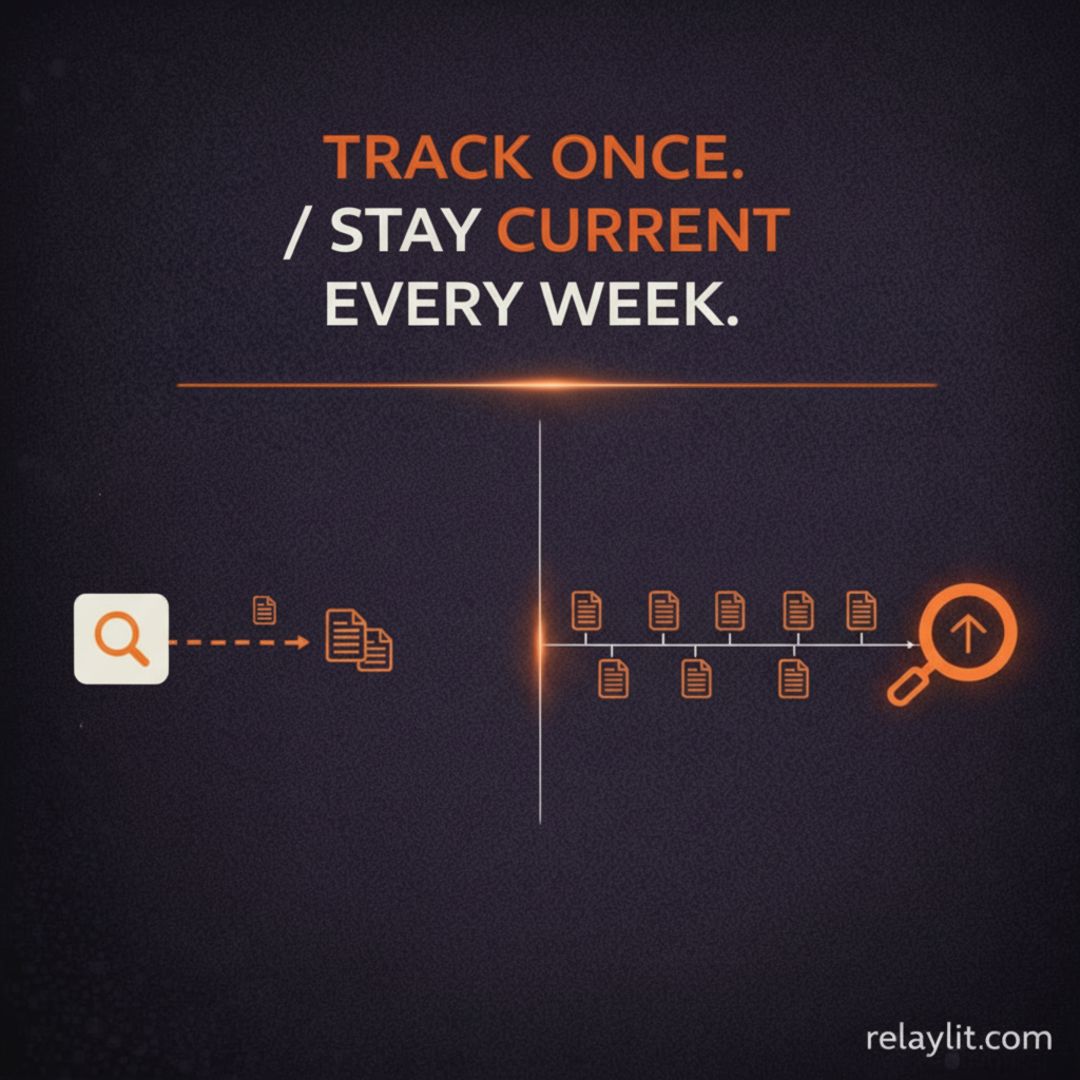
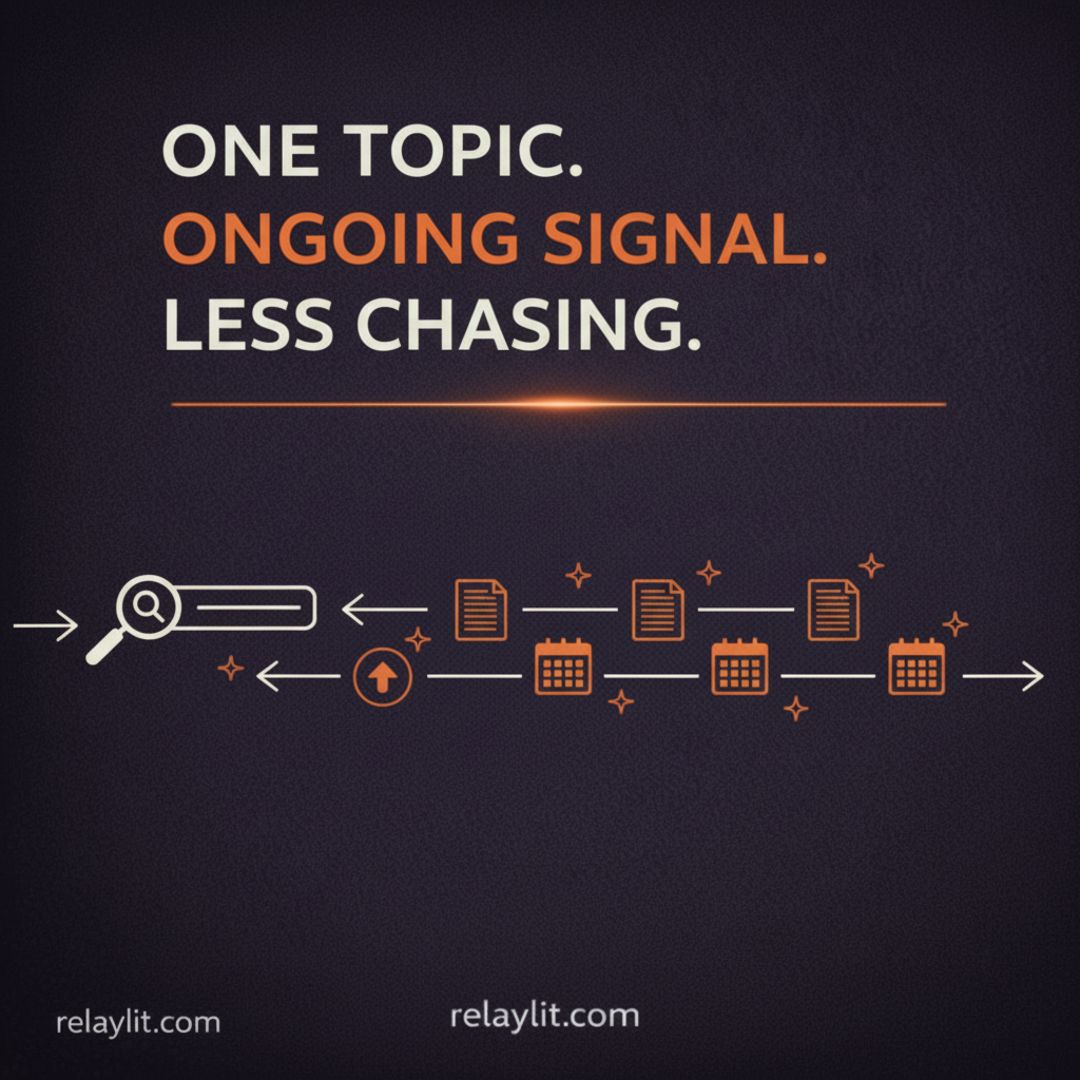
Search is a task. Monitoring is a system. Relaylit watches a topic over time and turns new papers into a ranked digest instead of another inbox to triage. https://t.co/1idmk3OUcm
The useful paper is not always the newest one. Sometimes it is the one closest to your population, endpoint, or method. Relaylit keeps the digest ordered by fit so the first read starts closer to the signal. https://t.co/1idmk3OUcm
A literature alert that only matches keywords still leaves the sorting to you. The hard part is priority: methods, population, endpoint, and recency. Relaylit is built around ranked first reads, not another flat feed. https://t.co/1idmk3OUcm
A paper can match the topic and still be a poor first read. Methods, population, endpoints, and recency all change priority. Relaylit keeps the watchlist ranked so the digest starts with papers worth checking first. https://t.co/1idmk3OUcm
A keyword alert answers one question: did the word appear? Research monitoring needs a better one: is this paper worth opening first? Relaylit turns a topic into a ranked shortlist on your cadence. https://t.co/1idmk3OUcm
If a new paper uses different phrasing, a keyword alert can miss the point. Relaylit keeps the ranking tied to topic fit, so the first pass starts closer to the signal. https://t.co/Xpdnep83Wd
Search terms are snapshots. Research topics keep moving. A useful digest should track the question, not just the exact phrase you typed three weeks ago. Relaylit ranks new papers by topic fit first. https://t.co/Xpdnep83Wd
Saved searches are useful until they become another inbox. Relaylit keeps the monitoring layer narrower: define the topic once, then get a ranked digest on the cadence that fits the work. https://t.co/1idmk3OUcm
Review articles help once a field has settled. Monitoring solves the earlier job: what changed this week, and which papers deserve time? Relaylit turns a topic into a ranked digest instead of another date-sorted alert. https://t.co/1idmk3OUcm
A daily alert and a weekly digest solve different problems. Alerts protect recency. Digests protect attention. Relaylit lets the cadence match the topic, so stable fields do not get treated like breaking news. https://t.co/1idmk3OUcm
Most alerts tell you what appeared. They rarely tell you what deserves the next 20 minutes. A ranked digest is a better first pass: fewer maybes, clearer next reads. https://t.co/Xpdnep83Wd
Search gives you candidates. Monitoring gives you continuity. The useful layer is ranking: which new papers actually fit the question you care about? That is where a digest beats another alert. https://t.co/Xpdnep83Wd
Google Scholar Alerts is a fine starting point. It's usually not the system people stay with. We compared seven alternatives here: https://t.co/Vo8mG28s3U
Keyword alerts sort by time. Good monitoring sorts by relevance. If you're tracking a fast-moving topic, ranking matters more than another pile of alerts: https://t.co/2sb8wxPuAJ
One query should lead to one ranked reading list, not ten tabs and fifty maybes. Relaylit turns topic intent into a shortlist you can actually use. https://t.co/OIt3XFHUH3