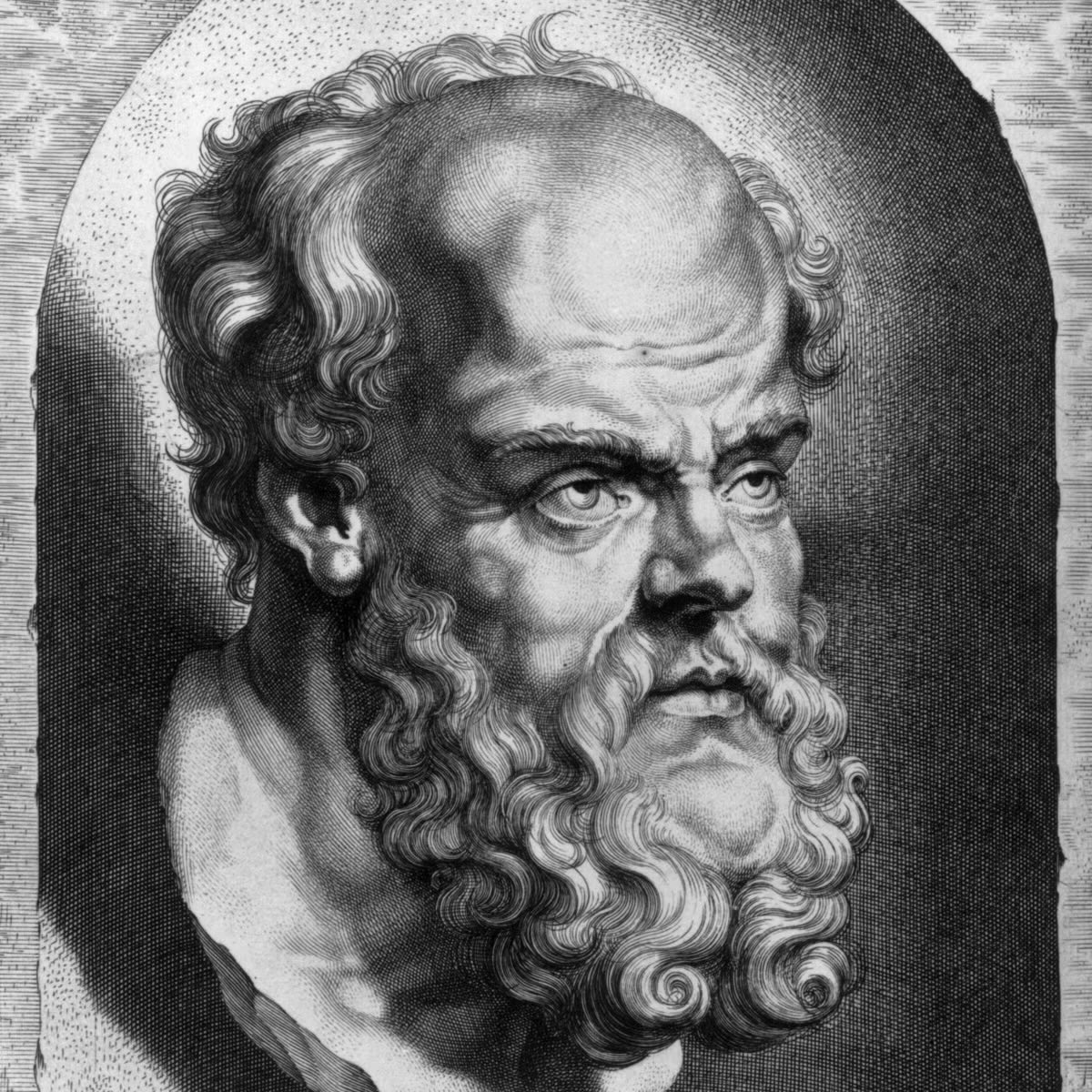
“In the world of mature people, I saw the most honest man is a child.”
- Socrates
Socrates (c. 470–399 BCE) was an ancient Greek philosopher whose thinking profoundly shaped the development of Western philosophy. He wrote no surviving works himself, so most of what is known about his life and ideas comes through figures such as Plato and Xenophon.
Socrates became famous for challenging assumptions and exploring questions about morality, justice, knowledge, virtue, and what it means to live well. Instead of simply giving answers, he used carefully chosen questions to expose contradictions and encourage people to reconsider their beliefs. This approach eventually became known as the Socratic method.
For Socrates, philosophy was not about memorizing fixed answers but continually questioning what we think we know. His association with the idea of recognizing his own ignorance reflects his belief in intellectual humility and the importance of understanding the limits of human knowledge.
His influence remains deeply rooted in philosophy, education, debate, and critical thinking. At the heart of his philosophy was a simple principle: a meaningful life requires reflection, questioning, and self-examination.
The Japanese have a beautiful expression: “Otsukaresama”that honours effort, not just results. Sometimes, the greatest recognition is simply knowing someone noticed how hard you tried.
The art of the dime is in vision and precision....
Like this INSANE cross-court pass from Jamal Murray that we couldn't not include in NBA Assist Week 🤯
Japanese legend: If you miss the bus, maybe you avoided the accident. If you got rejected, maybe you were saved from the wrong place. If they left, maybe they made room for who is coming. The universe protects you in ways that look like bad luck at first. Trust the detour.
Allow yourself to fall in love with people, experiences, and the world around you without fear of regret. Every choice you make shapes who you are, and mistakes are simply part of living fully. A life protected from every regret would also be protected from much of its joy.