Dear @seunokin,
I find it uncomfortable calling journalists out because I believe they do a job that can often pose significant challenges, especially in our setting.
However, the consistent act of allowing guests on your program to tell outright lies unchallenged is becoming quite worrying.
There is substantial evidence that Obi never sent northerners resident in Anambra back to the north when he was governor, nor insisted they be issued ID cards. Even children in Nigeria who are conversant with what is happening around them know that this only happened in Imo under Rochas Okorocha. If no one outside the South East knows this, you, as a journalist, should know.
Furthermore, Obi consistently called on the government to deal decisively with the criminality going on in the South East, since IPOB continued to deny responsibility. In essence, if they say they aren't responsible, the government should deal with the perpetrators decisively.
Therefore, the fact that Alhaji Ali Modi Sherif came on your program today and made false allegations against Obi, and you did not deem it right to counter him, is quite worrisome.
No one should appear on a popular TV program, tell lies against another person, and have those lies allowed to fly. It is the responsibility of the journalist to counter such lies, especially when they are as obvious as in this case.
Attached are videos of northerners resident in Anambra confirming how good Obi was to them when he was governor.
Thank you.
Worsening Leadership Crisis in the Country Now Evident
The ultimate cost of uncompassionate leadership, as evident in the country today, is turning citizens’ frustration into deep, volatile resentment. It is even more traumatising when the leader presiding over that collapse demonstrates clear incapacity and a lack of compassion.
The government and people of Oyo State, more than 50 days after the abduction of the schoolchildren without any tangible effort toward their rescue, should rightly feel bitter and abandoned.
Since this unfortunate incident, I have spoken publicly about it twice, including appealing directly to the kidnappers to release the children. I also called the Governor twice to assure him of my solidarity, understanding that this issue is not just an Oyo problem but a Nigerian tragedy.
On Friday, July 3, I decided to travel to Ibadan with Prof. Pat Utomi to express solidarity with the Governor, as more than 50 days had elapsed without the rescue of the children and with numerous others still being held captive across the country.
During our two-hour meeting, I shared my experience in addressing insecurity as Governor of Anambra State. I recalled how President Olusegun Obasanjo, and later Presidents Umaru Musa Yar’Adua and Goodluck Jonathan, would personally call us several times whenever we faced major security challenges.
But, to my utmost shock, I discovered that, contrary to my assumption that they had been in regular communication over the matter, Governor Seyi Makinde had not received a single call from President Bola Tinubu.
I remember the only case of a school kidnapping during President Goodluck Jonathan’s era - the Chibok girls. It drew local and international attention. Even though the security agencies provided almost daily updates on their efforts, Nigerians and the rest of the world were outraged that it took President Jonathan over two weeks to call the then State chief Executive.
I vividly recall that the current President, Bola Tinubu, led a team of vocal critics who called for President Jonathan’s immediate resignation over the incident, citing his delay in calling the state governor. That call for IMMEDIATE RESIGNATION should actually be the case in this matter.
Today, under President Tinubu, there have been more than 13 school kidnappings, yet the President has found it difficult to call the affected state’s chief executive after more than 50 days (over 7 weeks). This is outrageous. I suspect the same may also have been the case in other school kidnapping incidents.
I cannot imagine any issue more important than the lives of our kidnapped children, their teachers, and the many other Nigerians being held captive across the country. It is now an indisputable fact that governance has completely collapsed under this administration.
The situation reflects a total lack of capacity and compassion, compounded by glaring insensitivity.
Amid such an apparent display of incompetence, the President should either resign or, at the very least, abstain from seeking re-election for the sake of our dear country. This call is patriotic, not political. A new Nigeria is POssible. -PO
Grand Corruption: Nigeria’s Greatest Threat.
The recent report from the IMF consultation further raises concerns about the scale of grand corruption under the Tinubu government. The IMF now reveals that about N8.83 trillion in expenditure undertaken in 2025 is not reflected in the budget. This expenditure is not budgeted and is therefore not under legislative oversight or administrative scrutiny. This is horrible.
N8.83 trillion is as follows:
1.About 2% of our GDP.
2.Over 35% of Nigeria’s 2025 N23.96 trillion capital project budget. In fact, the amount is more than the actual released capital funding for 2025.
https://t.co/Hta3LViCB8 is more than the entire combined budget for education (N3.52 trillion) and health (N2.38 trillion).
If such an amount is properly used and accounted for, it could transform Nigeria’s public health and education sectors. It could create hundreds of cottage industries that can provide jobs for thousands of graduates and build a solid foundation for economic development. But we cannot account for it. This is not an isolated incident.
This is a pattern of grand corruption that has become part of this administration.
We have a lot to worry about regarding the state of corruption under President Tinubu. The sort of corruption that is ingrained in total disregard of elementary rules of public finance management poses a grave danger to national security and the stability of the Nigerian state. The capture of the Nigerian state and the plunder of its resources are actions that undermine the basis of state stability and deepen poverty and state failure.
This recent revelation proves that the APC government is grossly corrupt, incompetent, and insensitive. With the growing poverty and the urgent need for significant upgrades to social and physical infrastructure, a responsible and responsive government would ensure that N8.83 trillion is prudently utilised to address these gaps. But not the Tinubu administration.
A few days ago, I called on President Tinubu to resign from office for incompetence, lack of capacity, lack of compassion, and failure to improve on his campaign promises. Some people thought perhaps the call was excessive. But with the daily revelations of pervasive corruption in this administration and its total lack of commitment to the welfare and security of Nigerian citizens, the only reasonable action is for President Tinubu to resign from office. The collapse of elementary forms of due process under Tinubu and the increased evidence of rampant looting of Nigerian public finances reinforce the need for greater accountability. It is now time for Nigerian citizens to rise within the law and hold this administration to account.
A New Nigeria is POssible. -PO
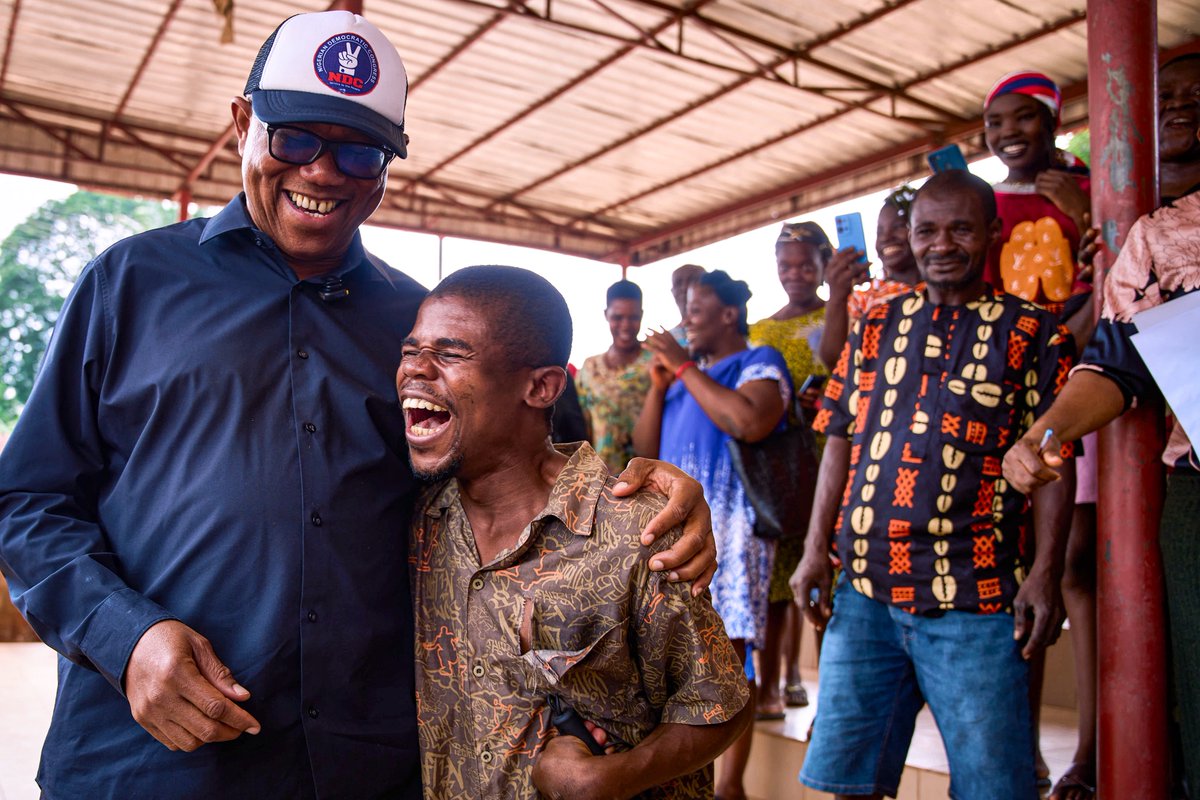
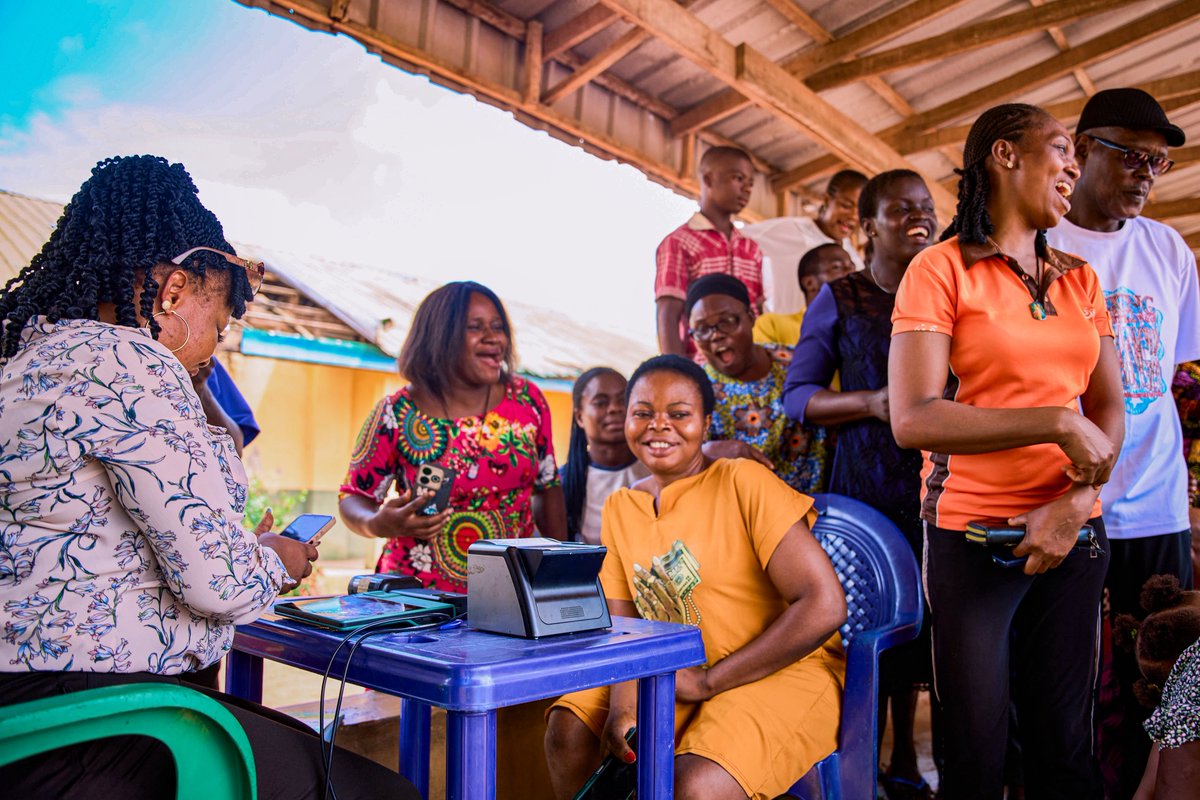
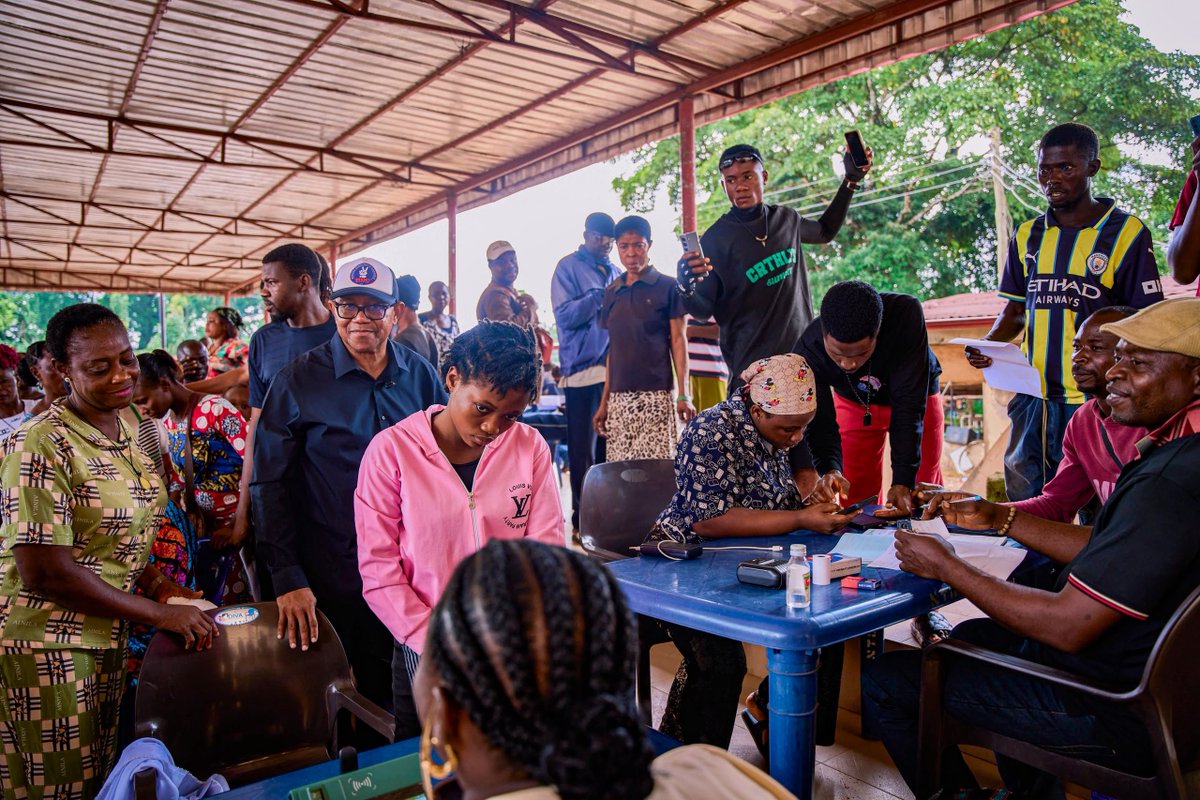
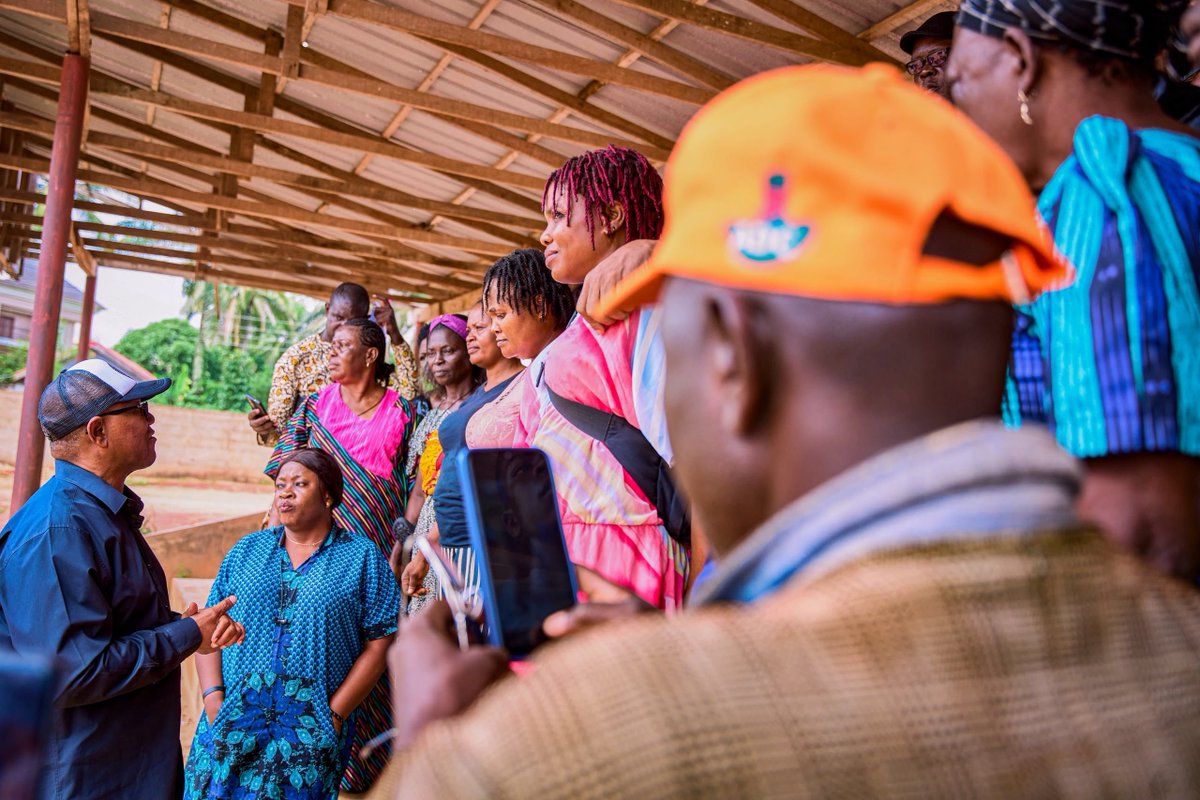
While Peter Obi stopped in Nise to encourage citizens registering for their PVCs, something unforgettable happened.
A blind man in the crowd began calling out, “Where is Peter Obi?” Peter Obi walked over, held his hand, and said, “I am Peter Obi.”
The man replied, “I heard you were here, so I came. I need help. The place where people with disabilities were cared for during your time as governor has been taken from us. We have been left on our own.”
Peter Obi listened attentively, supported him with a token for his immediate welfare, and assured him the matter would receive attention.
This is why many people speak about the impact of Peter Obi’s leadership with conviction. For them, it isn’t propaganda or political rhetoric, it’s lived experience and visible even to the blind.
Good leadership is remembered long after a tenure ends. It is felt in the lives it touches, especially by the most vulnerable.
It is safe to say that under a Peter Obi presidency, people with disabilities would not be forgotten, but included, protected, and treated with dignity.
#NigeriaWillBeOk
Celebrating a Life of Faith and Service in the Lord's vineyard
Yesterday, I travelled to Ibadan with Professor Pat Utomi to join family, friends, the clergy, and the faithful in celebrating the remarkable life of His Grace, Archbishop Alaba Job, on the occasion of his 88th birthday, 60 years of priestly ordination, and 55years of episcopal ordination.
The celebration reflects a lifetime devoted to God, selfless service, peace, justice, and the upliftment of humanity. His inspiring example reminds us that true leadership is measured by sacrifice, integrity, compassion, and a commitment to serving others. At a time when our nation yearns for principled and selfless leadership, His Grace’s life remains a beacon of hope and an enduring testament to what it truly means to serve God and humanity.
I congratulate His Grace, and pray that God Almighty continues to bless him with good health, wisdom and strength as he remains a source of inspiration to the church and our nation.
After the celebration, we passed through one of the secondary schools Professor Utomi attended, Loyola College, Ibadan, and within there we saw an INEC voter registration exercise going on, and we stopped. We used that occasion to thank those registering, and appeal to those who haven't to do so before the closing date.
We encouraged them to remain committed to the democratic process, and reminded them that voter registration is the first step towards building the New Nigeria we all desire. We told them that every registered voter represents hope for a nation where leadership is driven by competence, character, compassion, and a commitment to the common good.
A New Nigeria is POssible. -PO
UN’s Warning on Northern Nigeria’s Food Crisis
The recent report from the UN about the impending food crisis in northern Nigeria is disheartening, more so because it is avoidable. Northern Nigeria is the nation’s food basket, and nothing short of incompetent and irresponsible leadership could have created this tragedy.
In a recent post on my X handle, I urged our national leaders to reassess their priorities and address the dire circumstances facing our citizens. I called on the Federal Government and state leaders to move beyond mere political discourse and make transparent, upfront investments to secure agricultural corridors, support smallholder farmers with accessible resources, and collaborate vigorously with organisations like the World Food Programme (WFP) to bridge funding gaps before this crisis escalates and claims more lives, especially those of children.
A prosperous Nigeria, free from hunger, is achievable, but it requires leadership that prioritises the welfare of its citizens.
I am deeply troubled by the latest report from the UN’s World Food Programme, indicating that northern Nigeria is experiencing its most severe hunger crisis in nearly a decade. Over 17 million people in nine northern states face crisis-level hunger, with more than 35 million Nigerians nationwide at risk during this challenging season.
The fact that over 10,000 residents of Borno State have entered “catastrophic” hunger conditions represents not only immense human suffering but also a profound national failure. Nigeria should not rank among the world’s hungriest nations, given its abundant resources, particularly the vast stretches of fertile, uncultivated land in the North.
This food crisis stems from two critical structural failures: insecurity and farmers’ inability to access their lands. Banditry and insurgency have turned agrarian communities into displacement zones. Until we secure our agricultural areas, we cannot secure our future.
Our global hunger ranking continues to worsen because of our proclivity for adopting superficial measures that do little to boost agricultural productivity or transform rural infrastructure. We need to adopt policies that address the structural barriers to agricultural productivity and transform our land resources into agro-industrial output. We can overcome hunger and poverty if we urgently shift our focus from consumption to production.
A New Nigeria, devoid of hunger and mass poverty - a Nigeria where we transform our arable land into productive acreage - remains attainable, but it demands leadership that prices the lives and livelihoods of the Nigerian people above grandiose road dualisation projects.
A New Nigeria is POssible. -PO
Chance Visits to INEC Registration Centres
On my return to Anambra State yesterday, and on my way to attend some scheduled engagements, I made impromptu visits to the INEC voter registration centres at the Civic Centre, Nibo, and Nrijiofor Primary School, Nri.
I was pleased to see Nigerians registering to vote. I took the opportunity to commend those who had turned out and to encourage every eligible citizen to do the same. I reminded them that the journey to good governance does not begin on Election Day; it begins with voter registration. Registering to vote is not just a civic responsibility — it is an investment in the Nigeria we all desire.
I urged everyone who is eligible but has not yet registered to do so without delay. I also appealed to those who have already registered to encourage their family members, friends, neighbours, and colleagues to take advantage of the ongoing exercise before the deadline.
Every registered voter strengthens our democracy and brings us one step closer to building the secure, united, productive, and prosperous Nigeria we all seek.
A New Nigeria is POssible. -PO
Education Crisis: Calls for Fundamental Change, Not Just Policy
The Federal Government has finally admitted to its poor management of the education sector. Recently, the Minister of Education acknowledged that the policy separating junior and senior secondary schools has failed to improve educational outcomes. This is evident in recent examination results. In 2024, the West African Examinations Council (WAEC) reported that only 38.32% of candidates passed English and Mathematics in the WASSCE. In 2025, only 32% passed the computer-based WASSCE. This poor performance has been consistent across major examinations over the past two years.
This admission is tragic because education is the most vital contributor to human capital development, which forms the foundation for growth and economic development of any society. We cannot overcome economic stagnation without prioritising education, healthcare, and job creation to lift millions of unemployed youths out of poverty. As successful Asian nations have demonstrated, educational excellence requires sustained investment in curriculum development, motivated teachers, and better learning environments.
Unfortunately, the government continues to neglect the sector. In the 2026 budget, education received only ₦3.52 trillion, just 6.17% of total expenditure, down from 7.87% in 2025, and well below UNESCO’s recommended 15–20%. This low allocation indicates a failure to recognise education as a driver of sustained economic growth.
Education advocate, Mr Alex Onyia @winexviv , recently revealed that Nigeria failed to sponsor students to the International STEM and Mathematics Olympiads due to a lack of funding. It is heartbreaking that the government can sponsor hundreds to irrelevant international conferences yet fail to support its brightest students on the world stage.
The Minister’s admission reflects a broader failure of public leadership. The issue is not the JSS/SSS policy itself, but the lack of commitment to properly fund, manage, and deliver quality education.
In Anambra State, we proved that committed leadership can transform educational outcomes. Through effective funding, oversight, provision of laptops, generators, internet connectivity, and other learning aids, we turned the sector around. For example, our effort in providing computers across all secondary schools (public and private in the state) was recognised by HP Africa Head, who declared that Anambra had procured the largest number of laptops for school children of any subnational government in Africa.
For the future of our society, we must deliberately invest in education, healthcare, and job creation. As I have always said, failing to do the right things is equivalent to abusing society, and the society we abuse today will take its revenge on us and our children tomorrow.
A New Nigeria is POssible. -PO
NDC Presidential Candidate Mr. Peter Obi Visits PVC Registration Centres Across The Country To Monitor the Registration Process, Ensure It Is Conducted Properly, and Encourage Nigerians Ahead of the 2027 Presidential Election.
Voter Registration: The First Step in the Journey to a New Nigeria
Yesterday, while passing through Waru Wazobia in Abuja, I made a chance stop to interact with our people. I seized the opportunity to encourage them, especially our youths and women, to take advantage of the ongoing voter registration exercise.
The power to change Nigeria does not begin on Election Day; it begins with voter registration. Registering to vote is not just a civic responsibility; it is an investment in the future we all desire.
I urge every eligible Nigerian who has not yet registered to do so without delay. Those who already have their voter cards should encourage their family members, friends, neighbours, and colleagues to register as well.
A new Nigeria will not happen through wishful thinking. It will be built by citizens who participate, who believe, and who act. Let us continue to choose hope over despair, participation over apathy, and nation-building over division.
A New Nigeria is POssible. -PO
"I appeal to every eligible Nigerian who has not yet registered for a Permanent Voter Card (PVC) to do so.
I understand that some people chose not to register after what happened in 2023, and I know many have their reasons. But we must not give up on our country. Every vote determines the future of Nigeria. Let us rise above disappointment, register, collect our PVCs, and participate in building the Nigeria we all desire."
— NDC presidential candidate, Mr. Peter Obi
🚨 EXCLUSIVE: Tottenham Hotspur reach agreement with Newcastle United to sign Sandro Tonali. Deal for 26yo Italy international to join #THFC from #NUFC £92.5m + £7.5m in potential add-ons based around multiple Champions League qualifications @TheAthleticFC https://t.co/dWEZtjFzFK
I am going to ensure that I set up a primary health care center in all the more than 8000 wards in Nigeria within a period of time.
- Peter Obi says while he visits the Wazobia Wura community in Apo, Abuja.
Video Credit : afrisagacity // X
What Truly Should Be Our Priority Now as Leaders of a Nation?
This question has become necessary, given where we are today as a nation and where we are supposed to be.
While completing my INEC nomination form yesterday, Section E, Question 1 caught my attention. It asks: “Have you ever been adjudged a lunatic or been declared a person of unsound mind?” The answer is either Yes or No. That question got me thinking: Can we, as the political leaders of today’s Nigeria, truly say we are exhibiting the characteristics of a sound mind?
When Nigerians, including children and security personnel, are being abducted into the bushes, citizens cannot travel safely on our highways, several million Nigerians are uncertain where their next meal will come from, and several billions are being siphoned frivolously through non-existent agencies and projects, should politics really be our primary preoccupation?
A sound-minded leadership would have declared these existential challenges a national emergency and immediately mobilised all relevant institutions, security agencies, experts, community leaders, and other critical stakeholders to confront them with urgency and resolve. At a moment like this, the survival, security, and stability of Nigeria must take precedence over every other consideration. This is a time for decisive action, not political calculation or the pursuit of partisan advantage.
Further in the same Section E, Question 6, was: “Have you ever presented a forged certificate to INEC?” Again, the answer is either Yes or No. This raises another important question: Why shouldn’t INEC, in the interest of ensuring that our leaders are exemplary in following the rules and to strengthen public confidence in our electoral process, publish the academic certificates and credentials submitted by every candidate seeking elective office?
Transparency strengthens democracy and builds public trust. Nigeria’s problems are too serious for politics as usual. It is time for leadership defined by competence, character, capacity, compassion, and commitment to service.
A New Nigeria is POssible. -PO
My Stance on Road Development
There is a pertinent reason I have consistently advocated that we should refrain from initiating new road construction projects until we have thoroughly rehabilitated and maintained our existing road network. Instead of undertaking new ventures and dualization projects that offer marginal benefits, our primary focus ought to be on repairing the critical roads already in place.
Consider, for instance, the Asaba–Benin Road. This thoroughfare is a vital artery within Nigeria's transportation infrastructure. Travellers traversing from Akwa Ibom, Anambra, Rivers, Imo, Ebonyi, Cross River, Abia, Enugu, and portions of Benue and Kogi States to Lagos are compelled to utilise this route.
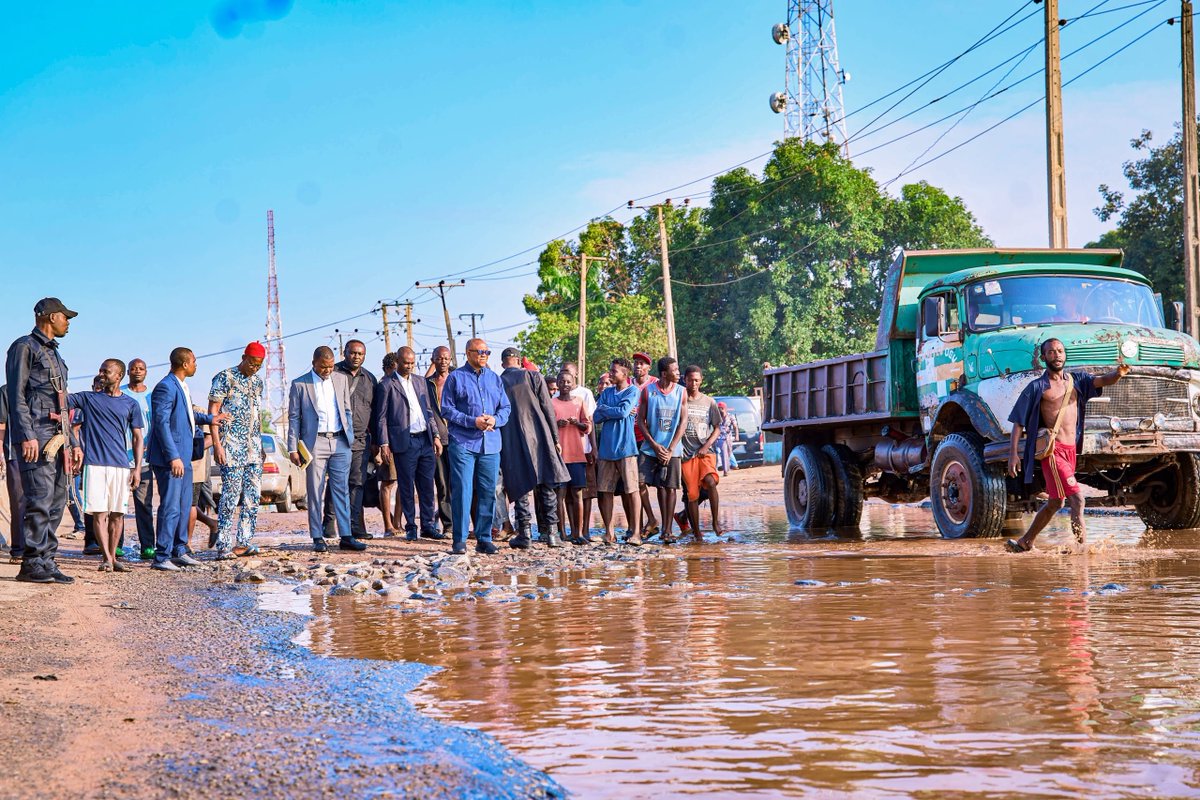
Despite its significance, substantial sections of this road are in a lamentable condition. It has become a major impediment, precipitating persistent traffic congestion and inflicting undue hardship on travellers, businesses, and transport operators.
Regrettably, this situation is not unique; it reflects the reality on many of our busiest national highways.
Our efforts should be directed towards the reconstruction and maintenance of our current road infrastructure before we announce plans for new road projects. The Nigerian populace requires functional and motorable roads, not merely projects that garner public attention.
Efforts aimed at superficial improvements for political gain should not supersede the urgent need to address the condition of our existing, critical roadways.
A new Nigeria is POssible. -PO
Engaging Tomorrow’s Leaders at Madonna University
Yesterday, I continued my engagement with future leaders in the country. I was at Madonna University, Okija Campus, where I had the privilege of interacting with students at the NextGen Mentorship & Leadership Initiative on the theme: “Beyond Now: Raising the Next Generation of Leaders.”
The session was highly engaging, with students asking thoughtful and probing questions. Their concerns reflected the frustration of many young Nigerians who feel constrained by poor governance and widespread corruption, which have denied them opportunities to realise their full potential. However, I was equally encouraged by their optimism and determination to be part of the solution.
I reminded them that leadership is the greatest determinant of a nation’s progress. A true leader must possess the character, competence, capacity, and compassion to make sacrifices for the good of the people. Nigeria’s future depends on leaders committed to safeguarding lives, investing in education, creating opportunities, and building effective institutions.
I encouraged the students to take their education seriously, to prepare themselves for leadership, and to see themselves not merely as spectators but as agents of change. Through active participation in the democratic process, they have the power to enthrone leaders with integrity and the capacity to propel our nation forward.
As part of my ongoing commitment to education, I presented a cheque of ₦15 million to the university to support its educational mission. Investing in education remains one of the most effective ways to develop the human capital necessary for national progress.
Together, by raising a new generation of responsible and visionary leaders, we can build the Nigeria of our dreams that is POssible. -PO
Delighted to Return to School of Nursing Sciences, Emekuku, Owerri, Imo State.
In continuation of my itinerant visits to educational and healthcare institutions in the country, yesterday, I visited the School of Nursing Sciences, Holy Rosary Hospital, Emekuku, where I met with the management, staff, and students, and presented a donation of ₦15 million to the institution.
I reminded the students that the world needs them more than they need the world because healthcare is one of humanity’s most fundamental needs. Any nation that truly desires development must invest in the education and training of healthcare professionals, who remain indispensable to the well-being and productivity of society.
I was delighted to inspect the computer laboratory, which I had previously supported, and to witness the remarkable progress the institution has made. It was also encouraging to reflect on other health institutions, such as Iyi-Enu and Borromeo, which I supported over the years and which have now grown into teaching hospitals. Their transformation reinforces my belief that sustained investments in health and education can produce enduring results. I look forward to seeing Holy Rosary Hospital attain the same status.
Our vision must be to build a Nigeria where functional institutions produce competent professionals, where investments are directed to critical sectors that lift people out of poverty, and where every child, regardless of background, has the opportunity to succeed. That is how we will build a nation where the son of nobody can become somebody without knowing anybody.
A New Nigeria is POssible. -PO
Lokoja Judgment: An Unnecessary Serious Setback for Nigerian Democracy
Today was an exceptionally busy day. I left Lagos in the early hours for Emekuku, where I visited the School of Nursing Sciences, an institution I have consistently supported over the years. It was gratifying to inspect projects funded through my previous interventions, including the school’s computer laboratory. Such investments reaffirm my belief that education remains one of the strongest foundations for national development.
From there, I attended the 80th birthday celebration of the Emeritus Archbishop of Owerri, Most Rev. Dr Anthony Obinna, whose commitment to justice, peace, and the common good has inspired many, before proceeding to Madonna University for another engagement.
It was at Madonna University that I received the court news of the Lokoja court rulings through my brother, Senator Rabiu Musa Kwankwaso.
Every Nigerian committed to the country’s progress should be deeply concerned. This judgment represents another setback for our democracy and the institutions upon which our future depends.
It is regrettable that some who claim to champion democracy now appear determined to weaken the very institutions that sustain it. In doing so, they are undermining public confidence and endangering the future of millions of Nigerians.
The legislature and the judiciary are increasingly being drawn into this pattern of institutional decline. Democracy cannot thrive where institutions lose their independence and credibility.
Those who seek to weaken Nigeria’s democratic foundations will not ultimately prevail. When a similar situation recently affected the ADC, I condemned it without hesitation. I do so again today because my position has always been guided by principle.
My concern is not about who becomes President. My concern is that Nigeria works. Our politics must move beyond the quest for power and focus instead on building a united nation founded on justice, strong institutions, the rule of law, and equal opportunity. That is the Nigeria we owe ourselves and the one we must leave for future generations.
I therefore urge all well-meaning Nigerians to rise above partisan interests and defend our democracy. The survival of our institutions is inseparable from the survival of our nation. It's when we work together that a new Nigeria of our dream is made POssible. -PO
State Police: Commendable Step, but Disorderly Legislation Raises Concerns of Political Misuse
The recent passage of the State Police Bill by the National Assembly marks a significant legislative milestone in addressing a long-standing demand of the Nigerian people. For years, many of us, alongside security experts and regional stakeholders, have consistently argued that a highly centralised policing structure is fundamentally unsuitable for a country as vast, diverse, and complex as Nigeria. However, the legislative and constitutional implementation appears shaky and raises legitimate concerns.
The process should involve greater community participation. Policing should be more visible at the local government and community levels. The mechanism for passing the law appears highly disorganised, with no public hearing on such a sensitive issue. Indeed, the rush to enact the law without proper legislative procedures fuels suspicion among many observers about the political motives behind it.
The greatest concern does not arise from logistical issues; it stems from history. There is a widespread, justifiable fear that state police forces could become instruments in the hands of governors. The suspicion is that a state-controlled police force could be weaponised to suppress political rivals, disrupt opposition rallies, and manipulate elections.
For state policing to evolve from a risky political gamble into a genuine security solution, the law must not only permit states to establish police forces but also clearly provide for independent oversight bodies, such as a state-level Police Service Commission that is entirely free from executive influence, to ensure that policing serves the public interest rather than the interests of the ruling elite.
Going by what Nigerians have seen so far, there is no guarantee that this administration can resist the temptation to take advantage of state policing to influence the 2027 general election by proxy. In view of that possibility and the danger it poses to the polity, it is necessary to defer its implementation until after the general election.
A New Nigeria is POssible. -PO